Gottfried Haberler
Gottfried Haberler was a key figure in some of the connections Samuelson was to make between different branches of economic theory. He had just arrived from Vienna, where he had taught since 1928.
“When I first knew him,” Samuelson wrote, “I was turning just old enough to vote [21] and he was 36 years of age. I can see his tall figure walking across the Harvard Yard, briefcase in hand: his broad forehead marked him as a professor and, except on the tennis court, he did not seem young to me. But then time stood still: I grew older; new generations of students strode the Harvard Yard; but Gottfried Haberler changed not at all.”13 Born in 1900, into what Samuelson called “the grande bourgeoisie of the Hapsburg Dual Empire meritocracy,” to parents who came from professional families, Haberler had studied at the University of Vienna under Wieser and Mises, submitting his habilitation thesis in 1925.m This thesis, written to obtain his academic position, had been published as Der Sinn der Inxexzahlen [The Meaning of Index Numbers] (1927), a widely discussed topic in the early 1930s. He became a major figure in the fields of international trade and the business cycle. In 1931—32 he had been a visiting lecturer at Harvard, and during the year participated in a symposium at the University of Chicago sponsored by the Harris Foundation, with a lecture on “Money and the Business Cycle” (1932). The following year saw the publication of a book on international trade, the English edition of which came out in 1936, just at the time Samuelson was taking his course.14 Before coming to Harvard, Haberler had worked at the League of Nations, drafting the first edition of Prosperity and Depression (1937b), a survey of business cycle theory.Samuelson praised Haberler for being consistent and yet eclectic, cautious and yet open to new ideas.
Comparing him with two other Austrian economists, he noted that he was more thoughtful than Ludwig von Mises, who “exploded rather than ruminated,” or Schumpeter, who “sparkled,” throwing out ideas and criticisms.15 He was also catholic in his friendships, knowing all his fellow Austrian emigres, supporting scholars who were unpopular because of their conservative views. Samuelson recalled that if Arthur Burns (Wesley Mitchell’s one-time co-author) was “belittled in catty Cambridge conversations,” Haberler would stand up for him.16 Consistent with this eclecticism and with his Viennese background, Haberler kept upm. His description of the Austro-Hungarian Empire as the “Dual Empire” is not strictly correct, as it was an empire and a kingdom.
with developments in logical positivism, relating these to the earlier methodological positions taken by Mises and Lionel Robbins, and he followed the methodological writings of Felix Kaufmann, Terence Hutchison, Percy Bridgman, and Arthur Eddington. Samuelson thus considered Haberler well informed on the latest developments in the philosophy of science.
The content of the course—very significant, as Samuelson was soon to write the first of his highly influential articles on the theory of international trade—can be inferred from two sources: Haber ler's recently published International Trade (1936) and notes that Lloyd Metzler took on Haberler's course in the fall of 1938.17'" In his book, Haberler began by explaining why there was any need to consider international trade differently from any other market activity. His answer was that factors of production—land and labor— did not move freely from one country to another. There were physical barriers to the movement of labor, such as the costs of transport, but the barriers to capital flows were different: the political and legal uncertainties associated with investment in countries with different legal, political, and monetary systems.
However, though the difference between domestic and international trade might be substantial, that difference was a matter of degree. It might be common to describe international trade as if countries were trading with each other, but purchases and sales of goods were undertaken by individuals, implying that, like domestic trade, it was influenced by consumers' preferences and companies' costs.18 Thus Haberler observed that there was a need to apply the theory of imperfect competition and business cycle theory to problems of international trade.19Like the book, Haberler's course started not, as was traditional, with the pure theory of trade, but with balance of payments and monetary problems, covering the workings of the gold standard and variable exchange rate systems, as well as the transfer problem: the mechanism whereby a transfer of money from one country to another (such as the reparations Germany had been required to pay to Allied governments after 1919) was translated into a transfer of goods. It was only halfway through the course that Haberler turned to the pure theory of trade, advising students to read recent articles by Leontief and Abba Lerner, a young economist from the London School of Economics (LSE), as well as the classic texts by Alfred Marshall.20 “Pure theory,” Metzler noted, “is concerned with welfare aspects of international
n. The structure of the latter corresponds closely to that of the book, suggesting that Haberler did significantly change his views on how the subject should be presented. The 1938 lectures cite some new material, notably Viner (1937) and Samuelson (1938f), but most of the references were ones Haberler would have known before writing the book. trade.”21 It seeks to explain why trade takes place and what will be traded, and does so in terms of nonmonetary factors. Metzler then made the interesting note that “the more general a theory becomes, the more tautological it is and the less it says about the real world.”22 Haberler first analyzed trade using the theory of supply and demand (citing one of Samuelson’s Chicago teachers, Henry Schultz, who had tried to measure demand curves) before criticizing it as a partial equilibrium theory—a theory that considers a single market in isolation.23 He then went on to develop a general equilibrium theory, in which all markets are considered together, developing the theory of comparative costs—the standard explanation of trade—to include the case where production costs fall as production increases.
It had been widely assumed that comparative costs—the ratio of the costs of production of goods in two countries—did no more than establish the limits within which the relative prices of internationally traded goods must fall. It had been known, since the early nineteenth century, that international trade between two countries would be profitable only if, in the absence of trade, they faced different comparative costs, for it was price differences that created an incentive to trade. Haberler (1930) had noted that the cost of producing a commodity might rise as more of it was produced, which meant that each country’s comparative costs would change as it altered its production to take advantage of international trade. For example, suppose that under autarky, producing an extra roll of cloth involved sacrificing 100 pounds of wheat, and that in the rest of the world the price of cloth was 150 pounds of wheat; comparative costs in that country and in the rest of the world would be different. However, if the country took advantage of its ability to produce cloth more cheaply than the rest of the world and increased its cloth production so that it could be exported in return for cheaper wheat, the cost of producing the cloth might rise to 150 pounds of wheat.24 After trade, comparative costs would be the same in both countries and would be the same as relative prices.
Haberler represented this by a geometric device he called the “substitution curve.” Given a country’s resources, there was a maximum quantity of goods it could produce. The points where this frontier touches the axes gives the potential output if there is specialization. In between, the frontier is a straight line if there are constant costs and is convex if costs are rising (see figure 9.1). This did not explain the point at which production would take place, whether under autarky or with international trade, but it provided a framework for thinking about costs and the supply of goods. However, though later writers were to make the connection, Haberler did not use indifference curves to represent the demand side of the economy in his book; when
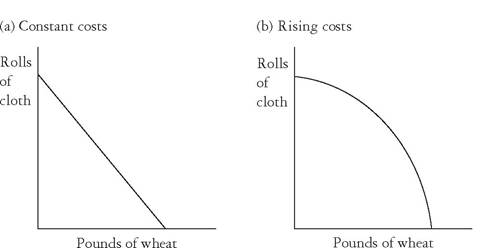
Figure 9.1 Haberlers substitution curve.
Note: The relative cost of wheat and cloth is indicated by the slope of the curve. As production of wheat rises and production of cloth falls, in case (a) the amount of cloth given up to obtain an additional pound of wheat does not change, whereas in case (b) it rises.
Source: Haberler 1930, pp. 357, 9; Haberler 1936, p. 176.
he wanted to look at the interaction of supply and demand, he used demand and supply curves. There is, therefore, no reason to doubt Samuelson’s later memory that Haberler was resistant to the idea of using indifference curves in his lectures.
In December, Haberler turned to the work of Bertil Ohlin (1933), which Samuelson was to make famous as one of the creators of the “Heckscher- Ohlin” theory of international trade, claiming that Ohlin was the first person to integrate location theory with the supply of goods in international trade. In the course of discussing Ohlin, he considered the influence of international trade on factor prices, noting that the factors specific to exporting industries would rise in price and conversely would decline for those specific to importing industries. Labor, however, had “nothing to fear from foreign trade in the long run—if it is mobile!!!!!!!”25 Metzler clearly noted the implication that immobile labor had much to fear in the short run.
Haberler’s conclusion here was consistent with the position he took on trade policy in his book. Aware of the problems caused for the world economy by the widespread introduction of tariffs in response to the Great Depression of the 1930s, Haberler was a committed supporter of free trade, considering it important to counter popular arguments for protection. One of the arguments he thought it important to argue against was that tariffs could be used to maintain wages:
[T]hepauper-labour argument is very popular in countries of high wages, especially the United States and England and her Dominions. The layman is impressed by the statement that the expansion of American industry could never have taken place, in face of the competition from
Asiatic and European countries where wages are half or less than half
American wages, without the protection of the American tariff.26
This argument was wrong because trade in goods did not lead to equalization of wages unless labor moved from one country to another.
He continued:Nevertheless, the implication that trade between countries in goods leads to an equalisation of factor-prices, and in particular of wages, is fundamentally false. An equalisation of wages comes about only if labour is mobile and can move from districts where wages are lower to districts where they are higher.27
The way to keep wages up was not protective tariffs on goods, but by prohibiting immigration. He described the use of tariffs to counteract other countries' lower costs, thereby ensuring “fair” competition, as a “stupid idea.”28 Wages were higher because American industry was more productive. This was a problem on which Samuelson was shortly to write one of his most highly cited articles.29
Inevitably, given events of the 1930s and his aim of viewing trade theory in relation to policy, Haberler also discussed tariffs as a way to cut unemployment. This took him into a discussion of different types of unemployment and issues such as the immobility of labor and wage flexibility, even covering Richard Kahn's theory of the multiplier and various ideas of Keynes. He conceded that tariffs could reduce unemployment, but there were good reasons to prefer other solutions. For example, in writing about unemployment in a particular branch of industry (perhaps having in mind Britain's problems with unemployment in industries such as textiles and shipbuilding), he concluded that the best solution was “to wait until the transition to full employment comes without any intervention, or possibly to assist the unemployed, for example by training them, to find jobs elsewhere.”30 The depth of his opposition to tariffs then came out more clearly in the following sentence: “But to use the dynamite of tariff increases against the less pleasant aspects of economic progress is to destroy economic progress itself.” Haberler left no doubt as to his opposition to the use of tariffs.
Prosperity and Depression was considered by the United Nations to be a major study, a conference being convened in Geneva in June 1936 to discuss a draft of the book.31 Haberler believed that progress could be made by coordinating the work of the many economists working on business cycles in Europe and the United States; sandwiched between the Geneva conference and a meeting of the Standing Committee of Business Cycle Institutes in Vienna had been another conference in Annecy, France, that was aimed at discussing the merits of encouraging cooperation on business cycle research.32 The organization of the book makes Haberler's approach very clear. Part I, the first to be written, provided a survey of theories of the cycle, classified according to the causal mechanism involved: theories that explained the cycle as the result of monetary policy; “over-investment” theories that linked cycles to periods when investment was unsustainably high, owing to either monetary policy or an uneven pace of innovation; theories that focused on changes in costs of production in different sectors or the creation of excessive levels of debt; under-consumption theories that blamed crises on a shortage of consumer demand, possibly caused by profits being too high; “psychological theories” based on the assumption that business psychology, central to investment, lay beyond the scope of economic analysis; and theories that related the cycle to the harvest. Each theory, to quote Samuelson, was put “under the Haberlerian microscope.”33
Haberler had started out as a supporter of the Mises-Hayek overinvestment theory of the cycle according to which monetary expansion, driven by low interest rates, was the cause of the boom, and these low interest rates caused a structural imbalance in the economy that could be corrected only through a period of contraction. However, by around 1930 he had become critical of this view, mainly on the grounds that it was unable to explain why a downturn had to take place and, hence, why depressions were inevitable. This theory, he believed, might help explain the expansion phase of the cycle, but it could neither explain depressions nor shed light on how to combat them. Instead, he adopted an eclectic view. Though he did not relent on his complete dismissal of under-consumptionist theories, according to which excessive saving led to a shortage of aggregate demand, he accepted that there might sometimes be a shortage of demand for consumer goods, and even found some worthwhile points in Keynes's General Theory, which had appeared in February, a few months before the text of Prosperity and Depression was finalized.
It is inconceivable that these ideas would not have come up in the course Samuelson took: aside from having the imprimatur of the League of Nations, Prosperity and Depression was the latest major publication on business cycle theory, reflecting wide-ranging debates during the previous three years. Moreover, though it did not convince everyone (Hayek found many passages unsatisfactory, and Cambridge economists claimed that more space should have been given to Keynes's ideas), the book would have introduced students to the latest theoretical developments.
Three aspects of the book are worth noting. The first is that the problem of depression—clearly the most important “macroeconomic” issue facing economists in the 1930s—had to be considered in the context of the business cycle.0 Thus, Haberler opened part II of Prosperity and Depression with the remark:
There is complete unanimity among economists that the problem of the recurrence of periods of economic depression and the cognate problem of acute economic or financial crises cannot fruitfully be discussed in isolation from the major problem of which they form part—viz., the problem of the business or trade cycle; by which is meant, a wavelike movement affecting the economic system as a whole.34
While Haberler may have exaggerated the extent to which there was agreement on this (Keynes took a different stance in his General Theory), this point is worth stressing for it shows the perspective from which macroeconomic problems were generally addressed when Samuelson was a student. Thus it should be no surprise that, when he began to write his introductory textbook in 1945, the business cycle came first and the theory of employment later.p
The second, a point on which Haberler's critics mostly agreed, was that discussion of the cycle should be organized under four headings, each corresponding to a specific phase of the cycle: expansion; down-turn and crisis; contraction; and up-turn, or revival.35 This was a way in which the problem of the cycle could be simplified, thereby isolating points on which no consensus could be reached. Haberler had hoped that disagreement would be confined to the causes of turning points, but this turned out not to be the case, for there was disagreement over whether contractions should or should not be seen as disequilibria.
The last point that merits attention is the importance Haberler paid to the notion of the accelerator, the principle that the level of investment is proportional to the growth rate of output, and hence fluctuates much more than output, a concept that was being widely discussed in the early 1930s.q Indeed, Hayek criticized him for attaching too much importance to the concept.36 Given that his book provided a more detailed discussion of the accelerator
o. Quotation marks are used around macroeconomic to signal that this was not a term in common use at the time.
p. See chapter 25 this volume.
q. If there is a fixed relationship between the capital stock (buildings, plant and machinery, working capital) and the volume of production, it follows that investment (the increase in the capital stock) should be proportional to the change in output. Haberler cited John Maurice Clark, Simon Kuznets, A. C. Pigou, Roy Harrod, Wesley Clair Mitchell, Dennis Robertson, and Arthur Spiethoff as recent authors who had made use of the concept. than his earlier draft, he clearly thought it important at the time he was teaching Samuelson, and the topic would have been comparatively fresh in his mind. Haberler's attitude to the interaction of the accelerator with the multiplier is shown by his response to Roy Harrod's The Trade Cycle (1936). This book, to which multiplier-accelerator interaction was central, appeared only while Prosperity and Depression was in press, but Haberler reviewed it in the Journal of Political Economy, where he remarked:37
Mr. Harrod does not realize, or at least does not say, that this interaction of “Relation” [accelerator] and “Multiplier” is not a new invention, dating from the birthday of the word “Multiplier” (1931). It is in reality a common feature of almost all trade-cycle theory.38
He attributed the idea, though not the name, to Wicksell and his followers, John Maurice Clark and Sumner Slichter. He emphasized its compatibility with other theories of the cycle, and in an interesting footnote, he noted the importance of time lags to multiplier-accelerator interaction, criticizing Harrod for his aversion to using such lags.39 When Samuelson began to write on the business cycle, though his immediate inspiration was Alvin Hansen, he was to adopt a stance very similar to Haberler's.