By introducing the different income classes in the previous section, we clarified correlations between heterogeneous consumers.
In this section, we will consider forces other than the contribution from these agents. Such an attempt may help us explore several hidden forces that shape household demand. The demand law may also be affected by other forces such as nonrandom modes reflecting natural or social necessities, and business fluctuations.
We may therefore conceive that another force, distinct from individual inner preferences, is at work. This then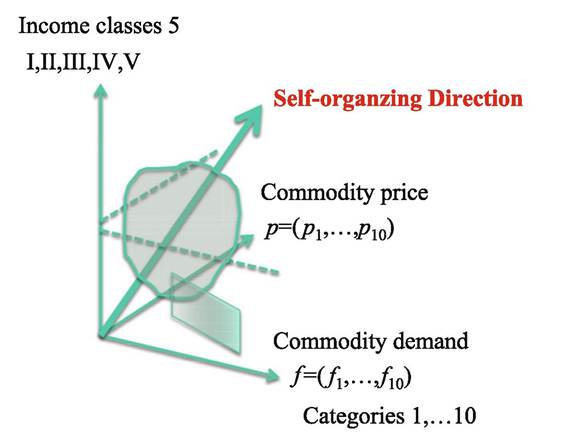
Fig. 2.7 A broader perspective of commodity demands
suggests another problem with the demand law. By applying a new method like random matrix theory to empirical household data, a remarkable feature has been found that is common to different class behaviors, irrespective of price variations. A resulting consumption activity may not be decided solely by price and income. There is another independent force driving consumption, which may be estimated by the system itself; in other words, the eigenmodes of the system. It is evident that consumer behavior is closely connected to certain social patterns.
2.3.1