Biological structure of populations
The structure of the population is not stable. Growth and development of organisms, birth of new organisms, death from various causes, changing environmental conditions, increasing or decreasing number of enemies - all these lead to a change in various relations within the population.
The direction of further changes in population largely depends on what structure of the population in a given period of time is.Sexual structure of populations
The sex ratio of species and especially the proportion of proliferative females in the population are of great importance for the further growth of its numbers. The sex ratio in the population is established not only by genetic laws, but also under the influence of the environment. In some species, sex is initially determined not by genetic, but by environmental factors. For example, in the case of red forest ants (Formica rufa), the eggs laid at temperatures below +20°C develop males, at a higher level - almost exclusively females. The sex of Arisaema japonica plants depends on the accumulation of nutrients in the tubers. Plants with female flowers grow from large tubers, and from small tubers - males.
Age structure. Age distribution is another important characteristic of population, which influences natality and mortality. Mortality usually varies with age, as chances of death are more in early and later periods of life span. Similarly, natality is restricted to certain age groups, as for example, in middle age-groups in higher animals. According to Bodenheimer (1958), the species of a population can be divided into pre-reproductive, reproductive and post- reproductive groups. The species of pre-reproductive group are young, those of reproductive group are mature and those in post-reproductive group are old. The ratio of various age groups in a population determines the reproductive status of the population.
Rapidly increasing population contains a large proportion of young species, a stable population shows even distribution of species in reproductive age-group and a declining population contains a large proportion of old species.The age state of the species is the stage of its ontogeny, at which it is characterized by definite relations with the environment. With age, the requirements of the species to the environment and the resistance to its individual factors naturally change very substantially. At different stages of ontogeny, habitat changes, changes in the type of nutrition, the nature of movement, and the overall activity of organisms can occur. Often the age- related ecological differences within the species are expressed to a much greater extent than the differences between species. For example, grass frogs on land and their tadpoles in water bodies, caterpillars, gnawing leaves, and winged butterflies sucking nectar are just different ontogenetic stages of the same species.
Three ecological age groups can be distinguished in the population:
J Preproductive
J Reproductive
J Post-productive
The duration of these ages in relation to the overall life expectancy varies greatly among different organisms.
In plants, the age structure of the cenopopulation, i.e., the population of a particular phytocenosis, is determined by the ratio of age groups.
For example, trees have both multiple life stages (seed, plant) and age classes within the plant stage (i.e., seedling, sapling, mature tree).
Analysis of the age structure helps to predict the population size during the life of the next generations.
Spatial distribution of populations
Organisms do not occur randomly in space. Any species of plant or animal may be found in some areas, while they are completely absent from others. Likewise, the individuals of any species are distributed in relation to each other in distinct patterns. The reasons for the readily apparent nonrandomness of the spatial distribution patterns of organisms are numerous, and the patterns result from processes acting throughout the whole life cycle of the organism, and on various spatial scales.
Interactions between individuals and across species all take place in space as well as in time, and an understanding of spatial patterns is basic to understanding real- life ecological processes. Indeed, patterns of spatial distribution play an important role in shaping a wide range of ecological dynamics, such as intra- and interspecific competition, mating systems, predation, population genetics, and the spread of contagious diseases.While there are few environments on earth without life, no single species can tolerate the full range of earth's environments. For each species, some environments are too warm, too cold, too saline, or unsuitable in other ways. At some point, the metabolic costs of compensating for environmental variation may take up too much of an organism's energy budget. Partly because of these energy constraints, the physical environment places limits on the distributions of populations. The environmental limits of a species are related to its niche. To the ecologist, the niche summarizes the environmental factors that influence the growth, survival, and reproduction of a species. In other words, a species' niche consists of all the factors necessary for its existence — approximately when, where, and how a species makes its living.
Three basic patterns of distribution: random, regular, or clumped.
A random distribution is one in which individuals within a population have an equal chance of living anywhere within an area.
A regular distribution is one in which individuals are uniformly spaced.
In a clumped distribution, individuals have a much higher probability of being found in some areas than in others (fig. 5).
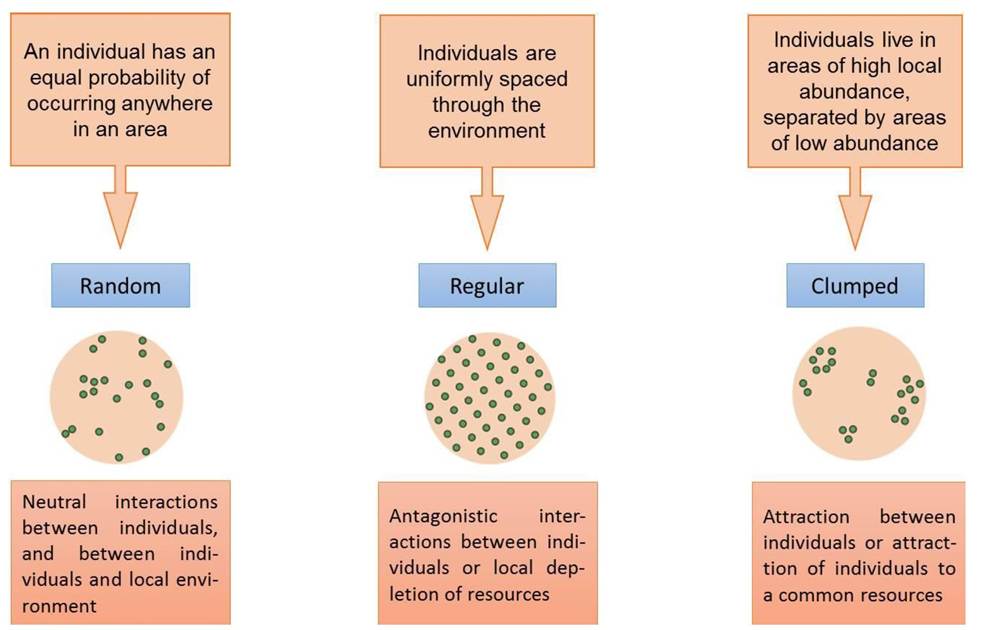
Figure 5 - Spatial distribution of populations
These three basic patterns of distribution are produced by the kinds of interactions that take place between individuals within a population, by the structure of the physical environment, or by a combination of interactions and environmental structure. Individuals within a population may attract each other, repel each other, or ignore each other. Mutual attraction creates clumped, or aggregated, patterns of distribution. An environment with patchy distributions of nutrients, nesting sites, water, and so forth fosters clumped distribution patterns. An environment with a fairly uniform distribution of resources and frequent, random patterns of disturbance (or mixing) tends to reinforce random or regular distributions.
More on the topic Biological structure of populations:
- Ethological structure of populations
- There are limits to the growth of populations
- Topic: First-aid dressing
- Age or size structure influences how rapidly populations grow
- Structure of the biocenosis
- Target Populations/Communities and Mitigations
- Structure of the book
- Contents
- The rarest and the most rapidly declining species are priorities for protection
- The geographic ranges of species vary in size