Ecologists often delineate communities by their physical or biological characteristics
The technical definition of a community given above is more theoretical than operational. In practical terms, ecologists often delineate communities using physical or biological characteristics as a guide (FIGURE 16.3).
A community may be defined by the physical characteristics of its environment; for example, a physically defined community might encompass all the species in a hot springs, a mountain stream, or a desert. The biomes and aquatic biological zones described in Chapter 3 are based largely on the physical characteristics thought to be important in defining communities. Similarly, a biologically defined community might include all the species associated with a kelp forest, a freshwater bog, or a coral reef. This way of thinking uses the presence and implied importance of abundant species, such as kelp, wetland plants, or corals, as the basis for community delineation.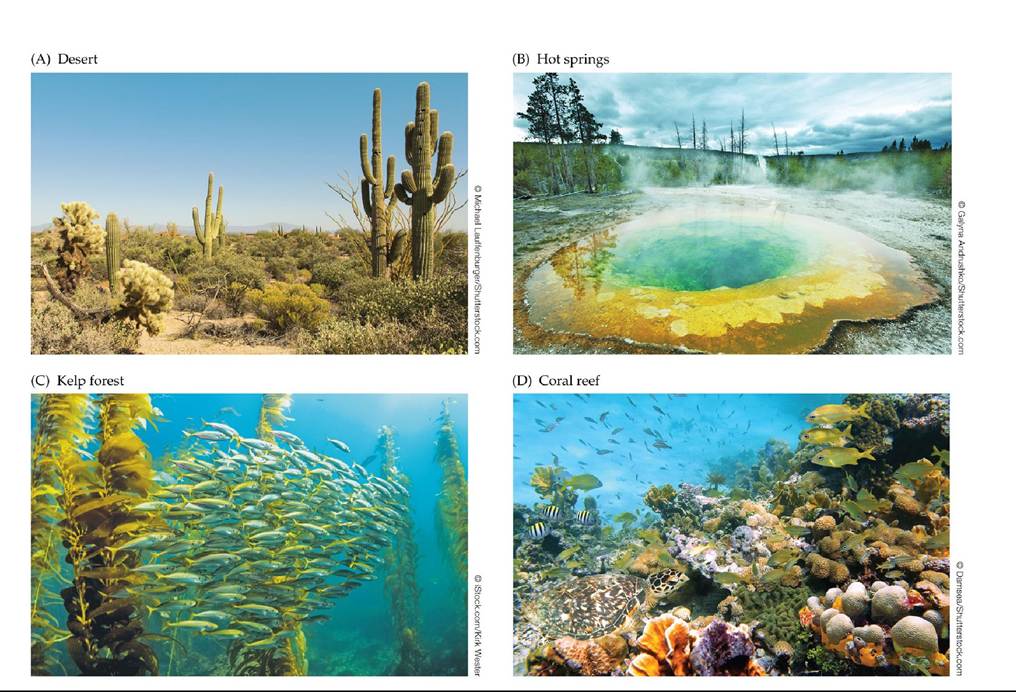
FIGURE 16.3 DefiningCommunities Ecologistsoftendelineatecommunitiesbasedon their physical attributes or their biological attributes.
Of the four communities shown in this figure, which are mostly defined by physical attributes and which are mostly defined by biological attributes? View larger image
In most cases, however, communities end up being defined somewhat arbitrarily by the ecologists who are studying them. For example, if ecologists are interested in studying aquatic insects and their amphibian predators, they are likely to restrict their definition of the community to that particular interaction. Unless they broaden their question, researchers are unlikely to consider the roles of birds that forage in wetlands or other inherently important aspects of the wetland in which they are working. Thus, is it important to recognize that ecologists typically define communities based on the questions they are posing.
Regardless of how a community is defined, ecologists interested in knowing which species are present in a community must contend with the difficult issue of accounting for them. Merely creating a species list for a community is a huge undertaking, and one that is essentially impossible to complete, especially if small or relatively unknown species are considered. Taxonomists have officially described about 1.9 million species, but we know from sampling studies of tropical insects and microorganisms that this number greatly underestimates the actual number of species on Earth, which could be closer to 9 million or even more. For this reason, and because of the difficulty of studying many species at one time, ecologists usually consider a subset of species when they define and study communities.