Oceans cover 71% of Earth's surface and contain a rich diversity of life.
The vast area and volume of the oceans and their environmental uniformity make them considerably different from terrestrial ecosystems in terms of biological organization. Marine organisms are more widely dispersed, and marine communities are not as easily organized into broad biological units as terrestrial biomes are.
Instead, marine biological zones are coarsely categorized by their physical locations relative to shorelines and the ocean bottom (FIGURE 3.16).The distributions of the organisms that inhabit these zones reflect differences in temperature, as we saw for terrestrial biomes, as well as other important factors, including light availability, water depth, stability of the bottom substrate, and interactions with other organisms.
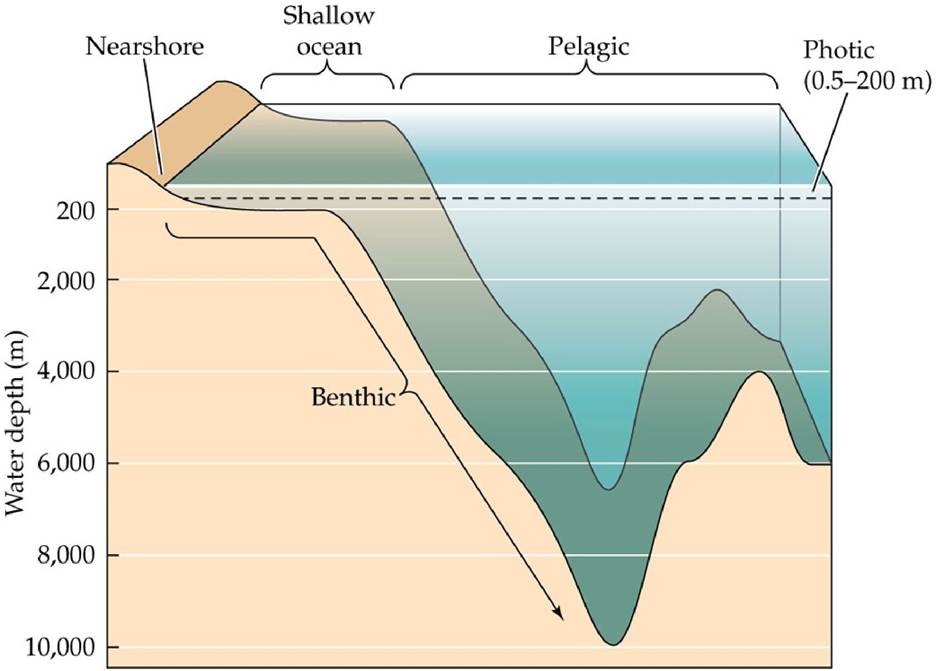
FIGURE 3.16 MarineBiologicalZones Biological zones in the ocean are categorized by water depth and by their physical locations relative to shorelines and the ocean bottom. View larger image
In this section, we will take a tour of the biological zones of the oceans, from the margins of the land to the deep, dark, cold ocean bottom. We will examine the physical and biological factors that characterize the different zones and the major organisms found in them.