Sources of Air Pollution
The air pollution is caused by carbon monoxide (4.3.1.1), carbon dioxide (4.3.1.2), oxides of nitrogen (4.3.2), oxides of sulphur (4.3.3), hydrogen sulphide (4.3.4), chlorine (4.3.5), ozone (4.3.6), hydrocarbons (4.3.7) and particulates (4.3.8) which have been already described in various sections mentioned in the parentheses.
The present section describes some of the other major sources of air pollution. These include pollution from• Industries
• Petroleum
• Mining Industries
• Power Plants
• Automobiles
• Agrochemical based industries
4.4.1 PollutantsfromIndustry
It has already been stated that industrial units dealing with the manufacture of explosives (e.g. various nitro compounds) using concentrated nitric acid and concentrated sulphuric acid release thousands of tonnes of oxides of nitrogen (sec. 4.3.2) and oxides of sulphur (sec. 4.3.3) into the atmosphere. Industries dealing with fermentation technology (e.g. in the manufacture of antibiotics and other chemicals like alcohol) release,thousands of tonnes of carbon dioxide (sec. 4.3.1.2) into the atmosphere. Caustic soda manufacturing units are responsible for the release of chlorine (sec. 4.3.5) in the atmosphere. Various metallurgical processes are responsible for introducing carbon monoxide, carbon dioxide, hydrogen sulphide and metal particulates into the atmosphere. The following discussion includes some very special industries dealing with highly specialized products.
A. Polymers and Plastics
A polymer is a macromolecule and has very high molecular mass. Polymers are formed by the joining of a large number of repeating units called monomer by the process called polymerisation. A plastic is also a polymer (but all polymers are not plastics), which can be moulded into various shapes. The term plastic is used to include many synthetic polymeric materials like rubbers, fabrics, resins etc.
Polymers (including plastics) form the backbone of modem civilization. In fact, in all walks of life, starting from household utensils, cloths, furniture etc., to automobiles to spacecrafts and biochemical and surgical operations, polymers are extensively used. The synthetic polymers have become so indispensable that their per capita production is associated with increased standard of living.It is a common knowledge that polymers (including plastics) are not biodegradable. On the contrary, biopolymers (such as starch, cellulose, proteins and nucleic acids etc.) which control various life processes, are biodegradable i.e., they disintegrate by themselves during a certain interval of time. The synthetic polymers, a major portion of which are used as throw away containers and packing materials do not disintegrate by themselves, i.e., they are not biodegradable and they do not degrade over a period of time. This property makes the polymer stay intact for a much longer period - an advantage for use in household items etc; This non-biodegradability of polymers and plastics has caused a serious waste disposal problem for the mankind. With the ever increasing use of plastics, the time is not far away when the entire civilization will be buried under a pile of plastic debris. The waste plastic causes acute environmental problems in all the segments i.e., the earth, the water bodies and the air. In view of the above, endless efforts have been and are being made by researches all over the world to evolve such plastics which are biodegradable. All these attempts have led to the discovery of certain biodegradable polymers. However, such polymers are costly.
The most important reason for the polymers and plastics being non- biodegradable under natural conditions is their hydrophobicity (water-repelling capacity). In case, the hydrophobic cnaracter is improved - the micro-organisms will be able to degrade the plastics, though this would mean shorter span of life for them. The best is to achieve a balance between the advantages arising out of the durability of plastics and the disadvantages arising out of their nonbiodegradability in environment.
The objective could be achieved by adding some additives, which after been introduced in the final product, make these biodegradable.n-Pentane, trichlorofluoromethane (Cl3CF) and toluene 2,4-diisocyanate are commonly used foaming agents to make low density plastics. For example, polyurethane is formed by incorporating liquid pentane under pressure. When the mixture is extruded from an outlet, the pentane volatilises into the atmosphere, leaving polyurethane full of small holes. Chemical foaming agents produce CO2 by a chemical reaction. It involves the reaction of an isocyanate with water.

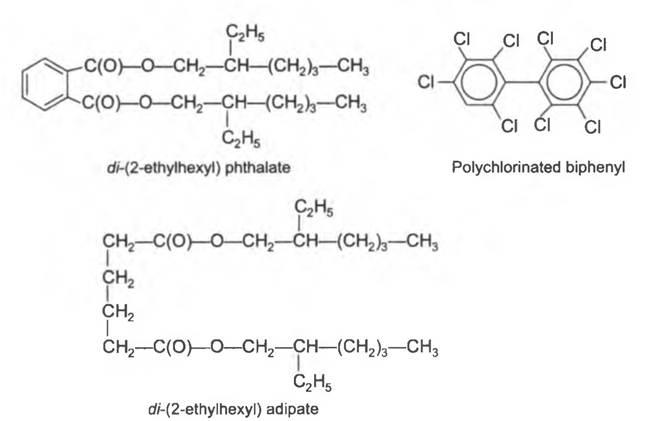
Plasticizers like Jz-(2-ethylhexyl)phthalate, zZz-(2-ethylhexyl)adipates and polychlorinated biphenyls are added to make plastics more flexible. These plasticizers get incorporated between the polymer chains, weakening the forces of attraction between them and so they increase their flexibility.
Antioxidants like 2-hydroxybenzophenone are added so as to protect the plastics from harmf ul solar radiations. In the absence of antioxidants, the finished products may degrade on being exposed to sunlight for longer time.
Hazards Caused by Polymers and Plastics
Most of the hazards are associated with the manufacturing processes and disposal of the waste materials.
i. Human Health
Workers employed in polymer and plastic industries suffer from a number of health hazards.
(a) 2-Chloro-1,3-butadiene (chloroprene) used for the production of synthetic rubber (neoprene) can cause liver damage.
(b) Bis-(Chloromethyl)Cther, used as a reagent to affect cross linking in polymers is suspected to cause lung cancer.
(c) Toluene-2,4-diisocyanate used to foam polyurethane is responsible for acute respiratory problems.
(d) Vinyl chloride used for the manufacture of polyvinyl chloride polymer results in a rare form of liver cancer (called αngiocαrcinomα).
(e) The phthalates used as plasticisers cause testicular cancer and lung damage.
(f) Polychlorinated biphenyls are released in the atmosphere by burning waste plastics in incinerators. These chemicals are washed down into the aquatic systems. Being fat soluble, they get accumulated into aquatic organisms. When human beings consume contaminated fish, they suffer from an ailment called yusho disease; the symptoms are headache, fatigue, pains in the joints, anaemia. Concentrations above 12 ppm can cause blindness.
(g) The polymer and plastic waste materials dumped on the land cause major problems of their disposal. The non-biodegradable nature of these materials makes them a permanent waste. In case, the waste material is incinerated, the problems associated with air pollution arise. The gases evolved by incineration are carbon dioxide (responsible for green house effect), oxides of nitrogen (responsible for acid rain) and carbon monoxide - an extremely poisonous gas. Incineration also releases particulate matter into the atmosphere. If asbestos has been used as filler during the manufacture of plastics or polymers, on incineration of plastic, asbestos is injected in the air which causes several health hazards.
Checking Polymer and Plastic Pollution
Being non - biodegradable, the problem of pollution caused by polymers and plastic can be checked to a certain extent by the following procedures:
i. Recycling of Plastics
Pollution load caused by plastics can be reduced to a certain extent by recycling the used and waste plastic items. Recycling is carried out by the following steps:
(i) Removal of non-plastic materials from plastic ones.
(ii) The plastic material is granulated and washed to remove dirt and paper labels.
(iiι) The heavier substances like stones and metals are removed by passing the washed material through a series of hydraulic tanks.
(iv) The granules are dried. Air is blown over it under pressure to remove residual fibrous material.
(v) Finally, the clean granules are moulded into finished products.
The technology has been successfully used for Jjolyvinyl chloride containers and also for recycling of polymers (e.g. polyester, polyethylene, terephthalate etc.).
ii. Conversion of Polymers into Monomers
The process for the conversion of scrap polyester, polyethyleneterephthalate (PET) into monomers is known as the Petrette process (Eur. Patent, 484, 963, May 13, 1992; US patent 5, 391,263, February 21, 1995 and US Patent 5, 504, 122 April 1996). The flow sheet of the Patrette process for recovery of monomers from PET scrap is given below (Scheme 1).
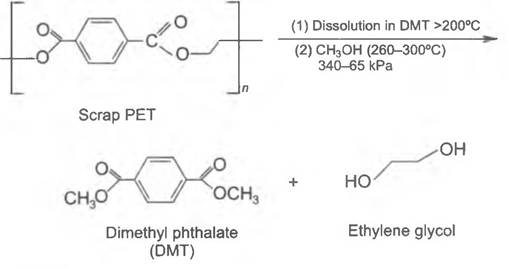
Scheme 1 Conversion of PET scrap into monomers
The monomers (DMT and ethylene glycol) are purified and polymerised again to give PET.
(iii) The best and foolproof method is to make polymers which are biodegradable. One typical illustration is the manufacture of Thermal Polyaspartate polymer (TAP), a biodegradable alternative to polyacrylate polymer (РАС). The Donlar’s synthesis of TPA consists of heating aspartic acid followed by hydrolysing the formed succinimide polymer with aqueous base (Scheme 2).
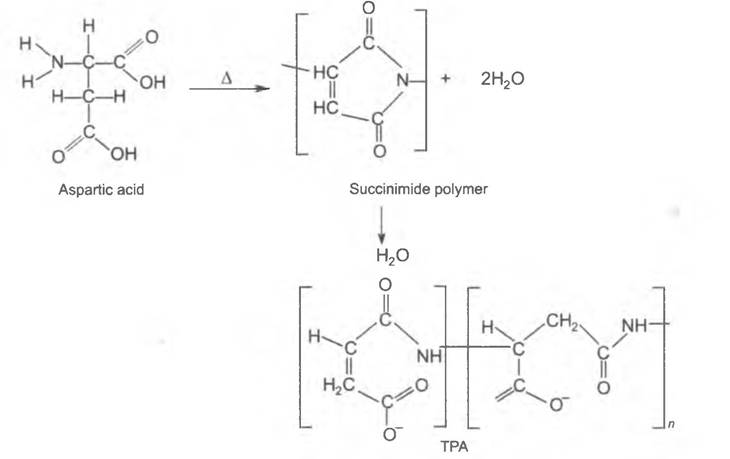
Scheme 2 Synthesis of TPA
B. Asbestos
The name asbestos is given to a group of silicate minerals which can be separated into fibres and used to make materials that will not bum. The name asbestos comes from a Greek word meaning inextinguishable or unquenchablef. It is the only naturally occurring fibrous mineral. It finds a variety of uses and is valued as an industrial material. Due to its fibrous nature, asbestos is an environmental hazard. Asbestos fibres are readily absorbed on the surface of lung tissues; this results in a disease called asbestosis and is also responsible for development of lung cancer. In fact, industrial workers who have worked in asbestos industries for about 20 years or so are susceptible to be affected by asbestosis as well as cancer.
Asbestos has been in use for more than 3000 years in commercial, public and other facilities. It is used because of its incombustibility and effectiveness as a reinforcing agent when combined with other materials like cement or plastic. Its resistance to chemical and biological attack is of great value. Finally, asbestos is cheap and easily available. Some important applications of asbestos are as follows:
• The fibres of asbestos can be spun into yam, which can be reinforced with other fibres, e.g. nylon. Such yam is used for making clothing for fire fighters and special gloves.
• Thermal insulators
• Electrical insulators
• For making brake lining of automobiles
• Building materials
Sources of Asbestos in the Environment
Asbestos present in some rocks and minerals which is not exploited may find its way into the atmosphere by natural phenomena such as weathering, landslides etc. Workers engaged in mining, milling and fabrication processes are also exposed to asbestos. When the building materials containing asbestos deteriorate, the asbestos particles are released into the atmosphere. The airborne asbestos is finally ingested through inhalation. Likewise, asbestos is also released into the atmosphere by used brake lining of vehicles.
Monitoring of Asbestos in the Atmosphere
The concentration of asbestos in the atmosphere is determined as given below:
(i) The airborne asbestos particles are colloidal in nature and bear electrostatic charge. The first step involves the discharge or removal of the charge. For this, a sample of air (about 1000 m3) is impinged on the
plate of a electrostatic precipitator.
(ii) The particles of asbestos settled on the plate, are washed into about 100 mL of a suitable non-polar solvent which dissolves unwanted organic particulates.
(iii) The undissolved asbestos particles are filtered.
(iv) The number of asbestos particles is finally counted under an electron microscope. The concentration is reported as number of asbestos particles per mL of air.
Harmful Effects of Asbestos
Exposure to asbestos fibres has the following effects:
i. Asbestosis
Incorporation of asbestos fibres in the lung tissues causes a lung disease known as asbestosis. Once inhaled, the asbestos particles get embedded in the lung tissues for long periods (20-30 years) and the victim’s outer lining of the lungs gets thickened; thereby, decreasing the oxygen-carbon dioxide exchange capacity and the elasticity of the lungs. The victim becomes short of breath and eventually dies of heart failure. It is found that workers engaged in asbestos industries (e.g. mining, cleaning and weaving) are more prone to suffer from asbestosis. This disease is incurable.
ii. Cancer
Workers in industries dealing with the use of asbestos such as, in building, construction, mining, manufacture of brakes and repair of clutches of automobiles face 50% chances of dying from cancer Since cancer symptoms do not appear (or arise) until 20-30 years after being exposed to asbestos, various agencies could not recognise the dangers posed by the use of asbestos. When inhaled, the fine particles of asbestos dust are lodged in the lungs and damage the cells therein. Prolonged heavy exposure increases a person’s risk of lung cancer and mesothelioma, a rare cancer of thin membrane that line chest and abdomen Some developed countries have banned the use of asbestos in any form. However, some developing and under developed nations have still not banned the use of asbestos completely.
iii. Iron Metabolism
Certain varieties of asbestos contain appreciable amount of iron (25-26%). Though iron is essential for life, its excessive built up is harmful. In the body, iron forms chelate with citrate ion; these chelates enter the cells and ferrous iron reacts with oxygen producing molecular oxygen radicals (O2*)- These radicals create havoc; these oxidise DNA and proteins and cause damage to proteins. This leads to carcinogenesis.
Checking Asbestos Pollution
(i) Asbestos is most harmful in the form of dust. It is not possible to prevent atmospheric pollution, but one can take adequate precautions so that one does not inhale asbestos dust as far as possible. For example, workers who deal with asbestos must wear masks in order to prevent inhalation.
(ii) Asbestos sheets, if used must be coated with dust-proof membranes, such as paints or plastics or keeping the sheets wet while handling; this reduces the hazard. One should not be exposed to asbestos dust for long.
(iii) Asbestos dust arising out of cleaning brake lining should be cleaned by vacuum extraction procedure or with a damp rag.
(iv) Children are more susceptible to asbestos pollution than adults. This is especially important because in old buildings of schools, the roofs and tiles are made from asbestos. It is best to find such buildings and the places in which asbestos is present and these must be coated with polyvinyl chloride spray.
(v) As far as possible, the use of asbestos should be avoided. In its place, clothing made from nylon and wool blends (these provide heat and fire protection) should be used. For insulation, ceramic fibres can be used as a substitute for asbestos. Moulding of phenol-formaldehyde can be used in place of asbestos in electrical insulation materials. Also, glass fibre reinforced cement is a good substitute for asbestos based building materials.
C. Tobacco
The use of tobacco is responsible for 3 out of every 10 cancer deaths. It is known to be a major factor for cancer of the lung, larynx, oral cavity, esophagus, urinarv bladder, kidney and prostrate. Tobacco smoke has been found to contain ove^2500 chemical substances) It contains carbon monoxide, carbon dioxide, ammonia, nitrosamines, nitrogen oxides, hydrogen cyanide, sulphur compounds, nitrites, ketones, alcohols and acrolin.∣ The ‘tars’ contain carcinogenic hydrocarbons, which include nitrosomines, benzo(a)pyrene, anthracene, acridines, quinoline, benzene, naphthol, naphthalene, cresols and insecticides (DDT) as well as radioactive compounds like potassium-40 and radium-226. Some of these compounds are known to be risk factors for human cancer
Cigarette smoking has been shown to be a major risk factor in men and women especially in middle age for cardiovascular diseases. Chronic lung diseases related to smoking are second to heart diseases as a cause of disability. Smoking adversely affects fertility in females. Children bom to smoking mothers are more prone to various abnormalities.
The cigarette manufacturing industries all over the world make an unimaginable number of cigarettes all of which are smoked. One cannot even imagine the amount of total smoke released into the atmosphere with all the harmful substances (chemicals). In fact, smoking is a major factor contributing to atmospheric pollution.
The most important question that arises is how to control pollution caused by smoking. This has to be a voluntary effort of all the people who smoke to quit smoking. Can one imagine a day when cigarette smoking is considerably reduced so that the cigarette-manufacturing companies find it non-profitable to manufacture cigarettes? The answer is probably ‘NO’. The reason is that the society we live in, it is not possible to have a law to ban smoking or the manufacturing of cigarettes.
4.4.2 Pollution by Petroleum
Petroleum is naturally occurring oil, mostly found in underground reservoirs. It is formed by the decay of the remains of animals and plants,It is also found below the oceans and is believed to be formed by decay of marine plants and animalsl In its crude form, petroleum is a mixture of hundreds of chemicals, chiefly hydrocarbons. It is separated into various products such as cooking gas, naphtha, petrol, diesel, kerosene and wax by fractional distillation in refineries. The pollution of air or atmosphere occurs at different stages. Some of these are:
• During drilling, some of low boiling fractions escape in the atmosphere and spill on the land.∣In case, drilling from below the surface of oceans, the petroleum oil may be spilled on the surface of water and may be
( swept by air currents to distant places.
• During transportation of crude petroleum oil, there is spilling or leakage of petroleum. This particularly occurs in oceans during transportation by huge tankers (see chapter 7).
• During fractional distillation in the refineries, a number of fractions, e.g. gas, hydrocarbon etc. find their way into the atmosphere due to leaks or poor recovery.
4.4.3 Mining Industries
Mining is the process that is used to take minerals out of the earth. Coal, asbestos, copper, mica, precious stones and many other materials are mined. Following mining industries contribute to the pollution of the atmosphere.
(i) Coal mining: This discharges large amount of particulate matter in the form of coal dust into the atmosphere. Workers in coal mining are prone to be incapacitated by black lung disease.
(ii) Mica mining : Mica is a group of silicate minerals having layered structure. It contains mixed silicates of elements sodium, potassium, calcium, aluminium, magnesium, iron and lithium. It is mined from pegmatite rocks. India is the largest producer of mica in the world contributing more than 75% of the world’s consumption. In India, mica is found in Bihar, Andhra Pradesh and Rajasthan. Besides, it is also found in Rocky Mountains of USA and in Canada. Mica is widely used as an electrical insulator and inare poisoned by pesticides every year, resulting in about 14,000 deaths. Developing countries account for 30% of the pesticide consumption but share more than 60% of the casualties. The term, pesticides includes insecticides, fungicides and herbicides.
4.4.6.2.1 Insecticides
Insecticides are used to eliminate the insects, which eat away the crops. Use of insecticides is helpful for
• Controlling the insect pests which reduce the yield of the crops.
• Stopping the spoilage of food crops (eg. grains) during storage by controlling the insects.
• Besides protecting the crops, the insecticides also protect the civilization by controlling the spread of diseases like sleeping sickness, bubonic plague and malaria.
• Controlling household insects like cockroaches, houseflies and mosquitoes.
Types of Insecticides
Broadly speaking, the synthetic insecticides are of the following four types:
a. Organochlorines
These have been in use since 1950. One of the most common and best known insecticides is DDT [2,2-⅛⅛(p-chlorophenyl)-1,1,1 -trichloroethane.]
Other examples include aldrin and dieldrin.
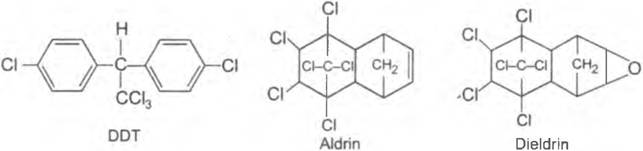
These insecticides are persistent in the environment and so show biological activity for long periods of time. However, these insecticides not only kill unwanted insects (responsible for destroying the crops) and are responsible for prevention of diseases but also destroy the non-target organisms (organisms which are helpful for the crops). Also, these insecticides keep on accumulating in the environment and cause pollution (in other words, they are not biodegradable). They also get accumulated in the vegetables, fruits and even water. They are harmful for human beings and have been phased out.
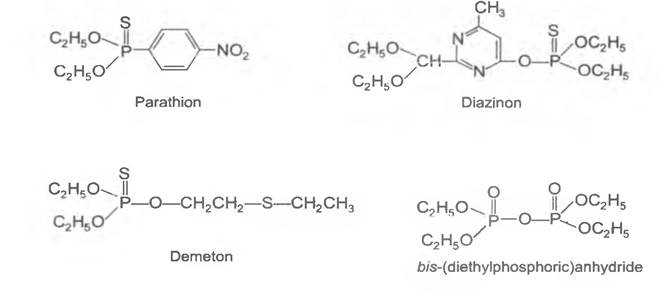
b. Organophosphates
Organophosphate insecticides have very low persistence in the atmosphere and are biodegradable. Being toxic in nature, the organophosphates kill not only the non-target insects, but are also harmful for humans and the wild life. They are unstable and so have to be applied at frequent intervals. Typical examples include parathion and diazinon, demeton and bis (Λ-ethylphosphoric) anhydride.
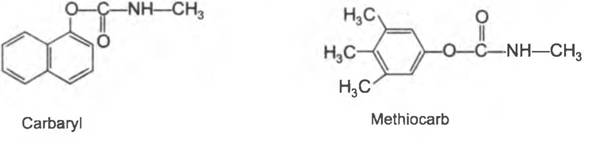
c. Carbamates
These insecticides are less toxic than organophosphates and less presistant than Organochlorines. Some examples include carbaryl and methiocarb.
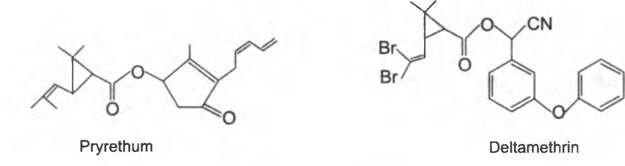
d. Pyrethroids
These are the recent group of insecticides and are the structural analogs of pyrethrum, the naturally occurring insect repellent present in Chrysenthemum. These are neither persistent nor toxic, though they are costly. Still about 33% of the world’s insecticides are pyrethroids. Some examples are pyrethrum and deltamethrin.
Effects of Insecticides on the Environment
Excessive use of insecticides has affected the environment in the following ways:
(i) Insecticides get accumulated in the fatty tissues of various organisms including the humans via the plants and vegetables etc. Accumulation in food chain has disastorus effects.
(ii) The target insects develop resistance against insecticides after a period of time. In this way, the effectiveness of the insecticides decrease considerably.
(iii) Due to accumulation of insecticides (e.g. DDT) in the fatty tissues of birds, their capacity to reproduce declines considerably resulting in the decline of their population.3 f'.,
(iv) In case the water in the rivers and oceans surface is contaminated with insecticides (which results with the helpof rain water), the fish are the worst affected.
(v) In industries manufacturing insecticides, the workers are affected by slow poisoning effects of the insecticides.
(vi) Accidents in manufacturing units are responsible for the environmental pollution. The worst incident happened in Bhopal (Madhya Pradesh. India) on Dec. 2, 1984, when methyl isocyanate gas used for the manufacture of insecticides got leaked which killed and disabled lakhs of people. This aspect will be discussed in chapter 15.
Since insecticides are essential for agricultural production, it is not possible to ban the manufacture or use of such products. The best option is to look for alternative insecticides, which will kill the pests but are not detrimental to the environment.
The following two types of insecticides have been used to control insects:
i. Hormonal Insecticides
The hormonal insecticides kill the insects via upsetting its normal metabolic processes. A hormone (called a Juvenile hormone) shows insecticidal properties. This hormone is initially present in insect larva but its production stops before undergoing metamorphosis (i.e., when it grows into adult insect). In case, the larva is continuously exposed by the Juvenile hormone, the larva cannot mature - the result is that its reproduction stops.
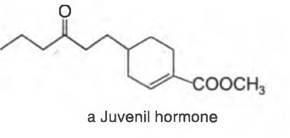
The hormonal insecticides are effective only at a certain stage (the stage before metamorphosis occurs). These insecticides do not let the larva develop into adults.
ii. Sex Attractants
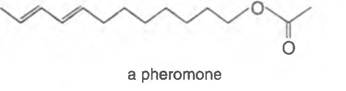
A group of compounds, known as pheromones have the capacity to attract the male insects from a very long distance. If these sex attractants (in extremely low concentration) are kept in a place, then male insects are attracted towards it from a radius of about E miles: Once assembled in a small area, they can be killed by any means.
4.4.6.2.2 Fungicides
Fungicides are chemicals which when applied to plants or their seeds and bulbs, inhibit or prevent fungal growth or fungal diseases. Infact, use of fungicides ensures vegetation and crops free from any disease. Though fungicides are somewhat harmful to the environment, their benefits (in producing disease free crops) outweigh the risks.
What are Fungi?
Fungi are plants without chlorophyll. So, they cannot make their food by photosynthesis like other green plants. Fungi live as parasites at the expense of living organism. Fungus stay in only a particular portion of a plant, compared to insects which can move about on the plant surface. Fungicides play a vital role in controlling the growth of fungi.
The main uses of fungicides are:
• Protection of commercial crops from diseases. In the absence of fungicides, the plants may rot (due to fungi) and do not grow as expected.
• The germination of seeds for making seedlings is successful, if seeds are placed in a solution of fungicide for about 20-30 minutes and then put in the soil for germination in the usual way.
• The fungi affected plants I crops are rendered free of fungi by spraying fungicides on them.
• To preserve wooden articles.
• The main use of fungicides is to act as growth inhibitors for the fungus.
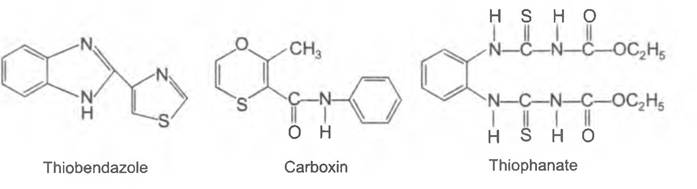
Broadly speaking fungicides are of two types: i. Systemic Fungicides
These fungicides, when applied to the plant, rapidly distribute itself in various plant tissues. Some examples are as follows:
ii. Non-systemic Fungicides
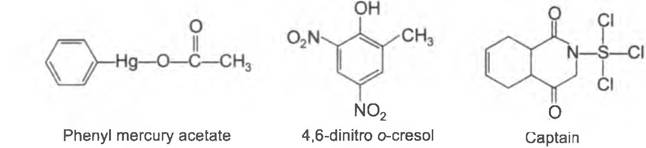
These protect only that part of the plant where it is applied. Some examples are given below:
Effects of Fungicides on Environment
Though fungicides are a boon for the agriculture, they have the following implications on the environment:
• In the soil, both bacteria and fungi compete for food. When fungi are eliminated by the use of fungicides, the bacterial population increases. Thus, though the plants are protected from fungal attack but they become susceptible to bacterial diseases.
• The fungicides in the soil increase the number of harmful bacteria and decrease the population of useful types. For example, the application of 4,6-dinitro-o-cresol and Captan prevent root nodule bacteria from initiating symbiotic nitrogen fixing process.
• Certain fungicides are toxic to soil arthropods. For example, eaptan>at a higher dose reduces the population of the useful soil invertebrates like springtails, collembola, earthworm and millipedes.
• Mercurial fungicides, e.g., phenyl mercury cyanide used in seed treatment, cause reduction of the seed eating birds like bobwhite quaal and pigeons. These insecticides also impair the egg hatching in pheasants resulting in reduction of population of such species.
• Certain fungicides e.g. captan inhibit the growth of fresh water algae even in very low concentrations.
• Continued use of fungicides makes the pests (that are desired to be eliminated) resistant to them.
• Mercurial fungicides are also responsible for human poisoning and deaths. This happens when ingestion of flour and wheat seeds treated with organo-mercury fungicides leads to mercury poisoning. Such poisonings have been recorded in Iraq in 1956, 1960 and 1972. in Guatemala in 1965 and in Pakistan in 1969.
Redressal of the Effects of Fungicides
The environmental effects of pesticides can be minimised by using them selectively in low concentrations. The problem of resistance of the pests can be taken care of by the development of new fungicides, which should be more effective, less toxic and more environmental friendly. One such fungicide is a derivative of β-methoxy acrylic acid.
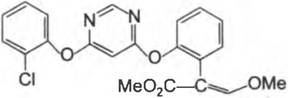
It is likely to be very useful anti-fungal agent, since it is effective against a wide range of fungal pathogens.
4.4.2.6.3 Herbicides
Herbicides are chemicals that kill unwanted weeds or interfere with their growth. Like fungicides, herbicides are instrumental for increasing the yields of disease free crops (inspite of their environmental effects).
Weeds are unwanted plants which grow at places where they are not required, eg. in agriculture crops and deplete the nutrients which are meant for the betterment of the crops. Herbicides basically control the growth of weeds. The main uses of herbicides are as follows:
• To remove weeds from agricultural fields; the weeds retard the growth of the main crops.
• To remove unwanted growth from the lawns, gardens, orchards, pastures etc.
Herbicides are of following two types: i. Contact Herbicides
These herbicides are quick acting and kill the weeds by direct contact. Some examples include the following.
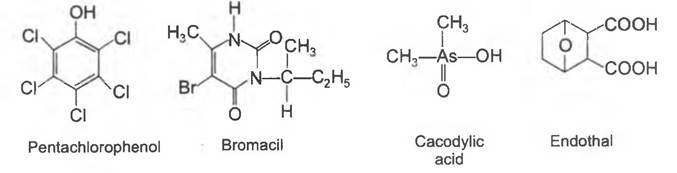
Contact herbicides are ineffective against those weeds whose roots produce new shoots at a fast rate.
ii. Systemic Herbicides
These diffuse within the plant’s body and are very useful. Examples include the following:
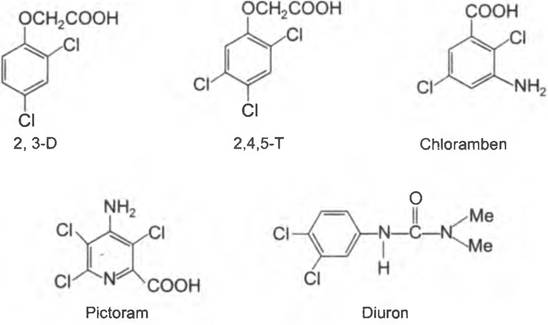
Systematic herbicides are effective at low concentrations.
Herbicides act as growth inhibitors for the weeds. For example, the contact herbicide, pentachlorophenol acts as mitotic poison. Some herbicides (eg. diuron) act as a photosynthetic inhibitor. Finally some herbicides (e.g. pictoram) act as a respiratory inhibitor.
Effects of Herbicides on Environment
Like fungicides, herbicides are extremely helpful for agricultural products, but they do have following effects:
• Residues of herbicides in soil increase fungi count resulting in fungal diseases.
• Herbicides like 2,4-D reduce the population of springtals and collembola.
• Herbicides eg. 2.4-D and 2,4,5-T when sprayed on the trees etc. are harmful to millards, quails and partridges.
• Herbicides are hazardous to live stock which eat weeds exposed to Sublethal doses of 2,4-D and 2,4,5-T.
• The production of freshwater algae is reduced due to 2,4-D and 2,4,5-T.
• Herbicides are extremely harmful to the health and survival of human race. On being exposed to 2,4-D and 2,4,5-T which are used to defoliate forest areas (as in case of Vietnam war) produce birth defects eg, children being bom with deformed or missing limbs etc. This is attributed to damage of male sperm cells.
The weeds developed resistance to the conventional herbicides by their continued application. The only way to solve this problem is to develop new and novel herbicides. One such herbicide is δ-aminolevulinic acid. It uses solar energy to produce toxic components that kill the weeds. On exposure to sunlight, δ- aminolevulinic acid in converted into magnesium tetrapyrrole, which is a precursor to chlorophyll biosynthesis.
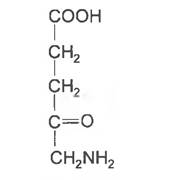
δ-aminolevulinic acid
The magnesium tetrapyrrole absorbs light energy and undergoes photochemical reaction producing singlet oxygen (a highly reactive form of oxygen). The liberated free radical kills the weeds. The left over δ-aminolevulinic acid or magnesium-tetrapyrrole is biodegradable and so does not cause any problems.
4.5