The American Serengeti—Twelve Centuries of Change in the Great Plains: A Case Study
Today, the region covering the central part of North America, known as the Great Plains, bears little resemblance to the Serengeti Plain of Africa. Biological diversity is very low in many parts of the current landscape, which contains large stands of uniform crop plants (which are often even genetically identical) and a few species of domesticated herbivores (mostly cattle).
In the Serengeti, on the other hand, some of the largest and most diverse herds of wild animals in the world roam a picturesque savanna (FIGURE 3.1). If not for a series of important environmental changes, however, the two ecosystems might look superficially very similar.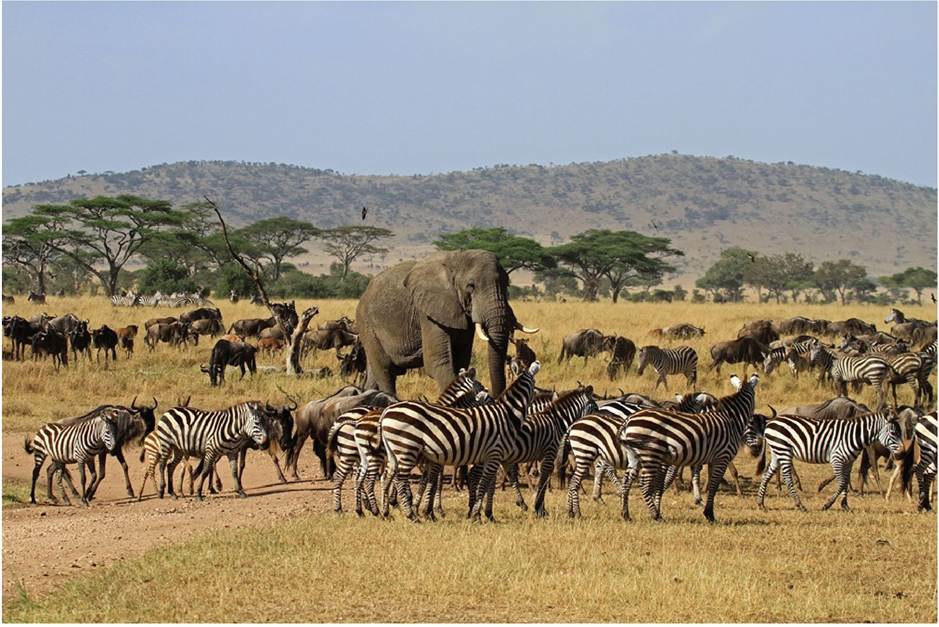
FIGURE 3.1 The Serengeti Plain of Africa Large, diverse herds of native animals migrate across the Serengeti in search of food and water. © bayazed/Shutterstock.com View larger image
Biological communities in the temperate and polar zones have been subjected to natural, long-term climate change, which has led to latitudinal or elevational shifts in their positions and species composition. Eighteen thousand years ago, at the last glacial maximum of the Pleistocene epoch, ice sheets covered the northern portion of North America. Over the next 12,000 years, the climate warmed and the ice receded. Vegetation followed the retreating ice northward and colonized the newly exposed substrate. Grasslands in the center of the continent expanded into former spruce and aspen woodlands. These grasslands contained species of grasses, sedges, and low-growing herbaceous plants similar to those found in the natural grasslands that exist today.
The animal inhabitants of those earlier grasslands were, however, strikingly different from today's. A diverse collection of megafauna (animals larger than 45 kg, or 100 pounds) existed in North America, rivaling the diversity found today in the Serengeti (Martin 2005) (FIGURE 3.2).
Thirteen thousand years ago—a relatively short time in an evolutionary context—North American herbivores included woolly mammoths and mastodons (relatives of elephants), as well as several species of horses, camels, and giant ground sloths. Predators included saber-toothed cats with 18 cm (7-inch) incisors, cheetahs, lions, and giant shortfaced bears that were larger and faster than grizzly bears.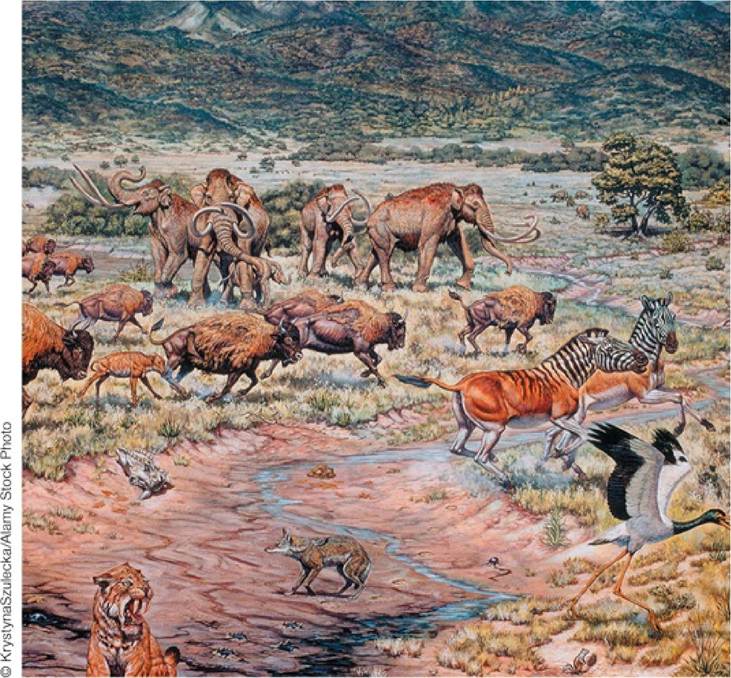
FIGURE 3.2 Pleistocene Animals of the Great Plains Theanimalsofthegrasslandsof central North America 13,000 years ago included woolly mammoths, horses, and giant bison. Many of these large mammals went extinct within a short time between 13,000 and 10,000 years ago. View larger image
About 10,000-13,000 years ago, as the extensive grasslands of the Great Plains were developing, many of the large mammals of North America suddenly went extinct (Barnosky et al. 2004). The rapidity of the disappearance of approximately 28 genera (40-70 species) made this extinction unlike any extinction event during the previous 65 million years. Another unusual aspect of this extinction was that nearly all the animals that went extinct belonged to the same group: large mammals. The causes of this extinction are a mystery.
Several hypotheses have been proposed to account for the disappearance of the North American megafauna. Changes in the climate during the extinction period were rapid and could have led to changes in habitat or food supply that would have negatively affected the animals. Another hypothesis, which has generated substantial controversy, suggests that the arrival of humans in North America may have hastened the demise of the animals (Martin 1984). When this hypothesis was first proposed, it was met with widespread skepticism, and the initial supporting evidence was considered weak. Although humans first appeared in the central part of North America about 16,000 years ago, it is unclear how hunters bearing stone and wooden tools could have driven so many species of large mammals to extinction. What evidence is there to support the hypothesis that humans were involved in this extinction event?