CONCLUSION
This chapter has examined three propositions: health differences generate income inequality, income differences generate health inequality, and income inequality damages health. Grossly simplifying a host of arguments and a vast body of evidence, our verdicts on these three charges are “guilty,” “not proven,” and “not guilty,” respectively.[110] [111] More cautious assessments of the weight of evidence are provided in the conclusions to Sections 17.3-17.5, respectively.
Rather than repeat the arguments that lead us to these conclusions, here we restrict attention to their normative and research implications.Chief among the multitude of mechanisms through which ill-health can impinge on income is the loss of earnings arising from reduced productivity combined with institutional inflexibilities that result in adjustment through employment rather than wages, or marginal changes in work intensity. In high-income countries, ill-health is a major cause oflabor-force withdrawal in middle age. On pure efficiency grounds, disability insurance (DI) is called for to weaken the dependence of income on health and thus compress the income distribution. But there is a strong moral hazard effect that makes employment even more sensitive to ill-health. Achieving the optimal balance between income replacement and work incentives is perhaps the greatest challenge for policy that seeks to constrain income inequality arising from ill-health. The task is made even more difficult by increasing economic inequality itself, in the context of which DI can further weaken the labor market attachment of the low-skilled facing deteriorating opportunities. Research needs to move beyond identifying the impact of ill-health on exiting from employment to the design of programs and incentives that can help individuals experiencing health problems remain in work.
Early-life experience might be another major route through which health impacts the distribution of income. Exposure to health risks in utero and ill-health in infanthood appear to impact earnings capacity both by interfering with the accumulation of human capital and skills and by triggering illnesses in adulthood that disrupt employment. The currently observed income distribution is, to some degree, the product of health events that occurred during the childhood of the current adult population. This contribution to economic inequality will be particularly strong if, as appears to be the case, disadvantaged children, who would have grown up to be poorer in any case, face greater health risks. Policies directed at childhood circumstances, including those intended to break the link between parental socioeconomic status and health, may not only be preferred normatively in pursuit of the goal of equal opportunity (see Chapter 4), but they might also be favored simply for their effectiveness in influencing the distribution of income among adults. However, much of this line of argument is still supposition. The evidence that childhood health is influenced by economic background and determines adult economic outcomes is persuasive but not yet concrete. Fortunately, the pace of progress in this field makes it unnecessary to call for more research on the contribution of early-life health to economic inequality.
Our “not proven” verdict on the contribution of income (and wealth) to health inequality arises from the potential difficulty in detecting an effect if one did, in fact, exist. At least in high-income countries with near-universal health insurance coverage and in which the burden of disease is mostly chronic, economic circumstances are likely to exert a toll on health, if at all, over a lifetime. The empirical strategies that have been employed, such as fixed effects and instrumenting with transitory financial shocks, are incapable of
identifying the long-run effects that may be operating.
Finding random permanent shocks to health from which to estimate the health impact on income is easier than stumbling across exogenous events that permanently change income and allow its effect on health to be identified. The empirical task would undoubtedly be more manageable if there was more theory available to identify precise mechanisms through which income (wealth) might plausibly impact health. The lack of theory is understandable. Economists are trained to explain the distribution of income, not health. Forty years after Grossman (1972a) introduced the concept of the health production function, it remains a black box. Although all too often cited to motivate study of the relationship between health and some socioeconomic factor, it is seldom more fully specified to make the mechanism of any effect explicit.Rather than further identifying a reduced form effect of income or wealth on health, we believe it is more fruitful to focus on plausible inputs to the health production function that can be influenced by economic status. For example, establishing the health effect of damp, squalid housing is more feasible than finding the health effect of the income that affords superior quality housing. This is not merely a call for empirical pragmatism. Provided that redistribution policy is motivated, in part, by (health) specific egalitarianism— and we attribute the extensive involvement of governments in the provision of health insurance and medical care as being motivated not only by the correction of market failures but also by concern for the distribution of health—it might be more efficient to enable poor people to live in less unhealthy conditions, rather than redistributing cash to them. Once basic nutritional needs are satisfied and access to medical care has been divorced from the ability to pay, the path leading from income to health seems a very long one.
If one switches attention from the distribution of health to that of well-being, then the association between income and health may be used to justify greater redistribution of income, even in the absence of any causal effect.
Assuming well-being increases with both income and health, the positive correlation between them increases inequality in well-being by more than is implied by the inequality in their marginal distributions (Deaton, 2013). Redistribution of income toward those in worse health would reduce inequality in well-being both by compensating for sickness and, on average, by reaching poorer individuals (Deaton, 2002).62 According to this argument, redistribution is partially motivated by one dimension of well-being (income) compensating for deficiency in another (health). This is not how health-related income transfers are typically justified. The disabled are paid transfers because their earnings capacity is impaired and/or they have higher costs of living. The transfers are made because ill-health has a causal impact on economic living standards. The ethical argument makes a case for income redistribution to the sick simply because they are sick. Courts awarding damages for injuriesA still more effective redistribution policy might be one that operates through a factor, perhaps education, that exerts a causal impact on both income and health (Deaton, 2002).
irrespective of their consequences for earnings or living costs are consistent with these ethics. But government social policies typically are not. Transfers compensate for financial losses, not reductions in other dimensions of welfare.
With respect to the charge that income inequality threatens health, a case could be made for revising the verdict from “not guilty” to “not proven.” It is fundamentally difficult to separate any potential effect of income inequality on the individual’s health from that of physical, environmental, social, cultural, or economic determinants of health that operate on the level at which income inequality is measured. Identifying the impact of relative income on health is even more challenging than doing so for absolute income given the added complexity of defining and measuring the reference point.
But the limitations are not only empirical. There is a lack of precision in the theoretical arguments as to why economic inequality should impact negatively on health.The conclusions offered above are based on evidence from high-income countries. In low-income countries, in which a substantial fraction of the population may live close to subsistence and only the economically privileged can afford effective medical care, ill- health is not only an important cause of economic inequality but a consequence of it. But it is the absolute living conditions of the poor, and not their relative deprivation, that takes the toll on health.
ACKNOWLEDGMENTS
We thank the editors, Tony Atkinson and Francois Bourguignon, for their encouragement and detailed comments on drafts of this chapter. Thanks are also due to Hans van Kippersluis and participants of the NH Handbook of Income Distribution conference, particularly Andrew Clark, for suggestions. Hale Koc and Hao Zhang provided excellent research assistance. We are grateful to various organizations for collecting and providing data (see Appendix). We acknowledge support from the National Institute on Aging, under Grant R01AG037398.
APPENDIX
Table A1 Descriptions and means of variables used in analyses in Section 17.2
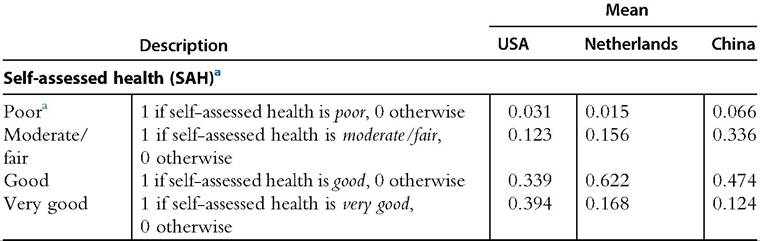
Table A1 DescriDtions and means of variables used in analyses in Section 17.2—cont'd
344" class="lazyload" data-src="/files/uch_group77/uch_pgroup315/uch_uch7350/image/image344.jpg">
aIn the USA and Dutch surveys, respondents report their health in general as being excellent, very good, good, fair (USA)/ moderate (NL), or poor. In the Chinese survey, respondents report their health relative to others of theirown age as verygood, good, fair, or poor.
bGross household income is before payment of taxes and social security contributions and after receipt of transfers. Annual income for USA and monthly income for NL and China.
Household income equivalized through division by the square root of household size, with the result being assigned to each household member.cEducation has been classified using the International Standard Classification of Education (ISCED) for the USA and the Netherlands, with low education referring to ISCED < 4, middle education to ISCED ¼ 4, and higher education to ISCED > 4 (UNESCO Institute for Statistics). For China, low education refers to a primary orjunior high school degree, middle education to a senior high school degree, and high education to vocational higher education and university higher education.
dReference category in the least squares and interval regressions in Tables 17.1 and 17.2.
Table A2 Acronyms used in tables
Name/definition
Datasets
BHPS British Household Panel Study
BRFSS Behavioral risk factor surveillance system
CERRA Leiden University Center for Research on Retirement and Aging Panel
CHS US National Centre for Health Statistics
CIDJ Chinese Inequality and DistributiveJustice survey project
CMF Compressed Mortality File of the National Centre for Health Statistics
CNEF Cross-national equivalent file
ECHP European Community Household Panel
FORS Future of Retirement Survey
FSUH Financial Survey of Urban Housing
GHN Globalization-Health Nexus database
GHS General Household Survey
GSOEP German Socioeconomic Panel
GTD WHO Global Tuberculosis Database
HRS Health and Retirement Study
HSE Health Survey of England
IOT International Obesity Taskforce
LCMS Living Condition Monitoring Study
LLH Living Conditions, Lifestyle, and Health survey
NCD Swedish National Cause of Death Statistics
NHANES National Health and Nutrition Examination Survey
NITS Swedish National Income Tax Statistics
OECD OECD Health Data
PSID Panel Study of Income Dynamics
PUMS US Census Public Use Micro Sample
RHS Retirement History Study
SALDRU South African Labour & Development Research Unit survey
SEDLAC Socio-Economic Database for Latin America and the Caribbean
SHARE Survey of Health, Ageing and Retirement in Europe
SOCIOLD Socioeconomic and occupational effects on the health inequality of the older
workforce
STF US Census Summary Tape File 3C
ULF Statistics Sweden’s Survey of Living Conditions
UNHDR United Nations Development Report
WDID World Bank World Development Indicators
WHO Various databases
WIID WIDER World Income Inequality Database
Table A2 Acronyms used in tables—cont'd
Name/definition
Health measures
ADL Activities of Daily Living
U5MR Under-5 mortality rate
GHQ General health questionnaire (psychological health)
HAZ Height-for-age z-score
HSCL Hopkins Symptoms Checklist
IMR Infant mortality
LE Life expectancy
Major diagnosis Cancer, heart disease, lung disease (McClellan, 1998—minor)
Minor diagnosis Hypertension, diabetes, stroke (McClellan, 1998—major), arthritis, back pain
MR Mortality rate
SAH Self-assessed health
SB Stillbirth rate
WHZ Weight-for-height z-score
Estimators
DID Difference-in-differences
DP Dynamic programming
FD First difference
FE Fixed effects
GMM Generalized method of moments
GOP Generalized ordered probit
GPSM Generalized propensity score matching
IV Instrumental variables
LPM Linear probability model
MSM Method of simulated moments
OLS Ordinary least squares
QR Quantile regression
RE Random effects
SML Simulated maximum likelihood
2SLS Two-stage least squares
2SQR Two-stage quantile regression
WLS Weighted least squares
DATA SOURCES
We use data from the Chinese Health and Nutrition Survey (CHNS), the Netherlands Longitudinal Internet Studies for the Social Sciences (LISS), and the ALP. We thank the organizations that collected and provided these data.
The LISS panel data were collected by CentERdata (Tilburg University, The Netherlands) through its MESS project funded by the Netherlands Organization for Scientific Research.
RAND ALP are proprietary capabilities ofthe RAND Corporation. They were developed by RAND with its own funds and with the support of numerous clients and grantors who have commissioned social science and economics research and analysis at RAND.
The National Institute of Nutrition and Food Safety, China Center for Disease Control and Prevention, Carolina Population Center, the University of North Carolina at Chapel Hill, the NIH (R01-HD30880, DK056350, and R.01-HD38700) and the Fogarty International Center, all contributed to the collection of the CHNS.
We thank the Equality Trust Fund for providing the data to reconstruct the first figure in Section 17.5.
REFERENCES
Acemoglu, D., Angrist, J.D., 2001. Consequences of employment protection? The case ofthe Americans with Disability Act. J. Polit. Econ. 109 (5), 915-957.
Adams, P., Hurd, M.D., Mcfadden, D., Merrill, A., Ribeiro, T., 2003. Healthy, wealthy, andwise?Tests for direct causal paths between health and socioeconomic status. J. Econom. 112 (1), 3-56.
Adda, J., Chandola, T., Marmot, M., 2003. Socio-economic status and health: causality and pathways. J. Econom. 112 (1), 57-64.
Adda,J., Gaudecker, H.,Banks,J., 2009. The impact ofincome shocks on health: evidence from cohort data. J. Eur. Econ. Assoc. 7 (6), 1361-1399.
Adjaye-Gbewonyo, K., Kawachi, I., 2012. Use of the Yitzhaki Index as a test of relative deprivation for health outcomes: a review of recent literature. Soc. Sci. Med. 75 (1), 129-137.
Agiiero, J., Carter, M., Woolard, I., 2009. The Impact of Unconditional Cash Transfers on Nutrition: The South African Child Support Grant. University of Cape Town, Cape Town.
Aigner, D.J., Cain, G.G., 1977. Statistical theories of discrimination in labor markets. Ind. Labor. Relat. Rev. 30 (2), 175-187.
Alesina, A., Baqir, R., Easterly, W., 1999. Public goods and ethnic divisions. Q. J. Econ. 114 (4), 1243-1284.
Alesina, A., Di Tella, R., MacCulloch, R., 2004. Inequality and happiness: are Europeans and Americans different? J. Public Econ. 88 (9-10), 2009-2042.
Allin, S., Stabile, M., 2012. Socioeconomic status and child health: what is the role of health care, health conditions, injuries and maternal health? Health Econ. Policy Law 7 (2), 227.
Almond, D., 2006. Is the 1918 influenza pandemic over? Long-term effects of in utero influenza exposure in the post-1940 U.S. population. J. Polit. Econ. 114 (4), 672-712.
Almond, D., Currie, J., 2011. Killing me softly: the fetal origins hypothesis. J. Econ. Perspect. 25 (3), 153-172.
Almond, D., Currie, J., 2012. Chapter 15—human capital development before age five. In: Ashenfelter, O., Card, D. (Eds.), Handbook of Labor Economics. Elsevier, Amsterdam, pp. 1315-1486.
Almond, D., Mazumder, B., 2005. The 1918 influenza pandemic and subsequent health outcomes: an analysis of SIPP data. Am. Econ. Rev. 95, 258—262.
Almond, D., Edlund, L., Palme, M., 2009. Chernobyl’s subclinical legacy: prenatal exposure to radioactive fallout and school outcomes in Sweden. Q. J. Econ. 124 (4), 1729—1772.
Almond, D., Hoynes, H.W., Schanzenbach, D.W., 2011. Inside the war on poverty: the impact of food stamps on birth outcomes. Rev. Econ. Stat. 93 (2), 387—403.
Amarante, V., Manacorda, M., Miguel, E., Vigorito, A., 2011. Do Cash Transfers Improve Birth Outcomes? Evidence from Matched Vital Statistics, Social Security and Program Data. CEPR Discussion Paper No. DP8740, CEPR, London.
Apouey, B., Clark, A., 2013. Winning big but feeling no better? The effect of lottery prizes on physical and mental health. Centre for Economic Performance, London, LSE Discussion Paper No. 1228.
Apouey, B., Geoffard, P., 2013. Family income and child health in the UK. J. Health Econ. 32 (4), 715-727.
Arrow, KJ., 1973. The theory of discrimination. In: Ashenfelter, O., Rees, A. (Eds.), Discrimination in Labor Markets. Princeton University Press, Princeton, NJ.
Ash, M., Robinson, D.E., 2009. Inequality, race, and mortality in U.S. cities: a political and econometric review of Deaton and Lubotsky (56:6, 1139-1153, 2003). Soc. Sci. Med. 68 (11), 1909-1913.
Atkinson, A.B., Harrison, A.J., 1978. Distribution of Personal Wealth in Britain, 1923-1972. Cambridge University Press, Cambridge.
Atkinson, A.B., Piketty, T., Saez, E., 2011. Top incomes in the long run of history. J. Econ. Lit. 49 (1), 3-71.
Au, D.W.H., Crossley, T.F., Schellhorn, M., 2005. The effect of health changes and long-term health on the work activity of older Canadians. Health Econ. 14 (10), 999-1018.
Autor, D.H., Duggan, M.G., 2003. The rise in the disability rolls and the decline in unemployment. Q. J. Econ. 118 (1), 157-205.
Autor, D.H., Duggan, M.G., 2006. The growth in the social security disability rolls: a fiscal crisis unfolding. J. Econ. Perspect. 20 (3), 71-96.
Avendano, M., 2012. Correlation or causation? Income inequality and infant mortality in fixed effects models in the period 1960-2008 in 34 OECD countries. Soc. Sci. Med. 75 (4), 754-760.
Babones, S.J., 2008. Income inequality and population health: correlation and causality. Soc. Sci. Med. 66 (7), 1614-1626.
Bago D’Uva, T., Van Doorslaer, E., Lindeboom, M., O’Donnell, O., 2008. Does reporting heterogeneity bias measurement of health disparities? Health Econ. 17 (3), 351-375.
Baird, S., Friedman, J., Schady, N., 2011. Aggregate income shocks and infant mortality in the developing world. Rev. Econ. Stat. 93 (3), 847-856.
Baldwin, M., Johnson, W.G., 1994. Labor market discrimination against men with disabilities. J. Hum. Resour. 29 (1), 1-19.
Banerjee, A.V., Duflo, E., 2011. PoorEconomics. Public Affairs, New York.
Banks, J., 2006. Economic capabilities, choices and outcomes at older ages. Fisc. Stud. 27 (3), 281-311.
Barker, D.J.P. (Ed.), 1992. Fetal and Infant Origins of Adult Disease. BMJ Publishing Group, London.
Barker, D.J., 1995. Fetal origins of coronary heart disease. Br. Med. J. 311, 171-174.
Barker, D.J.P., Godfrey, K.M., Gluckman, P.D., Harding, J.E., Owens, J.A., Robinson, J.S., 1993. Fetal nutrition and cardiovascular disease in adult life. Lancet 341 (8850), 938-941.
Barro, R.J., 2003. Determinants of economic growth in a panel of countries. Ann. Econ. Finance 4, 231-274.
Barro, R.J., 2013. Health and economic growth. Ann. Econ. Finance 14 (2), 329-366.
Bazzoli, G., 1985. The early retirement decision: new empirical evidence on the influence of health. J. Hum. Resour. 20, 214-234.
Bechtel, L., Lordan, G., Rao, D.S.P., 2012. Income inequality and mental health? Empirical evidence from Australia. Health Econ. 21, 4-17.
Becker, G., 1957. The Economics of Discrimination. University of Chicago Press, Chicago.
Behrman, J.R., Rosenzweig, M.R., 2004. Returns to birthweight. Rev. Econ. Stat. 86 (2), 586-601.
Bell, D., Heitmueller, A., 2009. The Disability Discrimination Act in the UK: helping or hindering employment among the disabled? J. Health Econ. 28 (2), 465-480.
Ben-Porath, Y., 1967. The production of human capital and the life cycle of earnings. J. Polit. Econ. 75, 352-365.
Berger, M.C., 1983. Labour supply andspouse’s health: the effects ofillness, disability and mortality. Soc. Sci. Q. 64, 494-509.
Berger, M.C., Fleisher, B.M., 1984. Husband’s health and wife’s labor supply. J. Health Econ. 3, 63-75. Bhalotra, S., 2010. Fatal fluctuations? Cyclicality in infant mortality in India. J. Dev. Econ. 93 (1), 7-19. Biggs, B., King, L., Basu, S., Stuckler, D., 2010. Is wealthier always healthier? The impact of national income level, inequality, and poverty on public health in Latin America. Soc. Sci. Med. 71 (2), 266-273.
Black, D., Kermit, D., Sanders, S., 2002. The impact of economic conditions on participation in disability programs: evidence from the coal boom and bust. Am. Econ. Rev. 92 (1), 27-50.
Black, S.E., Devereux, PJ., Salvanes, K.G., 2007. From the cradle to the labor market? The effect of birth weight on adult outcomes. Q. J. Econ. 122 (1), 409-439.
Blau, D., Gilleskie, D., 2001. The effect of health on employment transitions of older men. Worker Wellbeing in a Changing Labor Market Research in Labor Economics, vol. 20 JAI Press, Amsterdam, pp. 35-65.
Blau, D.M., Riphahn, R.T., 1999. Labor force transitions of older married couples in Germany. Labour Econ. 6 (2), 229-252.
Bleakley, H., 2007. Disease and development: evidence from hookworm eradication in the south. Q. J. Econ. 122 (1), 73-117.
Bliss, C., Stern, N., 1978. Productivity, wages and nutrition: part I: the theory. J. Dev. Econ. 5 (4), 331-362.
Borghol, N., Suderman, M., Mcardle, W., Racine, A., Hallett, M., Pembrey, M., Hertzman, C., Power, C., Szyf, M., 2012. Associations with early-life socio-economic position in adult DNA methylation. Int. J. Epidemiol. 41 (1), 62-74.
Bound, J., 1991. Selfreported versus objective measures of health in retirement models. J. Hum. Resour. 26, 107-137.
Bound, J., Burkhauser, R.V., 1999. Chapter 51: economic analysis of transfer programs targeted on people with disabilities. In: Ashenfelter, O., Card, D. (Eds.), Handbook of Labor Economics. Elsevier, Amsterdam, pp. 3417-3528.
Bound, J., Schoenbaum, M., Stinebrickner, T.R., Waidmann, T., 1999. The dynamic effects of health on the labor force transitions of older workers. Labour Econ. 6 (2), 179-202.
Bound, J., Stinebrickner, T., Waidmann, T., 2010. Health, economic resources and the work decisions of older men. J. Econom. 156 (1), 106-129.
Breslau, N., Deldotto, J.E., Brown, G.G., Kumar, S., Ezhuthachan, S., Hufnagle, K.G., Peterson, E.L., 1994. A gradient relationship between low birth weight and IQ at age 6 years. Arch. Pediatr. Adolesc. Med. 148 (4), 377-383.
Brown, S., Roberts, J., Taylor, K., 2010. Reservation wages, labour market participation and health. J. R. Stat. Soc. A Stat. Soc. 173 (3), 501-529.
Burgess, S., Propper, C., Rigg, J.A., 2004. The Impact of Low Income on Child Health: Evidence from a Birth Cohort Study. Centre for Analysis of Social Exclusion, London, LSE CASE Paper 85.
Cai, L., 2009. Effects of health on wages of Australian men. Econ. Rec. 85 (270), 290-306.
Cain, G., 1986. The economic analysis of labor market discrimination: a survey. In: Ashenfelter, O., Layard, R. (Eds.), Handbook of Labor Economics. In: vol. I. North Holland, Amsterdam.
Cantarero, D., Pascual, M., Maria Sarabia, J., 2005. Effects of income inequality on population health: new evidence from the European community household panel. Appl. Econ. 37 (1), 87-91.
Carman, K.G., 2013. Inheritances, intergenerational transfers, and the accumulation of health. Am. Econ. Rev. Papers & Proc. 103 (3), 451-455.
Carter, H., Glick, P., 1976. Marriage and Divorce: A Social and Economic Study. Harvard University Press, Cambridge, MA.
Case, A., 2004. Does money protect health status? Evidence from South African pensions. Perspectives on the Economics of Aging, University of Chicago Press, Chicago, IL, pp. 287-312.
Case, A., Paxson, C., 2008. Stature and status: height, ability, and labor market outcomes. J. Polit. Econ. 116 (3), 499-532.
Case, A., Paxson, C., 2011. The long reach of childhood health and circumstance: evidence from the Whitehall II study. Econ. J. 121 (554), F183-F204.
Case, A., Lubotsky, D., Paxson, C., 2002. Economic status and health in childhood: the origins of the gradient. Am. Econ. Rev. 92 (5), 1308-1334.
Case, A., Fertig, A., Paxson, C., 2005. The lasting impact of childhood health and circumstance. J. Health Econ. 24, 365-389.
Case, A., Lee, D., Paxson, C., 2008. The income gradient in children’s health: a comment on Currie, Shields, and Wheatley Price. J. Health Econ. 27 (3), 801-807.
Cawley,J., Ruhm, C.J., 2011. The economics ofrisky healthbehaviors 1. Handb. HealthEconom., vol. 2, p. 95.
Cawley, J., Heckman, JJ., Vytlacil, EJ., 2001. Three observations on wages and measured cognitive ability. Labour Econ. 8 (4), 419-442.
Cawley, J., Moran, J., Simon, K., 2010. The impact of income on the weight of elderly Americans. Health Econ. 19 (8), 979.
Chandola, T., Bartley, M., Sacker, A.,Jenkinson, C., Marmot, M., 2003. Health selection in the Whitehall II study. Soc. Sci. Med. 56 (10), 2059-2072.
Chang, F., 1991. Uncertain lifetimes, retirement and economic welfare. Economica 58 (230), 215-232.
Charles, K.K., 1999. Sickness in the Family: Health Shocks and Spousal Labor Supply. University of Michigan, Ann Arbor.
Charles, K.K., 2003. The longitudinal structure of earnings losses among work-limited disabled workers. J. Hum. Resour. 38 (3), 618-646.
Clark, A.E., Frijters, P., Shields, M.A., 2008. Relative income, happiness, and utility: an explanation for the Easterlin paradox and other puzzles. J. Econ. Lit. 46 (1), 95-144.
Coile, C.C., 2004. Health Shocks andCouples’ Labor Supply Decisions. NBERWorkingPaperNo. 10810, NBER, Cambridge, MA.
Commission on Macroeconomics and Health, 2001. Macroeconomics and Health: Investing in Health for Economic Development. World Health Organisation, Geneva.
Commission on the Social Determinants of Health, 2008. Closing the gap in a generation: health equity through action on the social determinants of health. Final Report of the Commission on Social Determinants of Health,World Health Organization, Geneva.
Condliffe, S., Link, C.R., 2008. The relationship between economic status and child health: evidence from the United States. Am. Econ. Rev. 98 (4), 1605-1618.
Conley, D., Bennett, N.G., 2001. Birth weight and income: interactions across generations. J. Health Soc. Behav. 42 (4), 450-465.
Conti, G., Heckman, J.J., Urzua, S., 2010a. Early endowments, education, and health. Unpublished manuscript, University of Chicago, Department of Economics, Chicago, p. 162.
Conti, G., Heckman, J., Urzua, S., 2010b. The education-health gradient. Am. Econ. Rev. 100, 234-238, Papers and proceedings.
Contoyannis, P., Rice, N., 2001. The impact of health on wages: evidence from the British Household Panel Survey. Emp. Econ. 26 (4), 599-622.
Contoyannis, P., Jones, A.M., Rice, N., 2004. The dynamics of health in the British Household Panel Survey. J. Appl. Econ. 19 (4), 473-503.
Costello, E.J., Worthman, C., Erkanli, A., Angold, A., 2007. Prediction from low birth weight to female adolescent depression: a test of competing hypotheses. Arch. Gen. Psychiatry 64 (3), 338-344.
Crimmins, E.M., Beltran-Sanchez, H., 2011. Mortality and morbidity trends: is there compression of morbidity? J. Gerentol. B 66B (1), 75-86.
Cunha, F., Heckman, J., 2007. The technology of skill formation. Am. Econ. Rev. 97 (2), 31-47.
Cunha, F., Heckman, J., 2008. A new framework for the analysis of inequality. Macroecon. Dyn. 12 (Suppl. S2), 315.
Cunha, F., Heckman, J.J., 2009. The economics and psychology of inequality and human development. J. Eur. Econ. Assoc. 7 (2-3), 320-364.
Cunha, F., Heckman, J.J., Lochner, L., Masterov, D.V., 2006. Chapter 12: interpreting the evidence on life cycle skill formation. In: Hanushek, E., Welch, F. (Eds.), Handbook ofthe Economics of Education. Elsevier, Amsterdam, pp. 697—812.
Currie, J., 2009. Healthy, wealthy, and wise: socioeconomic status, poor health in childhood, and human capital development. J. Econ. Lit. 47 (1), 87—122.
Currie, J., Hyson, R., 1999. Is the impact of health shocks cushioned by socioeconomic status? The case of low birthweight. Am. Econ. Rev. 89 (2), 245-250.
Currie, J., Madrian, B.C., 1999. Chapter 50: health, health insurance and the labor market. In: Ashenfelter, O.C., Card, D. (Eds.), Handbook of Labor Economics. Elsevier, Amsterdam, pp. 3309-3416.
Currie, J., Moretti, E., 2007. Biology as destiny? Short- and long-run determinants of intergenerational transmission of birth weight. J. Labor Econ. 25 (2), 231-264.
Currie, J., Stabile, M., 2003. Socioeconomic status and child health: why is the relationship stronger for older children. Am. Econ. Rev. 93 (5), 1813-1823.
Currie, J., Stabile, M., 2006. Child mental health and human capital accumulation: the case of ADHD. J. Health Econ. 25 (6), 1094-1118.
Currie, A., Shields, M.A., Price, S.W., 2007. The child health/family income gradient: evidence from England. J. Health Econ. 26 (2), 213-232.
Currie, J., Stabile, M., Manivong, P., Roos, L.L., 2010. Child health and young adult outcomes. J. Hum. Resour. 45 (3), 517-548.
Cutler, D.M., Lleras-Muney, A., 2010. Understanding differences in health behaviors by education. J. Health Econ. 29 (1), 1-28.
Cutler, D.M., Knaul, F., Lozano, R., Mendez, O., Zurita, B., 2002. Financial crisis, health outcomes and ageing: Mexico in the 1980s and 1990s. J. Public Econ. 84 (2), 279-303.
Cutler, D.M., Lange, F., Meara, E., Richards-Shubik, S., Ruhm, C.J., 2011a. Rising educational gradients in mortality: the role of behavioral factors. J. Health Econ. 30 (6), 1174-1187.
Cutler, D., Lleras-Muney, A., Vogl, T., 2011b. Chapter 7: socioeconomic status and health: dimensions and mechanisms. In: Glied, S., Smith, P.C. (Eds.), Oxford Handbook of Health Economics. Oxford University Press, Oxford, pp. 124-163.
Cutler, D., Ghosh, K., Landrum, M.B., 2013. Evidence for significant compression of morbidity in the elderly US population. NBER Working Paper No. 19268, NBER, Cambridge, MA.
Daly, M.C., Bound, J., 1996. Worker adaptation and employer accommodation following the onset of a health impairment. J. Gerontol. 51, S53-S60.
Dasgupta, P., 1993. An Inquiry into Well-Being and Destitution. Oxford University Press, Oxford.
Dasgupta, P., 1997. Nutritional status, the capacity for work, and poverty traps. J. Econom. 77 (1), 5-37.
Dasgupta, P., Ray, D., 1986. Inequality as a determinant of malnutrition and unemployment: theory. Econ. J. 96 (384), 1011-1034.
Deaton, A., 2001a. Inequalities in income and inequalities in health. In: Welch, F. (Ed.), The Causes and Consequences of Increasing Inequality. Chicago University Press, Chicago, pp. 285-313.
Deaton, A., 2001b. Relative Deprivation, Inequality, and Mortality. National Bureau of Economic Research, Cambridge, MA.
Deaton, A., 2002. Policy implications of the gradient of health and wealth. Health Aff. 21 (2), 13-30.
Deaton, A., 2003. Health, inequality, and economic development. J. Econ. Lit. 41 (1), 113-158.
Deaton, A., 2013. What does the empirical evidence on SES and health tell us about inequity and about policy? In: Eyal, N., Hurst, S.A., Norheim, O.F., Wikler, D. (Eds.), Inequalities in Health: Concepts, Measures and Ethics. Oxford University Press, New York.
Deaton, A., Lubotsky, D., 2009. Income inequality and mortality in U.S. cities: weighing the evidence. A response to ash. Soc. Sci. Med. 68 (11), 1914-1917.
Deaton, A., Paxson, C., 2001. Mortality, education, income, and inequality among American cohorts. In: Wise, D. (Ed.), Themes in the Economics of Aging. University of Chicago Press, Chicago, IL, pp. 129-170.
Deaton, A., Paxson, C., 2004. Mortality, income, and income inequality overtime in Britain and the United States. In: Wise, D. (Ed.), Perspectives on the Economics of Ageing. University of Chicago Press, Chicago, IL, pp. 247—285.
Deleire, T., 2000. The wage and employment effects of the Americans with Disabilities Act. J. Hum. Resour. 35 (4), 693—715.
Deleire, T., 2001. Changes in wage discrimination against people with disabilities: 1984—93. J. Hum. Resour. 36 (1), 144-158.
Deolalikar, A.B., 1988. Nutrition and labor productivity in agriculture: estimates for rural South India. Rev. Econ. Stat. 70 (3), 406-413.
D’Hombres, B., Rocco, L., Suhrcke, M., McKee, M., 2010. Does social capital determine health? Evidence from eight transition countries. Health Econ. 19 (1), 56-74.
Diamond, P., Sheshinski, E., 1995. Economic aspects of optimal disability benefits. J. Public Econ. 57 (1), 1-23.
Disney, R., Emmerson, C., Wakefield, M., 2006. Ill health and retirement in Britain: a panel data-based analysis. J. Health Econ. 25 (4), 621-649.
Dobkin, C., Puller, S., 2007. The effects of government transfers on monthly cycles in drug abuse, hospitalization and mortality. J. Pub. Econ. 91, 2137-2151.
Doorslaer, E.V.,Jones, A.M., 2003. Inequalities in self-reported health: validation ofanew approach to measurement. J. Health Econ. 22 (1), 61-87.
Duflo, E., 2000. Child health and household resources in South Africa: evidence from the old age pension program. Am. Econ. Rev. 90 (2), 393-398.
Duflo, E., 2003. Grandmothers and granddaughters: old-age pensions and intrahousehold allocation in South Africa. World Bank Econ. Rev. 17 (1), 1-25.
Dwyer, D.S., Mitchell, O.S., 1999. Health problems as determinants of retirement: are self-rated measures endogenous? J. Health Econ. 18 (2), 173-193.
Ebrahim, S., 2012. Epigenetics: the next big thing. Int. J. Epidemiol. 41 (1), 1-3.
Eibner, C., Evans, W.N., 2005. Relative deprivation, poor health habits, and mortality. J. Hum. Resour. XL (3), 591-620.
Erreygers, G., 2009. Can a single indicator measure both attainment and shortfall inequality? J. Health Econ. 28 (4), 885-893.
Erreygers, G., Van Ourti, T., 2011. Measuring socioeconomic inequality in health, health care and health financing by means of rank-dependent indices: a recipe for good practice. J. Health Econ. 30 (4), 685-694.
Ettner, S.L., 1996. New evidence on the relationship between income and health. J. Health Econ. 15 (1), 67-85.
Evans, W.N., Moore, T.J., 2011. The short-term mortality consequences of income receipt. J. Public Econ. 95 (11), 1410-1424.
Fang, H., Rizzo, J.A., 2012. Does inequality in China affect health differently in high-versus low-income households? Appl. Econ. 44 (9), 1081-1090.
Feeny, D., Furlong, W., Torrance, G.W., Goldsmith, C.H., Zhu, Z., Depauw, S., Denton, M., Boyle, M., 2002. Multiattribute and single-attribute utility functions for the health utilities index mark 3 system. Med. Care 40 (2), 113-128.
Fernald, L.C., Hidrobo, M., 2011. Effect ofEcuador’s cash transferprogram (Bono deDesarrollo Humano) on child development in infants and toddlers: a randomized effectiveness trial. Soc. Sci. Med. 72 (9), 1437-1446.
Fernald, L.C., Gertler, P.J., Neufeld, L.M., 2008. Role of cash in conditional cash transfer programmes for child health, growth, and development: an analysis of Mexico’s Oportunidades. Lancet 371 (9615), 828-837.
Finkelstein, A., Luttmer, E.F.P., Notowidigdo, M.J., 2013. What good is wealth without health? The effect of health on the marginal utility of consumption. J. Eur. Econ. Assoc. 11 (s1), 221-258.
Fleurbaey, M., Schokkaert, E., 2011. Chapter Sixteen—equity in health and health care. In: Pauly, M.V., Mcguire, T.G., Barros, P.P. (Eds.), Handbook of Health Economics. In: vol. 2. Elsevier, Amsterdam, pp. 1003-1092.
French, E., 2005. The effects of health, wealth, and wages on labour supply and retirement behaviour. Rev. Econ. Stud. 72 (2), 395-427.
Frijters, P., Shields, M.A., Haisken-DeNew, J.P., 2005. The effect of income on health: evidence from a large scale natural experiment. J. Health Econ. 24, 997—1017.
Fu,H., Goldman, N., 1994. Are healthier people more likely to marry? An event history analysis basedon the NLSY. Working Paper 94-5, Office of Population Research, Princeton University, NewJersey.
Galama, TJ., Van Kippersluis, H., 2010. A Theory of Socioeconomic Disparities in Health over the Life Cycle. Tinbergen Institute, Amsterdam, Discussion Paper No. 2010-08-24.
Garcia Gomez, P., Lopez-Nicolas, A., 2006. Health shocks, employment and income in the Spanish labour market. Health Econ. 9, 997-1009.
Garcia Gomez, P., Van Kippersluis, H., O’Donnell, O., Van Doorslaer, E., 2013. Long term and spillover effects of health on employment and income. J. Hum. Resour. 48 (4), 873-909.
Garcia-Gomez, P., 2011. Institutions, health shocks and labour market outcomes across Europe. J. Health Econ. 30 (1), 200-213.
Gardner, J., Oswald, AJ., 2007. Money and mental wellbeing: a longitudinal study of medium-sized lottery wins. J. Health Econ. 26 (1), 49-60.
Gerdtham, U., Johannesson, M., 2004. Absolute income, relative income, income inequality, and mortality. J. Hum. Resour. XXXIX (1), 228-247.
Gertler, P., 2004. Do conditional cash transfers improve child health? Evidence from PROGRESA’s control randomized experiment. Am. Econ. Rev. 94 (2), 336-341.
Gertler, P., Gruber, J., 2001. Insuring consumption against illness. Am. Econ. Rev. 92 (1), 51-70.
Goda, G.S., Golberstein, E., Grabowski, D.C., 2011. Income and the utilization of long-term care services: evidence from the social security benefit notch. J. Health Econ. 30 (4), 719-729.
Goldman, N., 1993. Marriage selection and mortality patterns: inferences and fallacies. Demography 30 (2), 189-208.
Granger, C.W.J., 1969. Investigating causal relations by econometric models and cross-spectral methods. Econometrica 37 (3), 424-438.
Grantham-Mcgregor, S.M., Powell, C.A., Walker, S.P., Himes, J.H., 1991. Nutritional supplementation, psychosocial stimulation, and mental development of stunted children: the Jamaican Study. Lancet 338 (8758), 1-5.
Grantham-Mcgregor, S., Cheung, Y.B., Cueto, S., Glewwe, P., Richter, L., Strupp, B., 2007. Developmental potential in the first 5 years for children in developing countries. Lancet 369, 60-70.
Gravelle, H., 1998. How much of the relation between population mortality and unequal distribution of income is a statistical artefact? Br. Med. J. 316, 382-385.
Gravelle, H., Sutton, M., 2009. Income, relative income, and self-reported health in Britain 1979-2000. Health Econ. 18 (2), 125-145.
Gravelle, H., Wildman, J., Sutton, M., 2002. Income, income inequality and health: what can we learn from aggregate data? Soc. Sci. Med. 54 (4), 577-589.
Gronqvist, H., Johansson, P., Niknami, S., 2012. Income inequality and health: lessons from a refugee residential assignment program. J. Health Econ. 31 (4), 617-629.
Grossman, M., 1972a. The Demand for Health: A Theoretical and Empirical Investigation. NBER, New York.
Grossman, M., 1972b. On the concept of health capital and the demand for health. J. Polit. Econ. 80 (2), 223-255.
Grossman, M., 2000. The human capital model. In: Culyer, A., Newhouse, J. (Eds.), North Holland Handbook in Health Economics. North Holland, Amsterdam, Netherlands, pp. 1804-1862.
Grossman, M., Kaestner, R., 1997. Effects of education on health. In: Behrman, J.R., Stacey, N. (Eds.), The Social Benefits of Education. University of Michigan Press, Ann Arbor, pp. 69-123.
Gruber, J., 2000. Disability insurance benefits and labor supply. J. Polit. Econ. 108 (6), 1162-1183.
Gustman, A.L., Steinmeier, T.L., 1986a. A disaggregated, structural analysis of retirement by race, difficulty of work and health. Rev. Econ. Stat. 68 (3), 509-513.
Gustman, A.L., Steinmeier, T.L., 1986b. A structural retirement model. Econometrica 54 (3), 555-584.
Halla, M., Zweimuller, M., 2013. The effect of health on income: quasi-experimental evidence from commuting accidents. Labour Econ. 24, 23-38.
Hammermesh, D., 1984. Life-cycle effects on consumption and retirement. J. Labor Econ. 2 (3), 353-370.
Hausman, J., Taylor, W., 1981. Panel data and unobservable individual effects. Econometrica 49, 1377-1398.
Hayes, B., Sharif, F., 2009. Behavioural and emotional outcome of very low birth weight infants—literature review. J. Matern. Fetal Neonatal Med. 22 (10), 849-856.
Heckman, J., 2003. Conditioning, causality and policy analysis. J. Econom. 112 (1), 73-78.
Heckman, J.J., 2007. The economics, technology, and neuroscience of human capability formation. Proc. Natl. Acad. Sci. U.S.A. 104 (33), 13250-13255.
Heckman, JJ., Stixrud, J., Urzua, S., 2006. The effects of cognitive and noncognitive abilities on labor market outcomes and social behavior. J. Labor Econ. 24 (3), 411-482.
Hediger, M.L., Overpeck, M.D., Ruan, WJ., Troendle, J.F., 2002. Birthweight and gestational age effects on motor and social development. Paediatr. Perinat. Epidemiol. 16, 33-46.
Herrnstein, RJ., Murray, C.A., 1994. The Bell Curve: Intelligence and Class Structure in American Life. Free Press, New York.
Hertzman, C., Power, C., Matthews, S., 2001. Using an interactive framework of society and lifecourse to explain self-rated health in early adulthood. Soc. Sci. Med. 53, 1575-1585.
Hibbs, H., 1915. The influence of economic and industrial conditions on infant mortality. Q. J. Econ. 30, 127-151.
Hildebrand, V., Kerm, P.V., 2009. Income inequality and self-rated health status: evidence from the European community household panel. Demography 46 (4), 805-825.
Hille, E.T.M., Ouden, A.L.D., Bauer, L., Oudenrijn, C.V.D., Brand, R., Verloove-Vanhorick, S.P., 1994. School performance at nine years of age in very premature and very low birth weight infants: perinatal risk factors and predictors at five years of age. J. Pediatr. 125 (3), 426-434.
Hotchkiss, J.L., 2004. A closer look at the employment impact of the Americans with Disabilities Act. J. Hum. Resour. 39 (4), 887-911.
Hoynes, H.W., Schanzenbach, D.W., 2009. Consumption responses to in-kind transfers: evidence from the introduction of the food stamp program. Am. Econ. J. Appl. Econ. 1 (4), 109-139.
Hoynes, H., Page, M., Stevens, A.H., 2011. Can targeted transfers improve birth outcomes? Evidence from the introduction of the WIC program. J. Public Econ. 95 (7), 813-827.
Hoynes, H.W., Miller, D.L., Simon, D., 2012. Income, the Earned Income Tax Credit, and Infant Health. NBER, Cambridge, MA, Working Paper No. 18206.
Hugonnier, J., Pelgrin, F., St-Amour, P., 2013. Health and (other) asset holdings. Rev. Econ. Stud. 80, 663-710.
Hurd, M., Kapteyn, A., 2003. Health, wealth, and the role of institutions. J. Hum. Resour. 38 (2), 386-415. Jackle, R., Himmler, O., 2010. Health and wages. J. Hum. Resour. 45 (2), 364-406.
Jencks, C., 1979. Who Gets Ahead? The Determinants of Economic Success in America. Basic Books, New York.
Jensen, R.T., Richter, K., 2004. The health implications of social security failure: evidence from the Russian pension crisis. J. Public Econ. 88 (1), 209-236.
Johnson, W.G., Lambrinos, J., 1985. Wage discrimination against handicapped men and women. J. Hum. Resour. 20 (2), 264-277.
Johnson, R., Schoeni, R., 2011. The influence of early-life events on human capital, health status, and labor market outcomes over the life course. BE J. Econ. Anal. Policy 11 (3), 1-55.
Jones, A.M., Wildman, J., 2008. Health, income and relative deprivation: evidence from the BHPS. J. Health Econ. 27 (2), 308-324.
Jones, M.K., Latreille, P.L., Sloane, P.J., 2006. Disability, gender, and the British labour market. Oxf. Econ. Papers 58 (3), 407-449.
Jones, A.M., Rice, N., Roberts, J., 2010. Sick of work or too sick to work? Evidence on self-reported health shocks and early retirement from the BHPS. Econ. Model. 27 (4), 866-880.
Kahn, L., 1991. Customer discrimination and affirmative action. Econ. Inq. 29, 555-571.
Kalemli-Ozcan, S., Weil, D., 2010. Mortality change, the uncertainty effect and retirement. J. Econ. Growth 15 (1), 65-91.
Karlsson, M., Nilsson, T., Lyttkens, C.H., Leeson, G., 2010. Income inequality and health: importance of a cross-country perspective. Soc. Sci. Med. 70 (6), 875-885.
Kawachi, I., Kennedy, B.P., 1997. Health and social cohesion: why care about income inequality? Br. Med. J. 314 (7086), 1037-1040.
Kawachi, I., Kennedy, B.P., Lochner, K., Prothrow-Stith, D., 1997. Social capital, income inequality and mortality. Am. J. Public Health 87 (9), 1491-1498.
Kelly, E., 2011. The scourge of Asian flu: in utero exposure to pandemic influenza and the development of a cohort of British children. J. Hum. Resour. 21 (4), 669-694.
Kennedy, B., Kawachi, I., Glass, R., Prothrow-Smith, D., 1998. Income distribution, socioeconomic status, and self rated health in the United States: multilevel analysis. Br. Med. J. 317, 917-921.
Kerkhofs, M., Lindeboom, M., Theeuwes, J., 1999. Retirement, financial incentives and health. Labour Econ. 6 (2), 203-227.
Khanam, R., Nghiem, H.S., Connelly, L.B., 2009. Child health and the income gradient: evidence from Australia. J. Health Econ. 28 (4), 805-817.
Kidd, M.P., Sloane, PJ., Ferko, I., 2000. Disability and the labour market: an analysis of British males. J. Health Econ. 19 (6), 961-981.
Kim, B., Ruhm, C.J., 2012. Inheritances, health and death. Health Econ. 21 (2), 127-144.
Kirkegaard, I., Obel, C., Hedegaard, M., Henriksen, T.B., 2006. Gestational age andbirth weight in relation to school performance of 10-year-old children: a follow-up study of children born after 32 completed weeks. Pediatrics 118 (4), 1600-1606.
Kuh, D., Ben-Shlomo, Y. (Eds.), 1997. A Lifecourse Approach to Chronic Disease Epidemiology: Tracing the Origins of Ill-Health from Early to Adult Life. Oxford University Press, Oxford.
Kuh, DJ.L., Wadsworth, M.EJ., 1993. Physical health status at 36 years in a British national birth cohort. Soc. Sci. Med. 37 (7), 905-916.
Kuh, D., Ben-Shlomo, Y., et al., 2003. Life course epidemiology. J. Epidemiol. Commun. Health 57 (10), 778-783.
Lambert, P., Zheng, B., 2011. On the consistent measurement of attainment and shortfall inequality. J. Health Econ. 30 (1), 214-219.
Lawlor, D.A., Clark, H., Davey Smith, G., Leon, D.A., 2006. Intrauterine growth and intelligence within sibling pairs: findings from the Aberdeen children of the 1950s cohort. Pediatrics 117 (5), E894-E902.
Leibenstein, H., 1957. The theory of underemployment in backward economies. J. Polit. Econ. 65 (2), 91-103.
Leigh, A., Jencks, C., 2007. Inequality and mortality: long-run evidence from a panel of countries. J. Health Econ. 26 (1), 1-24.
Leigh, A., Jencks, C., Smeeding, T., 2009. Health and economic inequality. In: Salverda, W., Nolan, B., Smeeding, T. (Eds.), Oxford Handbook of Economic Inequality. Oxford University Press, Oxford, pp. 384-405.
Li, H., Zhu, Y., 2006. Income, income inequality, and health: evidence from China. J. Comp. Econ. 34 (4), 668-693.
Lillard, L., Panis, C.A., 1996. Marital status and mortality: the role of health. Demography 33, 313-327.
Lillard, D.R., Burkhauser, R.V., Hahn, M.H., Wilkins, R., 2012. Does the income share of the top 1 percent predict self-reported health status of the 99 percent? Evidence from four countries. In: 10th International German Socio-Economic Panel User Conference 2012.
Lin, M., Liu, J., 2009. Do lower birth weight babies have lower grades? Twin fixed effect and instrumental variable evidence from Taiwan. Soc. Sci. Med. 68 (10), 1780-1787.
Lindahl, M., 2005. Estimating the effect of income on health and mortality using lottery prizes as an exogenous source of variation in income. J. Hum. Resour. 40 (1), 144-168.
Lindeboom, M., 2012. Health and work of older workers. In: Jones, A.M. (Ed.), The Elgar Companion to Health Economics, second ed. Edward Elgar, Cheltenham, pp. 26-35.
Lindeboom, M., Kerkhofs, M., 2009. Health and work of the elderly: subjective health measures, reporting errors and endogeneity in the relationship between health and work. J. Appl. Econom. 24 (6), 1024-1046.
Loe, I.M., Lee, E.S., Luna, B., Feldman, H.M., 2011. Behavior problems of 9-16 year old preterm children: biological, sociodemographic, and intellectual contributions. Early Hum. Dev. 87, 247-252.
Lorgelly, P.K., Lindley, J., 2008. What is the relationship between income inequality and health? Evidence from the BHPS. Health Econ. 17 (2), 249-265.
Luo, Y., Waite, L.J., 2005. The impact of childhood and adult SES on physical, mental, and cognitive wellbeing on later life. J. Gerontol. 60B (2), S93-S101.
Lynch, J., Smith, G.D., Harper, S., Hillemeier, M., 2004a. Is income inequality a determinant of population health? Part 2. U.S. national and regional trends in income inequality and age- and cause-specific mortality. Milbank Q. 82 (2), 355-400.
Lynch,J., Smith, G.D., Harper, S., Hillemeier, M., Ross, N., Kaplan, G.A., Wolfson, M., 2004b. Is income inequality a determinant of population health? Part 1. A systematic review. Milbank Q. 82 (1), 5-99.
Mackenbach, J.P., 2002. Income inequality and population health. BMJ 324 (7328), 1-2.
Mangyo, E., Park, A., 2011. Relative deprivation and health. J. Hum. Resour. 46 (3), 459-481.
Marmot, M., Rose, G., Shipley, M., Hamilton, P., 1978. Employment grade and coronary heart disease in British civil servants. J. Epidemiol. Commun. Health 32, 244-249.
Marmot, M., Davey Smith, G., Stansfeld, S., Patel, C., North, F., Head, J., White, I., Brunner, EJ., Feeney, A., 1991. Health inequalities among British civil servants: the Whitehall II study. Lancet 337, 1387-1393.
Mazumder, B., Almond, D., Park, K., Crimmins, E.M., Finch, C.E., 2010. Lingeringprenatal effects of the 1918 influenza pandemic on cardiovascular disease. J. Dev. Orig. Health Dis. 1 (1), 26.
McClellan, M., 1998. Health events, health insurance, and labor supply: evidence from the Health & Retirement Study. In: Wise, D. (Ed.), Frontiers in the Economics of Aging. University of Chicago Press, Chicago, IL.
Mcguinness, D., Mcglynn, L.M., Johnson, P.C., Macintyre, A., Batty, G.D., Burns, H., Cavanagh, J., Deans, K.A., Ford, I., Mcconnachie, A., Mcginty, A., Mclean, J.S., Millar, K., Packard, C.J., Sattar, N.A., Tannahill, C., Velupillai, Y.N., Shiels, P.G., 2012. Socio-economic status is associated with epigenetic differences in the pSoBid cohort. Int. J. Epidemiol. 41 (1), 151-160.
Mcinerney, M., Mellor, J.M., 2012. Recessions and seniors’ health, health behaviors, and healthcare use: analysis of the Medicare Current Beneficiary Survey. J. Health Econ. 31 (5), 744-751.
Mcinerney, M., Mellor, J.M., Hersch Nicholas, L., 2013. Recession depression: mental health effects of the 2008 stock market crash. J. Health Econ. 32 (6), 1090-1104.
Meer, J., Miller, D.L., Rosen, H.S., 2003. Exploring the health-wealth nexus. J. Health Econ. 22 (5), 713-730.
Mellor, J.M., Milyo, J., 2002. Income inequality and health status in the United States: evidence from the Current Population Survey. J. Hum. Resour. 37 (3), 510-539.
Meltzer, A.H., Richard, S.F., 1981. A rational theory of the size of government. J. Polit. Econ. 89 (5), 914-927.
Michaud, P., Van Soest, A., 2008. Health and wealth of elderly couples: causality tests using dynamic panel data models. J. Health Econ. 27 (5), 1312-1325.
Miguel, E., Kremer, M., 2004. Worms: identifying impacts on education and health in the presence of treatment externalities. Econometrica 72 (1), 159-217.
Miller, D.L., Paxson, C., 2006. Relative income, race, and mortality. J. Health Econ. 25 (5), 979-1003.
Miller, G., Urdinola, B.P., 2010. Cyclicality, mortality, and the value of time: the case of coffee price fluctuations and child survival in Colombia. J. Polit. Econ. 118 (1), 113.
Milligan, K.S., Wise, D.A., 2012. Introduction and summary. In: Wise, D.A. (Ed.), Social Security Programs and Retirement Around the World: Historical Trends in Mortality and Health, Employment, and Disability Insurance Participation and Reforms. The University of Chicago Press, Chicago.
Mirlees, J.A., 1975. Pure theory of underdeveloped economies. In: Reynolds, L.G. (Ed.), Agriculture in Development Theory. Yale University Press, New Haven, CT.
Mocan, N., Raschke, C., Unel, B., 2013. The Impact of Mothers’ Earnings on Health Inputs and Infant Health. NBER, Cambridge, MA, Working Paper 19434.
Mohanan, M., 2013. Causal effects of health shocks on consumption and debt: quasi-experimental evidence from bus accident injuries. Rev. Econ. Stat. 95 (2), 673-681.
Moller Dano, A., 2005. Road injuries andlong-run effects on income and employment. HealthEcon. 14(9), 955-970.
Moran, J.R., Simon, K.I., 2006. Income and the use of prescription drugs by the elderly evidence from the notch cohorts. J. Hum. Resour. 41 (2), 411-432.
NationalBureau of Statistics ofChina, 2007. China StatisticalYearbook2007. China Statistics Press, Beijing. http://www.stats.gov.cn/tjsj/ndsj/2007/indexeh.htm.
Navarro, V., 2001. World Health Report 2000: responses to Murray and Frenk. Lancet 357 (9269), 1701-1702.
Nepomnyaschy, L., Reichman, N.E., 2006. Low birthweight and asthma amongyoung urban children. Am. J. Public Health 96, 1604-1610.
Nilsson, P., 2009. The Long-Term Effects of Early Childhood Lead Exposure: Evidence from the PhaseOut of Leaded Gasoline. Uppsala University, Uppsala.
Nilsson, T., Bergh, A., 2013. Income inequality, health and development: in search of a pattern. In: Rosa Dias, P., O’Donnell, O. (Eds.), Health and Inequality. Emerald, Bingley, UK.
O’Donnell, O., 1995. Labour supply and saving decisions with uncertainty over sickness. J. Health Econ. 14 (4), 491-504.
Oecd, 2010. Sickness, Disability and Work: Breaking the Barriers: A Synthesis of Findings Across OECD Countries. OECD Publishing, Paris.
Oreopoulos, P., Stabile, M., Walld, R., Roos, L.L., 2008. Short-, medium-, andlong-term consequences of poor infant health: an analysis using siblings and twins. J. Hum. Resour. 43 (1), 88-138.
Paneth, N., Susser, M., 1995. Early origin of coronary heart disease (the “Barker hypothesis”). Br. Med. J. 310 (6977), 411-412.
Parsons, D.O., 1980. The decline in male labor force participation. J. Polit. Econ. 88 (1), 117-134.
Pascual, M., Cantarero, D., Sarabia,J., 2005. Income inequality andhealth: do the equivalence scales matter? Atlantic Econ. J. 33 (2), 169-178.
Paxson, C., Schady, N., 2005. Child health and economic crisis in Peru. World Bank Econ. Rev. 19 (2), 203-223.
Paxson, C., Schady, N., 2010. Does money matter? The effects of cash transfers on child development in rural Ecuador. Econ. Dev. Cult. Change 59 (1), 187-229.
Pelkowski, J.M., Berger, M.C., 2004. The impact of health on employment, wages, and hours worked over the life cycle. Q. Rev. Econ. Finance 44 (1), 102-121.
Persico, N., Postlewaite, A., Silverman, D., 2004. The effect of adolescent experience on labor market outcomes: the case of height. J. Polit. Econ. 112 (5), 1019-1053.
Petrou, S., Kupek, E., 2008. Social capital and its relationship with measures of health status: evidence from the Health Survey for England 2003. Health Econ. 17 (1), 127-143.
Phelps, E.S., 1972. The statistical theory of racism and sexism. Am. Econ. Rev. 62, 659-661.
Pollitt, E., Gorman, K.S., Engle, P.L., Martorell, R., Rivera, J., 1993. Early Supplementary Feeding and Cognition: Effects Over Two Decades. University of Chicago Press, Chicago.
Power, C., Matthews, S., Manor, O., 1996. Inequalities in self rated health in the 1958 birth cohort: lifetime social circumstances or social mobility? Br. Med. J. 313 (7055), 449-453.
Power, C., Matthews, S., Manor, O., 1998. Inequality in self-rated health: explanations from different stages of life. Lancet 351, 1009-1014.
Preston, S.H., 1975. The changing relation between mortality and level of economic development. Popul. Stud. 29 (2), 231-248.
Pritchett, L., Summers, L.H., 1996. Wealthier is healthier. J. Hum. Resour. 31 (4), 841-868.
Propper, C., Rigg, J., Burgess, S., 2007. Child health: evidence on the roles of family income and maternal mental health from a UK birth cohort. Health Econ. 16 (11), 1245-1269.
Putnam, R.D., Leonardi, R., Nanetti, R., 1993. Making Democracy Work: Civic Traditions in Modern Italy. Princeton University Press, Princeton, NJ.
Regidor, E., Martinez, D., Santos, J.M., Calle, M.E., Ortega, P., Astasio, P., 2012. New findings do not support the neomaterialist theory of the relation between income inequality and infant mortality. Soc. Sci. Med. 75 (4), 752-753.
Reinhold, S., Jiirges, H., 2012. Parental income and child health in Germany. Health Econ. 21 (5), 562-579.
Relton, C.L., Davey Smith, G., 2012. Is epidemiology ready for epigenetics? Int. J. Epidemiol. 41 (1), 5-9.
Riley, J.C., 1989. Sickness, Recovery and Death: A History and Forecast of Ill-Health. Macmillan, Basingstoke.
Riphan, R., 1999. Income and employment effects ofhealth shocks. A test case for the German welfare state. J. Popul. Econ. 12 (3), 363—389.
Rivera, J.A., Sotres-Alvarez, D., Habicht, J., Shamah, T., Villalpando, S., 2004. Impact ofthe Mexicanpro- gram for education, health, and nutrition (Progresa) on rates of growth and anemia in infants and young children.JAMA291 (21), 2563-2570.
Rodgers, G.B., 1979. Income and inequality as determinants of mortality: an international cross-section analysis. Popul. Stud. 33, 343-351.
Ronconi, L., Brown, T.T., Scheffler, R.M., 2012. Social capital and self-rated health in Argentina. Health Econ. 21 (2), 201-208.
Royer, H., 2009. Separated at girth: estimating the long-run and intergenerational effects of birthweight using twins. Am. Econ. J. 1 (1), 49-85.
Ruhm, CJ., 2000. Are recessions good for your health? Q. J. Econ. 115 (2), 617-650.
Ruhm, C.J., 2003. Good times make you sick. J. Health Econ. 22 (4), 637-658.
Ruhm, C.J., 2013. Recessions, healthy no more? NBER Working Paper 19287, Cambridge, MA.
Saigal, S., Szatmari, P., Rosenbaum, P., Campbell, D., King, S., 1991. Cognitive abilities and school performance of extremely low birth weight children and matched term control children at age 8 years: a regional study. J. Pediatr. 118 (5), 751-760.
Salm, M., 2011. The effect of pensions on longevity: evidence from Union Army Veterans. Econ. J. 121 (552), 595-619.
Sapolsky, R.M., 2005. The influence of social hierarchy on primate health. Science 308 (5722), 648-652.
Sastre, M., Trannoy, A., 2002. Shapley inequality decomposition by factor components: some methodological issues. J. Econ. 9 (1), 51-89.
Saunders, P.R., Evans, N., 2010. Beware False Prophets: Equality, the Good Society and the Spirit Level. Policy Exchange, London.
Schmeiser, M.D., 2009. Expanding wallets and waistlines: the impact of family income on the BMI of women and men eligible for the Earned Income Tax Credit. Health Econ. 18 (11), 1277-1294.
Schultz, T.P., 2005. ProductiveBenefits of Health: Evidence fromLow-Income Countries. Yale University, New Haven.
Schultz, T.P., 2010. Health human capital and economic development. J. Afr. Econ. 19 (Suppl. 3), iii12-iii80.
Schwandt, H., 2013. Wealth Shocks and Health Outcomes. Center for Health and Wellbeing, Princeton University, Mimeo. http://www.princeton.edu/~schwandt/.
Semykina, A., Wooldridge, J.M., 2010. Estimating panel data models in the presence of endogeneity and selection. J. Econometrics 157 (2), 375-380.
Sen, A., 1999. Development as Freedom. Knopf, New York.
Sheps, M.C., 1961. Marriage and mortality. Am. J. Public Health 51, 547-555.
Shorrocks, A., 2013. Decomposition procedures for distributional analysis: a unified framework based on the Shapley value. J. Econ. Inequal. 11 (1), 99-126.
Sickles, R.C., Taubman, P., 1986. An analysis of the health and retirement status of the elderly. Econometrica 54 (6), 1339-1356.
Sickles, R.C., Yazbeck, A., 1998. On the dynamics of demand for leisure and the production of health. J. Bus. Econ. Stat. 16 (2), 187-197.
Siegel, M., 2006. Measuring the effect of husband’s health on wife’s labour supply. Health Econ. 15, 579-601.
Sloan, F.A., Hsieh, C-R., 2012. Health Economics. MIT Press, Cambridge, MA.
Smith, J., 1999. Healthy bodies and thick wallets: the dual relation between health and socioeconomic status. J. Econ. Perspect. 13, 145-166.
Smith, J.P., 2004. Unraveling the SES: health connection. Popul. Dev. Rev. 30, 108-132.
Smith, J.P., 2007. The impact of socioeconomic status on health over the life-course. J. Hum. Resour. XLII (4), 739-764.
Smith, J.P., 2009. The impact of childhood health on adult labor market outcomes. Rev. Econ. Stat. 91 (3), 478-489.
Snowdon, C., 2010. The Spirit Level Delusion: Fact-Checking the Left’s New Theory of Everything. Little Dice, Ripon.
Snyder, S.E., Evans, W.N., 2006. The effect ofincome on mortality: evidence from the social security notch. Rev. Econ. Stat. 88 (3), 482-495.
Steckel, R.H., 1995. Stature and the standard of living. J. Econ. Lit. 33 (4), 1903-1940.
Stern, S., 1989. Measuringthe effect of disability onlaborforce participation. J. Hum. Resour. 24, 361-395. Stevens, A.H., Miller, D.L., Page, M.E., Filipski, M.,2011. The Best ofTimes, the Worst ofTimes: Understanding Pro-Cyclical Mortality. NBER Working Paper No. 17657, National Bureau of Economic Research, Cambridge, MA.
Stiglitz, J.E., 1976. The efficiency wage hypothesis, surplus labour, and the distribution ofincome in L.D.C. s. Oxf. Econ. Papers 28 (2), 185-207.
Stowasser, T., Heiss, F., Mcfadden, D.L., Winter, J., 2012. “Healthy, Wealthy and Wise?” Revisited: an analysis ofthe causal pathways from socio-economic status to health. In: Wise, D.A. (Ed.), Investigations in the Economics of Aging. University of Chicago Press, Chicago, pp. 267-317.
Strauss, J., Thomas, D., 1998. Health, nutrition, and economic development. J. Econ. Lit. 36 (2), 766-817. Subramanian, S.V., Kawachi, I., 2004. Income inequality and health: what have we learned so far? Epidemiol. Rev. 26 (1), 78-91.
Tacke, T., Waldmann, R.J., 2013. Infant mortality, relative income and public policy. Appl. Econ. 45 (22), 3240-3254.
Tekin, E., McClellan, C., Minyard, K.J., 2013. Health and Health Behaviors During the Worst of Times: Evidence from the Great Recession. NBER Working Paper No. 19234, Cambridge, MA.
Theodossiou, I., Zangelidis, A., 2009. The social gradient in health: the effect of absolute income and subjective social status assessment on the individual’s health in Europe. Econ. Hum. Biol. 7 (2), 229-237.
Thomas, D., Frenkenberg, E., 2002. Health, nutrition and prosperity: a microeconomic perspective. Bull. World Health Organ. 80 (2), 106-113.
Thorbecke, E., Charumilind, C., 2002. Economic inequality and its socioeconomic impact. World Dev. 30 (9), 1477-1495.
Townsend, R.M., 1994. Risk and insurance in village India. Econometrica 62 (3), 539-591.
Twaddle, A., 1974. The concept of health status. Soc. Sci. Med. 8, 29-38.
UNESCO Institute for Statistics, ISCED, International Standard Classification of Education. Available http://www.uis.unesco.org.
UJstiin, T., Chatterji, S., Villanueva, M., Bendib, L., Celik, C., Sadana, R., Valentine, N., Ortiz,J., Tandon, A., Salomon, J., Cao, Y., Xie, W., (5zaltin, E., Mathers, C., Murray, C., 2003. WHO multi-country survey study on health and responsiveness, 2000-2001. In: Murray, C.J.L., Evans, D.B. (Eds.), Health Systems Performance Assessment: Debates, Methods and Empiricism. World Health Organization, Geneva, pp. 761-796.
Van Doorslaer, E., Van Ourti, T., 2011. Measuring inequality and inequity in health and health care. In: Glied, S., Smith, P.C. (Eds.), Oxford Handbook of Health Economics. Oxford University Press, Oxford, pp. 837-869.
Van Doorslaer, E., Wagstaff, A., Bleichrodt, H., Calonge, S., Gerdtham, U.G., Gerfin, M., Geurts, J., Gross, L., Hakkinen, U., Leu, R.E., O’Donnell, O., Propper, C., Puffer, F., Rodriguez, M., Sundberg, G., Winkelhake, O., 1997. Income-related inequalities in health: some international comparisons. J. Health Econ. 16 (1), 93-112.
Van Doorslaer, E., Wagstaff, A., Van Der Burg, H., Christiansen, T., De Graeve, D., Duchesne, I., Gerdtham, U., Gerfin, M., Geurts, J., Gross, L., 2000. Equity in the delivery of health care in Europe and the US. J. Health Econ. 19 (5), 553-583.
Van Doorslaer, E., Koolman, X., Jones, A.M., 2004. Explaining income-related inequalities in doctor utilization in Europe. Health Econ. 13 (7), 629-647.
Van Doorslaer, E., Masseria, C., Koolman, X., 2006. Inequalities in access to medical care by income in developed countries. Can. Med. Assoc. J. 174 (2), 177-183.
Van Groezen, B.,Jadoenandansing, R., Pasini, G., 2011. Social capital and health across European countries. Appl. Econ. Lett. 18 (12), 1167—1170.
Van Houtven, C., Coe, N., 2010. Spousal Health Shocks and the Timing ofthe Retirement Decision in the Face of Forward-Looking Financial Incentives. Center for Retirement Research at Boston College, Boston, Working Paper WP 2010-7.
Van Kippersluis, H., Galama, T.J., 2013. Why the Rich DrinkMore But Smoke Less: The Impact ofWealth on Health Behaviors. DP 13-035/V, Tinbergen Institute, Amsterdam/Rotterdam.
Wadsworth, M., Kuh, D., 1997. Childhood influences on adult health: a review of recent work for the British 1946 Birth Cohort Study, the MRC National Survey of Health and Development. Paediatr. Perinat. Epidemiol. 11, 2—20.
Wagstaff, A., Van Doorslaer, E., 2000. income inequality and health: what does the literature tell us? Annu. Rev. Public Health 21 (1), 543-567.
Wagstaff, A., Paci, P., Vandoorslaer, E., 1991. On the measurement of inequalities in health. Soc. Sci. Med. 33 (5), 545-557.
Waldmann, RJ., 1992. Income distribution and infant mortality. Q. J. Econ. 107, 1283-1302.
Waldron, I., Hughes, M.E., Brooks, T.L., 1996. Marriage protection and marriage selection—prospective evidence for reciprocal effects of marital status and health. Soc. Sci. Med. 43 (1), 113-123.
Walker, S.P., Chang, S.M., Powell, C.A., Grantham-Mcgregor, S.M., 2005. Effects of early childhood psychosocial stimulation and nutritional supplementation on cognition and education in growth-stunted Jamaican children: prospective cohort study. Lancet 366, 1804-1807.
Weaver, I.C.G., Cervoni, N., Champagne, F.A., D’Alessio, A.C., Sharma, S., Seckl, J.R., Dymov, S., Szyf, M., Meaney, M.J., 2004. Epigenetic programming by maternal behavior. Nat. Neurosci. 7 (8), 847-854.
West, P., 1997. Unhealthy societies: the afflictions ofinequality (book). Sociol. Health Illn. 19(5), 668-670.
Wildman, J., Gravelle, H., Sutton, M., 2003. Health and income inequality: attempting to avoid the aggregation problem. Appl. Econ. 35 (9), 999-1004.
Wilkinson, R.G., 1990. Income distribution and mortality: a ‘natural’ experiment. Sociol. Health Illn. 12 (4), 391-412.
Wilkinson, R.G., 1992. Income distribution and life expectancy. Br. Med. J. 304, 165-168.
Wilkinson, R.G., 1996. Unhealthy Societies: the Afflictions of Inequality. Routledge, London.
Wilkinson, R.G., 2001. Mind the Gap: Hierarchies, Health and Human Evolution. Yale University Press, New Haven.
Wilkinson, R.G., Pickett, K.E., 2006. Income inequality and population health: a review and explanation of the evidence. Soc. Sci. Med. 62 (7), 1768-1784.
Wilkinson, R.G., Pickett, K., 2010. The Spirit Level: Why Equality Is Better for Everyone. Penguin Books, London/New York.
Wise, D.A. (Ed.), 2012. Social Security Programs and Retirement Around the World: Historical Trends in Mortality and Health, Employment, and Disability Insurance Participation and Reforms. The University of Chicago Press, Chicago.
Woodbury, R.M., 1924. Economic factors in infant mortality. J. Am. Stat. Assoc. 19, 137-155.
Wu, S., 2003. The effects of health events on the economics status of married couples. J. Hum. Resour. 38 (1), 219-230.
Yang, T., Chen, V.Y., Shoff, C., Matthews, S.A., 2012. Using quantile regression to examine the effects of inequality across the mortality distribution in the U.S. counties. Soc. Sci. Med. 74 (12), 1900-1910.
Yitzhaki, S., 1979. Relative deprivation and the Gini coefficient. Q. J. Econ. 93 (2), 321-324.
Yitzhaki, S., 1983. On an extension of the Gini inequality index. Int. Econ. Rev. 24 (3), 617-628.
More on the topic CONCLUSION:
- Conclusion
- Conclusion
- Conclusion
- Conclusion
- Hare C., Neo D. (eds.). Trade Finance: Technology, Innovation and Documentary Credit. Oxford University Press,2021. — 417 p., 2021
- Contents
- Contents
- Contents
- Fligstein Neil. The Banks Did It: An Anatomy of the Financial Crisis. Harvard University Press,2021. — 334 p., 2021
- FIVE COMPONENTS OF LEGAL COMPETENCIES