Constitutional change
Constitutional change - the building or the disintegration of a state - is often a consequence of a new foundation of economic structures. The determining causes typically are a war or a severe economic crisis.
We shall hereafter deal with the nexus among markets, institutions and the state, with a focus on the linkage between the evolution of economic structures and of political structures, the adhesion to the process of construction of a federation by a group of founding countries or entry at a subsequent stage, and the secession of a jurisdiction from the federation of belonging.Economic integration and political institutions
Since there is sometimes a substitution nexus and at other times a complementarity nexus between economic structures and political organizations, their relationships are very complex and difficult to assess.
Let us start from the substitution nexus. Globalization is interpreted as the emergence of a market economy freed from the regulation constraints imposed by national states. In contrast to the traditional link between firms and national economic systems, multinational companies are supposed to waive exchange rate policies that protect competitiveness, monetary policy for stabilization purposes, and fiscal policies that guarantee public transfers to economic sectors and areas in need. The establishment of an international economic system centred on private companies operating in globalized markets is alleged to make the traditional state function as an obstacle to static and dynamic efficiency. In order to overcome all the inefficiencies attributed to a ‘big government’, the demise of fiscal policy centralization is also advocated. Overall, economic integration should be followed by political disintegration in small countries with a ‘light’ public sector (Alesina et al., 2000).
This view has been formalized in a model of federalism - denominated ‘flexible union’ - midway between centralization and decentralization, inspired by the Inman and Rubenfeld (1997) proposal, referred to previously.
A flexible union is defined as the institutional organization where the supply of a public good by the federal government is inferior to the level that would prevail in a fiscal union. Following the subsidiarity principle, the federal supply is determined to internalize externalities across countries. Countries with a lower-than-median preference for the public good do not add a supplementary supply, and countries with a higher preference (among them, possibly also the median country) supply more (Alesina et al., 2001a). Public goods provision is Pareto superior in a flexible union compared to a centralized one. The demonstration draws on the median country’s special position. If its preference is low, the supply by the central government is considered sufficient; however, if the median country is in the high-preference group and the supply level close to the centralized one is preferred, then the median country government increases its supply to its favoured level.As for the complementarity nexus between economic integration and political integration, the historical evidence suggests that political unification should precede economic integration. In recent times, this ‘rule’ has been violated on only two occasions. In 1834, a customs union (Zollverein) promoted economic integration among some German states, and preceded the political union, which did not occur until 1871, in the Second Reich. The process of European economic integration, where the progressive release of powers to supra-national institutions - culminating in the 1990s with the single market, the common currency and the submission of national fiscal policies to the European Commission’s verification of compliance with the Stability and Growth Pact - took place without a previous political unification. The persistence of the lack of European Union political representation favours the reductionist interpretation presenting European integration as a typical case of globalization.
As a matter of fact, the rapid transformation of the European markets visa-vis the lengthy period of evolution for political structures seems to legitimate this interpretation.
Among the main clues of globalization are the concentration in the central EU regions of transnational clusters of economic activities in advanced sectors and public and private research institutions, the outsourcing in the East European countries of parts of the productive processes of European companies, and the financial mergers in the manufacturing and banking sectors across European countries. Yet, the improvement of communitarian legislation in various fields of economic regulation is a signal of the need for institutional underpinnings to sustain these economic integration processes. Although the traditional causality nexus, from the construction of a fully- fledged federation to market integration, functions the other way round in the European Union, the evolution of regulatory institutions is coping with the problems stemming from the market and monetary integration that has preceded the political integration.The role of institutions in economic integration
Institutions play a decisive role in orienting the organization of markets. An example is an integration process whereby founding members and accession countries have to reach a decision on standardization (for example, a common poverty line, common environmental regulations and so on). The increasing heterogeneity across member states created by successive accession agreements threatens the efficiency of the integration process.
A common policy may consist of the member states’ convergence to a common standard. This strategic enterprise can be sketched as a ‘battle of the sexes’ (see Figure 12.1a), a coordination game with a conflict of interests whereby each country prefers convergence to its own preferred outcome, with three Nash equilibria possible. Although the pay-off structure shows that both players are discontented if the other one prefers a different standard, both are better off with a consensual solution. Convergence by a player to the other player’s preferred standard is then Pareto superior to the defection strategy.
It will be shown that in an institution-building process, the threat power capable of fostering the coordination outcome can be determined by the juridical institutions, such as the articles of a treaty stipulatine the principles
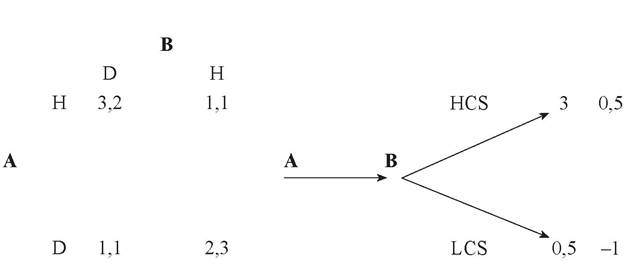
Figure 12.1 Role of institutions in economic integration
to be upheld by the member states as well as by the accession countries (in the given examples, the right to social inclusion and to a healthy environment, respectively).
In the game in Figure 12.1a, each player’s choice to comply (dove: D) with the other player’s strategy leads to the (3,2) or (2,3) outcomes (then excluding the one in the mixed strategy), which are Pareto-superior with respect to the aggressive strategy (hawk: H) to stick to his own preference (coordination failure: 1,1). Figure 12.1b illustrates that the strategic environment modifies when a supra-national institution affects the players’ ranking between strategies. Suppose that a group of countries (A) prefers a high cost standard (HCS), and another group of countries (B) prefers a low cost standard (LCS), e.g. for anti-poverty or anti-pollution policies. Hence, group A is doomed to suffer from an externality (e.g., generous subsidies attract poor immigrants from B, or high pollution damages, cost to A a loss = 0,5). The supra-national institution could consider the anti-poverty or anti-pollution policies a common interest, so that some articles are included in a treaty aimed at playing the role of the deus ex machina of the game. The articles state that group B must take an action (e.g. investments in anti-poverty policies, in anti-pollution policies, etc.) to comply with the HCS standard (investment costs = 1,5) within a deadline, after which group A has a right to retaliation (e.g. a tariff on export from B to A, costing to B a loss = 2) in the case of non-compliance. Due to externality and retaliation, in Figure 12.1b the pay-offs of the cell of coordination failure (1,1) are reduced to 0,5 and -1, respectively.
The supra-national institution has then changed the structure of the game, as the articles represent the information, for both groups A and B, that A has been assigned the advantage of committing to its preferred common standard HCS and just wait for the B’s coordination. In game-theoretic language, an extended form of the game could be envisaged in which the treaty dictates a sub-game perfect equilibrium. In our simplified appraisal of this strategic interaction, group B knows for certain that in pursuing its own preferred common standard (LCS), by continuing the game on the bottom half of the tree, the worst outcome for both A and B (0,5, -1) would result. Group B is then forced to comply with the common standard HCS, which amounts to choosing the top half of the game tree. Hence, the (3, 0,5) outcome obtains, with the division of the surplus favouring group A because of the anti-poverty or anti-pollution policies implemented by group B. Therefore, for each group the balance between benefits and costs stemming from the common policy - and then the success or failure of the coordination - also depends on the capacity of the juridical architecture of the collective action to constrain the players’ strategies.Institution-building
The strategic game among countries engaged in an institution-building process is a coordination game with a conflict of interest. The cooperative agreement reached by majority rule manifests a tradeoff between the benefit of reducing the compensation for the losing interest groups and the cost of possibly paving the way to the ‘tyranny of the majority’. The lower the size of the required majority, the higher the probability of a successful bargaining on the compensation for the losers, but the more likely the expropriation of the minority by excessive ex post redistribution. In a fully-fledged federation, the negative effects of this tradeoff shrink, compared to a mono-level constitutional organization. For historical reasons, federations show a strong heterogeneity in the distinctive features and preferences of their constituent communities.
By virtue of the heterogeneous composition both within and between the jurisdictions of the federation, the probabilistic value of the risk of belonging to an exploited minority declines. In the polls, a minority supporting a certain policy in a state is likely to be backed by a majority in another state endorsing the same policy. The federal voting then provides a sort of pooling of the risk of being in the exploited minority (Aghion and Bolton, 2003).Let us now examine the institution-building of a federation by a group of countries. The choice between a decentralized and a centralized fiscal policy depends on the tradeoff between the factors described earlier. On the one hand, the internalization of spillovers across jurisdictions and economies of scale are two important sources of cost reduction, favouring centralization. On the other hand, local governments are expected to be more efficient, being more informed about the local communities’ preferences, and a high heterogeneity across jurisdictions as to preferences for public goods makes centralization costly for countries with a per capita income very different from the median country. This favours decentralization.
The dispersion of per capita income across jurisdictions is a crucial determinant of the choice between centralization in a fully-fledged fiscal union and decentralization. The greater the expected benefits from spillovers’ internalization and economies of scale stemming from common policies that do not modify the per capita income dispersion across jurisdictions (transportation infrastructures, ICT networks and so on), the larger the number of countries that would incur a loss by not participating in common policies (Alesina et al., 2001b). Yet, the higher the per capita income dispersion across member states, the wider the dispersion of preferences regarding social insurance policies which are expected to generate spillovers across member states (unemployment transfers, health care, social security, education and so on), the higher the number of countries expecting to lose after centralization. Given the divergent preferences held on desired taxation and public goods by the decisive median voters in each jurisdiction, it is unlikely that an agreement on centralization would be reached. In addition to the expected dispersion of per capita income between jurisdictions, it is also possible that the expected federal median-to-mean income ratio vis-a-vis the median-to-mean income ratio within each jurisdiction will be decisive in the choice between centralization in a fully-fledged fiscal union and decentralization. The federal voting must be carefully analysed: if the inter-jurisdictional income distribution of the federation is more dispersed than most intra-jurisdictional income distributions, in a would-be federal election the decisive median voter is likely to be poorer than the mean-income-voter and would vote for a higher tax rate than most jurisdictional median voters are currently choosing. The higher the fear of an excessive inter-jurisdictional redistribution, the higher the probability that a country where a ‘high’ per capita income is associated with a high median/mean income opts out from the institution-building process (Croci Angelini et al., 2001).
Moreover, apart from the expected inter-jurisdictional redistribution, some countries may fear that economies of scale or positive spillovers stemming from the accumulation of common policies - due to complementarities and path dependency - could pave the way to a federation, which they do not support. Thus, the larger the number of countries participating in an institution-building process, the higher the probability that some countries will refrain from furthering the institution-building process (or from participating in some common policies, if opting out is allowed).
The public choice school has analysed another decision mechanism governing public policies’ centralization. Political pressure to adopt a common policy may be exerted on national governments by interest groups, such as lobbies, possibly paying contributions to their governments. These interest groups operating in the same economic sector but belonging to different member states may make transnational alliances on a functional basis. The aim is to exert political pressure on the national governments for the implementation of a common policy from which they could receive high profits due to economies of scale, internalization of negative externalities and so on. A transnational coalition of interest groups may even acquire the bargaining power needed to force governments to pass a common policy at the supranational decision-making level in every country, regardless of the preferences of the national median voters.
The strong incentive to log-rolling could increase the number of centralized policies. Due to the political influence of transnational interest groups, a common policy proposed by countries gaining from a common policy will also be endorsed by countries penalized by it, to which they will reciprocate by endorsing another common policy favouring these latter countries. Moreover, the larger the profits collected by a transnational lobby, the greater also the possibility of compensating some losers and increasing the number of member states participating in the launch of a common policy. Given this positive correlation between the number of transnational interest groups and the number of common policies, a positive correlation may also be found between the size and the scope of a political integration process.
Secession
The determinants of secession are similar to those of accession, but the costs arising from the separation process also have to be taken into account. The seceding jurisdiction bears both sunk costs and losses of economies of scale related to infrastructures, networks of public utilities and so on. The transaction costs have to be considered too: there might be a bargaining among jurisdictions over public debt division and a share of it to be repaid is assigned to the seceding jurisdiction.
In a fully-fledged federation, the fiscal system determines the federal interpersonal distribution through a risk-sharing scheme to deal with the macroeconomic risk of unemployment. The jurisdictions with the highest per capita income inequality are also those with a lower probability of being hit by a negative shock. These jurisdictions might complain about being drawn in by those with a ‘high risk’ of negative shock and be tempted by secession (Bolton and Roland, 1997). Like the rationale discussed above, in addition to the per capita income dispersion across jurisdictions, the median-to-mean income ratio also affects the propensity to secede. If the federal interpersonal distribution is greater than the inter-jurisdictional distribution of the various member states, then the federal median voter is likely to have a lower income than the federal mean - compared to the median voters of the various member states with respect to their national mean income. The voter will then be in favour of a higher tax rate. The more an inter-jurisdictional redistribution is pursued by the central government, the less the per capita income will vary among jurisdictions, and the higher the incentive for ‘rich’ jurisdictions to secede. In the opposite case of the federal median voter favouring a lower tax rate, a jurisdiction plagued with very low levels of both per capita income and median-to-mean income ratio (with respect to the other jurisdictions) would complain about the ineffective redistributive effort taking place both at the inter-jurisdictional and the interpersonal levels inside the federation. If the jurisdiction’s influence on the central government is negligible, the jurisdiction may seek secession.
An incentive strengthening the decision in favour of secession is an ‘outside option’, that is, the opportunity to join another political entity (the secession of Slovakia from Czechoslovakia can be explained by the expectation of a higher risk insurance to be obtained inside the European Union than through the Prague government). Secessions, devolution to lower-level government (Spain, the United Kingdom, Italy, Belgium) and the de-structuring of large political entities (the Soviet Union, Yugoslavia) have been interpreted as a historical tendency to the formation of smaller political entities after markets’ liberalization and globalization (Alesina et al., 2000). Yet, the need for insurance after the increased uncertainty brought about by globalization is fostering the search for supra-national institutions and increasing the attraction power exerted by political entities under construction. In Europe, the fragmentation tendency has been counteracted by the economic integration process that created the single market and monetary union, and is now generating expectations for a political union. The EU’s eastern enlargement demonstrates that political fragmentation does not only represent a successful episode of market globalization, but may reflect the dawn of a historical phase of regeneration of political institutions.
References
Aghion, P. and P. Bolton (2003), ‘Incomplete social contracts’, Journal of the European Economic Association, 1: 38-67.
Alesina, A., I. Angeloni and F. Etro (2001a), ‘Institutional rules for federations’, mimeo.
Alesina, A., I. Angeloni and F. Etro (2001b), ‘The political economy of international unions’, NBER Working Paper 8645, National Bureau of Economic Research, Cambridge, MA.
Alesina, A., A. Angeloni and L. Schuknecht (2001c), ‘What does the European Union do?’, NBER Working Paper 8647, National Bureau of Economic Research, Cambridge, MA.
Alesina, A., E. Spolaore and R.Wacziarg (2000), ‘Economic integration and political disintegration’, American Economic Review, 90: 1276-96.
Aoki, M. (2002), Towards a Comparative Institutional Analysis, Cambridge, MA: MIT Press.
Arrow, K.J. (1994), ‘Methodological individualism and social knowledge’, American Economic Review, 84: 1-9.
Austen-Smith, D. (2000), ‘Redistribution of income under proportional representation’, Journal of Political Economy, 108: 1235-69.
Backhaus, J. (1996), ‘An economic analysis of constitutional law’, in E. Buscaglia, W. Ratliff and R. Cooter (eds), Law and Economics of the Development, Greenwich, CT: JAI Press.
Berlin, I. (1958), Two Concepts of Liberty, Oxford: Clarendon.
Besley, T. and S. Coate (2000), ‘Centralized versus decentralized provision of local public goods: a political economy analysis’, NBER Working Paper 2495, National Bureau of Economic Research, Cambridge, MA.
Boadway, R. and F.R. Flatters (1982), ‘Equalization in a federal state: an economic analysis’, Economic Council of Canada, Ottawa.
Bolton, P. and G. Roland (1997), ‘The breakup of nations: a political economic analysis’, Quarterly Journal of Economics, 112: 1056-90.
Brennan, G. and J.M. Buchanan (1985), The Reason of Rules. Constitutional Political Economy, Cambridge: Cambridge University Press.
Buchanan, J.M. (1950), ‘Federalism and fiscal equity’, American Economic Review, 40: 58688.
Buchanan, J.M. (1965), ‘An economic theory of clubs’, Econometrica, 32: 1-14.
Buchanan, J.M. (1975), The Limits of Liberty: Between Anarchy and Leviathan, Chicago: Chicago University Press.
Buchanan, J.M. (1985), ‘Rights, efficiency, and exchange: the irrelevance of transaction costs’, in Liberty, Market, and the State, Brighton: Wheatsheaf, pp. 38-59.
Buchanan, J.M. (1991a), The Economics and the Ethics of Constitutional Order, Ann Arbor, MI: Michigan University Press.
Buchanan, J.M. (1991b), ‘Economic origins of ethical constraints’, in Buchanan (1991a), pp. 179-93.
Buchanan, J.M. (1992), ‘The individual as participant in political exchange’, in S. Spilerman and A. Sorenson (eds), Essays in Honor of James D. Coleman, New York: Praeger, pp. 12142.
Buchanan, J.M. (1993), ‘How can constitutions be designed so that politicians who seek to serve “public interest” can survive and prosper’, Constitutional Political Economy, 4: 1-6.
Buchanan, J.M. and G. Tullock (1962), The Calculus of Consent, Ann Arbor, MI: Michigan University Press.
Casella, A. and J.S. Feinstein (2000), ‘Public goods in trade: on the formation of markets and jurisdictions’, International Economic Review, 39: 24-76.
Casella, A. and B. Frey (1992), ‘Federalism and clubs: towards an economic theory of overlapping political jurisdictions’, European Economic Review, 36: 639-46.
Coase, R. (1961), ‘The problem of social cost’, Journal of Law and Economics, 3: 1-44. Coleman, J. (1990), Foundations of Social Theory, Cambridge, MA: Harvard University Press. Cooter, R.D. (2000), The Strategic Constitution, Princeton, NJ: Princeton University Press. Croci, Angelini E., C. D’Ambrosio and F. Farina (2001), ‘Do preferences in EU member-states support fiscal federalism?’, Quaderni del Dipartimento di Economia Politica, Working Paper 346, Department of Political Economics, University of Siena.
de Ruggiero, G. (1925 [1927]), The History of European Liberalism, Boston, MA: Beacon Press.
Dworkin, R. (1978), ‘Liberalism’, in S. Hampshire (ed.), Public and Private Morality, Cambridge, New York: Cambridge University Press.
Epple, D. and H. Sieg (1999), ‘Estimating equilibrium models of local jurisdictions’, Journal of Political Economy, 107: 645-81.
Fitoussi, J.P. (2002), ‘Democratie et mondialisation’, Revue de I’OFCE, 75 : 7-19.
Greif, A. (1994), ‘Cultural beliefs and the organisation of society: a historical and theoretical reflection on collectivist and individualist societies’, Journal of Political Economy, 5: 91250.
Greif, A. (2001), ‘Impersonal exchange and the origin of markets: from the community responsibility system to individual legal responsibility in pre-modern Europe’, in M. Aoki and Y. Hayami (eds), Communities and Markets in Economic Development, Oxford: Oxford University Press, pp. 33-56.
Grilli, V., D. Masciandaro and G. Tabellini (1991), ‘Political and monetary institutions, and public policies in industrial countries’, Economic Policy, 22: 37-68.
Habermas, J. (1988), ‘Individuierung durch Vergesellschaftung’ [‘Identity through socialization’], in Nachmertaphysisches Denken, Frankfurt a/M: Suhrkamp, pp. 184-236.
Hayek, F.A. (1973), Law, Legislation, and Liberty, Vol. 1, Rules and Order, London: Routledge & Kegan Paul.
Hayek, F.A. (1976), Law, Legislation, and Liberty, Vol. 2, The Mirage of Social Justice, London: Routledge & Kegan Paul.
Hayek, F.A. (1978), ‘The confusion of language in political thought’, in New Studies in Philosophy, Politics, Economics and the History of Ideas, London: Routledge & Kegan Paul, pp. 71-97.
Hayek, F.A. (1979), Law, Legislation, and Liberty, Vol. 3, The Political Order of a Free People, London: Routledge & Kegan Paul.
Hirschman, A.O. (1970), Exit, Voice, and Loyalty, Cambridge, MA: Harvard University Press. Hume, D. (1740 [1978]), A Treatise of 'Human Nature, Oxford: Oxford University Press.
Inman R. and D. Rubenfield (1997), ‘The political economy of federalism’, in D. Mueller (ed.), Perspectives on Public Choice: A Handbook, Cambridge: Cambridge University Press.
La Porta, R., F. Lopes-de-Silanes, C. Pop-Eleches and A. Shleifer (2002), ‘The guarantees of freedom’, NBER Working Paper 8759, National Bureau of Economic Research, Cambridge, MA.
Laffont, J.J. and J. Tirole (1990), ‘The politics of government decision making: regulatory institutions’, Journal of Law, Economics, and Organization, 6: 1-32.
Locke, J. (1640 [1988]), Two Treatises of Government, Cambridge: Cambridge University Press.
Madison, J. (1787-88), ‘Federalist 10’, in Alexander Hamilton, James Madison and John Jay, The Federalist Papers, New York: Bantam Books.
Marshall, T.H. (1981), ‘The right to welfare’, in The Right to Welfare and Other Essays, London: Heinemann Educational Books.
Marx, K. (1844 [1970]), Critique of Hegel’s Philosophy of Right (Kritik des Hegelschen Straatrechts), Cambridge: Cambridge University Press.
McKinnon, R.I. and T. Nechyba (1997), ‘Competition in federal systems: the role of political and financial constraints’, in J. Ferejohn and B. Weingast (eds), The New Federalism: Can the States be Trusted?, Stanford, CA: Hoover Institution Press, pp. 68-94.
Milgrom, P., D.C. North and B.R. Weingast (1990), ‘The role of institutions in the revival of trade: the law merchant, private judges, and the champagne fairs’, Economics and Politics, 1: 1-23.
Montesquieu, Charles-Louis de Secondat (1748 [1955]), The Spirit of Law (L’Esprit des Lois'), Chicago: Encyclopedia Britannica.
Morishima, M. (1982), Why Has Japan Succeeded?, Cambridge: Cambridge University Press. Mueller, D.C. (2003), Public Choice III, Cambridge: Cambridge University Press.
Nordhaus, W. (1975), ‘The political business cycle’, Review of Economic Studies, 42: 169-90.
North, D.C. (1990), Institutions, Institutional Change and Economic Performance, Cambridge: Cambridge University Press.
North, D.C. (1991), ‘Institutions’, Journal of Economic Perspectives, 5: 97-112.
North, D.C. and R.P. Thomas (1973), The Rise of the Western World: A New Economic History, Cambridge: Cambridge University Press.
Oates, W.E. (1972), Fiscal Federalism, New York: Harcourt-Brace & Jovanovich.
Oates, W. (1999), ‘An essay on fiscal federalism’, Journal of Economic Literature, 3: 1120-49.
Persson, T., G. Roland and G. Tabellini (1997), ‘Separation of powers and political accountability’, Quarterly Journal of Economics, 112: 1163-202.
Persson, T. and G. Tabellini (1994), ‘Does centralisation increase the size of government?’, European Economic Review, 38: 765-73.
Persson, T. and G. Tabellini (1996a), ‘Federal fiscal constitutions: risk sharing and moral hazard’, Econometrica, 64: 623-46.
Persson, T. and G. Tabellini (1996b), ‘Federal fiscal constitutions: risk sharing and redistribution’, Journal of Political Economy, 104: 979-1009.
Persson, T. and G. Tabellini (2000), Political Economics. Eixplaining Economic Policy, Cambridge, MA: MIT Press.
Persson, T. and G. Tabellini (2003), The Economic Effects of Constitutions, Cambridge, MA: MIT Press.
Polanyi, K. (1957), ‘Economy as instituted process’, in K. Polanyi (ed.), Trade and Market in the Early Empires. Economies in History and Theory, New York: Free Press, pp. 297-331.
Posen, A. (1995), ‘Central bank independence and disinflationary credibility: a missing link?’, staff reports 1, Federal Reserve Bank of New York.
Putnam, R. (1993), Making Democracy Work: Civic Traditions in Modern Italy, Princeton, NJ: Princeton University Press.
Rawls, J. (1971), A Theory of Justice, Cambridge, MA: Harvard University Press.
Rawls, J. (1999), The Law of Peoples, Cambridge, MA: Harvard University Press.
Rodden, J. and Rose-Ackermann S. (1997), ‘Does federalism preserve markets?’, Virginia Law Review, 83: 1521-72.
Romano, R. (1987), ‘The political economy of takeover statutes’, Virginia Law Review, 73: 97111.
Roubini, N. and J.D. Sachs (1989), ‘Political and economic determinants of budget deficits in the industrialised democracies’, European Economic Review, 33: 903-38.
Salmon, P. (1987), ‘Decentralisation as an incentive scheme’, in Oxford Review of Economic Policy, 3: 24-43.
Schotter, A. (1981), The Economic Theory of Social Institutions, Cambridge: Cambridge University Press.
Seabright, P. (1996), ‘Accountability and decentralization in government: an incomplete contracts model’, European Economic Review, 40: 61-89.
Sinn, H.-W. (2003), The New System Competition, Oxford: Blackwell.
Smith, A. (1759 [1976]), The Theory of Moral Sentiments, Oxford: Oxford University Press.
Smith, A. (1776 [1976]), An Inquiry into the Nature and the Causes of the Wealth of Nations, Oxford: Oxford University Press.
Stiglitz, J. (1998), ‘Central banking in a democratic society’, De Economist, 146: 199-226.
Sugden, R. (1993), ‘Rights: why do they matter, and to whom?’, Constitutional Political Economy, 4: 127-52.
Thaler, R. (1985), ‘Mental accounting and consumer choice’, Marketing Science, 4: 199-214.
Tiebout, C.M. (1956), ‘A pure theory of local expenditures’, Journal of Political Economy, 60: 416-24.
Vanberg, V.J. (1994), Rules and Choice in Economics, London: Routledge.
Weber, M. (1922 [1974]), Economics and Society, San Diego: University of California Press.
Weingast, B.R. (1993), ‘Constitutions as governance structures: the political foundations of secure markets’, Journal of Institutional and Theoretical Economics, 149: 286-311.
Weingast, B.R. (1995), ‘The economic role of political institutions: market-preserving federalism and economic development’, Journal of Law, Economics, and Organization, 11: 1-31.
Weitzman, M. and C. Xu (1993), ‘Chinese township and village enterprises as vaguely defined cooperatives’, Journal of Comparative Economics, 18: 121-45.
Wicksell, K. (1896), Finanztheoretische Untersuchungen [Studies in the Theory of Public Finance], Jena: Gustav Fischer.
13
More on the topic Constitutional change:
- Constitutional change
- Did the Ukrainians have to fight the Russians in order to secede from the Soviet Union?
- Domestic Politics
- Towards the domestication of Rwandan genocide trials
- THEORETICAL CONSIDERATIONS
- North Korea: the last Stalinist state
- FIVE COMPONENTS OF LEGAL COMPETENCIES