Globalization
‘Globalization’ is a widely used but often loosely defined term. In this chapter we take forward many of the ideas touched on in Chapter 7 (The multinational corporation). We review the major characteristics of globalization, including new markets, new actors, new rules and norms and new methods of communication.
Some indicators of these characteristics are identified and measured over recent decades to establish some of the quantitative and qualitative patterns and trends underpinning globalization. For example, in the period 1948-2010, global trade volumes have risen by an astonishing average of 9.8% per annum. After assessing some of the strategic implications for firms operating in a global environment, attention turns to the multidimensional aspects of such an environment. In addition to the economic dimension, political, legal and sociocultural dimensions are briefly reviewed. The perspectives behind the raft of contemporary anti-globalization protests are reviewed and evaluated. The chapter concludes by reviewing the move towards global engagement by the economy most directly associated with globalization, namely the US.

Characteristics of ‘globalization'
It is widely accepted that the world has become increasingly interconnected in recent decades as the result of economic, technological, political, sociological and cultural forces. To take but one example, Carlos Ghosn, the Renault-Nissan CEO, announced in April 2010 an alliance with Daimler, the German automaker, combining car technology and manufacturing capability on a global scale. The Boeing 787 Dreamliner has wings built in Japan, fuselage in Italy and the US, landing gear in France.
However, there is considerable debate as to whether such events merely reflect the continuation of a long-established internationalization process or a deep-seated shift in the structure and operations of the world economy.
‘Globalization’ is a much used but often loosely defined term, which many believe should be restricted to situations characterized by this latter perspective. Glyn (2004) sees globalization as characterized by two key trends:1 shifts within countries towards market-driven systems of production;
2 the increasing international economic integration of countries through trade, investment and migration.
As we can see below, there are a wide range of definitions of globalization, but certainly increasing ‘interconnectedness’ is a theme running through all of them!
Definitions of globalization
■.. the process of transformation of local phenomena into global ones. It can be described as a process by which the people of the world are unified into a single society and function together. This process is a combination of economic, technological, sociocultural and political forces’ (Croucher 2003, p. 10)
■ ‘... a widening, deepening and speeding up of interconnectedness in all aspects of contemporary social life from the cultural to the criminal, the financial to the spiritual’ (Held et al. 1999, p. 2)
■ ‘... increasing global interconnectedness, so that events in one part of the world are affected by, have to take account of, and also influence, other parts of the world. It also refers to an increasing sense of a single global whole (Tiplady 2003, p. 2)
■ ‘... the worldwide movement towards economic, financial, trade and communications integration. Globalisation implies opening out beyond local and nationalistic perspectives to a broader outlook of an interconnected and inter-dependent world with the free transfer of capital, goods and services across national frontiers’ (Business Dictionary)
■ ‘... refers to the shift toward a more integrated and interdependent world economy... [through] the merging of historically distinct and separate national markets into one huge global market place’ (Hill 2005, p. 6)
■ ‘...
process by which the whole world becomes a single market. This means that goods and services, capital and labour are traded on a worldwide basis, and information and the results of research flow readily between countries (Black 2002)■ ‘... reflects a business orientation based on the belief that the world is becoming more homogenous and that distinctions between national markets are not only fading but, for some products, will eventually disappear’ (Czinkota et al. 1999, p. 454)
Of course, globalization is by no means the preserve of economists alone. Indeed, it has been approached from the perspective of at least four academic disciplines, within each of which it tends to take on different characteristics.
1 Economists focus on the growth of international trade and the increase in international capital flows.
2 Political scientists view globalization as a process that leads to the undermining of the nation state and the emergence of new forms of governance.
3 Sociologists view globalization in terms of the rise of a global culture and the domination of the media by global companies.
4 International relations experts tend to focus on the emergence of global conflicts and global institutions.
Some argue that globalization is a long-standing phenomenon and not really anything new, pointing out that world trade and investment as a proportion of world GDP is little different today from what it was a century ago and that international borders were as open at that time as they are today with proportionately just as many people migrating abroad. Indeed Adam Smith as long ago as 1787 defined the businessmen of his time as ‘men without a country’.
However, those who believe that globalization really is a new phenomenon tend to agree that at least three key elements are commonly involved.
1 Shrinking space. The lives of all individuals are increasingly interconnected by events worldwide. This is not only a matter of fact but one which people increasingly perceive to be the case, recognizing that their jobs, income levels, health and living environment depend on factors outside national and local boundaries.
2 Shrinking time. With the rapid developments in communication and information technologies, events occurring in one place have almost instantaneous (real-time) impacts worldwide. A fall in share prices in Wall Street can have almost immediate consequences for share prices in London, Frankfurt or Tokyo.
3 Disappearing borders. The nation state and its associated borders seem increasingly irrelevant as ‘barriers’ to international events and influences. Decisions taken by regional trading blocs (e.g. EU, NAFTA) and supra-national bodies (e.g. IMF, World Trade Organization) increasingly override national policy-making in economic and business affairs as well as in other areas such as law enforcement and human rights.
It may be useful at this point to consider some of the conceptual issues as regards ‘globalization’ a little further using a broadly economic perspective.
■ Shallow versus deep integration. ‘Shallow integration’ is often used to describe an increasing volume of trade in goods and services between largely independent firms which conduct the main part of their activities within single national economies. A stereotypical version of ‘shallow integration’ would be the growth in international trade involving firms exchanging materials and foodstuffs with other firms mainly engaged in the manufacture and finishing of products in single national economies. ‘Deep integration’ is more commonly associated with the rise of the multinational enterprise and the associated fragmentation of production processes and their geographical relocation on a global scale which pays scant regard to national boundaries. The term is also used to reflect the development of communication networks, financial transactions and logistical arrangements on a global scale. In other words, ‘deep integration’ views the linkages between national economies as being progressively influenced by the cross-border value-adding activities of multinational enterprises over a broad range of goods and services.
■ Internationalization versus globalization processes. Whilst the growing quantitative importance of multinational enterprises in global trade patterns (see Chapter 7) points inexorably towards ‘deep integration’, a key question is whether their involvement has also led to a qualitative change in the relationship between nation states and firms. Whereas the term ‘internationalization’ might be applied to the many processes resulting in more geographically extensive patterns of economic activity, ‘globalization’ should arguably be applied only to processes whereby geographically dispersed activities become more functionally integrated than hitherto. For example, a ‘qualitative’ change might be said to occur where the co-ordination and regulation functions involving the production chain become progressively ‘internal’ to the multinational enterprise rather than an ‘external’ issue whose resolution requires engagement between the multinational enterprise and national or international regulatory bodies. In such a case, there has arguably been a ‘qualitative’ change in the relationship between nation states and the firm.
Table 24.1 attempts to capture some of the characteristics which currently underpin the use of the term ‘globalization’ as being something different from what has gone before. Some would argue that the ‘globalization tendencies’ outlined in Table 24.1 can be at work without this resulting in the end-state of a new geo-economy in which ‘market forces are rampant and uncontrollable, and the nation state merely passive and supine’ (Dicken 2011, p. 5). Certainly the focus in this chapter will be on examining the impacts of these ‘globalization tendencies’ in today’s world economy rather than on a semantic debate as to whether a deep-seated shift, involving qualitative change, has or has not occurred in the structure and operations of the world economy.
Table 24.1 Characteristics of globalization.
New markets
■ Growing global markets in services - banking, insurance, transport.
■ New financial markets - deregulated, globally linked, working around the clock, with action at a distance in real time, with new instruments such as derivatives.
■ Deregulation of antitrust laws and growth of mergers and acquisitions.
■ Global consumer markets with global brands.
New actors
■ Multinational corporations integrating their production and marketing, dominating world production.
■ The World Trade Organization - the first multilateral organization with authority to force national governments to comply with trade rules.
■ A growing international network of Non-Governmental Organizations (NGOs).
■ Regional blocs proliferating and gaining importance - European Union, Association of South-East Asian Nations, Mercosur, North American Free Trade Association, Southern African Development Community, among many others.
■ More policy coordination groups - G7, G8, OECD, IMF, World Bank.
New rules and norms
■ Market economic policies spreading around the world, with greater privatization and liberalization than in earlier decades.
■ Widespread adoption of democracy as the choice of political regime.
■ Human rights conventions and instruments building up in both coverage and number of signatories - and growing awareness among people around the world.
■ Consensus goals and action agenda for development.
■ Conventions and agreements on the global environment - biodiversity, ozone layer, disposal of hazardous wastes, desertification, climate change.
■ Multilateral agreements in trade, taking on such new agendas as environmental and social conditions.
■ New multilateral agreements - for services, intellectual property, communications - more binding on national governments than any previous agreements.
■ The (proposed) Multilateral Agreement on Investment.
New (faster and cheaper) methods of communication
■ Internet and electronic communications linking many people simultaneously.
■ Cellular phones.
■ Fax machines.
■ Faster and cheaper transport by air, rail, sea and road.
■ Computer-aided design and manufacture.
Source: Adapted from UNCTAD (1999) World Investment Report 1999.
I Indicators of globalization
Bearing in mind the characteristics of globalization already outlined in Table 24.1, here we review some selected quantitative indicators relevant to the debate.
New markets
Table 24.2 would certainly seem to confirm the growth of new markets within a more liberalized and deregulated global environment. We have already seen the relevance of foreign direct investment (FDI) to crossborder mergers and acquisitions by multinational
Table 24.2 I ncreasing liberalization of markets on a global scale.
National regulatory changes in FDI regimes
| Number of regulatory changes | Number more favourable to FDI | Number less favourable to FDI | |
| 1991 | 82 | 80 | 2 |
| 1993 | 103 | 100 | 3 |
| 1995 | 107 | 102 | 5 |
| 1997 | 158 | 144 | 14 |
| 1999 | 146 | 138 | 8 |
| 2001 | 206 | 194 | 12 |
| 2005 | 214 | 201 | 13 |
| 2009 | 102 | 71 | 31 |
Source: Adapted from UNCTAD (2010b and various) World Investment Report.
Table 24.3 Transnationality Index for the world's largest 100 MNEs in their home economies, 1990 and 2008.
Average TNI Number of
(%) MNEs
| Economy | 1990 | 2008 | 1990 | 2008 |
| European Union | 56.7 | 67.6 | 48 | 58 |
| France | 50.9 | 66.6 | 14 | 15 |
| Germany | 44.4 | 56.9 | 9 | 13 |
| UK | 68.5 | 75.5 | 12 | 15 |
| US | 38.5 | 58.1 | 28 | 18 |
| Japan | 35.5 | 50.0 | 12 | 9 |
| All economies | 51.1 | 63.4 | 100 | 100 |
Source: Adapted from UNCTAD (2010b and various) World Investment Report.
enterprises (MNEs) (Chapter 7). Table 24.2 uses data from the United Nations Conference on Trade and Development (UNCTAD 2010) to indicate the progressive increase in regulatory changes affecting FDI by national governments, the overwhelming majority of which have been ‘more favourable’ to FDI flows. Nevertheless, the latest data for 2009 show a sharp rise in the number of regulatory changes which have been ‘less favourable’ to FDI flows, with some 30% of all such changes in this category as compared to only around 6% as recently as 2005.
New actors
The rapid growth of MNEs themselves has already been documented in Chapter 7, as for example with employment in the overseas affiliates of MNEs rising from less than 18 million in 1982 to around 64 million in 2009. Table 24.3 throws further light on the increasing globalization of productive activity by showing the progressive growth in the Transnationality Index (TNI) for the world’s largest 100 MNEs in their home economies between 1990 and 2008. The TNI has been defined (see p. 125) as the average of the following three ratios: foreign assets/total assets; foreign sales/total sales; and foreign employment/total employment. A rise in the TNI suggests still more international involvement of the top 100 MNEs outside their home country, which is certainly a pattern strongly supported by the data in Table 24.3.
The EU is home to 58% of the world’s largest MNEs, and we can see from Table 24.3 that the average TNI for the EU has risen from 56.7% to 67.6% over the 1990-2008 period alone. A rapid growth in the TNI is also indicated for MNEs with the US and Japan as their ‘home’ bases. For ‘all economies’ the greater internationalization of production is indicated by the rise in TNI from 51.1% to 63.4% during 1990-2008. Closer scrutiny of these data reveals that the driving forces behind these observed increases in TNI have been the growth in the foreign sales/ total sales and the foreign employment/total employment ratios that contribute to the TNI. The data in Table 24.3 also indicate a greater number of the world’s largest 100 MNEs originating from outside the countries shown, only 12 in 1990 but 15 in 2008. East and South East Asia especially are home to a growing number of large MNEs with extensive international subsidiaries.
New actors within a globalized economy are also expected to include growing numbers of multilateral organizations (e.g. the World Trade Organization - WTO), non-governmental organizations (NGOs) and policy co-ordination groups (e.g. G8/G7). These will be in greater demand in an attempt to bring some kind of order to a progressively less nationally supervised and more deregulated world trading regime. In addition, the growth of regional trading blocs is often predicted as a collective response to the progressive loss of economic power of individual nation states. Chapter 26 provides ample evidence of the growing presence of these new actors within the global economy.
New rules and norms
Not only are new international institutions and trading blocs characteristic of a more globalized economy in which nation states have progressively less influence, but so too are the ‘rules and norms’ by which they seek to operate. Market-oriented policies, democratic political frameworks, consensus goals involving social and environmental responsibility, and growing multilateral applications of agreed rules were all identified as characteristics of globalization in Table 24.1 above. Again, Chapter 26 provides considerable empirical evidence of movements in this direction. Here we note the importance of good governance and transparency, an absence of corruption and appropriate property rights to the establishment of a sustainable globalized economic environment.
The World Bank’s World Development Report (World Bank 2001, 2005, 2010) has pointed out that good governance - including independent agencies, mechanisms for citizens to monitor public behaviour and rules that constrain corruption - is a key ingredient for growth and prosperity. In an early study Barro (1991) had found a positive correlation between economic growth and measures of political stability for 98 countries surveyed between 1960 and 1985. More recent empirical research points in a similar direction, for example confirming that FDI inflows are inversely related to measures of corruption, as with Lipsey (1999) observing a strong negative correlation between corruption and the locational choice of US subsidiaries across Asian countries. Similarly Claugue et al. (1999) and Zak (2001) found that productivity and economic growth will improve when governments impartially protect and define property rights.
Underpinning these findings is the perception by firms that a non-transparent business environment increases the prevalence of information asymmetries, raises the cost of securing additional information, increases transaction costs (e.g. risk premiums) and creates an uncertain business environment which deters trade and investment. For example, Wallsten (2001) found a strong inverse relationship between investment intentions and the threat of asset expropriation, as well as a propensity for firms to charge higher prices to help pay back their initial capital outlays more rapidly when they felt less secure about the intentions of host governments, the higher prices often inhibiting the penetration and growth phase of product life cycles.
New methods of communication
Management specialist Stephen Kobrin (1994) describes globalization as driven not by foreign trade and investment but by information flows. It is this latter perspective which sees globalization as a process inextricably linked with the creation, distribution and use of knowledge and information, which is the focus here. Many contributors to the globalization debate regard the technological convergence of information, computer and telecommunications technologies in the late twentieth century as having acted as a key catalyst in the rapid growth of these information-based activities, seen here as the hallmark of the globalized economy (Held et al. 1999).
International communications have grown dramatically, as evidenced by indicators such as the 4.22 billion mobile phone subscribers globally in 2010, a 95% rise on 2005. Nearly a quarter of the world’s population - i.e. over 1.6 billion people - have Internet access. In this period 2000-09, the number of Internet users rose by 1,400% in China, 1,520% in India, 1,225% in Turkey, and even more rapidly elsewhere (e.g. 10,600% in Vietnam over the same period). Facebook more than doubled its subscribers from 140 million to over 300 million in 2009/10 (Laudicina 2010). Contemporary discourse often seeks to express globalization in terms of the exponential growth in the creation, processing and dissemination of knowledge and information. For example, an ‘index of globalization’ recently compiled jointly by the Carnegie Foundation and ATKearney (a global consultant) gives considerable weight to the proportion of national populations online as well as to the number of Internet hosts and secure servers per capita. These indicators of access to information technology and associated information flows are seen here as proxy variables for ‘global openness’, to be used in association with the more conventional indicators of investment, capital flows, foreign income as a proportion of national income, and convergence between domestic and international prices, when compiling the overall globalization index. Singapore has regularly been recorded as the ‘most globalized’ country, helped by the fact that its outgoing telephone and Internet traffic per head per year has been some four times as much as in the US.
We now look in rather more detail at a sophisticated index widely used in ranking countries in terms of globalization characteristics.
KOF Index of Globalization
The KOF (Swiss Federal Institute of Technology) Index of Globalization was first introduced in 2002 and has been regularly updated since then. It incorporates three key dimensions in determining a country’s overall ‘score’:
1 economic globalization, characterized as longdistance flows of goods, capital and services as well as information and perceptions that accompany market exchanges;
2 political globalization, characterized by a diffusion of government policies; and
3 social globalization, expressed as the spread of ideas, information, images and people.
In the 2010 KOF Index (see Table 24.4) each variable used for ‘scoring’ these dimensions is transformed to an index on a scale of 1-100, where 100 is the maximum value any country achieved for that variable over the period 1970-2007, and 1 is the minimum value1.
The variables used in calculating the globalization ‘score’ for each dimension/component include the following:
■ Economic globalization: trade variable (sum of exports and imports); FDI variable (sum of inflows and outflows in a given year plus FDI stock value); portfolio variable (sum of a country’s stock of assets and liabilities).
■ Social globalization: personal contacts variable (international telecom traffic in minutes per person; international volumes of letters sent or received per person; incoming and outgoing tourism value per person; stock of foreign people in country); information flows variable (number of Internet users per 100 people; % of households with TV, international newspapers traded as % of GDP); cultural proximity variable (traded value exports and imports of books and related as % of GDP); number of global MNEs located in country - e.g. McDonalds/IKEA.
■ Political globalization: embassies and high commission variable (number in country); international organizations variable (number in country); UN peace missions (number in which involved); UN treaties (number signed).
Belgium is ranked 1st in terms of this index, although its ranking was only 6th on economic globalization, 4th on social globalization and 3rd on political globalization. While Singapore was ranked 1st for economic globalization, it was ranked 21st in social globalization and 77th in political globalization.
Whatever the merits or demerits of these types of indices, they certainly recognize the multidimensional characteristics of globalization, with particular emphasis on ‘interconnectedness’ in an international context, which underpins the metrics developed around each of the variables outlined above.
Globalization and corporate strategy
It may be useful to assess the impacts of the characteristics of globalization outlined in Table 24.1 on the strategic direction of firms, where ‘strategy’ is defined as the guiding rules or principles which influence the direction and scope of the organization’s activities over the long term. Of course, various chapters have touched on aspects of firm objectives and behaviour (Chapter 3), cross-border mergers and alliances (Chapter 5), multinational involvement (Chapter 7) and corporate social responsibility (Chapter 15). However, here we concentrate more explicitly on devising corporate strategy within a business environment exhibiting still more rapid growth in the various quantitative indicators of globalization outlined above.
Prahalad (2000) paints a vivid picture of a ‘discontinuous competitive landscape’ as characterizing much of the 1990s and early years of the millennium. Industries are no longer the stable entities they once were.
Table 24.4 2010 KOF Index of Globalization: top 20 overall, and by each dimension.
| Country | Globalization index | Country | Economic globalization | Country | Social globalization | Country | Political globalization | |
| 1 | Belgium | 92.95 | Singapore | 97.48 | Switzerland | 94.94 | France | 98.44 |
| 2 | Austria | 92.51 | Ireland | 93.93 | Austria | 92.77 | Italy | 98.17 |
| 3 | Netherlands | 91.90 | Luxembourg | 93.57 | Canada | 90.73 | Belgium | 98.14 |
| 4 | Switzerland | 90.55 | Netherlands | 92.40 | Belgium | 90.61 | Austria | 96.85 |
| 5 | Sweden | 89.75 | Malta | 92.26 | Netherlands | 88.99 | Sweden | 96.27 |
| 6 | Denmark | 89.68 | Belgium | 91.94 | Denmark | 88.01 | Spain | 96.14 |
| 7 | Canada | 88.24 | Estonia | 91.66 | United Kingdom | 87.05 | Netherlands | 95.77 |
| 8 | Portugal | 87.54 | Hungary | 90.45 | Germany | 85.97 | Switzerland | 95.00 |
| 9 | Finland | 87.31 | Sweden | 89.42 | Sweden | 85.95 | Poland | 94.63 |
| 10 | Hunga ry | 87.00 | Austria | 89.33 | France | 85.84 | Canada | 94.40 |
| 11 | Ireland | 86.92 | Bahrain | 89.32 | Portugal | 85.95 | Portugal | 94.36 |
| 12 | Czech Republic | 86.87 | Denmark | 88.58 | Norway | 85.30 | Germany | 94.21 |
| 13 | France | 86.18 | Czech Republic | 88.43 | Finland | 84.89 | Denmark | 93.96 |
| 14 | Luxembourg | 85.84 | Cyprus | 87.77 | Slovak Republic | 83.90 | United States | 93.85 |
| 15 | Spain | 85.71 | Finland | 87.33 | Czech Republic | 83.54 | Egypt, Arab Rep. | 93.39 |
| 16 | Slovak Republic | 85.07 | Slovak Republic | 87.25 | Australia | 82.96 | Argentina | 93.38 |
| 17 | Singapore | 84.58 | Chile | 87.14 | Spain | 82.52 | Greece | 93.11 |
| 18 | Germany | 84.16 | Israel | 85.15 | Luxembourg | 81.60 | Turkey | 93.11 |
| 19 | Australia | 83.82 | Portugal | 85.03 | Hunga ry | 80.79 | Brazil | 92.95 |
| 20 | Norway | 83.53 | Bulgaria | 84.10 | Liechtenstein | 80.11 | India | 92.69 |
Source: KOF (2010).
508 CHAPTER 24 GLOBALIZATION
■ Rapid technology changes and the convergence of technologies (e.g. computer and telecommunications) are constantly redefining industrial ‘boundaries’ so that the ‘old’ industrial structures become barely recognizable.
■ Privatization and deregulation have become global trends within industrial and service sectors (e.g. telecommunications, power, water, health care, financial services) and even within nations themselves (e.g. Transition Economies, China).
■ Internet-related technologies are beginning to have major impacts on business-to-business and business-to-customer relationships.
■ Pressure groups based around environmental and ecological sensitivities are progressively well organized and influential.
■ New forms of institutional arrangements and liaisons are exerting greater influences on organizational structures than hitherto (e.g. strategic alliances, franchising).
In a progressively less stable environment dominated by such discontinuities, there will arguably be a shift in perspective away from the previous strategic focus of Porter and his contemporaries, in which companies are seen as seeking to identify and exploit competitive advantages within stable industrial structures. The more conventional strategic models focused on securing competitive advantages by better utilizing one or more of the following five factors:
1 architecture (a more effective set of contractual relationships with suppliers and customers);
2 incumbency advantages (reputation, branding, scale economies, etc.);
3 access to strategic assets (raw materials, wavebands, scarce labour inputs, etc.);
4 innovation (product or process, protected by patents, licences, etc.);
5 operational efficiencies (quality circles, just-in-time techniques, re-engineering, etc.).
However, the discontinuities outlined previously have changed the setting in which much of the strategic discussion must now take place. Prahalad (2000) goes on to suggest four key ‘transformations’ which must now be registered.
1 Recognizing changes in strategic space. Deregulation and privatization of previously government- controlled industries, access to new market opportunities in large developing countries (e.g. China, India, Brazil) and in the transitional economies of Central and Eastern Europe, together with the rapidly changing technological environment, are creating entirely new strategic opportunities. Take the case of the large energy utilities. They must now decide on the extent of integration (power generation, power transmission within industrial and/or consumer sectors), the geographical reach of their operations (domestic/overseas), the extent of diversification (other types of energy, non-energy fields), and so on. PowerGen in the UK is a good example of a traditional utility with its historical base in electricity generation which, in a decade or so, has transformed itself into a global provider of electricity services (generation and transmission), water and other infrastructure services. Clearly the strategic ‘space’ available to companies is ever expanding, creating entirely new possibilities in the modern global economy.
2 Recognizing globalization impacts. As we discuss in more detail below, globalization of business activity is itself opening up new strategic opportunities and threats. Arguably the distinction between local and global business will itself become increasingly irrelevant. The local businesses must devise their own strategic response to the impact of globalized players. Nirula, the Indian fast food chain, raising standards of hygiene and restaurant ambience in response to competition from McDonald’s, is one type of local response, and McDonald’s providing more lamb and vegetarian produce in its Indian stores is another. Mass customization and quick response strategies require global businesses to be increasingly responsive to local consumers. Additionally, globalization opens up new strategic initiatives in terms of geographical locations, modes of transnational collaboration, financial accountability and logistical provision. In 2010, Boeing has a supply chain of some 6,500 different suppliers located in over 100 countries.
3 Recognizing the importance of timely responses. Even annual planning cycles are arguably becoming progressively obsolete as the speed of corporate response becomes a still more critical success factor, both to seize opportunities and to repel threats.
4 Recognizing the enhanced importance of innovation. Although innovation has long been recognized as a critical success factor, its role is still further enhanced in an environment dominated by the ‘discontinuities’ mentioned. Successful companies must still innovate in terms of new products and processes, but now such innovation must also be directed towards providing the company with faster and more reliable information on customers as part of mass customization, quick response and personalized product business philosophies.
These factors are arguably changing the context for business strategy from positioning the company within a clear-cut industrial structure to stretching and shaping that structure by its own strategic initiatives. It may no longer be sensible or efficient to devise strategic blueprints over a protracted planning time-frame and then seek to apply the blueprints mechanically, given that events and circumstances are changing so rapidly. The direction of broad strategic thrust can be determined as a route map, but tactical and operational adjustments must be continually appraised and modified along the way.
Nor can the traditional strategy hierarchies continue unchallenged - i.e. top management creating strategy and middle management implementing it. Those who are closest to the product and market are becoming increasingly important as well-informed sources for identifying opportunities to exploit or threats to repel. Arguably the roles of middle and lower management in the strategic process are being considerably enhanced by the ‘discontinuities’ mentioned. Top managers are finding themselves progressively removed from competitive reality in an era of discontinuous change. Their role is rather to set a broad course, to ensure that effective and responsive middle and lower management are in place to exercise delegated strategic responsibilities, and to provide an appropriate infrastructure for strategic delivery. For example, a key role of top managers in various media-related activities may have been to secure access to an appropriate broadband wavelength by successfully competing in the UK or German auctions. Such access is likely to be a prerequisite for competitive involvement in a whole raft of Internet-related products for home and business consumption via mobile telephony. Figure 24.1 provides a useful summary of the traditional and emerging views of international business strategy.
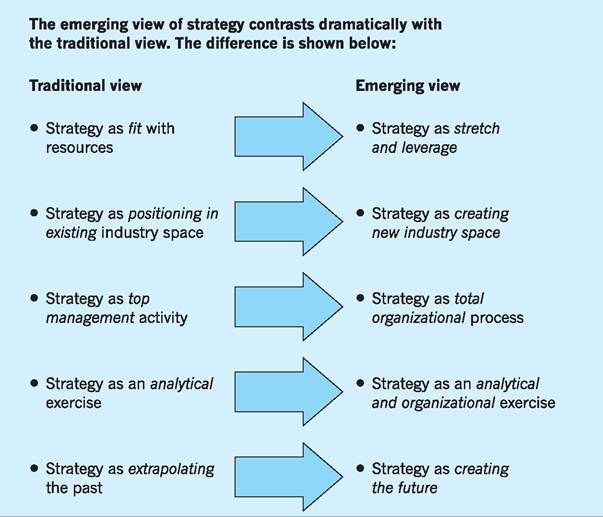
Fig. 24.1 New strategic directions in a global economy.
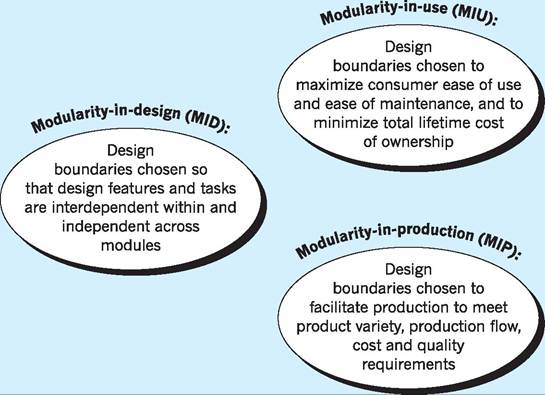
Fig. 24.2 Modular strategies.
Modular strategies
Globalization has been a driving force for modular strategies, since these can help companies engage in large worldwide investments without a huge increase in fixed costs and with fewer of the problems typically associated with managing complex global operations. Modular strategies can embrace production, design and/or use (see Fig. 24.2).
■ Modularity in Production (MIP). This provided the initial impetus to adopt modules in the car industry. Here production activities are broken down into a number of large but separate elements that can be carried out independently, with the finished vehicle then being assembled from these large sub-assemblies. Such modular production systems can help reduce the fixed capital overhead required for production, especially where selected modules are outsourced. Specialization of labour and management on smaller, independent modules can also result in productivity gains and lower variable costs.
■ Modularity in Design (MID). There may be more problems in establishing modularity in the design process. This will be particularly true where the finished product embodies systems as well as sub-assembly components. For example, a finished vehicle offers climate control and vehicle safety ‘systems’ which, to be provided effectively, require design input into a whole range of sub-assembly module operations. Modularity in design may therefore require that boundaries be carefully drawn so as to capture as many interdependencies as possible within the modular groupings.
■ Modularity in Use (MIU). This was the main reason for the introduction of modularity in the computer industry. It became increasingly obvious that consumers required computer-related products that were both compatible and upgradeable. Much effort was therefore expended in standardizing interfaces between different elements of the product architecture to give these desired user attributes. The then leader, IBM, found that the electromechanical system could be disaggregated without adversely affecting performance.
Of course, creating a modular product in any or all of these ways may have organizational consequences, not all of which may be foreseen. A national or international infrastructure exists which supports new firm start-ups - e.g. access to venture capital, skilled labour, etc. Further, for example, a module product architecture may result in modular business organization. This has certainly been the case in the computer industry. It can also stimulate certain types of organizational practice, such as outsourcing, and shift power relationships between companies. For example, IBM’s decision to outsource the development and production of its operating system to Microsoft and of its chip to Intel was an important factor in shifting power away from the overall product architecture to these designers and producers of modular systems elements.
I Dimensions of globalization
Of course, we should admit that a one-dimensional view of globalization, which thinks purely in terms of the economic impacts of market forces, is likely to result in only a partial picture at best. To quote Giddens (1990):
Globalisation is a complex process which is not necessarily teleological in character - that is to say, it is not necessarily an inexorable historical process with an end in sight. Rather, it is characterised by a set of mutually opposing tendencies.
McGrew (1992) has tried to identify a number of these opposing tendencies.
■ Universalization versus particularization. While globalization may tend to make many aspects of modern social life universal (e.g. assembly line production, fast food restaurants, consumer fashions) it can also help to point out the differences between what happens in particular places and what happens elsewhere.
■ Homogenization versus differentiation. While globalization may result in an essential homogeneity (‘sameness’) in product, process and institutions (e.g. city life, organizational offices and bureaucracies), it may also mean that the general must be assimilated within the local. For example, human rights are interpreted in different ways across the globe, the practice of specific religions such as Christianity or Buddhism may take on different forms in different places, and so on.
■ Integration versus fragmentation. Globalization creates new forms of global, regional and transnational communities which unite (integrate) people across territorial boundaries (e.g. the multinational enterprises, international trade unions, etc.). However, it also has the potential to divide and fragment communities (e.g. labour becoming divided along sectoral, local, national and ethnic lines).
Morrison (2002) usefully reviews these multidimensional perspectives of globalization, in particular pointing to two widely held but contrasting schools of thought (Table 24.5).
■ Hyperglobalists envisage the global economy as being inhabited by powerless nation states at the mercy of ‘footloose’ multinational enterprises bestowing jobs and wealth creation opportunities on favoured national clients. National cultural differences are largely seen by these progressively powerful multinationals as merely variations in consumer preferences to be reflected in their international marketing mix.
Table 24.5 Globalization: two schools of thought.
| Hyperglobalists | Transformationalists | |
| What's new | A global age | Historically unprecedented levels of global interconnectedness |
| Dominant features | Global capitalism; global | ‘Thick' (intensive and extensive) |
| governance; global civil society | globalization | |
| Power of national governments | Declining or eroding | Reconstituted, restructured |
| Conceptualization of | As a reordering of the framework | As a reordering of interregional relations |
| globalization | of human action | and action at a distance |
| Historical trajectory | Global civilization | Indeterminate; global integration and fragmentation |
| Source: Morrison (2002), adapted from Held etal. (1999). | ||
■ Transformationalists recognize that globalization is a powerful force impacting on economic, social and political environments, but take a much less prescriptive stance as to what the outcomes of those impacts might be. Predictions as to any endstate of a globalized economy can only be tentative and premature. Globalization involves a complex set of intermittent, uneven processes with unpredictable outcomes rather than a linear progression to a predictable end-state. It is this more pragmatic transformationalist approach which is reflected in the rest of the chapter.
Globalization and the political environment
At the heart of governance is the notion of ‘sovereignty’, which implies the power to rule without constraint and which, for the last three centuries, has been associated with the nation state. We live in a world which is organized as a patchwork of nation states within which different peoples live, with their own systems of government exerting authority over the affairs within their territory. Of course, groupings within those territories may arise from time to time, which seek a measure of independence from the central authorities, sometimes claiming nation statehood themselves. Many would also argue that the idea of the nation state has itself been challenged by the growth of globalization. Before turning to this issue, it may be useful to highlight two opposing and arguably contradictory tendencies in globalization.
1 Centralization versus decentralization. Some aspects of globalization tend to concentrate power, knowledge, information, wealth and decision-making. Many believe this to be the case with the rise of the MNE, the growth of regional trading blocs (e.g. EU), the development of world regulatory bodies such as the WTO, etc. However, such centralizing tendencies may conflict with powerful decentralizing tendencies as nations, communities and individuals attempt to take greater control over the forces which influence their lives (e.g. the growth of social movements centred on the global environment, peace and gender issues, etc.).
2 Juxtaposition versus syncretization. In the globalization process, time and space become compressed, so that different civilizations, ways of life and social practices become juxtaposed (placed side by side). This can create ‘shared’ cultural and social spaces characterized by an evolving mixture of ideas, knowledge and institutions. Unfortunately this can also stimulate the opposite tendencies, such as a heightened awareness of challenges to the established norms of previously dominant groups, which can result in determined attempts to avoid integration and instead combine against a ‘common opponent’ (syncretization).
Whilst there may be many theories as to the causes of globalization, most writers would agree that globalization is a discontinuous historical process. Its dynamic proceeds in fits and starts and its effects are experienced differentially across the globe. Some regions are more deeply affected by globalization than others. Even within nation states, some communities (e.g. financial) may experience the effects of globalization more sharply than others (e.g. urban office workers). Many have argued that globalization is tending to reinforce inequalities of power both within and across nation states, resulting in global hierarchies of privilege and control for some but economic and social exclusion for others.
Globalization and the nation state
It has been argued that one of the major effects of globalization is to threaten the notion of the territorial nation state, in at least four key respects: its competence, its form, its autonomy and, ultimately, its authority and legitimacy. In a global economic system, productive capital, finance and products flow across national boundaries in ever-increasing volumes and values, yet the nation state seems increasingly irrelevant as a ‘barrier’ to international events and influences. Governments often appear powerless to prevent stock market crashes or recessions in one part of the world having adverse effects on domestic output, employment, interest rates and so on. Attempts to lessen these adverse effects seem, to many citizens, increasingly to reside in supranational bodies such as the IMF, World Bank, EU, etc. This inability of nation states to meet the demands of their citizens without international co-operation is seen by many as evidence of the declining competence of states, arguably leading to a ‘widening and weakening’ of the individual nation state.
In such a situation, the form and autonomy of the nation state are also subtly altered. The increased emphasis on international co-operation has brought with it an enormous increase in the number and influence of intergovernmental and NGOs to such an extent that many writers now argue that national and international policy formulation have become inseparable. For example, whereas in 1909 only 176 international NGOs could be identified, by 2010 this number exceeded 30,000 and was still growing! The formerly monolithic national state, with its own independent and broadly coherent policy, is now conceived by many to be a fragmented coalition of bureaucratic agencies each pursuing its own agenda with minimal central direction or control. State autonomy is thereby threatened in economic, financial and ecological areas.
However, as we saw earlier, globalization consists of a series of conflicting tendencies. Whilst there is some evidence that the relevance of the nation state is declining, other writers claim the alternative view. Some argue that the state retains its positive role in the world through its monopoly of military power which, though rarely used, offers its citizens relative security in a highly dangerous world. Further, it provides a focus for personal and communal identity, and finally, in pursuing national interest through cooperation and collaboration, nation states actually empower themselves. The suggestion here is that international co-operation (as opposed to unilateral action) allows states simultaneously to pursue their national interests and at the same time, by collective action, to achieve still more effective control over their national destiny. For example, the international control of exchange rates (e.g. the EU single currency) is seen by some as enhancing state autonomy rather than diminishing it, since the collective action implicit in a common currency affords more economic security and benefits for nationals than unilateral action.
Globalization is therefore redefining our understanding of the nation state by introducing a much more complex architecture of political power in which authority is seen as being pluralistic rather than residing solely in the nation state.
Globalization and knowledge-based economies
Most commentators agree that developments in the information and communications technologies (ICT) have played a key role in the dramatic surge in information flows associated with the globalized economies of the latter part of the twentieth century. Some have even spoken of a new economic paradigm (e.g. ‘new economy’) resulting in a long-term upward shift in the productivity of both labour and capital, leading to enhanced prospects of higher long-term and non-inflationary growth. Convergence of ICT technologies and the enhanced use of the Internet and websites are often linked, in this perspective, to a new Kondratief ‘long wave’ cycle of the type associated with the earlier technological breakthroughs in steam power, railroads and electricity.
Recent major reports have identified a number of important impacts of the expanded Internet and website usage within the global economy and associated increases in information-related activities on contemporary labour markets. A number are briefly reviewed below.
■ A positive net impact on total levels of employment, with the employment-creating potential of ICT outweighing the risk of job losses. Evidence suggests that countries experiencing the greatest growth in ‘total factor productivity’ over the past decade have been those where ICT have been most widely adopted. These are also the countries in which employment has grown most rapidly.
■ A change in the patterns of employment as ICT developments increase the demand for highly skilled workers who can push forward the technological frontier and make the new technology accessible to the rest of the workforce. Less skilled, repetitive occupations in both manufacturing and service sectors (e.g. offices) tend to be replaced by ICT, with fewer, more highly skilled workers remaining.
■ A greater geographical dispersion of employment as work becomes progressively less dependent on specific locational factors (e.g. growth in work from home).
■ A shift in employment towards smaller, less established firms and new entrants via ‘leapfrogging’, which in this context refers to the opportunities inherent in the new ICT technologies for small/ medium-sized enterprises (SMEs) and new entrants to bypass earlier investments by rivals in the time or cost of developments.
■ A more highly skilled and better-educated workforce within economies which now depend less on physical inputs than on knowledge.
■ A shift in the focus of education and training to foster generic skills, with individuals no longer seen as passive recipients of facts but as active, lifelong learners. The ability at all levels of expertise to learn new approaches and transform existing knowledge into new knowledge becomes still more important in work environments that rely increasingly on rapid innovation and the interpersonal exchange and creation of knowledge.
However, some have cast doubt on the growth of knowledge-based societies as indicative of globalization. For example, it has been suggested that ‘globalization’ is merely a contemporary catchphrase for what in reality has been a long-established process in the growth of knowledge and information. Adams, an American historian, claimed as early as 1918 to have observed an exponential growth in various aspects of knowledge, subsequently formulated as ‘Adams’ Law of Acceleration of Progress’ (see Rescher 1978). Similarly Rider (1977), investigating the stock of books of American universities over the period 1831-1938, found the stock to have doubled every 22 years, whilst the stock of the pure research universities had doubled every 16 years, resulting in growth rates of 3.2% and 4.4% per annum respectively. Price (1977), using similar indicators, estimated the growth rate of the stock of knowledge to be 6.5% per annum. Later writers (Machlup 1962; Bell 1973; Gershuny 1978) have identified these patterns and trends as being part of an inexorable process towards ‘maturity’ as developed economies pass through industrial and service-sector stages and towards ‘post-industrial’ societies. The acquisition and codification of theoretical knowledge, giving rise to a host of information-related activities, is seen as a key characteristic of such post-industrial societies.
Globalization and terrorism/ criminality
The global growth of foreign direct investment and the increasingly ‘footloose’ activities of MNEs have already been documented as widely used indicators of globalization. Many commentators have also drawn attention to parallels between the rapid growth in formal, legal cross-border relationships and the rapid growth in a wide range of illegal cross-border relationships including, at one extreme, activities more commonly associated with terrorism. Some of the characteristics of globalization previously reviewed in Table 24.1 are seen as conducive to such growth, especially the weakening of power and control by nation states and the proliferation of new, less detectable methods of communication. Whilst a proper investigation of so complex an issue is beyond the scope of this chapter, we can perhaps draw attention to some of the economic impacts associated with global terrorism and criminality within more globalized economies.
September 11th 2001 (9/11)
This is perhaps the single event most closely associated with global terrorism. It may therefore be instructive to consider some of the short-term and long-term economic impacts of that event. Kaletsky (2002) identified what is arguably the major cost of 9/11 to the world economy over the two years following the attack on the World Trade Center, namely the difference between projected and actual growth of global GDP over that period. Whilst other external events may also have contributed to the cumulative discrepancy (projected - actual) of $740bn (£476bn) estimated as the resulting shortfall in global GDP over the two- year period following 9/11, there is little doubt that the greatest single influence has been 9/11 itself.
Of course, many other more direct short-term costs of 9/11 can be identified. In New York alone some $95bn in costs have been estimated as directly attributable to 9/11 and some $36bn in costs to an assortment of insurance companies involved with individuals and companies affected by 9/11.
Nevertheless, it is the adverse impacts of global terrorism on future growth prospects that are likely to impose the greater short- and longer-run costs on the world economy.
Globalization and disease control
We noted earlier that increased international travel and communication featured in the ‘globalization characteristics’ outlined in Table 24.1. Parallel with the growth of such travel is an increasing exposure to communicable diseases.
SARS: a case study of globalized disease In 2003 the SARS (Severe Acute Respiratory Syndrome) outbreak provided a useful illustration of this point, with the World Health Organization believing it to be the first health episode of the twenty-first century with epidemic potential, with the ease of global travel acknowledged as playing a key role in its dissemination. Stephen Roach, chief economist of Morgan Stanley, argued that SARS would cut growth in Asia, excluding Japan, from 5% to 4.5% in 2003. Hu Angang, of Tsinghua University in Beijing, believes that without SARS, China could have achieved 9-10% growth in 2003, but estimated SARS to have reduced growth by at least 1% on those projections to 8-9%. The World Bank was also pessimistic, cutting 0.5% off its pre-SARS estimate for Chinese growth in 2003.
We cannot, of course, hope to capture more than a flavour of the multidimensional and broad-based influence of globalization in a single chapter. What we can do is note that the economic, sociocultural and political impacts are significant and ongoing.
I Anti-globalization movements
In recent years the meetings of various international finance, trade, political and economic forums which were once routine, have become the focus of unprecedented protest and widespread media coverage. Since the Seattle meeting in November 1999, a wave of other protests has crashed around the world, including Bolivia, Ecuador, Washington, Paris, Prague, Nice, Quebec, Gothenburg and Genoa.
Seattle represented a turning point in what some now describe as the ‘anti-globalization movement’. Although one account of events in Seattle maintained that people both outside and inside were confused about what they wanted, it captured the attention of the world’s media and brought the issues surrounding globalization onto screens and into people’s homes. International economic and political meetings now invariably focus on the major themes of trade, debt relief and globalization. Although hard to understand, this new ‘movement’ is now given much attention in the media.
Is the anti-capitalist movement merely the focus of today’s privileged, excluded or bored OECD youth - an anarchist travelling circus? Such explanations are too simplistic. The coalitions of stakeholders taking to the streets appear to be unlikely alliances of disparate groups transcending age and economic and social classifications, including trade unionists, representatives of NGOs, shareholder activists and students. Although the movement certainly contains antiglobalization and anti-capitalist elements, it appears to be united over the central issue of political, economic and social exclusion. All these groups have experienced the transfer of power from government to big corporations, the acceleration of inequalities within and between countries as a result of current economic policies and political ideologies, and the sense that society is itself being shaped and defined by big corporations. In rising up and dissenting against a sense of dispossession, the anti-globalization movement is in effect creating a society for those who feel excluded.
Globalization - North and South
North and South are terms often used to refer to the advanced industrialized and the developing economies respectively and their perspectives on globalization often differ markedly. Some Northern perspectives see globalization as liberalization, creating a climate of trust and enhancing wealth creation, whereas Southern perspectives often emphasize marginalization, exploitation, divisiveness and the exercise of power, viewing neo-liberal economic policies as destructive of livelihoods, communities, cultures and natural resources.
Many supporters of globalization are aware of its shortcomings and unintended side-effects and argue that the challenge is finding rules and institutions to preserve the advantages of globalization whilst taking account of these problems, hence the search for ‘globalization with a human face’, which can embrace concerns for ethics, equity, inclusion, human security, sustainability and development.
Sustainable development, open economies and trade
A key issue is whether globalization helps contribute to raising global standards of living, enhancing human and social capital in both North and South and therefore contributing to sustainable development, or whether its impacts are quite the opposite. This debate has largely crystallized around perspectives as to the role and impacts of international institutions such as the World Trade Organization, World Bank, IMF and so on. The anti-capitalist protestors regard these roles as inimical to sustainable development. But is this really so? We now address this key issue in rather more depth, with the particular emphasis on whether an ‘open’ world trading regime supports or hinders sustainable development.
Trade liberalization and the World Trade Organization (WTO)
The WTO is a powerful institution of international global governance whose rules and procedures are having a profound impact on global economic, social and political development (see Chapter 26). Agreeing trade rules that work for the benefit of the many and not the few is about reaching agreement on the ultimate purposes and goals of trade liberalization itself.
Trade liberalization has certainly met many of its own objectives, with various trade rounds having resulted in a tenfold reduction in border tariffs on industrial products from 50% in 1947 to around 5% in 2010. However, many believe that it is the multinational corporations and the North in general that have benefited most from these trade freedoms. Nevertheless some, even from the South, argue that the WTO is needed to protect developing countries and that it is a broadly successful institution of global governance to be reformed and improved, but not abandoned. Others stress that the WTO goes much too far, pointing out that it forces domestic laws to conform to trade law; in over 90% of the WTO cases between 1995 and 2010, national government regulation has been struck down. In essence, some see the WTO as a mechanism for putting trade rules above every other kind of law, in the interests of its most powerful members. For example, Southern governments argue that the focus tends to be on Southern rather than Northern non-compliance!
Whilst any country has a chance of winning a case at the WTO, not all can impose effective sanctions. For example, a small developing country can win a WTO ruling but, even with WTO permission, would hardly benefit from imposing retaliatory sanctions on a large, advanced industrialized country. In contrast, developing countries fear the impact of trade sanctions imposed by the more powerful WTO members who have won a WTO ruling against them.
The influence of multinational companies on devising the current trade rules at the WTO arouses strong emotions. Many would like to see an end to a system in which trade rules are set after discussions between government trade representatives and the government relations representatives of multinational companies. Trade rules are widely held to have been set to the advantage of the business community, restricting the capacities of national governments to make their own trade-related decisions. Such crossborder and internally invasive intervention has been an important source of public disenchantment with the WTO and similar bodies.
The anti-capitalist protests have significantly changed the dynamic of the trade negotiations. The conventional wisdom that ‘trade is good for the poor, it makes people richer - and hence improves the environment’ is now being openly challenged. Whilst more trade may very well benefit higher-income groups in many countries, in some cases it would seem to have had negative effects on low-income groups in both developed and developing countries. However, many believe that the reform, not the abandonment, of institutions such as the WTO may be in the ultimate interests of the world’s poor, in other words the essential maintenance of an ‘open’ world trading system with institutional support to prevent its worst excesses. Chapter 30 reviews in rather more detail the linkages between trade openness, economic growth and development.
We conclude with a brief review of the one nation which, more than any other, is perceived as the driving force behind, and major beneficiary of, globalization, namely the US.
I The US and globalization
Although the US is less dependent in trade terms on the global economy than many believe, its influence is felt everywhere. The US has a population of 287,400,000, which is smaller than the EU’s single market, but it has a huge land area (9,158,960 square kilometres) which is very resource rich with plentiful supplies of water, timber, coal, iron ore, oil, gas, copper, bauxite, lead, silver, zinc, mercury and phosphates, amongst others. Given the abundance of these resources, the US was for many years self-sufficient with little need to import. However, a recurring problem has been the country’s relatively low population density so that, despite its huge potential in natural resources, it has had a scarce labour supply which has made full exploitation of those resources rather difficult. For much of the nineteenth century and even in the early twentieth century, the US was largely disengaged from the global marketplace in terms of imports and exports. Even in the 1960s, imports and exports combined amounted to barely 10% of GDP. Nowadays things have changed. Today the US exports around 13% of its GDP, with almost 30% of all the wealth generated (more than $2 trillion) coming from trade.
Figure 24.3 usefully indicates the dominance of the US, via its currency, in global economic affairs. Although the US only accounts for some 24% of world GDP in 2010, US dollars are used in around 84% of all foreign exchange transactions, comprise some 62% of global reserves, and are the currency in which 60% of global bank deposits, 50% of global bank loans and 44% of debt securities transactions are denominated.
The increased role of the US in the globalization process essentially has two strands which, while interconnected, remain distinct. The first of these strands relates to a number of happy accidents that drew a reluctant US into increased involvement in international affairs which, combined with pragmatic domestic policies, allowed it to benefit fully from that involvement. The second of these strands involves the notion of the dynamism of American culture and the endurance of the ‘American dream’ which in turn have given rise to the perception of US dominance in the global economy.
US international engagement
During the nineteenth century, and particularly after the American Civil War (1861-65), the American economy grew rapidly, spurred on by the advent of the railways which made development of the western territories more viable. Even more striking, however, was the growth of US economic influence abroad. From the 1870s onward, US farmers in the midwest exported grain and meat, as improved transport links and refrigeration lowered transport costs. The US began to eclipse the major European countries as a manufacturing nation, and as a producer of raw materials such as coal, iron and steel. By 1914 the US was producing nearly five times as much steel as the UK and more than twice as much as the German Empire.
With a smaller population in a pre-consumer society, the US was able to almost completely isolate itself from the rest of the world, and thanks to a highly protectionist trade policy, its imports were minimal. However, vast amounts of European, and especially British, portfolio investment had flooded into the US to finance economic development in the late nineteenth and early twentieth centuries. By the end of the First World War, with Europe an economic wreck, the allies had borrowed such large sums from US bankers that Wall Street had become the world’s financial centre, and the US had become the world’s largest international creditor. Under the presidency of Woodrow Wilson (1913-21) the US took its first tentative steps towards freer international trade, but such steps were not long lasting or indeed very forthright.
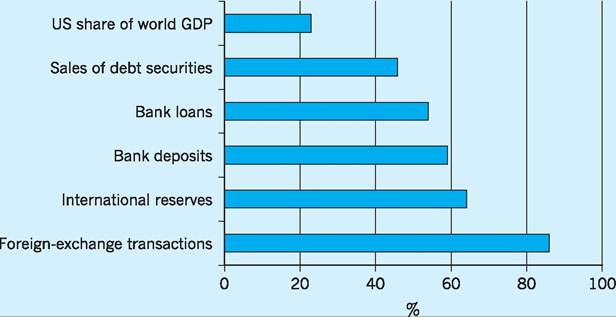
Fig. 24.3 US dollar's share of world total, %, in 2010. Sources: Various.
The 1920s saw unprecedented growth in the American economy as the consumer age really began. Fostered by the loose regulation and pro-business framework of the classical laissez-faire economic policies of the government, and largely free from foreign competition due to its extensive tariff barriers, American business grew rapidly. As the population expanded so did the markets available for these firms, and developments in technology allowed for vastly increased output at lower costs.
The Second World War served as a kick-start for the US to engage with the global economy, and is one of the happy accidents mentioned earlier. More activist government policies brought about by the war effort helped to start a number of virtuous circles whose effects lasted many decades. For example, the strong American presence in the world aircraft industry today came about because of the increased demand for aircraft that arose from the needs of the US military during the Second World War. Having thus acquired a dominant position in the aircraft industry during the war, the US now had a large pool of workers and engineers with the skills required, and was thereby well positioned to maintain its competitive advantage. Even though the initial war trigger is long gone, the dominant position of the US aircraft industry endures. To varying degrees, the same can be said about other industries, ranging from space technology, through defence, and on to consumer goods. In summary, by the end of the Second World War, the US was in an excellent position to head into the post-war period. Its industrial base was large and diverse, its technology was superior, and a number of virtuous circles had developed.
US cultural dominance
The move into the global arena was aided by the widespread perception in the 1950s and 1960s that American culture was dynamic and worthy of emulation. The fact that the US was an English-speaking country, and English is the language of international business and commerce, also helped smooth such cultural transmission. In a time of rising prosperity and optimism about the future, the American dream seemed available to all. The growth of American firms in the consumer goods and leisure industries coincided with an increased demand for these outputs within the more affluent societies. American culture began to permeate Western Europe, driving demand further, and thus ensuring business for American firms, whether located in Europe or supplied from the US.
In the post-war period, the US became a champion of free trade, reversing the policy plank that had been present since the early days of the union. It was a founder member of the General Agreement on Tariffs and Trade (GATT) in 1947 which sought to break down barriers to trade, especially trade in manufactures. Having developed strong and competitive industries in the US, being home to major financial centres in New York and Chicago, and finding itself drawn more into the global arena than previously, the aim was to increase its access to foreign markets. As the domestic economy developed and became ever more consumer orientated, the US found itself constrained in exploiting its resources fully due to insufficient labour supply. Paradoxically for a country that, in theory, did not need to trade internationally, the ever-increasing demand from rising prosperity at home forced the US to import, and the hungry ambitions of American business sought new markets outside the US.
Modern American trade policy, particularly in the post-cold war period, has focused on locking the US into each significant region of economic development. Under Presidents George H. W. Bush (1989-93), Bill Clinton (1993-2001), George W. Bush (2001-09), and arguably under the early years of the Obama administration, the US primarily favoured a regional and bilateral thrust to trade policy, although remaining a member of the WTO. American involvement in the APEC agreement (1993), the creation of the North American Free Trade Agreement (NAFTA) (1994), the signing of the Transatlantic Pact between the US and the EU (1995), and the current development of the Free Trade Area of the Americas (FTAA) have all cemented the American position in the global economy. However, they mark a subtle change in what had occurred previously. The new regionalist approach to trade policy exchanges access to the American market for reciprocal access to foreign markets. It uses the power of the US, and the allure of its domestic economy, to force open foreign markets that otherwise may have remained closed. It also ensures that very little now goes on in the global economy without US involvement.
In the realm of international financial markets, American practices are now more widespread than in previous generations. As American financial service providers have traditionally been better financed than their British counterparts, with a work ethic less genteel and less based on historical precedents, it was much easier for them to attract the best staff and be more competitive in the European financial markets. In the 1980s, when American financial service providers arrived to do business in the City of London, they found that the London markets functioned like a gentlemen’s club, with short working weeks, long lunches and a sense of tradition. The faster-paced ‘greed is good’ ethic of the American markets swept away much of the old city practices very rapidly, as the traditional British financial markets found that their quaint ideals, smaller capital base and respect for tradition were no match for the flash young traders from the US who worked through lunch breaks and often on into the evening in search of the lucrative bonuses. Nowadays American financial service providers are everywhere, and the culture they brought with them has displaced much indigenous financial culture.
Globalization has resulted in challenges for the US too. In spite of the advantages it possesses, whether by virtue of natural resources, language, culture, government policy or serendipity, the move into the global market has not been without problems. Perhaps the most obvious problem has involved the trade deficits that opened up quite rapidly between 1981 and 1984. Although the US had run deficits before, the deficits of the 1980s appeared year-on- year, and were much larger than any previously experienced. In part, the trade deficits were the result of the budget deficits resulting from Ronald Reagan’s tax-cutting agenda. National savings fell, and capital had to be imported to finance domestic American investment. The American position as the world’s largest international creditor disappeared; indeed, the US became the world’s largest net debtor. During the 1980s, the American trade deficit was financed by the sale of American assets, including shares, bonds, real estate and eventually entire companies. There are those in the US who saw this financing of the deficit as giving away the foundations of the American economy to foreigners and resulting in a loss of American economic sovereignty. The major budget and trade deficits of George W. Bush had reawakened such concerns, which continue under the current Obama administration.
Many in the US, on both sides of the political divide, question the benefits from being involved in globalization. Some argue, for example, that the freer world trade arising from GATT/WTO and the patchwork of bilateral and regional deals negotiated by the US has left the American worker dangerously exposed to lower wage competition from the economies of Latin America and the Asia Pacific rim. As the MNEs source labour and raw materials from whichever locations are cheapest, they now produce much of their output from outside the US but can then sell within the American market without paying high import tariffs. They no longer employ as many American workers, or invest as much in the US. This argument, known as the ‘pauper labour argument’, implies that American workers will lose out in terms of employment, pay and working conditions from the inexorable process of globalized world production.
There is also concern that in an era of global markets, where production occurs in many locations which are likely to be different from those in which the goods are sold, firms that began life as ‘American’ now see themselves in a different light, namely as global companies rather than national ones. It used to be said that what was good for General Motors was good for America, but if ideas such as the pauper labour argument are valid, then this is less likely to be the case now.
Again some argue that, given the size and wealth of the American market, the US should once again be protectionist, as foreign firms would be willing to pay more in the form of tariffs for access to its huge, high- income market. They also suggest that since much of global trade is intra-industry trade, with parts made in a number of countries for assembly in the US, such tariffs would make it less cost-efficient for firms to source their components outside the US, thereby encouraging productive capacity to return to America.
We might conclude that for the reluctant globalists of the US, globalization has been remarkably successful. However, disadvantages have also been recognized, as with successive Presidents attempting to equip the American workforce to take full advantage of the opportunities resulting from intensified global competition. Their attempts to overhaul health care, education and job training, and bring about an improvement in skills, were aimed at raising American productivity and lowering business costs. In practice, American success in promoting free trade has arguably intensified the pressure on lower-skilled Americans, whilst offering them little defence from an ever intensifying global competition in the future.
Conclusion
Globalization is more widely viewed as a process rather than an end-state, in terms of our earlier framework, conforming more closely to the perspective of ‘transformationalists’ rather than ‘hyperglobalists’. That said, it is characterized by major changes occurring in at least four broad areas, namely new markets, new actors, new rules and norms, and new methods of communications. Quantitative and qualitative changes in these areas are arguably having major impacts in shaping corporate strategies and influencing the lives of employees and individuals worldwide. Nor can we confine these impacts to the economic sphere alone, important though that undoubtedly is. The greater difficulties faced by nation states in combating global forces extend to the security and health-related domains, as much as the economic. At the macro level, policy responses have often involved a resort to more multilateral institutions and arrangements, including regional trading blocs, in an attempt to employ more effective collective influence where national influence is perceived to be lessening. At the micro level, the wide range of firm strategies (e.g. Porter’s Five Forces) thought appropriate when industry structures were stable and predictable, at both national and institutional levels, are now being challenged and reshaped in the ‘discontinuous competitive landscape’ more typical of a globalized business environment.
Of course the debate as to the costs and benefits of globalization, however defined, continues apace. Supporters of the development of advanced business capitalism since the early nineteenth century point to the remarkable growth in living standards achieved. For example, in the eight centuries from 1000 to 1820 per capita incomes in Western Europe rose by 0.15% per year on average, but by 1.5% per year on average since then - 10 times as fast. On the other hand, anti-globalization protesters point to the gross inequalities between rich and poor, such inequalities buttressed by the prevailing rules and norms governing the actions of an institutional superstructure (IMF, World Bank, G7/G8, WTO, etc.) which is allegedly biased against the disadvantaged.
Key points
■ Shrinking space, shrinking time and disappearing borders are widely accepted features of globalization, however defined.
■ ‘Hyperglobalists’ and others see globalization as an end-state characterized by global governance, global capitalism (dominated by multinational enterprises) and rapidly eroding nation states.
■ ‘Transformationalists’ and others see globalization as consisting of a complex set of intermittent, uneven processes linked to rapidly increasing levels of global interconnectedness. Whilst no single endstate is predictable, corporate, national and individual destinies will be reshaped by these globalization processes.
■ These globalization processes are leading to new markets, new actors, new rules and norms, and new methods of communication.
■ In a progressively less stable environment, there will arguably be a shift away from the previous strategic focus of Porter and his contemporaries in which companies seek to identify and exploit competitive advantages within stable industrial structures.
■ In the new, globalized landscape the strategic focus shifts to the stretching and shaping of industrial structures by the MNEs themselves, using their own strategic initiatives.
■ Globalization is redefining our understanding of the nation state by introducing a much more complex architecture of political power in which authority is seen as being pluralistic (e.g. intergovernmental and non-governmental organizations) rather than residing solely in the nation state.
■ The growth of knowledge-based economies dominated by the creation, processing and dissemination of information is seen by some as synonymous with globalization.
■ Globalization is a multidimensional process, reshaping the context of security, health control and other governmental policies just as much as their economic policies.
■ The US, whilst seen as the major driver of, and beneficiary from, globalization, has in many respects been a reluctant participant in that process.
Now try the self-check questions for this chapter on the Companion Website. You will also find useful links to relevant websites.
Note
1 The weights for calculating the sub-indices are determined using principal components analysis for the entire sample of countries and years.
References and further reading
Barro, R. (1991) Economic growth in a cross-section of countries, Quarterly Journal of Economics, 106(20): 407-43.
Bell, D. (1973) The Coming of Post-Industrial Society, New York, Basic Books.
Benassy-Quere, A. and Coeure, B. (2010) Economic Policy, Oxford, Oxford University Press.
Black, J. (2002) A Dictionary of Economics, Oxford, Oxford University Press.
Booth, P. and Wellings, R. (2009) Globalization and Free Trade, Cheltenham, Edward Elgar. Buchanan, P. (1998) The Great Betrayal:
How American Sovereignty and Social Justice Are Being Sacrificed to the Gods of the Global Economy, New York, Little, Brown.
Claugue, C., Keefer, P., Knack, S. and Olson, M.
(1999) Contract-intensive money: contract enforcement, property rights and economic performances, Journal of Economic Growth, 4, 185-211.
Croucher, S. (2003) Globalization and Belonging: the Politics of Identity in a Changing World, New York, Rowman & Littlefield.
Czinkota, M., Johansson, J. and Ronkainen, I. (1994) International Marketing, New York, McGraw-Hill.
Dicken, P. (2011) Global Shift: Reshaping the Global Economic Map in the 21st Century (6th edn), London, Sage Publications.
Duignan, P. and Gann, L. H. (1994) The USA and the New Europe 1945-1993, Cambridge MA, Blackwell.
Dunning, J. and Lundan, S. (2008) Multinational Enterprises and the Global Economy (2nd edn), Cheltenham, Edward Elgar.
French, M. (1997) US Economic History since 1945, Manchester, Manchester University Press. Gershuny, J. (1978) After Industrial Society?
The Emerging Self-service Economy, Leiden, Brill Academic Publishers.
Giavazzi, F. and Blanchard, O. (2010) Macroeconomics: A European Perspective, Harlow, Financial Times / Prentice Hall.
Giddens, A. (1990) The Consequences of Modernity, Cambridge, Polity Press.
Glyn, A. (2004) The assessment: how far has globalization gone? Oxford Review of Economic Policy, 20(1): 1-4.
Held, D., McGrew, A., Goldblatt, D. and
Perraton, J. (1999) Global Transformations: Politics, Economics and Culture, Cambridge, Polity Press.
Hill, C. (2005) International Business: Competing in the Global Marketplace (5th edn), Maidenhead, McGrawHill/Irwin.
ILO (2001) World Employment Report 2001: Life at Work in the Information Economy, Geneva, International Labour Office.
IMF (2001) World Employment Report 2001: The Information Technology Revolution, October, Washington DC, International Monetary Fund.
Kaletsky, A. (2002) If leaders persist with failed economic policy they will be doing Bin Laden’s work for him, The Times, 10 September.
Kobrin, S. J. (1994) Is there a relationship between a geocentric mind-set and multinational strategy? Journal of International Business Studies, 3, 493-511.
KOF (2010) KOF Index of Globalisation, Zurich, Swiss Federal Institute of Technology. Krugman, P. (1994) Peddling Prosperity: Economic Sense and Nonsense in the Age of Dminished Expectations, New York, Norton.
Krugman, P. (1998) The Age of Diminished Expectations, Cambridge MA, MIT Press.
Krugman, P. and Obstfeld, M. (2010) International Economics: Theory and Policy, Harlow, Financial Times / Prentice Hall.
Laudicina, P. (2010) Globalisation enters a new era: what course will it take? Corporate Finance Review, March/April, 5-12.
Lipsey, R. E. (1999) The Location and Characteristics of US Affiliates in Asia, NBER Working Paper 6876, Cambridge MA, National Bureau of Economic Research.
Machlup, F. (1962) The Production and Distribution of Knowledge in the United States, Princeton NJ, Princeton University Press.
McGrew, A. (1992) A global society, in Hall, S., Held, D. and McGrew, A. (eds), Modernity and its Futures, Milton Keynes, Open University Press, 62-102.
Mohan, R. (2009) Monetary Policy in a Globalised Economy, Oxford, Oxford University Press.
Morrison, J. (2002) The International Business Environment: Diversity and the Global Economy, New York, Palgrave Macmillan.
Prahalad, C. K. (2000) Mastering Strategy, London, Financial Times/Prentice Hall.
Price, D. de Solla (1977) Science Since Babylon, New Haven CT, Yale University Press.
Rescher, D. (1978) Scientific Progress. A Philosophical Essay on the Economics of Research in Natural Science, Oxford, Blackwell. Rider, M. (1977) Growth of knowledge, in de Solla Price, D. (ed.), Science Since Babylon, New Haven CT, Yale University Press.
Spulber, N. (1995) The American Economy: The Struggle for Supremacy in the 21st Century, Cambridge, Cambridge University Press.
Tiplady, R. (2003) One World or Many? The Impact of Globalisation on Mission, New York, Authentic.
UNCTAD (1999) World Investment Report 1999: Foreign Direct Investment and the Challenge of Development, New York and Geneva, United Nations Conference on Trade and Development.
UNCTAD (2005) World Investment Report 2005: Transnational Corporations and the Internationalization of R&D, New York and Geneva, United Nations Conference on Trade and Development.
UNCTAD (2010a) Trade and Development Report 2010: Employment, Globalization and Development, New York and Geneva, United Nations Conference on Trade and Development. UNCTAD (2010b and various) World Investment Reports, New York and Geneva, United Nations Conference on Trade and Development.
UNDP (2010) Human Development Report 2010 The Real Wealth of Nations: Pathways to Human Development, New York, United Nations Development Programme.
Wallsten, S. (2001) Ringing in the 20th Century, World Bank Research Working Paper No. 2690, Washington DC, World Bank.
World Bank (1997) Trade Development and Poverty Reduction, www.worldbank.org/devcom (accessed February 2011).
World Bank (2001) World Development Report (WDR) 2000/2001: Attacking Poverty, Washington DC.
World Bank (2003) Global Economic Prospects, Washington DC.
World Bank (2004) World Development Indicators, Washington, DC.
World Bank (2005) World Development Report 2005: A Better Investment Climate for Everyone, Washington DC.
World Bank (2010) World Development Report 2010: Development and Climate Change, Washington DC.
World Bank (2010 and various) World Development Reports, Washington DC.
Zak, P. (2001) Institutions, property rights and growth, Gruter Institute Working Papers, 2(1): Article 2.
Zamagni, S. and Zamagni, V. (2010) Cooperative Enterprise: Facing the Challenge of Globalization, Cheltenham, Edward Elgar.