Socioeonomic polarization
5.7.1 Between- and Within-Group Income Inequality
The inequality literature has long used social characteristics to decompose income inequality. Based on this, Zhang and Kanbur (2001) suggested using that within-group inequality to capture internal heterogeneity and between-group inequality to measure external heterogeneity.
They proposed the ratio of between-group inequality to within-group inequality as the following socioeconomic polarization index[180]:13
between-group inequality
'7I√r _______________ o r n________________ L /c characteristics alike.
Permanyer (2010) presented two axiomatically characterized socioeconomic polarization indices incorporating a variable alienation component. The focus is first on between-group alienation only and subsequently on within-group alienation as well. The starting point is the identification-alienation framework.
Assume that there are n exogenous social groups (based on religious, ethnic, or political characteristics, for instance) that can possibly inform an individual’s sense of identity. Each individual also feels a degree of “radicalism” y > 0. Radicalism is defined by the degree with which an individual defends the identity/interests/objectives of his or her group. Radicalism serves two purposes. First, y measures the strength with which individuals compare themselves with others in different social groups. Second, y can fuel an individual’s sense of identity/difference toward others in the same social group.
Thus, there are two potential sources of identification and two potential bases for alienation. Identification can depend either solely on the size of one’s social group or on both the size of that group and on the degree of radicalism felt by individuals within that group. Alienation is felt toward those members of the other social groups, with an intensity given by the sum of the radicalism felt by individuals of different groups; different degrees of radicalism among individuals of the same group can also fuel alienation across members of that same group.
This setting is a departure from the income polarization and social polarization frameworks. Unlike income polarization, identity can be a function both of income and of membership into a social group, and there may or may not be alienation between members of a same group. Unlike social polarization, identity can be fueled by the degree to which members associate with the interests of their group, and not only by pure membership in the group; the intensity of alienation can also be permeated by that same degree of radicalism.
The alienation-identification framework is then adopted in Permanyer (2010), first by assuming that there is no within-group alienation. Identity depends only on group size ni. Individuals feel perfectly identified with all the members of their own group—the groups are cohesive and membership into them is sufficient for defining individuals’ sense of identity. Alienation across members of two different groups with radicalism x and y is defined as being a monotonically increasing function of the sum of radicalism, x + y. The higher the force with which individuals defend the interests of their group, the higher the animosity felt toward individuals of a different group; the sum of radicalism thus appears as a measure of tension between individuals of different groups. This is a departure from the usual alienation framework, in which distances (and not sums) capture alienation.
Using the expressions for alienation and identification, we then have

The rest of the analysis follows broadly the axiomatic framework of Duclos et al. (2004). Three axioms on movements of densities within and across groups and an additional population invariance axiom are imposed. Figure 5.20 illustrates the first axiom.
Consider a given group divided into two subgroups, the bigger one with a lesser degree of radicalism and the smaller subgroup with a greater degree of it.
If these subgroups respectively increase and decrease their degrees of radicalism by the same amount, then the average degree of radicalism within the group increases. The first axiom (a within-group axiom) says that this should raise overall social economic polarization. It also implies that T is concave in x + y.The second axiom is based on the net effect of a smaller group becoming less radical and of a bigger group becoming more radical. This is shown in Figure 5.21. This second axiom (a between-group axiom) says that the effect of the increase in radicalism in the bigger group should dominate the impact of the fall of radicalism in the second group; polarization should not decrease. It also implies that T is convex in x + y.
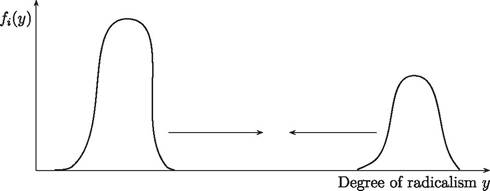
Figure 5.20 A slide of basic densities within a group increases socioeconomic polarization.
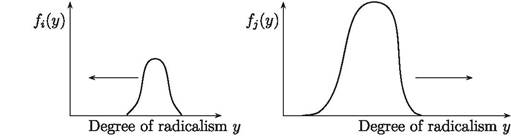
Figure 5.21 A smaller group becoming less radical and a bigger group becoming more radical does not decrease socioeconomic polarization.
The third axiom says that a movement of population from a large group to two equally smaller groups, with the same normalized density, should not decrease polarization. This implies that the identification effect should not be too large (and therefore imposes and upper bound on α in Equation (5.41)). An equalization of population sizes across these three groups with the same distribution of radicalism will thus generate more socioeconomic polarization than if one group dominates size. Added to the usual population invariance property, this necessarily leads to the index:

where α 2 (0,1]. This measure of socioeconomic polarization generalizes the social polarization DP(α, F) (and thus also the RQ index).
Instead of setting alienation between groups to a constant, it is made sensitive to the size of radicalism and to different possible levels of animosity between groups. If the means μi are identical for all groups, then Per(α,F) simplifies to a proportion of DP(α,F). In the particular case of α = 0, Per(α, F) is generalization of the fractionalization index FRAC, and it simplifies to the classical fractionalization index when μi = μj, V i = j. The value of α has the same interpretation as the polarization sensitivity parameter in Esteban and Ray (1994); the larger it is, the greater the departure from (socioeconomic) inequality.The lower bound of α in Equation (5.41) can be set above zero if we require polarization to fall as a number n of identical groups (with relative size 1/n) increases, thus differentiating socioeconomic polarization from fractionalization and inequality. Permanyer (2010) then showed that the lower bound of α becomes (2 — log2 3)/(log2 3 — 1) = 0.71.
The preceding ignores within-group alienation in socioeconomic polarization. Alienation may exist between members of the same group if levels of radicalism differ; within a group, radical members may alienate the more moderate members and vice versa. Permanyer (2010) adapted this by letting between-group alienation be measured by a monotonically increasing function in x + y, but by supposing within-group alienation to be measured by a monotonically increasing function in ∣x — y∣, as is usual in the identification/alienation framework. Under this setting, total polarization becomes
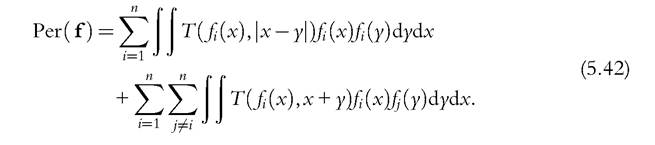
The first component on the right-hand side of Equation (5.42) represents the contribution of within-group polarization and the second component is the contribution of between-group polarization. Within- and between-group components are summed to obtain total polarization.
Using population invariance axioms similar to Axioms DER 2 and DER 3 and a “socioeconomic polarization axiom” that says that a population transfer across two initially identical groups should lower polarization, the index becomes

with α 2 [1/(3n — 2), 1], or with α 2 [0.5, 1] if we require polarization to fall as a number of identical groups increases.
Social polarization and income polarization do not deal with situations in which a society may be partitioned with respect to several variables, some of a social and others of an economic type. Consider, for instance, the case in which individuals may be male or female and may enjoy different health statuses. This is illustrated in Figures 5.22 and 5.23. In the usual social and income polarization settings, the situation in which all males (represented by the dark areas) have very poor heath and all females (represented by the white rectangles) have very good heath (Figure 5.22) leads to the same degree of polarization (and bipolarization) as the one (Figure 5.23) in which half of males and half of females have very poor heath and the other halves very good health. This is because income polarization does not take into account the effect of segregation by social
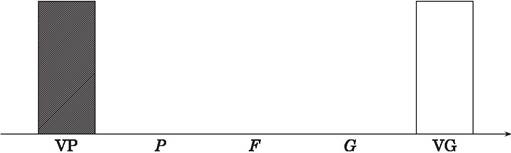
Figure 5.22 A hypothetical distribution of health statuses across two different social groups (males and females)—the initials stand for: very poor (VP), poor (P), fair (F), good (G), and very good (VG). Source: Permanyer and D'Ambrosio (2013).
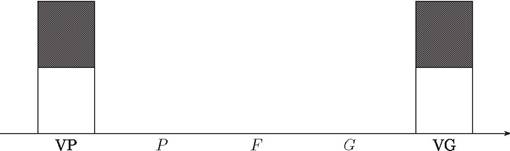
Figure 5.23 A hypothetical distribution of health statuses across two different social groups (males and females)—the initials stand for: very poor (VP), poor (P), fair (F), good (G), and Very Good (VG). Source: Permanyer and D'Ambrosio (2013).
characteristics and because social polarization does not consider distances in welfare across groups. It seems plausible, however, that the situation in Figure 5.22 may exhibit more tension and more polarization than the second, in which males and females are mixed in health status. Polarization should therefore presumably be sensitive to the joint distribution of social groups and of welfare statuses.
Permanyer and D’Ambrosio (2013) pursued this issue by first partitioning the population of individuals into exogenously given groups. Members of a given group identify with their peers within their group but feel alienated from all others. Identification for members of a particular group i depends on the size of the group to which they belong (ni∙). Identification is a function only of group sizes. Alienation is assumed to be the same for every member of a particular group; between-group rather than between-individual alienation matters.
Alienation is captured by an overlap measure. This is different from the usual distancebased definition of alienation. Let θi∙j∙ be an overlap coefficient between groups i and j in a context of categorical welfare data, with C categories, and where πi(yc) is the proportion of individuals in group i that have a level of welfare equal to yc:

Alternatively, with a continuous welfare variable y, we have:

wheref i∙(y) is the normalized density of group i over welfare y. Hence, in capturing alienation, it is not distances that matter but rather the importance of the clustering of groups in certain areas of a welfare domain. This is different from social and income polarization. By Equations (5.44) and (5.45),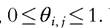 When groups are disjoint,
 and when
groups overlap perfectly Alienation is defined by
 which equals 1 in the
case of completely disjoint groups and 0 in the case of perfectly overlapping groups.
Following the identification-alienation framework of Esteban and Ray (1994), polarization can be defined as the sum of all effective antagonisms, that is, as

Using axioms similar to Duclos et al. (2004) but adapted to a socioeconomic setting with multiple social groups, Permanyer and D’Ambrosio (2013) found that a socioeconomic polarization index of the form Equation (5.46) should be proportional to 

A socioeconomic extension of Esteban et al.’s (2007) income polarization index is provided in Gradin (2000). The extension uses both income distribution and social differences to form groups, in contrast to the EGR(α, σ, F) for which groups are determined on the basis of income differentials. The objective is essentially to assess by how much social polarization correlates with income polarization; the greater the correlation, the greater the polarization association between income and social characteristics.
The first socioeconomic polarization index (called “group polarization”) considers a population of n subgroups defined on the basis of social characteristics, such as education level, skin color, gender, race, region, and so on, rather than income, as for the ER and EGR indices. The socioeconomic grouping induces a partitioning of the income distribution given by Fg. This leads to a socioeconomic polarization index given by

This social categorization of the population leads to lower between-group income dispersion and higher within-group heterogeneity than the “optimal” EGR income partitioning is thus expected to be lower than EGR(α, σ, F*). The lower
the difference between these two expressions, the greater the ability of social groupings to explain income polarization.
Gradin (2000) also proposed an alternative measure of the association between income polarization and socioeconomic polarization (called “explained polarization”). 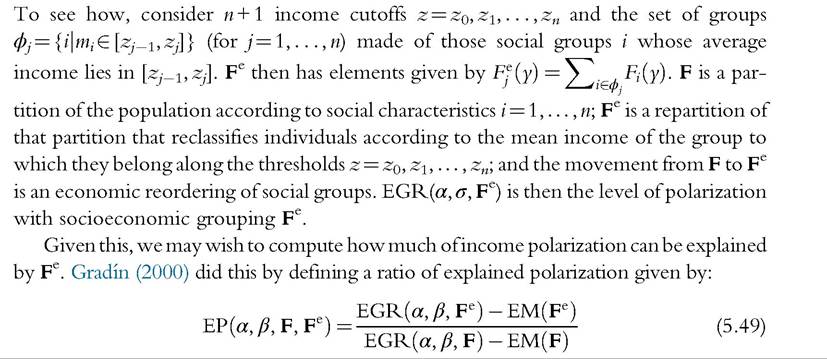 where EM is EGR when there is no between-group heterogeneity.
5.8.
More on the topic Socioeonomic polarization:
- Contents
- Polarization and Collapse
- The Socio-structural Base for Colombian Historic Violence
- One World, Many Peaces
- THE USE AND ABUSE OF EVIDENCE: THE QUESTION OF PROVINCIAL AND ROMAN INFLUENCES ON EARLY ISLAMIC LAW*
- Introduction: Thinking about Secularism
- Omeljan Pritsak Kievan Rus’ and Sixteenth-Seventeenth-Century Ukraine