The BRIC economies: Brazil, Russia, India and China
The term BRICs was first used in 2001 by Jim O’Neill, chief economist at the investment bank Goldman Sachs, who used this label to refer to the four largest and fastest growing emerging countries: Brazil, Russia, India and China.
Goldman Sachs predicted in 2003 that the four economies would comprise more than 10% of the global output by 2010, and in fact they surpassed this target, reaching 15% by that date. The BRIC four countries, combined, currently account for more than a quarter of the world’s land area and more than 40% of the world’s population and hold a combined GDP of more than 8 trillion dollars, or close to 16 trillion dollars in purchasing power parity exchange rates (see Chapter 25, p. 532).This chapter reviews the economic and political context behind the emergence of each of these economies. The demographic and sociocultural contexts of each country are also examined, together with issues of international competitiveness and the impacts on the respective countries of the recent global recession. The chapter concludes by assessing some of the global implications in the coming years stemming from the rise of the BRIC economies.
Rise of BRIC economies
A thousand years ago, China and the region that is now India were the richest and most populous areas of the world. In terms of per capita income, they were then overtaken by various countries in Western Europe, then by some of their European offshoots, such as the US, and finally by some East Asian economies such as Japan and South Korea. This process has now gone into reverse and both China and India are catching up rapidly with the countries which had overtaken them. The acronym BRIC is increasingly used as a symbol of the shift in global economic power away from the developed economies and towards the developing world, and in particular towards Brazil, Russia, India and China.
The onset since 1993 of a consistent decline in the global market shares of exports in goods from the advanced industrialized countries has coincided with the emergence of these new players on the world markets. In fact, Goldman Sachs argued in 2003 that the economic potential of Brazil, Russia, India, and China is such that they could become among the four most dominant economies by the year 2050. Goldman Sachs’ expectations around BRIC growth were met sooner than predicted. The absolute size of China’s economy overtook Germany’s economy in 2007, a year earlier than expected, and overtook Japan’s in July 2010. Goldman Sachs now believes that the Chinese economy will overtake the US by 2027, with India accounting even now for 10 of the 30 fastest- growing urban areas in the world. With 700 million people projected to move to Indian cities by 2050, India’s influence on the world economy will also be larger and faster than was predicted in 2003. Taken together, the BRICs could be larger than the combined contribution of the US and the developed economies of Europe within 40 years. Table 28.1 provides a useful data profile indicating the rapid growth of various indicators across the BRIC economies.Nevertheless, two of the BRICs are still relatively poor countries when measured by per capita income (note that the table uses the terminology GNI, i.e. Gross National Income, but we will use the more usual GDP terminology throughout this chapter). In terms of per capita income: India ($3,020) and China ($6,240) fall below the mean level of GDP per head in the global economy whilst Brazil ($10,180) has a mid-level per capita income and Russia ($19,780) is now relatively affluent (all values in purchasing power parities - PPP - compared against the UK $38,370). An important expectation is that by 2025, BRICs will bring another 200 million people with incomes above $15,000 into the world economy - a number equal to the combined populations of Germany, France and the UK.
This phenomenon will affect world markets as multinational corporations will attempt to take advantage of the enormous potential markets in the BRICs by producing, for example, far cheaper manufactured goods affordable to the consumers within the BRICs rather than concentrating only on the higher priced and ‘luxury’ models that currently bring the most income when sold to these countries.The BRICs have some common features including large territories and populations, generally low income levels, fast economic growth and the emergence of a prosperous local middle class. They also, however, show significant differences, not least because they follow different models of economic development. At its simplest level, Russia and Brazil have relied on commodity price rises, particularly energy in the case of the Russia, whereas India and China have relied on low labour costs to take market share in services and manufacturing respectively from the advanced industrialized economies. As a group, their relationship is somewhat symbiotic: higher demand for raw materials in India and China boosts the GDP of Russia and Brazil. Analysts predict that China, Brazil and India respectively will become the dominant global suppliers of manufactured goods and services, while Brazil and Russia will become the dominant global suppliers of raw materials.
It should be noted that of the four countries, Brazil remains the only nation that has the capacity to be both a dominant global supplier of manufactured goods and services and a dominant global supplier of raw materials simultaneously. Co-operation is thus seen by many to be a logical next step among the BRICs, with Brazil and Russia together forming the logical raw material and energy suppliers to India and China. They have also taken steps to increase their political co-operation, mainly as a way of influencing the outcome of major global trade accords, and to enhance their role in major global organizations such as the IMF and World Bank.
In these ways, the BRICs have the potential to form a powerful economic and political bloc to challenge the modern-day states currently with ‘Group of Eight’ status.In the followings sections we look at the countries individually in terms of their recent economic growth,
Table 28.1 Data profiles of the BRIC economies.
| Brazil | Russia | India | China | |||||||||
| 2000 | 2008 | % increase in decade | 2000 | 2008 | % increase in decade | 2000 | 2008 | % increase in decade | 2000 | 2008 | % increase in decade | |
| World view | ||||||||||||
| Population, total (millions) | 174.17 | 191.97 | 110% | 146.30 | 141.95 | 97% | 1,015.92 | 1,139.96 | 112% | 1,262.65 | 1,324.66 | 105% |
| Population growth (annual %) | 1.4 | 1.0 | 0.0 | -0.1 | 1.7 | 1.3 | 0.8 | 0.5 | ||||
| Surface area (sq. km) | 8,514.9 | 8,514.9 | 17,098.2 | 17,098.2 | 3,287.3 | 3,287.3 | 9,598.1 | 9,598.1 | ||||
| (thousands) | ||||||||||||
| GNI1 Atlas method (current | 673.69 | 1,438.51 | 214% | 250.31 | 1,369.14 | 547% | 458.08 | 1,235.29 | 270% | 1,168.88 | 4,051.77 | 347% |
| US$) (billions) | ||||||||||||
| GNI per capita, Atlas method | 3,870 | 7,490 | 194% | 1,710 | 9,650 | 564% | 450 | 1,080 | 240% | 930 | 3,060 | 329% |
| (current US$) | ||||||||||||
| GNI1 PPP (current | 1,167.25 | 1,955.00 | 167% | 972.45 | 2,807.75 | 289% | 1,553.48 | bgcolor=white>3,442.87222% | 2,895.44 | 8,262.69 | 285% | |
| international $) (billions) | ||||||||||||
| GNI per capita, PPP | 6,700 | 10,180 | 152% | 6,650 | 19,780 | 297% | 1,530 | 3,020 | 197% | 2,290 | 6,240 | 272% |
| (current international $) | ||||||||||||
| People | ||||||||||||
| Life expectancy at birth, | 70 | 72 | 65 | 68 | 61 | 64 | 71 | 73 | ||||
| total (years) | ||||||||||||
| Fertility rate, total (births | 2.4 | 1.9 | 1.2 | 1.5 | 3.3 | 2.7 | 1.8 | 1.8 | ||||
| per woman) | ||||||||||||
| Economy | ||||||||||||
| GDP (current US$) (billions) | 644.70 | 1,638.61 | 254% | 259.71 | 1,667.60 | 642% | 460.18 | 1,214.21 | 264% | 1,198.48 | 4,532.79 | 378% |
| GDP growth (annual %) | 4.3 | 5.1 | 10.0 | 5.6 | 4.0 | 5.1 | 8.4 | 9.6 | ||||
| Mobile cellular subscriptions | 13 | 78 | 600% | 2 | 141 | 7050% | 0 | 30 | N/A | 7 | 48 | 686% |
| (per 100 people) | ||||||||||||
| Internet users (per | 2.9 | 37.5 | 1293% | 2.0 | 31.9 | 1595% | 0.5 | 4.5 | 900% | 1.8 | 22.5 | 1250% |
| 100 people) | ||||||||||||
| Sources: World Bank(2010a) WorldDevelopmentIndicatorsDatabase', UNCTAD (2010b) World Investment Report, and previous | issues; World Bank (2010b) World Development Report, | and | ||||||||||
| previous editions. | ||||||||||||
596 CHAPTER 28 THE BRIC ECONOMIES: BRAZIL, RUSSIA, INDIA AND CHINA
their political, economic and sociocultural structures, starting with China, then moving on to India, Brazil and Russia respectively.
I China
Background
China’s major attraction is its large and fast growing market. It is the most populous country of the world, with its population now standing at 1,324 million people. Economic growth over the past 30 years has been unprecedentedly high, reaching an average annual rate of 9.8% in the first decade of the millennium, though starting from a very low level. The Chinese economy is highly fragmented as is typical of large, fast-growing developing countries with huge regional disparities and a large gap between average incomes in urban and rural areas and wide disparities of personal incomes in general. In 2008, the Chinese GDP amounted to $4,051 billion, approximately the size of the German economy, although China’s GDP per capita is still relatively small and amounted to only $3,060 (about 6% of that in the UK), which places China in the ‘lower middle income country’ category according to the World Bank’s definition. However, using PPP, GDP per capita is significantly higher, reaching $6,240 (15% of the UK). China has achieved a more than five-fold increase in real per capita income since 1990 and lifted more than 390 million people out of poverty.
The relatively low level of per capita income is an important reason for Chinese policy-makers to have placed greater emphasis on foreign demand rather than domestic demand! For this reason, China has so far been a larger and more dynamic market for purchasing investment goods from the rest of the world than for purchasing consumer goods. Investment in fixed assets is unusually high, reaching around 50% of GDP, and investment has been the most important driver of growth over recent years, with around half of the investment being private and the other half public. Table 28.2
Table 28.2 China: data profile.
| 2000 | 2005 | 2007 | 2008 | |
| World view | ||||
| Population, total (millions) | 1,262.65 | 1,303.72 | 1,317.89 | 1,324.66 |
| Population growth (annual %) | 0.8 | 0.6 | 0.5 | 0.5 |
| Surface area (sq. km) (thousands) | 9,598.1 | 9,598.1 | 9,598.1 | 9,598.1 |
| Poverty headcount ratio at national poverty line (% of population) | - | - | - | - |
| GNI, Atlas method (current US$) (billions) | 1,168.88 | 2,292.42 | 3,284.35 | 4,051.77 |
| GNI per capita, Atlas method (current US$) | 930 | 1,760 | 2,490 | 3,060 |
| GNI, PPP (current international $) (billions) | 2,895.44 | 5,389.52 | 7,385.91 | 8,262.69 |
| GNI per capita, PPP (current international $) | 2,290 | 4,130 | 5,600 | 6,240 |
| People | ||||
| Income share held by lowest 20% | - | 5.7 | - | - |
| Life expectancy at birth, total (years) | 71 | 73 | 73 | 73 |
| Fertility rate, total (births per woman) | 1.8 | 1.8 | 1.8 | 1.8 |
| Adolescent fertility rate (births per 1,000 women ages 15-19) | 10 | 10 | 10 | 10 |
| Contraceptive prevalence (% of women ages 15-49) | - | - | - | - |
| Births attended by skilled health staff (% of total) | - | 98 | 98 | - |
| Mortality rate, under 5 (per 1,000) | 36 | 25 | 22 | 21 |
| Malnutrition prevalence, weight for age (% of children under 5) | - | - | - | - |
| Immunization, measles (% of children ages 12-23 months) | 85 | 86 | 94 | 94 |
| Primary completion rate, total (% of relevant age group) | - | - | 99 | 96 |
| Ratio of girls to boys in primary and secondary education (%) | - | - | 103 | 104 |
| Prevalence of HIV, total (% of population ages 15-49) | 0.1 | 0.1 | 0.1 | - |
Table 28.2 (continued)
| 2000 | 2005 | 2007 | 2008 | |
| Environment | ||||
| Forest area (sq. km) (thousands) | 1,770.0 | 1,972.9 | 2,054.1 | - |
| Agricultural land (% of land area) | 58.4 | 58.7 | 59.3 | - |
| Annual freshwater withdrawals, total (% of internal | ||||
| resources) | - | - | 22.4 | - |
| Improved water source (% of population with access) | 80 | 86 | - | 89 |
| Improved sanitation facilities (% of population with access) | 49 | 53 | - | 55 |
| Energy use (kg of oil equivalent per capita) | 865 | 1,296 | 1,484 | - |
| CO2 emissions (metric tons per capita) | 2.7 | 4.3 | 5.0 | - |
| Electric power consumption (kWh per capita) | 993 | 1,783 | 2,332 | - |
| Economy | ||||
| GDP (current US$) (billions) | 1,198.48 | 2,257.07 | 3,505.53 | 4,532.79 |
| GDP growth (annual %) | 8.4 | 11.3 | 14.2 | 9.6 |
| Inflation, GDP deflator (annual %) | 2.1 | 3.9 | 7.6 | 7.8 |
| Agriculture, value added (% of GDP) | 15 | 12 | 11 | 11 |
| Industry, value added (% of GDP) | 46 | 47 | 47 | 47 |
| Services, etc., value added (% of GDP) | 39 | 41 | 42 | 42 |
| Exports of goods and services (% of GDP) | 23 | 37 | 38 | 35 |
| Imports of goods and services (% of GDP) | 21 | 32 | 30 | 27 |
| Gross capital formation (% of GDP) | 35 | 44 | 42 | 43 |
| Revenue, excluding grants (% of GDP) | - | 9.7 | 17.0 | - |
| Cash surplus/deficit (% of GDP) | - | -1.4 | - | - |
| States and markets | ||||
| Time required to start a business (days) | - | 48 | 35 | 40 |
| Market capitalization of listed companies (% of GDP) | 48.5 | 34.6 | 177.6 | 61.6 |
| Military expenditure (% of GDP) | 1.8 | 2.0 | 1.9 | 1.9 |
| Mobile cellular subscriptions (per 100 people) | 7 | 30 | 42 | 48 |
| Internet users (per 100 people) | 1.8 | 8.6 | 16.1 | 22.5 |
| Roads, paved (% of total roads) | - | 41 | 50 | - |
| High-technology exports (% of manufactured exports) | 19 | 31 | 30 | 29 |
| Global links | ||||
| Merchandise trade (% of GDP) | 39.6 | 63.0 | 62.1 | 56.5 |
| Net barter terms of trade index (2000 = 100) | 100 | 86 | 80 | 74 |
| External debt stocks, total (DOD, current US$) (millions) | 145,711 | 283,986 | 373,773 | 378,245 |
| Total debt service (% of exports of goods, services | ||||
| and income) | 9.3 | 3.1 | 2.2 | 2.0 |
| Net migration (thousands) | -786 | -2,058 | - | - |
| Workers' remittances and compensation of employees, | ||||
| received (current US$) (millions) | 5,237 | 24,102 | 38,791 | 48,524 |
| Foreign direct investment, net inflows (BoP, current US$) | ||||
| (millions) | 38,399 | 79,127 | 138,413 | 147,791 |
| Net official development assistance and official aid received | ||||
| (current US$) (millions) | 1,712 | 1,814 | 1,487 | 1,489 |
| Source: World Bank (2010a) World Development Indicators Database, April. | ||||
provides a useful data profile on China using many indicators over the period 2000 to 2008 (World Bank 2010a).
The role of the state
The Chinese economy can be characterized as a hybrid, combining elements of a developing country, a transition country and a ‘newly industrializing country’. The institutional and political framework is that of a ‘Socialist Market Economy’, where the state has a significant influence on the essentially market-driven system and the Communist Party of China has remained the all-embracing power. Due to the dominance of State Owned Enterprises (SOEs) and the relatively high degree of government influence, China is still classified as a ‘non-market economy’ (NME) by the EU and the US. An important international economic policy goal for many, both inside and outside China, is that China reach ‘market economy status’ as soon as possible!
Under constitutional law China is a centralist state, but during the economic reforms it has become more decentralized, although on a largely informal basis, in that provinces have received wider discretion in how they implement policy goals set by the central government. Government expenditure is relatively low by international standards (20% of GDP), about half of which is spent by the central government and the other half by local governments. The budget deficit and the total public debt are relatively low, reaching -0.6% and 20% of GDP respectively in the most recent year for which data are available.
The state has a dual function as the owner of large public enterprises and as a powerful regulator of the economy. To regulate the economy, the government applies measures such as interest rate adjustments and tax policies, but also uses more direct measures such as credit controls, export restrictions and licensing. Apart from the long-term development plans and the ‘five-year plans’, which provide a broad framework for government policy, there are also sectoral policies such as energy plans and plans for industrial development and for important individual industries, e.g. the automotive sector.
The public enterprise sector in China is very heterogeneous: public enterprises may be controlled either by the central government or by local governments, some are fully state-owned while in others the state only has a controlling interest, and some are collectively owned. Because of the difficulty in determining which enterprises are actually state-controlled, there is considerable uncertainty in providing an accurate estimate of the size of the Chinese public sector, but most estimates indicate that 30-40% of the GDP is currently produced by public enterprises of one kind or another.
There has never been an official process of ‘privatization’. It was only after 1997 that a comprehensive ‘state-owned enterprise reform’ (SOE reform) was launched and large numbers of small enterprises were either sold off by various methods (including auctions), made bankrupt or merged with larger ones. The state retained and restructured the largest and most strategic SOEs. Many were turned into joint stock companies and accepted private partners and/or listed on the stock market. SOEs enjoy certain advantages such as better access to loan and equity capital. On the other hand, they may be prompted to actively support government policies, e.g. by keeping employment high, by supplying products at a loss or by investing abroad to secure strategic raw materials, and in return they may receive subsidies.
No enterprises have been sold to foreigners, as has been the case in the Central and Eastern European countries. In most Sino-foreign joint ventures, the Chinese partner is a state-owned enterprise. The ‘Guidelines for state-owned enterprise reform’ in 2006 give a list of sectors in which the state should be the sole owner or have a majority share. These include power generation and distribution, oil, petrochemicals and natural gas, telecommunications and armaments.
Economic context
Officially, the Chinese economic model is termed ‘Building socialism with Chinese characteristics’ or a ‘socialist market economy’, where markets take the pivotal role for the functioning of the economy, but public ownership, direct government intervention and state-led industrial policies remain an integral part of the system. The market-oriented reform of the Chinese command economy began after Mao Tse Tung’s death, under the leadership of Deng Xiaoping in 1978. It was a gradual process, as opposed to the ‘shock therapy’ taken by the Central and East European countries ten years later, which left the Chinese state with substantial power. The reform started in the agricultural sector and proceeded to the industrial sector in 1985 and the services sector only after China’s entry into the World Trade Organization (WTO) in 2001. A number of reform steps are still not completed, such as the rules for the acquisitions and transfer of ‘land use rights’ (all land in China is owned by the state), price reform (prices of important agricultural products such as grain are still regulated and prices of energy and other utilities are also set by the state authorities), establishing a new social security and health system and developing an adequate legal system.
In parallel to the market-oriented reforms starting in 1978, China gradually opened its closed, selfsupporting economy following the model of the Asian ‘Newly Industrializing Economies’ in the 1970s, which attracted labour-intensive, export-oriented foreign direct investment (FDI) from more advanced economies such as the USA and Japan to produce mainly textiles and clothing. In the first step ‘Special Economic Zones’ (SEZs) were established in the south of China to attract export-oriented FDI from nearby Hong Kong and Taiwan to take advantage of low wage costs and modern infrastructure, and tax privileges and tariff exemptions. More ‘special zones’ were then established in other coastal provinces such as Shanghai.
Through a ‘joint venture law’, the state then followed a ‘market for technology’ strategy such that in exchange for access to the highly protected Chinese market, foreign producers were expected to transfer advanced technology to their Chinese partners. In a second step, after 1992, the system of SEZs was extended to the inland provinces and a greater number of Chinese enterprises were allowed to engage in foreign trade. Tariff rates for intermediate inputs and investment goods were reduced, but remained high for final products. As a consequence FDI grew extremely rapidly and China became the second most important recipient of inward FDI after the US. Since WTO entry, Chinese exports and imports have expanded even more strongly, with exports rising much faster than imports, which has led to a large trade surplus and corresponding bilateral trade deficits with the US and the EU and to the accumulation of large foreign exchange reserves by China. In order to rebalance this trade relationship between China and the developed economies, the latter argue that the renminbi should be allowed to strongly appreciate to make Chinese exports more expensive abroad and imports less expensive in China, thereby helping to reduce the country’s external surplus and, as a sideeffect, reduce the US current-account deficit with China (Krugman and Obstfeld 2010). Other experts suggest that measures such as an increase in government spending on social security (including pensions, health and education) and increased public investment in housing could help reduce household precautionary savings and thereby help increase consumer spending in China.
In 2001, the long-term development goal for China was still formulated in quantitative terms, namely ‘to quadruple the per capita value of the 2000 GDP by 2020’, implying an average growth rate of 8%. The next generation of Chinese leaders, under Hu Jintao, came into power in 2003 and opted for more sustainable growth, clearly emphasizing qualitative instead of quantitative growth. To secure this sustainability, the state should put more emphasis on tackling social problems, reducing regional disparities, improving environmental protection and increasing energy efficiency. The export-led development model should therefore be phased out and transformed into a more domestic-market oriented growth model. In line with these goals, the Chinese economy would then become more balanced between agricultural and industrial development, with industry restructured away from the low value added export-intensive industries and towards the higher value added, technology-intensive industries.
The new development model is putting strong emphasis on the quality of inward FDI that China should absorb, which may reduce the overall size and change the type of FDI inflows into China in the future. China will seek to encourage technologyintensive investment, more control of Sino-foreign mergers and acquisitions and better protection of intellectual property rights. China has a sharply growing number of college graduates and earlier experiences in East Asia suggest that changes in the sectoral structure of an economy, for example linked to the technological upgrading of its export sector, can absorb part of the increased supply of educated workers. This is likely to happen also in China: the slower growth of the labour surplus could make unskilled labour relatively more expensive, and the growing supply of skilled labour could make skilled workers relatively less expensive. As a result, the country’s comparative advantage could shift towards more skill-intensive manufactures and services.
In 2002, China introduced the ‘go-abroad’ policy aimed at making more efficient use of its foreign exchange reserves to secure resources, to acquire technology, to gain access to established distribution networks, and to reduce the risk for Chinese enterprises of getting caught by non-tariff barriers to trade. The longer-term perspective is to generate a group of 30-50 large transnational companies.
China and the global economic crisis
GDP growth fell from 9.9% during the first three- quarters of 2008 to 6.8% in the last quarter of 2008 and reached only 6.1% in the first quarter of 2009. The transmission of the crisis took place in the form of declining exports due to sluggish external demand, which then triggered a slowing-down of industrial production and investments. Because of falling incomes and rising unemployment, private consumption dropped; nor was China spared from the global contraction of FDI, with FDI inflows falling below the previous levels. Real estate investment contracted particularly strongly in the first quarter of 2009 and stock prices in general fell dramatically.
To contain the crisis, the Chinese government announced a ‘stimulus package’ in November 2008, providing additional funds of more than $600 billion for 2009 and 2010 (equivalent to some 7% of GDP per annum). The funds are being spent mainly on infrastructure, such as highways, railways, airports and rural infrastructure (37.5%); reconstruction of earthquake hit areas (25%); affordable housing (10%); improvement of villages (9.25%); public health and education (3.75%); and restructuring of industry (14.5%).
Thanks to its huge domestic market and its massive and timely stimulus policies, China appears to be the BRIC which has been least affected by the crisis and its economy seemed to bottom-out earlier than those of the advanced economies. GDP growth in the second quarter of 2009 reached 7.9%, almost 2% higher than in the previous quarter. The strongest recovery came from fixed asset investment, pushed up by the extra public expenditures. Private consumption rose too, although moderately. On the supply side, industrial output, which had suffered the heaviest slump of all sectors, rose sharply. Stock prices gained more than 60% during the first half of that year.
In the medium term, the major question is whether the Chinese government will seek to continue its policy of qualitative rather than quantitative growth in the face of the current global financial crisis, with exports and FDI shrinking worldwide.
In recent years, most external estimates for China’s long-term economic development until 2020 have been in the range between 6% and 9% average annual growth of GDP, which is also in line with the Chinese government’s target of 7-8% average annual growth. The question is whether the current global crisis will affect these estimates. If the crisis is over in one or two years, little will change, but if the world slides into a prolonged recession, China’s transition from an export-led to a domestically-oriented economy may proceed slower than envisaged, with FDI inflows and technology transfer slower than expected. Estimates suggest this may result in one to two percentage points less annual growth in China than otherwise. Whatever the prospects for a ‘double dip’ global recession, there is no doubt that China is moving rapidly from a developing to a developed country and from a regional to a global economic power.
Demographic and sociocultural factors
Because of the one-child policy proclaimed by the Chinese government at the beginning of the 1980s, population growth in China at around 0.6% per annum is much lower than in other countries at a similar stage of economic development, and is only slightly higher than the EU average. China also faces the problem of a rapidly ageing population and rising dependency ratios of the retired on the working population, which will have an important influence on consumption as well as production in the future. It is estimated that the Chinese population of working age will have reached its maximum as early as 2015. Table 28.3 gives a useful breakdown of demographic patterns and trends in China in recent years.
The ‘one-child rule’ in China is beginning to be lifted as the country faces the future with an increasingly ageing population. For example, for the first time in over 30 years, officials in Shanghai, the country’s economic capital, are urging eligible parents to plan for a second child. The move was prompted by the growing demographic imbalance in the city and fears that the younger generation will not be able to support the ageing population. The one-child system,
Table 28.3 China's population (millions), 1994 and 2009.
| Age (years) | Male 1994 | Female 1994 | Male 2009 | Female 2009 |
| 0-5 | 59 | 53 | 45 | 40 |
| 5-10 | 62 | 58 | 42 | 39 |
| 10-15 | 53 | 50 | 53 | 44 |
| 15-20 | 51 | 49 | 56 | 50 |
| 20-25 | 64 | 59 | 60 | 54 |
| 25-30 | 64 | 59 | 52 | 49 |
| 30-35 | 48 | 43 | 50 | 46 |
| 35-40 | 46 | 41 | 60 | 58 |
| 40-45 | 44 | 40 | 59 | 57 |
| 45-50 | 30 | 28 | 43 | 42 |
| 50-55 | 25 | 20 | 41 | 39 |
| 55-60 | 23 | 18 | 39 | 36 |
| 60-65 | 20 | 17 | 26 | 21 |
| 65-70 | 18 | 15 | 20 | 20 |
| 70-75 | 11 | 12 | 18 | 17 |
| 75-80 | 6 | 7 | 10 | 12 |
| 80-85 | 2 | 4 | 5 | 7 |
| 85-90 | 1 | 2 | 2 | 4 |
| 90-95 | 1 | 2 | 2 | 3 |
where all pregnancies are monitored and sometimes terminated by order, was enforced to control a population that is the largest in the world at more than 1.3 billion. ‘We advocate eligible couples to have two children because it can help to reduce the proportion of the ageing people and alleviate a workforce shortage in the future,’ said Xie Linli, the director of the Shanghai Population and Family Planning Commission.
In practice the one couple, one child familyplanning policy has actually been less rigorous than its name suggests. Urban parents have often been permitted to have two children if the husband and wife were themselves from one-child families. In rural areas, couples have often been allowed to have a second child if their first child was a girl. Shanghai’s over-60 population already exceeds three million, or 21.6% of registered residents. Zhang Meixin, a spokesman for the Shanghai Commission, said, ‘That is already near the average figure of developed countries and is still rising quickly.’ By 2020 the proportion of over-60s is expected to rise to 34% of the city’s population.
The elderly population is rising at a similar rate across the rest of China, mainly in cities, with the working-age population expected to start shrinking in about 2015. The overall population will peak in 2030, with China becoming the first country to grow old before it grows rich and therefore likely to find it even more difficult to support a nation of pensioners. The US Centre for Strategic and International Studies warned in 2009 that by 2050, China would have more than 100 million people aged 80 or over. The country will by that date only have 1.6 working age adults to support every person aged 60 or above, as compared with 7.7 working age adults in 1975.
Figure 28.1(c) provides a useful summary of Chinese cultural characteristics from the perspective of Gert Hofstede’s classification of national cultural characteristics. We will refer back to Fig. 28.1 as we discuss each of the individual BRIC countries, but here our focus in on China.
■ Power distance. In terms of power distance (PDI) China has a much higher score (80) as compared to the world average score of 60, suggesting much greater respect for position within hierarchies and for receiving direct instructions in China as compared to, say, the UK (35), US (40) and most other countries which also have lower PDI scores than China.
■ Individualism. In terms of individualism (IDV) China has a much lower individualism score (20) as compared to the world average score of 44, and the UK (89) and US (91). This indicates the much more collectivist outlook in China as compared to the greater emphasis on self-reliance and relatively loose bonds with others in the UK, US and most other countries.
■ Masculinity. In terms of masculinity (MAS) China has a higher score (66) as compared to the world average score of 50, suggesting a greater emphasis on assertiveness, decisiveness and career focus amongst other predominantly ‘male’ characteristics.
■ Uncertainty avoidance. In terms of uncertainty avoidance (UAI) China has a much lower score (30) than the world average score of 68. This implies that China is much less concerned with uncertainty avoidance than many other countries, suggesting that China has a much higher degree of
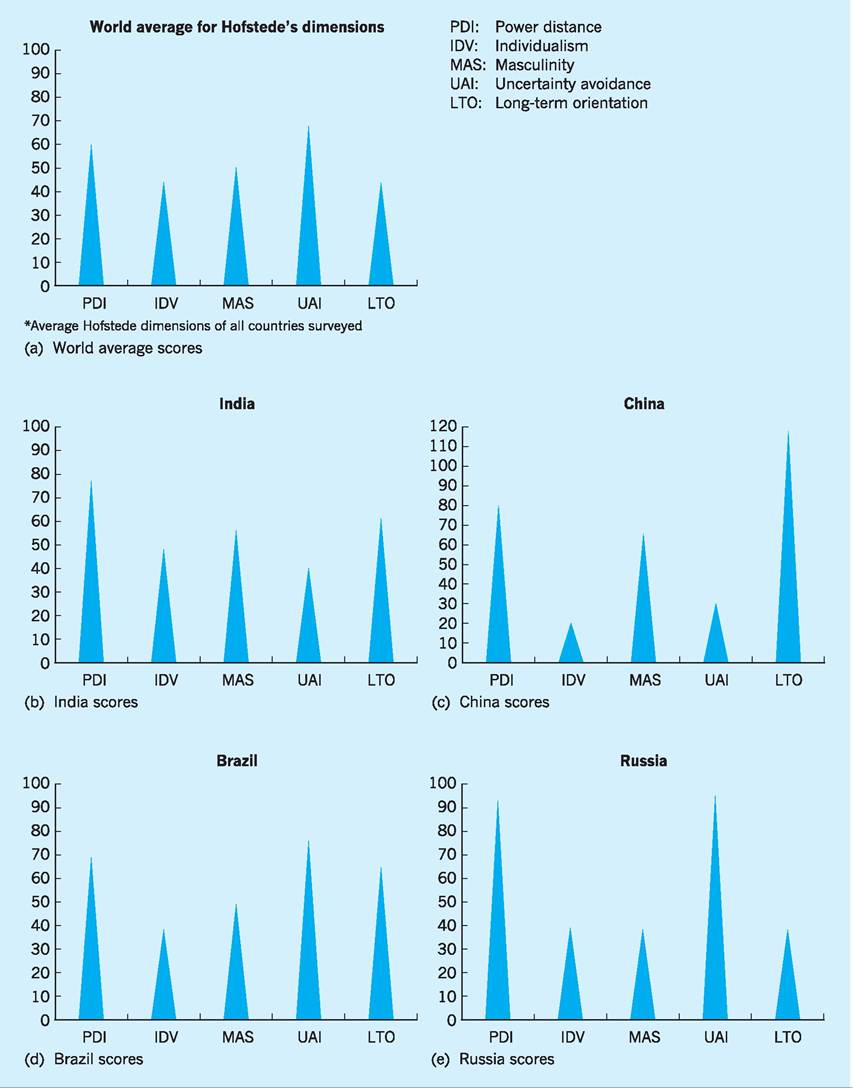
Fig. 28.1 Hofstede scores on five cultural dimensions.
Source: Adapted from Hofstede and Hofstede (2005).
acceptance of uncertainty and change than many might have expected.
■ Long-term orientation. In terms of long-term orientation (LTO) China has a much higher score (118) as compared with the world average score of 44. There is clearly a much greater readiness in China to postpone immediate gratification and materialism in favour of achieving longer-term objectives as a result of such abstinence.
International competitiveness
We have already seen (Chapter 7, p. 131) the low wage advantage of China, as compared to many other countries. The US Bureau of Labor Statistics (2010) estimates average labour costs in China at only $1.4 per hour in manufacturing, as compared to an EU average of $43.3 per hour in manufacturing and an East Asia (excluding Japan) average of $13.3 per hour in manufacturing. Of course we have already noted (Chapter 1, p. 19) that a more accurate measure of international competitiveness must also bring in relative labour productivity and the relative exchange rate, when calculating the most widely used single measure of international competitiveness, namely relative unit labour cost (RULC). The relatively low labour productivity in many Chinese economic sectors will, of course, offset to some extent the competitive advantage of China on the basis of labour costs and a relatively low exchange rate. Nevertheless the huge trade surpluses with the US and Europe in particular provide further evidence of China’s highly competitive economy in many sectors, especially manufacturing.
One further point of global relevance is the high propensity of the Chinese population to save. In fact, savings in total, whether from households, businesses or government, account for an astonishing 50% of the Chinese national income. With China having a balance of payments surplus of some $300bn, there is arguably a global ‘need’ for China to spend more on imports to stimulate other economies (via an injection of extra exports into their economies), and help correct global balance of payment imbalances. As the Chinese government increases its provision of healthcare and other services, it may be that the ‘precautionary’ need for high savings to guard against adversity may become less pressing!
India
Background
India was a signatory to the GATT agreements of 1994 and therefore became a founding member of the WTO. India has a large, highly diverse and complex economy and in recent years it has experienced relatively rapid economic growth and become one of the more attractive destinations for foreign investment in the developing world. It has a huge population of around 1.2 billion people and is projected to overtake China as the most populous nation in the world in the near future. India’s rate of economic growth is accelerating and many commentators predict that it is about to move onto a Chinese-style growth path although there are some major obstacles to be overcome if this is to be achieved! Infrastructure such as road transport is poor in India and there is widespread illiteracy, with over 20% of the Indian population aged 15-24 illiterate, as compared to only 5% in China a decade ago and 1% today.
India has benefited from the opportunities for globalization, mainly as an exporter of tradable services, while the slower growth in its manufacturing sector has been driven primarily by domestic demand. GNI in 2008 was $3,443bn in PPP terms, making India the fourth largest economy in the world, while in terms of nominal exchange rates, the GNI amounted to $1,235bn. However, in per capita terms GNI in 2008 was $1,080 in nominal exchange rates but a higher $3,020 at PPP.
The role of the state
There is a federal system of government with 30 states and five union territories (which are under the control of the central government). Economic powers are shared between central and state governments, with the central government controlling all monetary policy and significant elements of fiscal policy. All direct taxes and taxes on international trade, as well as taxes on services, are collected by the central government, although states are allowed to collect their own value added tax and property taxes. The Reserve Bank of India (the central bank) can determine and constrain the borrowing limits of the state governments, thereby constraining their fiscal policies. State governments that borrow from international organizations such as the World Bank and the Asian Development Bank require the prior permission of the central government. The central government, as well as many states, has passed fiscal responsibilities legislation that puts a limit of 2% of GDP on the fiscal deficit. However, these have been explicitly relaxed during the recent crisis, and even in the past they have often been breached via the internationally familiar method of moving several items of expenditure off-budget!
The recent rapid growth of the economy has placed increased stress on the physical infrastructure such as electricity, railways, roads, ports, airports, irrigation, urban and rural water supply and sanitation. Since all of these already suffered from substantial shortages and lack of capacity, this has made the ‘physical infrastructure deficit’ even more evident! Total infrastructure investment has amounted to around 5% of GDP in recent years according to the Planning Commission, which also estimated that this ratio would need to rise to 9% to get at least close to meeting the required infrastructure needs of the Indian economy and society. Table 28.4 provides a useful data profile of India and its development path across many indicators.
Economic context
The diversity of India encompasses many different features. The economy includes various different production and distribution systems: from traditional village farming by peasant households, shifting cultivation and pastoralism in some areas, to modern mechanized agriculture; from labour-intensive handicraft production to a wide range of modern industries at different levels of technological development; from low-productivity informal service activities to highly skilled and capital-intensive ‘new’ services. Geographically India covers a huge area from mountainous and cold or temperate regions to sub-tropical
Table 28.4 India: data profile.
| 2000 | 2005 | 2007 | 2008 | |
| World view | ||||
| Population, total (millions) | 1,015.92 | 1,094.58 | 1,124.79 | 1,139.96 |
| Population growth (annual %) | 1.7 | 1.4 | 1.3 | 1.3 |
| Surface area (sq. km) (thousands) | 3,287.3 | 3,287.3 | 3,287.3 | 3,287.3 |
| Poverty headcount ratio at national poverty line (% of | ||||
| population) | 28.6 | bgcolor=white>-- | - | |
| GNI, Atlas method (current US$) (billions) | 458.08 | 823.09 | 1,116.93 | 1,235.29 |
| GNI per capita, Atlas method (current US$) | 450 | 750 | 990 | 1,080 |
| GNI, PPP (current international $) (billions) | 1,553.48 | 2,509.01 | 3,206.74 | 3,442.87 |
| GNI per capita, PPP (current international $) | 1,530 | 2,290 | 2,850 | 3,020 |
| People | ||||
| Income share held by lowest 20% | - | 8.1 | - | - |
| Life expectancy at birth, total (years) | 61 | 63 | 63 | 64 |
| Fertility rate, total (births per woman) | 3.3 | 2.9 | 2.8 | 2.7 |
| Adolescent fertility rate (births per 1,000 women ages 15-19) | 88 | 74 | 69 | 67 |
| Contraceptive prevalence (% of women ages 15-49) | 47 | - | - | - |
| Births attended by skilled health staff (% of total) | 43 | - | - | - |
| Mortality rate, under 5 (per 1,000) | 93 | 77 | 71 | 68 |
| Malnutrition prevalence, weight for age (% of children under 5) | - | - | - | - |
| Immunization, measles (% of children ages 12-23 months) | 54 | 64 | 70 | 70 |
| Primary completion rate, total (% of relevant age group) | 72 | 85 | 94 | - |
| Ratio of girls to boys in primary and secondary education (%) | 79 | 90 | 92 | - |
| Prevalence of HIV, total (% of population ages 15-49) | 0.5 | 0.4 | 0.3 | - |
Table 28.4 (continued)
| 2000 | 2005 | 2007 | 2008 | |
| Environment | ||||
| Forest area (sq. km) (thousands) | 675.5 | 677.0 | 677.6 | - |
| Agricultural land (% of land area) | 61.4 | 60.5 | 60.5 | - |
| Annual freshwater withdrawals, total (% of internal | ||||
| resources) | - | - | 51.2 | - |
| Improved water source (% of population with access) | 81 | 85 | - | 88 |
| Improved sanitation facilities (% of population with access) | 25 | 28 | - | 31 |
| Energy use (kg of oil equivalent per capita) | 450 | 488 | 529 | - |
| CO2 emissions (metric tons per capita) | 1.2 | 1.3 | 1.4 | - |
| Electric power consumption (kWh per capita) | 402 | 476 | 542 | - |
| Economy | ||||
| GDP (current US$) (billions) | 460.18 | 837.20 | 1,232.82 | 1,214.21 |
| GDP growth (annual %) | 4.0 | 9.3 | 9.6 | 5.1 |
| Inflation, GDP deflator (annual %) | 3.5 | 4.7 | 5.3 | 7.2 |
| Agriculture, value added (% of GDP) | 23 | 19 | 18 | 17 |
| Industry, value added (% of GDP) | 26 | 28 | 29 | 28 |
| Services, etc., value added (% of GDP) | 50 | 53 | 53 | 54 |
| Exports of goods and services (% of GDP) | 13 | 19 | 21 | 24 |
| Imports of goods and services (% of GDP) | 14 | 22 | 25 | 29 |
| Gross capital formation (% of GDP) | 24 | 34 | 38 | 36 |
| Revenue, excluding grants (% of GDP) | 11.9 | 12.1 | 14.0 | 14.3 |
| Cash surplus/deficit (% of GDP) | -3.9 | -3.2 | -1.0 | -1.5 |
| States and markets | ||||
| Time required to start a business (days) | - | 71 | 33 | 30 |
| Market capitalization of listed companies (% of GDP) | 32.2 | 66.1 | 147.6 | 53.2 |
| Military expenditure (% of GDP) | 3.1 | 2.8 | 2.4 | 2.7 |
| Mobile cellular subscriptions (per 100 people) | 0 | 8 | 21 | bgcolor=white>30|
| Internet users (per 100 people) | 0.5 | 2.5 | 4.1 | 4.5 |
| Roads, paved (% of total roads) | 47 | - | - | - |
| High-technology exports (% of manufactured exports) | 5 | 5 | 5 | 6 |
| Global links | ||||
| Merchandise trade (% of GDP) | 20.4 | 29.0 | 30.8 | 42.5 |
| Net barter terms of trade index (2000 = 100) | 100 | 105 | 127 | 92 |
| External debt stocks, total (DOD, current US$) (millions) | 100,243 | 120,224 | 204,992 | 230,611 |
| Total debt service (% of exports of goods, services | ||||
| and income) | 14.5 | 13.1 | 13.7 | 8.7 |
| Net migration (thousands) | -1,400 | -1,540 | - | - |
| Workers' remittances and compensation of employees, | ||||
| received (current US$) (millions) | 12,883 | 22,125 | 37,217 | 49,941 |
| Foreign direct investment, net inflows (BoP, current US$ | ||||
| (millions) | 3,584 | 7,606 | 25,127 | 41,169 |
| Net official development assistance and official aid received | ||||
| (current US$) (millions) | 1,373 | 1,851 | 1,384 | 2,108 |
| Source: World Bank (2010a) World Development Indicators Database, April. | ||||
monsoon regions to arid desert conditions. Linguistically India has the most diverse population in the world, with 14 official languages other than English (which is widely used in government, the organized sector and for inter-state communication) as well as 250 minor languages and several thousand dialects.
India’s integration with the world economy increased rapidly in the 1990s, associated with the various economic reform measures. Trade to GDP ratios in India increased from 11% in 1995 to around 24% in the latest data period. The share of agriculture in GDP has fallen in the course of development, but there has been little increase in the share of the secondary sector which has hardly changed since the early 1990s. In India fewer industries have been as export dependent as those in China, and those that are tended to be traditional industries, such as apparel, leather goods and textiles. In most manufacturing categories (at the three-digit SITC - Standard International Trade Classification - level) exports have accounted for less than 20% of production over this period. The most dramatic increase in manufacturing exports has been to China, as India has become a ‘player’ in the export expansion of the Asian region as a whole, supplying metals and other intermediate products to China for further processing for the US and European markets.
In service exports, India has been much more successful, becoming the foremost exporter of computer and information services in the international economy, with its share in world exports of computer and information services placed at 17% in the most recent data. Indeed, Indian economic growth in recent years has essentially been service-led, as the rate of growth of services within GDP has been much higher than the rate of growth of overall GDP, with more than 60% of the increase in GDP during the past 20 years being due to an increase in GDP from services.
However, despite this rapid growth, the absolute size of the computer and information services sector in India remains relatively small (less than 6% of GDP). It is the vast mass of differentiated but largely low-productivity unorganized services which still accounts for half the GDP and most of the employment in the services sector. Further, the computer and information sector’s contribution to employment does not compare with its role in the generation of income and foreign exchange. The total IT industry, including both hardware and software elements as well as IT-enabled services, still employs only around 2 million workers.
India’s telecom sector has been possibly the biggest success story of its market-oriented reforms. Deregulation and liberalization of telecommunications laws and policies have prompted rapid growth in this sector. With more than 270 million connections, India’s telecommunication network is currently the third largest in the world, and the second largest among the emerging economies of Asia. At present more than 8 million telephone connections are being added every month, and the frenetic pace of expansion continues despite the economic slowdown.
There has been a significant amount of liberalization concerning FDI, with the government moving from fairly strict controls to a much more liberal regime as regards the extent and proportion of shares held in private hands, reductions in the need for permissions and in the constraints placed on profit repatriation, and fewer foreign exchange controls. Similarly FDI policy in India is now thought to be among the most liberal in the emerging economies, with FDI up to 100% now allowed under the ‘automatic route’, i.e. without prior approval, in most sectors and activities. There is, however, a small list of industrial sectors is which FDI is not permitted, including arms and ammunition, atomic energy, railway transport, coal and lignite, and the mining of iron, manganese, chrome, gypsum, sulphur, gold, diamonds, copper and zinc. Whilst there are still limits on FDI permitted in a few key sectors, such as telecommunications, where these still exist the limits have been relaxed significantly.
India and the global economic crisis
India has been adversely affected by the global economic crisis. Rapidly declining exports, reversal of private capital flows and worsening fiscal balances of both the central and state governments have constrained the immediate prospects for growth in the period since 2007, although the impact thus far has been one of slowing down the growth process rather than reversing it with negative output growth. As in some of the Western economies, the earlier emphasis on public spending as the principal stimulus for growth has been replaced in the past 15 or more years with debt-financed sources for housing investment and private consumption for the burgeoning middle classes. This required a relaxation of the terms on which debt was available to households and the private sector, and therefore made the country’s financial system more vulnerable to default at various levels, especially in circumstances such as ‘contagion’ from the sub-prime crisis (see Chapter 30). The Indian government’s attempts at recovery have focused on encouraging banks into lending even more, in the hope that there would be enough borrowers who would use that credit to revive flagging domestic demand and make up for sluggish exports. In addition, the recovery strategy has pushed forward infrastructure investment, financed not only with domestic debt but also with external commercial borrowing. While this seems to have had some immediate effects in terms of creating some growth revival, especially in an international context, it does involve further potential problems for the future! It arguably adds to the debt spiral and may involve a currency mismatch inasmuch as infrastructural projects are unlikely to yield foreign exchange revenues that can be used to meet future interest and amortization commitments payable in foreign exchange.
Nevertheless, there remain several reasons to be optimistic about the medium-term outlook for the Indian economy. First, there are basic strengths defined by the potentially huge domestic mass market, which is now beginning to expand in terms of effective purchasing power. Second, new government welfare programmes will act as cushions for the income of the poor and as a demand stimulus (perhaps reducing precautionary savings), especially for the rural economy. Third, the significant increase in funding for education at all levels will also have a positive effect. Thus, while the global crisis is definitely taking its toll on India, there are other forces within the economy that suggest that faster recovery and more positive future growth patterns are still possible.
Demographic and sociocultural factors
India has a population of 1,140 million, growing at an annual rate of 1.3%, with some 30% urban based in 2010, a significant increase on the 25% urban based in 1990. Although the ageing population in India is by no means as severe a problem as in China, India also has a rising ‘old age dependency ratio’ defined as the population aged 65 years and above expressed as a percentage of the population of working age (15-64 years of age). This ratio has risen in India from 6.6 in 1990 to 7.7 in 2010, whereas in China it has risen from 8.3 to 11.4 over the same period!
Figure 28.1 earlier (p. 603) provides an outline of India’s cultural characteristics using Hofstede’s definitions, and comparing these with the other BRIC economies and the world ‘average’ scores for the individual elements.
As we can see, India is similar to China in terms of Power Distance (PDI), with its ‘score’ of 77 higher than the world average of 60, indicating significant respect for position within hierarchies and for accepting direct instructions. The India score for Individualism (IDV) is 48, which is interestingly above the world average (44) and well above that for China (20). This suggests a less collectivist outlook in India than in China and a greater emphasis on self-reliance and less close bonds with others. As regards Masculinity (MAS) the Indian score of 56 is again above the world average (50), suggesting a somewhat greater emphasis on decisiveness, career focus, assertiveness and other ‘male’ characteristics. As regards Uncertainty Avoidance (UAI), the Indian score of 40 is well below the world average (68), suggesting a higher degree of acceptance of uncertainty and change in India than perhaps might have been expected! Finally, in terms of Long-term Orientation (LTI) the Indian score of 61 is well above the world average (41), suggesting a lesser emphasis on materialism and instant gratification and a greater focus on long-term outcomes than in many other countries.
In terms of religion, all the major religions of the world are represented in the population. The Census of India has indicated that 80.2% of the population is officially described as Hindu, 13.4% as Muslim, 2.3% Christian, 1.9% Sikh, and the remaining 1.9% consists of Buddhists, Jains, Zoroastrians and various other religions. Social divisions extend beyond religious and ethnic groups to caste divisions which are extremely complex.
International competitiveness
We have already seen (Chapter 7, p. 131) the low wage advantage of India, as compared to many other countries. The estimate by the US Bureau of Labor Statistics (2010) is of an average labour cost in India of only $0.9 per hour in manufacturing, lower even than the $1.4 per hour in China and well below the EU average of $43.3 per hour in manufacturing and East Asian (excluding Japan) average of $13.3 per hour in manufacturing. Of course, we have already noted (Chapter 1, p. 19) that a more accurate measure of international competitiveness must also bring in relative labour productivity and relative exchange rate, needed for calculating the most widely used single measure of international competitiveness, namely RULC. The relatively low labour productivity in many lower technology Indian economic sectors and the relatively high exchange rate for the rupee will, of course, offset to some extent the competitiveness advantages on the basis of labour costs alone. Indeed, India has had an overall balance of payments deficit on goods and services since year 2000.
Brazil
Background
Brazil is an emerging world economic power, being the fifth largest country in the world, both in terms of territory (8.5 million km2) and of population (with an estimated 192 million inhabitants in 2008). Its population is predominantly young and mostly concentrated on or near the Atlantic coast of the southeastern and north-eastern states.
In recent years, Brazil has been implementing an increasingly assertive foreign policy, playing an active role in positioning itself as a representative of emerging countries and as a staunch defender of poorer countries, particularly in Africa. The country is a member of the G20 group of richest nations, leading the reforms and global responses to the 2008 financial crisis. Brazil plays a key political role within Mercosur pushing for the negotiation of free trade agreements with third counties and for the extension of Mercosur. Brazil has also diversified its bilateral relations, establishing closer links with the other BRIC powers with Arab and African countries, while maintaining balanced relations with the US and EU.
Brazil is classified as an upper-middle-income country with a GNI of $1,439bn and a per capita income of approximately $7,490 ($10,180 measured at PPP) in 2008, being the world’s 8th largest consumption market and the world’s 10th largest economy. Since 2000 the average GDP growth rate has been over 4%, which is low as compared to those of the other BRICs, but the continuous growth has been stable and has now occurred over an extended period of more than 20 years.
In recent years, the country has also recorded significant trade surpluses and exports have contributed positively to Brazil’s GDP growth. This export expansion has been accompanied by a rising importance of non-traditional export markets such as China, whose market share trebled from 2% in 2000 to reach more than 6% today. Exports have been led mainly by agricultural commodities, meat, transport equipment and iron and steel. Significant productivity gains have been made in the agricultural sector turning Brazil into a major agricultural power.
Brazil is the second largest recipient of net FDI among the emerging markets just after China, with the US being the highest inward investor. Most of the inward FDI is via mergers and acquisitions, mainly in public services and telecommunications.
Brazil is also Latin America’s largest energy consumer, accounting for over 40% of Latin America’s energy. Its energy mix is one of the cleanest in the world, and the country is expected to continue to rely on hydropower to meet most of its power-generation needs. In 2010, Brazil is the world’s 15th largest oil producer, with proven reserves of 11.2 billion barrels; oil reserves have increased over eight-fold since 1980, with some 85% of these oil reserves located in offshore fields, increasingly from deep- and ultradeep waters, which have yielded significant recent discoveries. Table 28.5 gives a useful overview of many of the key indicators for Brazil.
The role of the state
Constitutionally, Brazil is a federal republic made up of 26 states, one federal district (Brasilia) and 5,560 municipalities which has a stable and representative democracy with developed political bodies and institutions. The country’s President acts simultaneously as head of state and of the federal government. Each state has a state legislature and a directly elected governor, who heads the state executive and appoints its members. The constitution provides for an independent judiciary.
Table 28.5 Brazil: data profile.
| 2000 | 2005 | 2007 | 2008 | |
| World view | ||||
| Population, total (millions) | 174.17 | 186.07 | 190.12 | 191.97 |
| Population growth (annual %) | 1.4 | 1.2 | 1.0 | 1.0 |
| Surface area (sq. km) (thousands) Poverty headcount ratio at national poverty line (% of | 8,514.9 | 8,514.9 | 8,514.9 | 8,514.9 |
| population) | - | - | - | - |
| GNI, Atlas method (current US$) (billions) | 673.69 | 747.44 | 1,166.89 | 1,438.51 |
| GNI per capita, Atlas method (current US$) | 3,870 | 4,020 | 6,140 | 7,490 |
| GNI, PPP (current international $) (billions) | 1,167.25 | 1,560.00 | 1,826.95 | 1,955.00 |
| GNI per capita, PPP (current international $) People | 6,700 | 8,380 | 9,610 | 10,180 |
| Income share held by lowest 20% | - | 2.9 | 3.0 | - |
| Life expectancy at birth, total (years) | 70 | 72 | 72 | 72 |
| Fertility rate, total (births per woman) | 2.4 | 2.1 | 1.9 | 1.9 |
| Adolescent fertility rate (births per 1,000 women ages 15-19) | 88 | 81 | 77 | 75 |
| Contraceptive prevalence (% of women ages 15-49) | - | - | - | - |
| Births attended by skilled health staff (% of total) | - | - | - | - |
| Mortality rate, under 5 (per 1,000) | 34 | 26 | 23 | 22 |
| Malnutrition prevalence, weight for age (% of children under 5) | - | - | 2 | - |
| Immunization, measles (% of children ages 12-23 months) | 99 | 99 | 99 | 99 |
| Primary completion rate, total (% of relevant age group) | 108 | 106 | - | - |
| Ratio of girls to boys in primary and secondary education (%) | 103 | 103 | 102 | 103 |
| Prevalence of HIV, total (% of population ages 15-49) Environment | 0.6 | 0.6 | 0.6 | - |
| Forest area (sq. km) (thousands) | 4,932.1 | 4,777.0 | 4,714.9 | - |
| Agricultural land (% of land area) | 30.9 | 31.2 | 31.1 | - |
| Annual freshwater withdrawals, total (% of internal resources) | - | - | 1.1 | - |
| Improved water source (% of population with access) | 93 | 95 | - | 97 |
| Improved sanitation facilities (% of population with access) | 75 | 78 | - | 80 |
| Energy use (kg of oil equivalent per capita) | 1,086 | 1,159 | 1,239 | - |
| CO2 emissions (metric tons per capita) | 1.9 | 1.9 | 1.9 | - |
| Electric power consumption (kWh per capita) Economy | 1,894 | 2,017 | 2,171 | - |
| GDP (current US$) (billions) | 644.70 | 882.19 | 1,365.98 | 1,638.61 |
| GDP growth (annual %) | 4.3 | 3.2 | 6.1 | 5.1 |
| Inflation, GDP deflator (annual %) | 6.2 | 7.2 | 5.9 | 7.4 |
| Agriculture, value added (% of GDP) | 6 | 6 | 6 | 6 |
| Industry, value added (% of GDP) | 28 | 29 | 27 | 27 |
| Services, etc., value added (% of GDP) | 67 | 65 | 67 | 67 |
| Exports of goods and services (% of GDP) | 10 | 15 | 13 | 14 |
| Imports of goods and services (% of GDP) | 12 | 12 | 12 | 14 |
| Gross capital formation (% of GDP) | 18 | 16 | 17 | 18 |
| Revenue, excluding grants (% of GDP) | - | - | 23.2 | 23.8 |
| Cash surplus/deficit (% of GDP) | - | - | -1.9 | -1.2 |
Table 28.5 (continued)
| 2000 | 2005 | 2007 | 2008 | |
| States and markets | ||||
| Time required to start a business (days) | - | 152 | 152 | 152 |
| Market capitalization of listed companies (% of GDP) | 35.1 | 53.8 | 100.3 | 36.0 |
| Military expenditure (% of GDP) | 1.8 | 1.5 | 1.5 | 1.4 |
| Mobile cellular subscriptions (per 100 people) | 13 | 46 | 64 | 78 |
| Internet users (per 100 people) | 2.9 | 21.0 | 30.9 | 37.5 |
| Roads, paved (% of total roads) | 6 | - | - | - |
| High-technology exports (% of manufactured exports) | 19 | 13 | 12 | 12 |
| Global links | ||||
| Merchandise trade (% of GDP) | 17.7 | 22.2 | 21.0 | 23.2 |
| Net barter terms of trade index (2000 = 100) | 100 | 99 | 107 | 110 |
| External debt stocks, total (DOD, current US$) (millions) | 241,552 | 187,431 | 237,472 | 255,614 |
| Total debt service (% of exports of goods, services and income) | 93.5 | 44.7 | 27.8 | 22.7 |
| Net migration (thousands) | -210 | -229 | - | - |
| Workers' remittances and compensation of employees, | ||||
| received (current US$) (millions) | 1,649 | 3,540 | 4,382 | 5,089 |
| Foreign direct investment, net inflows (BoP, current US$) | ||||
| (millions) | 32,779 | 15,066 | 34,585 | 45,058 |
| Net official development assistance and official aid received | ||||
| (current US$) (millions) | 231 | 243 | 321 | 460 |
| Source: World Bank (2010a) World Development Indicators Database, April. | ||||
The origins of today’s Brazilian state and many current issues can be traced to the history of its people. From 1875 until 1960, about 5 million Europeans immigrated to Brazil, settling mainly in the southern states, with such immigrants coming mainly from Italy, Germany, Spain, Japan, Poland, and the Middle East. Pedro Alvares Cabral had claimed Brazil for Portugal as long ago as 1500, and the colony was ruled from Lisbon until 1808, when Dom Joao VI and the rest of the Portuguese royal family fled from Portugal when confronted by Napoleon’s army, and established the Brazilian seat of government in Rio de Janeiro. Dom Joao VI returned to Portugal in 1821, but his son declared Brazil’s independence from Portugal in 1822, and became emperor. His son, Dom Pedro II, ruled from 1831 to 1889, when a federal republic was established in a coup led by the army.
From 1889 to 1930, the government was a constitutional republic, with the presidency alternating between the dominant states of Sao Paulo and Minas Gerais. This period ended with a military coup that placed Getulio Vargas, a civilian, in the presidency; Vargas remained as dictator until 1945. Between 1945 and 1961, Brazil had six civilian presidents followed by another military coup in 1964. The coup leaders chose senior army officers as consecutive presidents. Geisel began and then Figueiredo (197985) permitted the return of politicians exiled or banned from political activity during the 1960s and 1970s. In 1985, the electoral college voted Neves from the opposition Brazilian Democratic Movement Party (PMDB) into office as President. Neves died before his presidential inauguration, and his vice president, Sarney, became president upon Neves’ death.
Brazil completed its transition to a popularly elected government in 1989, when Fernando Collor de Mello won 53% of the vote in the first direct presidential election in 29 years. Luiz Inacio Lula da Silva, commonly known as Lula, was elected president in 2002, and was re-elected in 2006 for a second four-year term. Lula, a former union leader, was Brazil’s first working-class president. Since taking office he has taken a prudent fiscal path, warning that social reforms would take years and that Brazil had no alternative but to maintain tight fiscal austerity policies. At the same time, he has made the fight against poverty, through conditional transfer payments, an important element of his policies.
Economic context
After a period of economic stability and growth in the 1970s the country suffered from hyperinflation and macroeconomic volatility in the ‘lost decade’ of the 1980s due to the external debt crisis of 1982. At the beginning of the 1990s, growth was again erratic and the period was marked again by instability and inflation. In 1994 Brazil adopted the ‘Plano Real’ and succeeded in controlling inflation and aligning its currency, the real, with the US dollar. The combination of the fixed exchange rate with a loose fiscal policy in the second half of the 1990s caused a persistent deterioration of the trade balance, culminating in a major balance of payments crisis in January 1999. The country was then forced to negotiate an adjustment programme with the IMF and launched a package of structural reforms to restore macroeconomic balances. These included the adoption of a floating exchange system for the ‘real’, a low inflationtarget regime and a tight fiscal policy.
The government that came to power in 2003 has maintained the prudent macroeconomic policy that Brazil has been implementing since 1999. Lower inflation rates have permitted a partial reduction in interest rates which, in turn, has set in motion a significant credit expansion in the country. This credit boom, along with well-funded social programmes, has increased the purchasing power of the poorest strata of Brazilian society.
The cautious economic policy also prompted a steep fall in the public debt/GDP ratio (to 35.8%), allowing Brazil to repay all its liabilities to the IMF. The structure of its debt has also improved, with a smaller share of total debt now being denominated in foreign currency.
The success of Brazil’s economic policy has paved the way for longer term economic thinking, though problems still exist. The rate of growth in Brazil at present is below 5%. Some experts think this is surprisingly low, given the near 2% increase in the working-age population, the rise in female labour force participation, the advancing urbanization and the trend towards greater average education and schooling of the labour force! Despite the relative successes of its macroeconomic policies, inflation remains a problem in Brazil, with an annual rate of over 7% in recent years.
In the course of its recent history, Brazil’s industrial policies were integrated in the strategic plans of development. All of these plans focused on the industrial sector and were influential in the development and integration of modern Brazilian industry. During the 1970s targets were related to the balance of payments, concentrating on import substitution, and on the expansion of manufactured exports. In the 1980s and 1990s, the development plans were left aside and replaced by macroeconomic stabilization plans under the belief that macroeconomic stability would create the necessary and sufficient conditions for the development of the productive sectors. In 1992 Brazil reduced import tariffs, opening the economy and forced a restructuring in large parts of Brazilian industry. At the same time a programme of privatization was started which has been continued under the current government. Public utility sales have involved large mining companies and public telecommunications and electricity suppliers.
Even though Brazil has diversified its industrial activities, the industrial structure is still very concentrated, with small/medium-sized enterprises (SMEs) accounting for around 35% of GDP. By comparison, the US has a similar ratio of SMEs to the number of firms (98%), but their valued added corresponds to 65% of GDP. Productivity and innovation in Brazil is also low, though Brazilian industry is competitive in some high-technology sectors such as aerospace, in which the country holds third position in the world market for commercial aircraft. It is also the second biggest exporter of ethanol, being the technological leader in this product. The automotive sector is one of the biggest industries in the country, accounting for about 10% of total revenues and 6% of employment.
Recent Brazilian industrial policy
In March 2004, the current federal administration announced its first industrial policy after decades advocating that the state should create a favourable environment for industrial development and facilitate entrepreneurship, while holding firm to its commitment to macroeconomic stability. The government set about reducing the external restrictions on inward FDI to increase efficiency. In the medium to long term, it would now foster the development of key activities and technologies to allow Brazil to increase its competitiveness in the international markets, by simplifying trade procedures, helping companies find new markets, stimulating the creation of distribution centres for Brazilian companies abroad and supporting and consolidating the image of Brazil and Brazilian trademarks overseas. The focus on the international market has been one of the differences between this new industrial policy and the ones in previous decades. In May 2008, the Brazilian government announced new tax measures and goals for its industrial policy, including tax incentives for investment, R&D and exports. The National Bank for Economic and Social Development is to provide more than $100bn in finance for innovation projects in industrial and services sectors. The programme contains four macro targets: (i) to increase the ratio of investment to GDP; (ii) to stimulate innovation via an increase in private R&D; (iii) to increase the share of Brazilian exports in world exports; and (iv) to increase the number of SME exporters.
Brazil and the global financial crisis
Brazil has, in general, been more resilient to the crisis than many developed nations. Nevertheless, the Brazilian stock market suffered one of the world’s largest losses from May to November 2008, losing practically half of its value. At the beginning of May 2009, however, the index largely recovered, gaining 37% compared to the beginning of the year. Nevertheless, Brazil, as with most of the emerging markets, was facing large capital outflows in 2008, which was accompanied by a sudden freeze in credit lines (including trade credit). Brazil’s currency dropped more than 35% against the US dollar between August 2008 and March 2009, with the depreciation of the Brazilian ‘real’ being the second largest (after the Russian rouble) among major currencies. The depreciation has, however, been seen as mainly positive for the country by increasing the competitiveness of its exports and its import substitutes, even though exports dwindled as the biggest consumers of Brazilian goods saw their own economies move into recession.
In January 2009, export volume fell by 29% in comparison to December 2008 and by 26% in comparison to January 2008.
The response on the part of the monetary authorities has been two-fold. On the exchange rate side, the Brazilian Central Bank (BCB) engaged in several auctions on the foreign exchange markets, raising liquidity. On the domestic credit side, besides extending its re-discount policies, the BCB has eased its long-held strict reserve requirements, in a series of moves that, according to estimates, ended up liberating an amount of liquidity potentially higher than 5.7% of GDP. On the part of the government, the main response to the crisis was an easing of constraints on public banks to acquire the capital of private financial institutions. At the end of March 2009, the government also reduced the tax on certain industrial products, helping reduce prices for the final consumer.
Analysts such as Ernst & Young argue that the country is already on a sustainable growth path and would grow by an average 4% per year in the period 2007-2030. Goldman Sachs concurs, predicting that Brazil will overtake Germany in terms of GDP in 2029. While most countries are in search of products through which they can integrate with the global economy, Brazil is innovative in a number of high- technology activities in agriculture, energy, aircraft, mining products, design, machinery and automobiles, among many others. The country has a diversified economy through which it can sustain growth for many years to come.
Demographic and sociocultural factors
Brazil has a population of some 192 million, with a low population growth rate of around 1% per annum. It also has an ageing population issue, with the ‘old age dependency ratio’ (see p. 601) rising from 7.4 in 1990 to 10.6 in 2010.
Key social indicators have improved over the past decades. The current government has assigned high priority to social development programmes for the most disadvantaged families, offering financial subsidies as well as a combined access to basic social rights like healthcare, food and education. However, much remains to be done to address rural, urban, gender and racial inequalities and to ensure that access to goods and services benefits all social groups. In 2008 Brazil ranked 70th out of 177 in the UN Human Development Index, a rather modest position compared with the country’s levels of economic development and technological sophistication and there are still regional imbalances between the Northeast and the South and Southeast regions.
The Human Development Report (UNDP 2010) estimates that some 18% of the Brazilian population live on less than $2 a day (approximately 36 million people), while a further 22% of the population have a standard of living below the ‘poverty line’ as defined in Brazil itself. Brazil is also one of the world’s most unequal societies: in 2008 the poorest 20% accounted for just 3% of Brazil’s national income or consumption.
Figure 28.1 earlier (p. 603) presents the Brazilian cultural characteristics identified by Gert Hofstede’s analysis. We can see that Brazil has a higher Power Distance score of 69 than the world average (60), suggesting considerable respect for position within hierarchies and a willingness to receive direct instructions. However, its Individualism score of 38 is below the world average of 44, suggesting a more collectivist and group-oriented outlook than in many other countries. In terms of Masculinity characteristics Brazil’s score of 49 is broadly similar to the world average (50), i.e. similar to most countries in terms of assertiveness/materialism. However, its Uncertainty Avoidance score of 76 is above the world average (68), suggesting a preference for a more structured and predictable environment, as compared to a less certain one. Finally, in terms of Long-term Orientation Brazil has a score of 65, well above the world average (44) and suggesting a greater readiness to look further into the future and to postpone immediate gratification in favour of longer-term goals.
International competitiveness
Brazil is seen in Chapter 7 (Table 7.8, p. 131) to have a total labour cost per hour in manufacturing of only $8.3 (US Bureau of Labor Statistics 2010). This compares favourably with the average of $43.3 per hour in EU manufacturing and $13.3 per hour in East Asia manufacturing (excluding Japan), though well above the $0.9 per hour and $1.5 per hour recorded in India and China respectively. Whilst labour productivity is lower than in many advanced industrialized economies in certain, less high technology sectors this still gives Brazil a competitive edge over many countries. However, the rapid rise in the Brazilian exchange rate for the ‘real’ in recent times (see Chapter 25, p. 529) has certainly helped erode this labour cost advantage.
Russia
Background
Nearly 20 years after the collapse of the Soviet Union and despite the considerable structural changes that have occurred during the transition to a market economy, Russia is still very much affected by the heritage of the former one-party political and centrally planned economic system. The effects range from the disintegration of the Soviet Union and the related disruptions of traditional economic linkages, to the loss of perceived superpower status including the loss of former allies in Central and Eastern Europe and the former Soviet Republics, some of which are now members of the EU. Former President Putin viewed the collapse of the Soviet Union as the ‘greatest tragedy of the 20th century’. The prevailing Russian view also sees the outcome of the transition-related industrial restructuring of the early and mid-1990s as very much connected with the ‘primitivization’ of the Russian economy, whereas in contrast in the new EU member states such economic restructuring - despite some setbacks - is broadly viewed as a success. Table 28.6 provides a range of indicators for developments in Russia during the past decade.
The role of the state
Russia’s ‘economic development model’ has undergone marked changes since the 1990s. The heavy reliance on energy and raw materials resources, particularly for exports, and the advanced defence- and space industry- related high-technology sectors represent structural features of the Russian economy associated with its Soviet heritage. It has moved from liberal approaches, where the initial focus was on the liberalization of prices and external trade, mass privatization and devolution of powers from the centre to regions, which had been applied between early 1992 and the late 1990s, to a subsequent path involving backtracking
Table 28.6 Russia: data profile.
| 2000 | 2005 | 2007 | 2008 | |
| World view | ||||
| Population, total (millions) | 146.30 | 143.15 | 142.10 | 141.95 |
| Population growth (annual %) | 0.0 | - 0.5 | -0.3 | -0.1 |
| Surface area (sq. km) (thousands) | 17,098.2 | 17,098.2 | 17,098.2 | 17,098.2 |
| Poverty headcount ratio at national poverty line (% of | ||||
| population) | - | - | - | - |
| GNI, Atlas method (current US$) (billions) | 250.31 | 639.04 | 1,068.47 | 1,369.14 |
| GNI per capita, Atlas method (current US$) | 1,710 | 4,460 | 7,520 | 9,650 |
| GNI, PPP (current international $) (billions) | 972.45 | 1,655.71 | 2,320.77 | 2,807.75 |
| GNI per capita, PPP (current international $) | 6,650 | 11,570 | 16,330 | 19,780 |
| People | ||||
| Income share held by lowest 20% | - | 6.4 | 5.6 | - |
| Life expectancy at birth, total (years) | 65 | 65 | 67 | 68 |
| Fertility rate, total (births per woman) | 1.2 | 1.3 | 1.4 | 1.5 |
| Adolescent fertility rate (births per 1,000 women ages 15-19) | 32 | 26 | 25 | 25 |
| Contraceptive prevalence (% of women ages 15-49) | - | - | - | - |
| Births attended by skilled health staff (% of total) | - | 99 | - | - |
| Mortality rate, under 5 (per 1,000) | 24 | 17 | 15 | 13 |
| Malnutrition prevalence, weight for age (% of children under 5) | - | - | - | - |
| Immunization, measles (% of children ages 12-23 months) | 97 | 99 | 99 | 99 |
| Primary completion rate, total (% of relevant age group) | 94 | - | 94 | 95 |
| Ratio of girls to boys in primary and secondary education (%) | - | 99 | 98 | 98 |
| Prevalence of HIV, total (% of population ages 15-49) | 0.3 | 1.1 | 1.1 | - |
| Environment | ||||
| Forest area (sq. km) (thousands) | 8,092.7 | 8,087.9 | 8,086.0 | - |
| Agricultural land (% of land area) | 13.3 | 13.2 | 13.2 | - |
| Annual freshwater withdrawals, total (% of internal resources) | - | - | 1.8 | - |
| Improved water source (% of population with access) | 95 | 96 | - | 96 |
| Improved sanitation facilities (% of population with access) | 87 | 87 | - | 87 |
| Energy use (kg of oil equivalent per capita) | 4,170 | 4,550 | 4,730 | - |
| CO2 emissions (metric tons per capita) | 9.9 | 10.6 | 10.8 | - |
| Electric power consumption (kWh per capita) | 5,209 | 5,785 | 6,317 | - |
| Economy | ||||
| GDP (current US$) (billions) | 259.71 | 764.55 | 1,300.12 | 1,667.60 |
| GDP growth (annual %) | 10.0 | 6.4 | 8.1 | 5.6 |
| Inflation, GDP deflator (annual %) | 37.7 | 19.2 | 14.4 | 18.0 |
| Agriculture, value added (% of GDP) | 6 | 6 | 5 | 5 |
| Industry, value added (% of GDP) | 38 | 39 | 38 | 37 |
| Services, etc., value added (% of GDP) | 56 | 55 | 57 | 58 |
| Exports of goods and services (% of GDP) | 44 | 35 | 30 | 31 |
| Imports of goods and services (% of GDP) | 24 | 21 | 22 | 22 |
| Gross capital formation (% of GDP) | 19 | 20 | 24 | 26 |
| Revenue, excluding grants (% of GDP) | - | - | 31.3 | 33.5 |
| Cash surplus/deficit (% of GDP) | - | - | 6.2 | 5.6 |
Table 28.6 (continued)
| 2000 | 2005 | 2007 | 2008 | |
| States and markets | ||||
| Time required to start a business (days) | - | 35 | 30 | 30 |
| Market capitalization of listed companies (% of GDP) | 15.0 | 71.8 | 115.6 | 23.8 |
| Military expenditure (% of GDP) | 3.7 | 3.7 | 3.4 | 3.5 |
| Mobile cellular subscriptions (per 100 people) | 2 | 84 | 120 | 141 |
| Internet users (per 100 people) | 2.0 | 15.2 | 24.6 | 31.9 |
| Roads, paved (% of total roads) | - | 84 | - | - |
| High-technology exports (% of manufactured exports) | 17 | 8 | 7 | 7 |
| Global links | ||||
| Merchandise trade (% of GDP) | 57.8 | 48.3 | 44.4 | 45.8 |
| Net barter terms of trade index (2000 = 100) | - | - | - | - |
| External debt stocks, total (DOD, current US$) (millions) | 159,993 | 229,911 | 368,075 | 402,453 |
| Total debt service (% of exports of goods, services and income) | 9.9 | 14.6 | 9.2 | 11.5 |
| Net migration (thousands) | 2,208 | 964 | - | - |
| Workers' remittances and compensation of employees, | ||||
| received (current US$) (millions) | 1,275 | 3,012 | 4,713 | 6,033 |
| Foreign direct investment, net inflows (BoP, current US$) | ||||
| (millions) | 2,714 | 12,886 | 55,073 | 75,002 |
| Net official development assistance and official aid received | ||||
| (current US$) (millions) | 1,553 | - | - | - |
| Source: World Bank (2010a) World Development Indicators database, April. | ||||
towards recentralization and a strengthening role of the state, associated mainly with Putin’s presidency after 2000.
The Russian economy has been booming during the first decade of the new millennium and most analysts have been busy repeatedly revising GDP growth forecasts upwards, largely owing to surging energy prices. Russian GDP growth has exceeded 8% in recent years, driven by a double-digit expansion of household consumption and even faster growth of investments. Even in 2008, when the global financial turmoil started to bite, GDP growth still reached 5.6%. During the past five years, real GDP has increased by more than 40%. Using PPP figures, Russia’s GNI amounted to $2,800bn in 2008. In per capita terms, the Russian PPP-based GNI reached $19,780 in 2008 - about 54% of the EU average. During the Putin era consumers have experienced rising income and average wages and decreasing poverty levels, along with rising employment, almost full repayment of the government’s external debt and growing foreign exchange reserves.
The application of industrial policy principles over free market approaches, the use of public-private ownership investment schemes, etc. were the economic development model guidelines designed at the end of Putin’s presidency to be implemented by his successor Dimitry Medvedev. The global financial crisis and its outbreak in Russia in late 2008 has led to further adjustments in the direction of more centralization and state interventionism while some of the ambitious investment and modernization programmes have had to be scaled down due to the lack of finance.
Economic context
Russian foreign exchange reserves and capital inflows were at record levels at the beginning of 2008 and the government budget had a large surplus (4.9% of GDP) with public foreign largely repaid. These factors translated into double-digit annual inflation (14.1% in 2008) and to a sizeable appreciation of the rouble against the dollar in real terms. The appreciation pressure was reversed only after November 2008: with sharply declining oil prices and export revenues, the rouble started to depreciate - despite massive interventions by the Central Bank of Russia (CBR) which spent around $200bn of its reserves to support the rouble within the three subsequent months.
The recent economic boom has been explained to a large degree by surging world market commodity prices, in particular those of energy. The development of Russian exports has been closely linked to rising oil prices. Indeed, the surging revenues from energy exports have accounted for a major (and growing) share of total export revenues.
The main challenge for the Russian economy in the medium and long run is whether it will succeed in replacing energy exports as the key growth driver by the development of other sectors (diversification towards manufacturing, high-technology branches, services, etc.) and how it will cope with the acute demographic crisis (the population is projected to decline by nearly 10 million in the coming decade). The officially endorsed long-term development programme, prepared by the Ministry of Economic Development and Trade in 2007, envisaged in its ‘innovation scenario’ an ambitious economic diversification away from the current heavy reliance on energy through a plan to a gradual switch to innovation-based development, supported by various industrial policy instruments, as well as the completion of reforms which aim at an improved climate for investment and entrepreneurship. Growing investment in transport infrastructure, education, health and R&D should help to generate an average annual GDP growth rate above 6% over the next decade. In this scenario, the Russian economy should become more efficient, modern and competitive.
In 2008, Russian economic growth still reached nearly 6%; fixed investments grew by 13% and real money incomes by 8%. However, GDP growth virtually collapsed in the fourth quarter of 2008 and the first quarter of 2009 while inflation remains high and may even accelerate as a consequence of the recent government rescue measures and the depreciation of the rouble.
Russia and the global economic crisis
Despite strong economic fundamentals, Russia was seriously hit by the global crisis, especially after September 2008. The stock market dropped by more than 70% between May 2008 and January 2009 - one of the largest declines among the emerging markets. Market capitalization declined by about $1,000bn over the same period. For the whole of 2008, net capital outflows reached nearly $140bn (net capital inflows exceeded $80bn during 2007). The stocks of a number of Russian blue chip companies (such as Gazprom, Rosneft, Lukoil Sberbank, Norilsk Nickel) were hit particularly hard, reflecting partly investors’ over-reaction, although fundamental factors played a role given the recent decline in the world prices for oil and metals and high exposure to short-term foreign debts. Potentially more serious than the poor performance of the stock market is the tightening of credit conditions. Large Russian companies and smaller Russian banks have been facing difficulties servicing and refinancing their outstanding foreign debts. The lack and/or dearth of domestic, especially long-term credit financing have motivated Russian companies, even the state-owned or state- controlled ones such as Gazprom or Roseneft, to seek external financing.
Similar to the US and the EU, the Russian government has adopted various rescue and stimulation packages in order to improve the liquidity of the banking sector and restore confidence. The central bank released more than $100bn out of its reserves in order to provide additional liquidity and to support the rouble exchange rate. New loans to the banking sector with a maturity of up to six months have been provided via the state-owned Vneshekonombank (VEB) with no collateral required. In addition, the VEB will provide credit for refinancing short-term foreign loans, while acquiring shares in those companies as collateral, and the bank guarantee on private deposits was raised to RUB 700,000. More than $200 billion of state assistance in various forms were earmarked in an endeavour to ease liquidity in the financial sector.
Russia’s greatest untapped potential lies in efficiencyseeking FDI. With its technological capabilities and human skills, Russia could become a major international engineering hub. But such success may prove challenging to achieve under a scenario of intense global competition for FDI projects, in which case the country would also need to upgrade its investment promotion efforts, including the liberalization of FDI and the provision of targeted incentives. If that happens, Russia could multiply its inward FDI stock within a relatively short period of time. One important caveat is that, before this happens, Russia could become too expensive a location for export- oriented FDI projects.
Demographic and sociocultural factors
The Russian population has been declining due to a combination of high mortality rates and declining birth rates, falling from 146.3 million in 2000 to around 140 million in 2010. The adverse demographic developments and labour shortages are among the major challenges that Russia will be facing in the near future. Russia also has an ageing population issue, with the ‘old age dependency ratio’ rising from the already high figure of 15.1 in 1990 to 17.9 in 2010.
Key social indicators, however, have improved since year 2000 with the average life expectancy rising from 65 years to 68 years, and a fall in the child mortality rate from 24 per 1,000 in the year 2000 to less than 13 per 1,000 in 2010. However, much remains to be done to address various inequalities. The Human Development Report (UNDP 2010) estimates that the poorest 10% of the Russian population receive only 2.6% of National Income, whilst the richest 10% receive 28.4%.
Figure 28.1 earlier (p. 603) presents the Russian cultural characteristics identified by Gert Hofstede’s analysis. We can see that Russial has a higher Power Distance score of 93 than the world average (60), suggesting considerable respect for position within hierarchies and a willingness to accept direct instructions. However, its Individualism score of 39 is below the world average of 44, suggesting a more collectivist and group-oriented outlook than in many other countries. In terms of Masculinity characteristics Russia’s score of 36 is below the world average (50), i.e. perhaps rather surprisingly suggesting less asser- tiveness/materialism and other ‘male’ characteristics! However, its Uncertainty Avoidance score of 95 is well above the world average (68), suggesting a strong preference for a more structured and predictable environment, as compared to a less certain one. Finally, in terms of Long-term Orientation Russia has a score of 36, below the world average (44) and suggesting a reluctance to look further into the future and to postpone immediate gratification in favour of longer-term goals.
International competitiveness
Russia has a total labour cost per hour in manufacturing of around $28.4, which compares favourably with the average of $43.3 per hour in EU manufacturing and $13.3 per hour in East Asia manufacturing (excluding Japan), though well above the $0.9 per hour and $1.5 per hour recorded in India and China respectively. Whilst labour productivity is lower than in many other advanced industrialized economies, in certain, less high technology sectors this still gives Russia a competitive edge over many countries. However, the rapid rise in the Russian exchange rate for the rouble in recent times has eroded some of this labour cost advantage.
I Conclusion
If the last decade from 2000 saw the arrival of the BRICs, what of the second decade of the new millennium through to 2020? Goldman Sachs (2010) predict that BRICs will continue to strengthen, contributing twice as much to global growth over the next decade as the combined G3 of the US, Japan and Germany (Fig. 28.2a). China alone is projected to contribute some 30% of the projected global growth in the next decade, with some 15% contributed by the other BRIC economies. Figure 28.2(b) suggests that rising incomes in the BRICs will create a large new middle class (defined here as people with incomes between $6,000 and $30,000 per annum) with subsequent changes in spending patterns, increased competition for resources and greater pressure on the environment.
It seems likely, therefore, that within a few decades China and India will once again become on their own the largest economies in the world and their per capita incomes will rise dramatically. There may still be poor areas and many poor individuals, but they will both have large and sophisticated manufacturing and service sectors. Brazil and Russia will join them in the list of the world’s top 10 economies.
All this will have many diverse implications. Both India and China will become great powers along with Russia (regaining its status), with large well-equipped armed forces and the economic muscle to challenge the present global dominance of the US. This will have
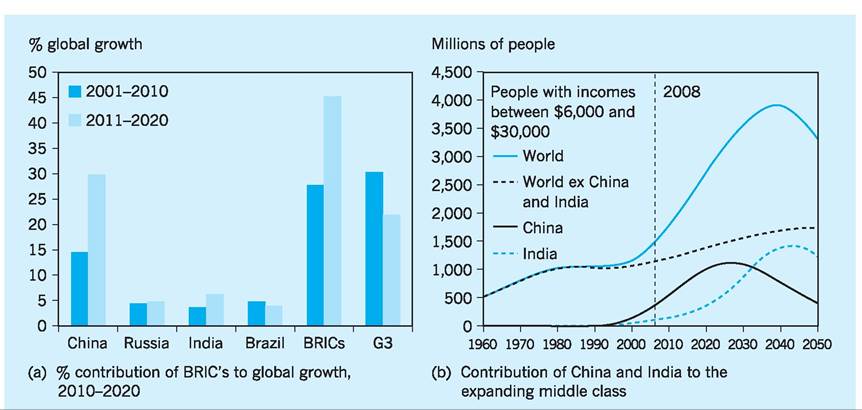
Fig. 28.2 BRICs and global economic prospects. Source: Goldman Sachs (2010).
profound implications for international politics as the world moves from a unipolar world to a multipolar one. There are also environmental issues to consider as the economic growth of Brazil, China and India is accompanied by a trend growth in CO2 emissions continuing into the future. The consumption of oil by China has been increasing rapidly, and it appears that China will soon overtake the US as a user of this fuel. The Indian demand for oil is much lower, but if predictions of Indian growth are correct, the country’s consumption of oil will also increase rapidly. A large increase in world oil demand could lead to global shortages and higher prices, thereby damaging countries which are heavily dependent on imported oil.
Whatever the specific predictions the rapid emergence of the BRIC economies, with their economic and political developments, will have major impacts on a global scale.
Key points
■ The BRIC economies already account for 15% of global output, comprise over 40% of the world’s population and contribute around 16 trillion dollars to global output (using PPP exchange rates).
■ China has the highest world population, at 1,324 million people, with a GDP per capita of around $6,240 (around 15% of that in the UK, using PPP). China has grown its economy by an average annual rate close to 10% in the first decade of the millennium, but has the problem of a rapidly ageing population.
■ The Chinese economic model is sometimes termed a ‘socialist market economy’, with markets playing a key role in resource allocation, but with public ownership, direct governmental international and state-led industrial polices also an integral part of the system.
■ China has a huge balance of payments surplus of some $300 million with the rest of the world. It also has an astonishingly high propensity to save, with almost 50% of its national income being ‘saved’ by households, businesses or government.
■ India has a huge population of around 1.2 billion people, and is expected to surpass China’s population in the near future! There is a much higher rate of illiteracy in India than in China, with some 20% of the population aged 15-24 years illiterate in India, compared to only 5% in China.
■ India’s GNP per capita is $3,020 in PPP, i.e. around half of that in China.
■ India has been a highly regulated economy, but deregulation is occurring in many sectors of economic activity.
■ Brazil has the 5th largest world population, with some 192 million people and with a GNP per capita in PPP of some $10,180. The average economic growth rate has been over 4% per year over the past decade.
■ Brazil is engaged in industrial policies which encourage private markets and entrepreneurship, and has 35% of GDP accounted for by SME activity.
■ There is considerable income inequality, with the poorest 20% receiving only 3% of Brazil’s national incomes.
■ The rapid rise in the Brazilian currency (the ‘real’) is creating problems for its international competitiveness.
■ Russia has a population of some 142 million people, but the growth rate is actually negative!
■ Russian GDP per capita is around $19,708 in PPP terms, some 54% of the EU average. Economic growth has been over 8% per annum in recent years.
■ The high global energy and commodity prices have helped the Russian balance of payments to be in considerable surplus, although inflation has been over 10% in recent years.
■ The rise of the BRIC economics is creating strong growth in the global ‘middle class’.
Now try the self-check questions for this chapter on the Companion Website. You will also find useful links to relevant websites.
References and further reading
Abdelal, R. (2010) The promise and peril of Russia’s resurgent state, Harvard Business Review, Jan/Feb, 125-9.
Black, J. S. and Morrison, A. J. (2010) A cautionary tale for emerging market giants, Harvard Business Review, September, 99-103.
Giavazzi, F. and Blanchard, O. (2010) Macroeconomics: A European Perspective, Harlow, Financial Times/Prentice Hall. Goldman Sachs (2010) Global economics, commodities and strategy research, Global Economics Weekly, 2 December.
Hofstede, G. and Hofstede, G. J. (2005)
Cultures and Organisations: Software of the Mind, Maidenhead, McGraw Hill.
Hout, T. and Ghemawat, P. (2010) China versus the world: whose technology is it? Harvard Business Review, December, 94-103.
Krugman, P. and Obstfeld, M. (2010), International Economics: Theory and Policy, Harlow, Financial Times/Prentice Hall. Paine, L. (2010) The China Rules! Harvard Business Review, June, 103-8.
Rakshit, M. (2011) Macroeconomics of Post Reform India, Oxford, Oxford University Press. Rakshit, M. (2011) Money and Finance in the Indian Economy, Oxford, Oxford University Press.
Tse, E. (2010) Is it too late to enter China? Harvard Business Review, April, 96-101.
World Bank (2010a) World Development Indicators Database 2010, April, Washington DC.
World Bank (2010b) World Development Report 2010: Development and Climate Change, Washington DC.
UNCTAD (2009) The Least Developed Countries Report 2009: The State and Development Governance, New York and
Geneva, United Nations Conference on Trade and Development.
UNCTAD (2010a) Trade and Development Report 2010: Employment, Globalization and Development, New York and Geneva, United Nations Conference on Trade and Development. UNCTAD (2010b) World Investment Report 2010: Investing in a Low Carbon Economy, New York and Geneva, United Nations Conference on Trade and Development. UNDP (2010) Human Development Report 2010: The Real Wealth of Nations: Pathways to Human Development, New York, United Nations Development Programme.
US Bureau of Labor Statistics (2010) International Labor Statistics.