Ancient Hawaiian Religion
Not all of the indigenous religions of what is now the United States originated in those of Beringia and northeastern Siberia.
Another important eastward movement of peoples, religions, and cultures occurred much farther south, where Malaysian and Indonesian islanders of south Asian descent, driven by adventure, warfare, or a search for food supplies, pushed across the Pacific Ocean, gradually settling first the islands of Micronesia and Melanesia, and then those of Polynesia, including Tahiti, Easter Island, and the Marquesas. Archaeological data suggest that northward oceanic migration had led inhabitants of the Marquesas to Hawaii by around 500 CE—making the islands probably the last in the Pacific to be occupied by human beings—and that larger streams of Tahitians arrived in Hawaii between 900 and 1300 CE. Native Hawaiian religion and language became increasingly distinct over time but show clear similarities to the Tahitian. Hawaiian and Tahitian cultures in turn point to their shared origins in the Asian and oceanic cultures to their west.Ancient Hawaiian religious belief and practice were much like those of other Paleolithic peoples, emphasizing the spiritual power assumed to underlie every aspect of life, its specific manifestation in various natural forces and places, its exercise by humanized deities of varying functions, and its manipulability at the hands of ritual specialists. More specifically, Hawaiian religion resembled those of other Polynesians, with such powerful geological and geographical realities as the ocean, volcanic activity, and reliance on plants and sea animals figuring prominently. Hawaiians traced everything to the sky father Wakea and the earth mother Papa, including the deities. The most important of these were the creator Kane (like the Tahitian Tane), the storm, rain, and fertility deity Lono, war deity Ku, and Kanaloa (in Tahiti, Ta’aroa), deity of the sea and of death.
Lesser deities were associated with vulcanism (Pele), sharks, and canoe building. The Hawaiian supernatural world was also populated by aumakua (beings that protected specific families), unihipili (spirits of the dead that were able to inhabit other people), and kapua (trickster beings capable of changing form).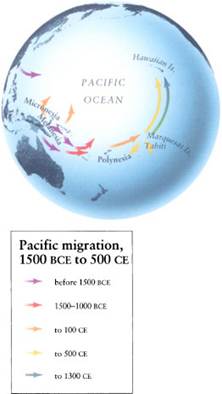
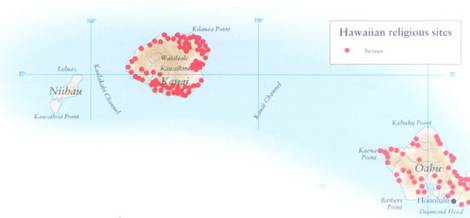
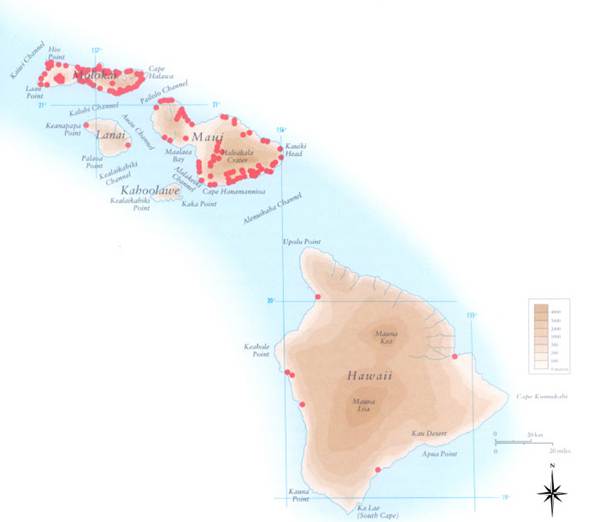
The power of these beings lay in their ability to control mana, a universal force that shaped the world and could move from one person, object, or place to another. Human beings also sought to use mana as well for their purposes, looking especially to their priests (kahunas), who sought through rituals (also called kahunas), often held in particular enclosed areas (heiaus), to bring the mana of specific deities into carved figures representing them, to use the mana of the sea water that surrounded them and seemed to them so powerful, or to induce healing by directing mana through ritual massages (lomilomi), herbs, and sacred objects. Dealing with the power of mana also required observance of taboos (kapus) meant to protect either people from mana or mana from people. Thus chiefs or war leaders maintained their power through certain required or prohibited behaviors, and fishing was disallowed at certain times so that the fish might retain the mana necessary to reproduce. Varying kapus distinguished the chiefs (alii) from others, and the heiaus, usually located around the perimeter of an island, were important loci of the power they wielded in tandem with the priests. At the same time, Hawaiians considered themselves bound together in a shared existence by a power called aloha.
While this aboriginal religion and related social system survived the arrival of Spanish explorers in the 16th century and of Captain James Cook in 1778, the kapus, kahunas, and heiaus were abolished by a new generation of Hawaiian royals after the 1819 death of Kamehameha I, thus facilitating the efforts of the Protestant missionaries who arrived from New England shortly thereafter. But the ancient ways endured in Hawaiian folk culture as Hawaiians continued to respect mana and to regard heiaus and other locations as sacred places.