Birth certificate(s): HoR's proximate origins
The birth certificate of modern, academic HoR is contested, as we have many beginnings, many false starts, many chairs established across Europe, many different approaches, and way too many scholars to recall here.
However, it could be argued that there are at least four main chronological milestones for the discipline:1. The Higher Education Act of 28 April 1876 (effective by 1877) in the Netherlands, which ‘laid the legal and institutional foundations for a new discipline of the science of religion' (Strenski 2015: 80; cf. Platvoet 1998a: 117).
2. The publication of German Catholic priest and anthropologist Wilhelm Schmidt's (1868-1954) Der Ursprung der Gottesidee (‘The Origin of the Idea of God'), in 12 volumes, published from 1912 to 1955, and preceded by a series of articles (1908-1910) published in French as Lorigine de I’idee de Dieu.
3. The establishment of the first permanent chair of history of religions in Italy, held by Raffaele Pettazzoni (1893-1959) in Rome since 1923 (preceded by other Italian precursors whose importance for the whole discipline is, with some exceptions, negligible).
4. The foundation of the International Association for the History of Religions (IAHR; initially International Association for the Study of History of Religions) in 1950, with Pettazzoni appointed as second President after the untimely death of Dutch theologian, historian and philosopher of religion Gerardus van der Leeuw.
Many other potential starting points might have been chosen. For instance, a chair dedicated to Allgemeine Religionsgeschichte (i.e. ‘General History of Religion') was established at the Faculty of Theology, Geneva, Switzerland, in 1874 and dismantled in 1894 because of the dissatisfaction of the faculty, notwithstanding the rather mild pro- theological approach championed there. Another Swiss example worthy of mention here was the series of lectures ‘The History of Polytheistic Religions' held by J.
G. Müller at the Faculty of Theology at Basel University from 1834 to 1875 (Sharpe 1986: 120). Although overlapping classes were offered in other departments (especially those concerned with Near Eastern history and culture), dedicated courses and chairs soon followed. In the Netherlands, courses about ‘Paganism', the ‘History of the Idea of God' or about the ‘Comparative History of Religions with the exception of Israel's and Christianity' had been taught since 1876 following the institutional elimination of theology from public universities (Spineto 2010: 1258-9). In a few years, the new historico-religious and comparative approach spread all across Western Europe, and other institutions embraced it, although almost always subsumed under various fideistic paradigms: the Collège de France and the Institut Catholique, both based in Paris (1880), the Universite Libre de Bruxelles in Belgium (1884), both the Italian universities of Rome and Bologna (respectively, 1886 and 1914), Uppsala University in Sweden (1901), Berlin and Leipzig Universities in Germany (resp., 1910 and 1912), the University of Copenhagen in Denmark (1914), and the University of Oslo in Norway (1915) (Platvoet 1998a: 140 n. 6; Spineto 2010: 1260-3).In the United States, a lectureship more or less tied to comparative religion and theological or ministerial preoccupations began in 1854, at Harvard Divinity School, and then from 1867 to 1904, when the Frothingham Professorship of the History of Religions was finally created. Boston University had a chair dedicated to ‘Comparative History of Religion, Comparative Theology, and Philosophy of Religion' established in 1873. Then came the Princeton Theological Seminary (1887), New York University (1887), Cornell University (1891, formally outside of ministerial concerns), the University of Chicago (1892), and the University of Pennsylvania (1894; Turner 2011: 57-9; see Turner 2014: 378-9 for a wider contextualization). More examples might be adduced ad libitum, especially if we include Bible Studies, theology, and ancient history, whenever these disciplines engaged in the analysis of religion(s) past and present (Turner 2014). However, a strong case could be made in favour of the pivotal events I have selected above because of the undeniable, long-lasting impact of the Dutch- Austrian-Italian scholarly network and disciplinary reorganization - the effect of which still shapes worldwide, mainstream HoR (Figure 10). As to the usual caveat, I
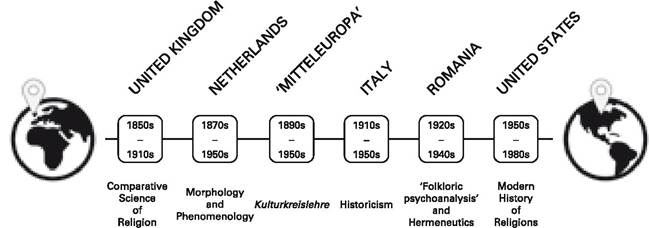
Figure 10 The road towards the establishment of modern HoR
duly remind readers that what follows is a mere geographical selection whose intent is to offer an easy-to-access overview; those interested in an in-depth analysis will find enough material in the in-brackets references.
More on the topic Birth certificate(s): HoR's proximate origins:
- THE BIRTH OF RA
- The Cognitive (R)evolution: The End?
- Case H: Ministry Certificate
- Case C: Certificate of Bad Husbandry
- Point of (k)no(w) return: The politics of the Eliadean HoR
- The birth of the Non-Aligned Movement
- The Birth of a Composite Monarchy: Medieval Foundations and Institutional Framework
- The Deep History of Comparison
- The Birth of a Messiah
- Chapter 18 The Birth of a Nation