The Deep History of Comparison
Science, we may tentatively say, begins with theories, with prejudices, superstitions, and myths. Or rather, it begins when a myth is challenged and breaks down - that is, when some of our expectations are disappointed.
Karl Popper
A rusty toolbox
The comparative study of religion typical of the HoR, whatever its features may be, assumes that there must be some religious entities in time and space that are somehow comparable. And if there are things that can be compared, it means that those things do really share similarities according to which they can be classified. Therefore, classification is the first and most important tool of the comparative study of religion. The implicit risk is that religion might encompass at once the agent by which classification is allowed and the items classified. As J. Z. Smith has written, ‘religions are not only the objects of classification, they are themselves powerful engines for the production and maintenance of classificatory systems' (Smith 2000: 38). Religious classification, as well as any major attempts at classifying human cultures, was (and still is) mainly driven by essentialism, that is, quoting from an article by Benson Saler, the ‘idea that an object is what it is because it has certain unchanging and necessary properties or qualities. [...] Essences [...] are not always accessible to perception, but they are held to be determinative both of genuine identity and of true-to-nature behaviour' (Saler 2008: 379). A consequence of this heuristic method of epistemic knowledge (in this case, the intuitive adoption of immediate and unmediated ways to discern similarities in the social and natural world) is that accidents, variants and contingent factors are deemed superfluous. In Greek Platonism, for instance, defects were ascribed to the fact that human beings' ability to perceive the nature of things was limited or, alternatively, imperfections were attributed to the inevitable corruption of the planet Earth against the backdrop of the incorruptible perfection of the universe (Leeds 1988: 467).
According to essentialism, a necessary set of features beyond the appearance of things is reputed to define and delimit the clustering of classes. The underlying epistemology of essentialism, as noted by Anthony Leeds, rests on an a priori intuition plus an active filtering: ‘[o]ne can arrive at a knowledge of some postulated Thing, untroubled by variants and variations, not by induction concerning the variation, but by contemplatively disregarding the variation in order to find the essence' (Leeds 1988: 468). Invariably, essentialism posits that such features are constant, notwithstanding the possibility of immanent, potential developments (e.g. an acorn has the developmental potential to become an oak). This idea provides the cornerstone of many classifications of classical HoR. As we shall see in the next paragraph, this is exactly the opposite of what a scientific, Darwinian epistemology should strive for (i.e. looking for variants and imperfections as the hallmark of history). In any case, essentialism provides an intuitive interpretive pattern for human reasoning and categorizing in general, and not just for philosophical disquisitions. In 1966, Paul McCartney had an accident while riding a moped, which resulted in a cut on the upper lip promptly disguised under a moustache. Because of this change, fans believed that the real Paul was dead and that he was being replaced by an actor. A mythology of sort grew along this premise, with fans working restlessly to uncover the conspiracy while decrypting imaginary clues in both the Beatles' lyrics and cover artwork (MacDonald 2008: 311-12). A sudden change in the appearance is enough to trigger an essentialist suspicion, and today the Internet is rife with conspiracy theories about doppelgangers or clones impersonating supposedly long- dead celebrities (Cresci 2017).
Another critical feature is the emic/etic dilemma. ‘Emic' is an anthropological term that refers to the semantic level and which defines the insiders' description and/ or interpretation of their own worldviews.
‘Etic', instead, denotes the systemic dimension and refers to the specialists' description and/or interpretation of the insiders' own description/interpretation, basically positing a meta-interpretation of an interpretation (Jensen 1993: 124-5; Purzycki and McNamara 2016: 155-6). So, in our case, things might seem quite obvious: emic refers to the believers and practitioners themselves plus their own religious systems as defined by themselves, while etic refers to the scholars who are studying, describing and interpreting the descriptions provided by the believers. Yet, HoR does not seem to have a consistent record of getting this qualitative difference right. Before and during the twentieth century, the scholars who studied the classifications provided by their subjects of study were biased believers themselves, and in doing their research they often blurred the distinction between participation and observation. To put it simply, and with the benefit of hindsight, the result was, from a scientific and academic perspective, quite confusing.When looked at from a big-historical perspective, essentialism and emic/etic perspectives have been two fundamental tools behind the construction and the study of religious classifications (Figure 2). Each past and present human culture has modulated the use of these tools according to its own sensibilities (unless a hypothetical and complete geopolitical isolation prevented such culture from doing so). For instance, during the Roman period, integrative comparison was a culturally codified way to include systematically foreign gods and deities by conjectural assimilation, meaning that a local god was assimilated to an apparently similar Roman deity on the basis of some common features. What we know today about ancient Celtic and German gods is mostly due to Roman writers who assimilated those goddesses and gods to similar Roman deities (i.e. respectively, Caesar in his De Bello Gallico and Tacitus in his De
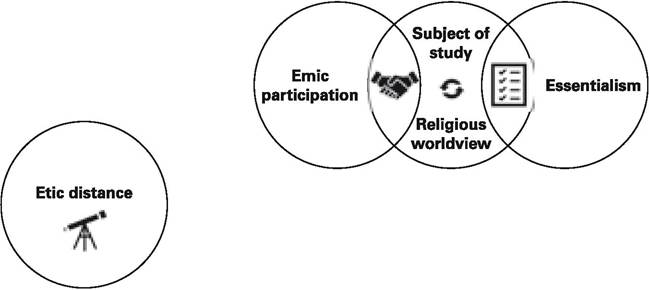
Figure 2 The study of religious worldviews between essentialism and the etic/emic dilemma
origine, situ, moribus ac populis Germanorum, more commonly known as Germania).
This mechanism implied more than continuity between different beliefs and different gods; it implied an underlying translatability, a common identity.1 Once this common ground had been established, different comparative enterprises could have been performed. Early Christian writers, for instance, favoured dissimilarities over similarities and distinguished between ‘true’ religion and ‘false’ religion - the ‘true’ religion being theirs, of course.2 From Late Antiquity onwards, different apologetic and theological answers were advanced to explain away both the presence and the shocking similarities of pagan religions with Christianity (di Nola 1977a: 269; Sharpe 1986: 7-13; Borgeaud 2013: 37-65; Bettini 2014):1. demonic origins;
2. plagiarism by ancient philosophers or demons;
3. divine condescendence towards some pre-Christian tendencies;
4. natural revelation and/or subsequent degeneration.
Yet, notwithstanding their preference for discontinuity and their unwillingness to engage in a fully detached etic analysis (their interpretation being overshadowed by their own beliefs), early Christian writers remained firmly within the boundaries of a comparative endeavour: even to refute someone else’s beliefs, the knowledge of those beliefs is paramount.
Long before that, Greek thinkers and philosophers questioned the validity of myths and set out to describe the rational and comparative interpretations of religions. Cultural and political relations between the Greek world and its neighbours (e.g. ancient Egypt, Persia, India, Mesopotamia) sparked a huge ethnographic, geographic and comparative industry, today mostly available as fragmentary descriptions, keenly dedicated to religious customs and beliefs (for an overview see di Nola 1977a: 263-8; Sharpe 1986: 3-7). The same interpretative account described above was already available as Greek interpretation (interpretatio Graeca), championed by Herodotus, which was basically the ancestor of Roman conjectural assimilation.
Other equally relevant explanatory models were euhemerism, which took its name from Euhemerus, according to whom gods were originally human beings that did great things in the past and because of that they had been divinized; and allegories, that is, myths, were to be interpreted because they were not actual facts but fantastical adventures (cf. Hawes 2014; Whitmarsh 2015; Roubekas 2017).3My choice of ancient Mediterranean examples is merely the contingent consequence of my own narrow academic specialization. Obviously, the examples provided by human history might be multiplied ad libitum (see di Nola 1977a: 268-86, whose examples include medieval Christian, Chinese and Islamic scholars, thirteenth-century explorers and missionaries, and Renaissance philologists; cf. also Momigliano 2005). Those that I have briefly recalled here serve just as instances of the universal ability to trace common patterns between religious matters in order to compare them - or to disassemble them via a critical approach (e.g. L. H. Martin 2014: 66-79; see also Minois 1998; Geertz and Markusson 2010; Jensen 2014: 21). Indeed, the human capacity for social and cultural categorization, exemplified by the existence of classificatory systems about religion(s), might be considered as old as Homo sapiens itself, that is, at least 300,000 years, if not older (cf. Geertz 2013). Then again, the mental toolbox for categorizing and classifying is old and rusty, as it has been in use since before the evolution of our primate lineage. Nonhuman animals need to intuitively classify the items in their environments to map their surroundings, in order to act in one way or another, to discriminate between in-group members and outsiders, etc. (Shettleworth 2010: 167-209). Therefore, classification and categorization can be evolutionarily considered as good-enough, imperfect, cognitively intuitive features of animal cognition that can be co-opted for in-group social policy and which are nevertheless prone to maladaptive misfiring (e.g.
Ambasciano 2016a: 188-9).As recently summarized in a reworked excerpt from neuroendocrinologist and primatologist Robert Sapolsky's latest book,
humans universally make Us/Them dichotomies along lines of race, ethnicity, gender, language group, religion, age, socioeconomic status, and so on. And it's not a pretty picture. We do so with remarkable speed and neurobiological efficiency; have complex taxonomies and classifications of ways in which we denigrate Thems; do so with a versatility that ranges from the minutest of microaggression to bloodbaths of savagery; and regularly decide what is inferior about Them based on pure emotion, followed by primitive rationalizations that we mistake for rationality.
Sapolsky 2017a; see Sapolsky 2017b: 387-4244
Donald Wiebe has recently pointed out that, in the deep history of H. sapiens, such ontological categorizations might have been evolutionarily co-opted to constrain extended cooperation and implement a hazard-precaution system, as suggested by the potential feedback loop between the following features (see Martin and Wiebe 2016: 62-89):
1. the role played by evolved, panhuman cognitive mechanisms on the transmission and learning of shared beliefs, resulting in the fallacious, folk-biological and ontological categorization of different human communities as if they were almost different species (Gil-White 2001; see Schaller and Murray 2008, and Schaller and Murray 2010 for a correlation between genotypes and cultural openness);
2. the existence of universal epistemological fallacies tied to in-group self-deception to boost self-confidence (Munz 1985; Trivers 2011);
3. the possible benefits of post-hoc religious justifications for limiting out-group solidarity, in order to strengthen an intuitive disease-avoidance strategy (Villareal 2008; Fincher and Thornhill 2008; Fincher and Thornhill 2012).
However, what had probably been effective as a ‘behavioural immune system' in the deep past can be a dangerous and maladaptive hindrance in modern times (Martin and Wiebe 2016: 61). With regard to religion itself, Wiebe asserts that the continued existence of religiously justified violence, ethnocentrism and xenophobia in the globalized network of intercontinental cooperation might be understood as the development of an auto-immune disease with a negative cost/benefit ratio for both ingroups and out-groups (Martin and Wiebe 2016: 62-3). However interesting and thought-provoking such hypotheses might be, since the focus of the volume is just the modern discipline of HoR, in what follows I will humbly limit my exploration to the modern and historical study of religion.
Birth certificate(s): Ultimate origins
Although any identification of a precise historical beginning invariably creates problems of inclusion and exclusion, especially those concerning cultural watersheds (Smail 2014), contemporary disciplinary categorization in academia calls nonetheless for a date of birth. There are two main perspectives on the origins of the HoR. According to some scholars, the modern and comparative study of religions began officially after the Darwinian revolution, in the late nineteenth century, when the organization of modern universities, i.e. national and public institutions dedicated to the accumulation and advancement of shared empirical knowledge, was systematically fine-tuned and the discipline began to be accepted as an autonomous field. Alternatively, it is held that the roots of the discipline lay down into the age of Discovery prior to the Enlightenment (roughly between the late fifteenth and early eighteenth centuries), when the encounter with unexpected human populations scattered worldwide and the exploration of new continents forced European explorers to reconsider the received wisdom on everything they knew and cherished - most of all religion.
However, this is a false dichotomy, since one point of view does not disprove the other. In particular, it is undeniable that during the age of Discovery, amidst an endless catalogue of moral virtues, religion became one of the quintessential traits of human self-depictions: ‘as early as the mid-seventeenth century, religion had been identified as a, if not the, uniquely human trait' (Day 2008: 49-50). But it is also true that it was the Darwinian revolution that sparked the academic interest in a truly global history of religions. And yet, as we have seen in the previous paragraph, instances of comparative endeavours between (and within) ancient cultures are also well attested. A way out of this conundrum entails a two-fold recognition. We could say that the ultimate origins of the discipline are to be found in the various encounters and intellectual confrontations that took place between different cultures since the dawn of human civilization. As a consequence of this big-historical provincialization, the age of the exploration of the Americas and Australasia becomes a subset of a much larger process of categorization. The proximate origins of the discipline, instead, are identifiable in the post-Enlightenment era, with the co-occurrence of three additional factors (Figure 3):
1. the Scientific Revolution and the diffusion of rational, empirical methods and theories to investigate both human beings and the natural world (Ferrone 2015);
2. the increase in ethnographic accounts of human populations that had never been in contact with Western cultures before;
3. the establishment of modern academic institutions - and corresponding growth of international scholarly networks - by the emerging European and (later) American nation-states.
Let us now delve deeper into this reorganization. It is commonly held that the cultural shock waves produced during the age of Discovery put in motion an unstoppable domino effect. Historian of religions Guy Stroumsa has recently claimed that the origins of the HoR are to be traced in the centuries between 1600 and 1800, which saw the ‘implosion’ of the previously agreed-upon concept of ‘religion’. As he writes,
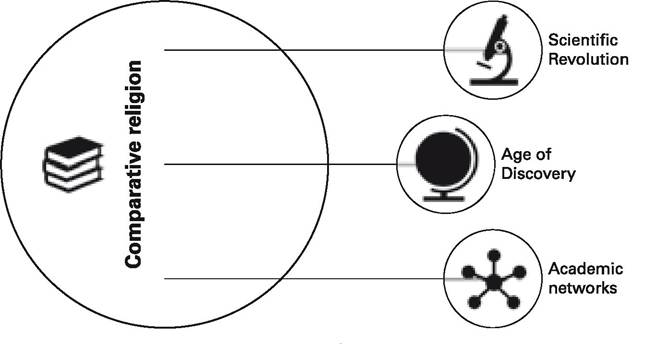
Figure 3 Proximate origins of comparative religion
the intellectual and religious shock caused by the observation of formerly all-but- unknown religious rituals and beliefs in the Americas and Asia provided the trigger without which the new discipline could not have been born [...] The newly discovered continents and cultures were slowly becoming part of the ‘cultural landscape' [...] of European intellectuals. Books were now printed in classical or ‘exotic' languages, such as Hebrew or Arabic, and the world of European Christendom had been torn asunder. This new knowledge of the diverse religions practiced around the world entailed the urgent need to redefine religion as a universal phenomenon.
Stroumsa 2010: 2-3
It was, in Stroumsa's words, ‘a paradigmatic change' (Stroumsa 2010: 2-3). The birth of comparative religion, according to Stroumsa, is something strictly related to the same cultural environment that gave rise to Newtonian physics: religion was ‘discovered', in the sense that the confrontation with previously unknown religions and cultures from Asia and the New Worlds prompted, if not a critical reconsideration, at least a thoughtful reflection on the basic common themes behind these ‘new' religions (I have put ‘new' in quotation marks because they were not new at all, it was just that they were unknown to Europeans). And again, as happened once in Graeco-Roman antiquity, the recognition that each and every society had a more or less institutionalized, or at least an organized, form of religion (in other terms, a mythological machine) was something destined to have a major impact on comparative religion. ‘Beyond the multiple forms of religion, including the most barbarian forms of idolatry, such as the human sacrifices practiced by some American peoples', continues Stroumsa, ‘all religions reflected the unity of humankind. As the Dominican friar Bartolome de las Casas [...] would say, Idolas colere humanum est (“idol worship is human”)' (Stroumsa 2010: 7). Even though the interpretive filter provided by the scholars' own religious beliefs was to distort any unbiased understanding (cf. Nongbri 2013), classification, comparison, essentialism and translatability were once again in the spotlight.
This ‘discovery' (in quotation marks for the same reason explained above) had a twofold and quite paradoxical effect: it prompted intellectuals to question the presumption of a unique ethical, theological and cosmological system of religious values, and ultimately led to the acknowledgement of religion as ‘a single concept', as ‘part of humankind's collective identity' (Stroumsa 2010: 7). This process of slow rethinking was facilitated by the fact that the Western ethical, theological and cosmological system behind religious values had been already (and inescapably) eroded by the European wars of religion between the sixteenth and seventeenth centuries, fought both physically and intellectually between Catholics and Protestants, and within different strains of Catholic and Protestant faith - not to mention the everlasting theological and political confrontation between the three so-called Abrahamic religions, that is, Judaism, Christianity and Islam, whose ultimate ‘truths' mutually disconfirmed the others', each one paradoxically reclaiming unique and divine revelation or interpretation (Preus 1987: 205; on the problematic concept of Abrahamic religion, see Hughes 2012).
As a result of such confrontation between old and new problems, the modern idea of natural religion was born, an emic concept already in vogue during antique and medieval times to define the fact that religion appeared to be a sine qua non feature, an indispensable trait of the human being qua human being (Stroumsa 2010: 11), defined by a specific ‘basic and minimal list of truths' (Preus 1987: 205-6). In the words of Ivan Strenski, ‘natural religion embodies the belief that religion is an innate, built-in “common” feature of being human. It is therefore “natural”, because it is a “normal” part of who we are. Natural religion reflects the belief that all people are born with a capacity or talent for being attracted to the ultimate reality' (Strenski 2015: 11).
Most importantly, natural religion was supported and reinforced by sacred history,
i. e. the view that ‘historians writing in the Judeo-Christian tradition' held as true and that ‘located the origins of man in the Garden of Eden', that is, somewhere in the Fertile Crescent and sometime around mere thousands of years все (Smail 2008: 12). Since the earliest philosophical, cultural and religious contacts, the Near and the Far East have always profoundly influenced and ignited the Mediterranean and European imagination. In ancient Greece, some philosophical currents whose basic tenets were destined to recur later, held that immemorial and primordial sacred wisdom was located in the exotic ancient Egypt or in the far East - dating equally far back in time (cf. Momigliano 1993: 146-7). The equation is simple: the more distant, the better; the more ancient, the more prestigious. And prestige was readily translated into social and cultural terms of originality and purity, and thus embedded in political discourses (Jensen 2014: 101). Modern natural religion simply took this process one step further, globalizing the search for the most ancient traces of revealed sacred wisdom.
Homo religiosus, i.e. ‘religious man', can be considered as the final elaboration and ultimate product of both natural religion and sacred history in that it indicates that the human being is religious deep down inside, even though s/he might be atheist or agnostic.5 More precisely, homo religiosus expresses the concept that the human being is literally imbued with a divine transcendence not accessible via ordinary analytical tools and which should be understood and studied tautologically, that is, according to the very religious inner sense that is postulated. In other words, this idea was the precipitate and the apogee of emic reflections on religion (see Figure 4). As we will see
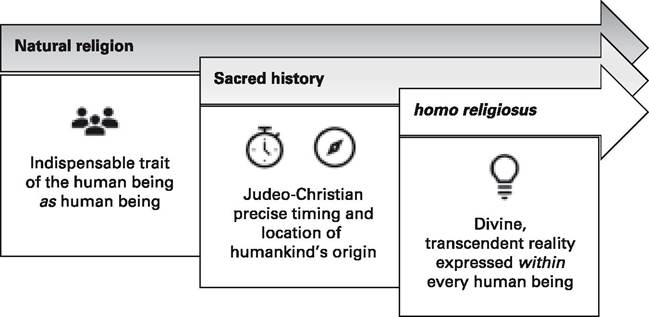
Figure 4 Diachronic and cumulative development of the following concepts: natural religion; sacred history; homo religiosus
in the next chapter, homo religiosus proved to be a most powerful idea, destined to have an unprecedented impact on the HoR as an academic discipline.
A preliminary note on imperialism, postmodernism and science
Notwithstanding a fideistic attitude, the recognition of such a common ground among human cultures also paved the way for a profound philosophical reassessment of religious beliefs, leaning towards a more rational study of religion. Comparison entails the recognition that any ‘absolute truth' of a specific tradition might be reconsidered alongside other absolute truths, and in the long run this reconsideration might emerge into a more or less radical criticism of those very absolute truths as not so absolute as those belonging to that particular tradition might claim them to be. As a result, gradually, naturalistic accounts of religion, that is, accounts that tried to eschew and avoid emic explanation in favour of natural and social (i.e. etic) explanations, were developed. The modern European process of ‘explaining religion' in rational terms, thus gradually renouncing the emic claims of absolute truth and rejecting or reworking the various explanations provided by believers, was by no means exclusive to modernity since it had previous and brilliant precursors in ancient Greece and Rome, as we have already and briefly seen. As a matter of fact, the European Renaissance saw the recovery and the renewed study and circulation of ancient works on the nature of religion, igniting an interest in those ancient philosophical works that framed or criticized different religious beliefs by comparing them. Thus, it can be said that the rescue, restoration and circulation of past Graeco-Roman interpretations of religions, which provided a filter by which difference and interpretations were projected not only far away in space but also far away in time, constitutes an integral part of the modern age of religious discovery and confrontation (cf. Bod 2015).
More specifically, what set apart modern Europe from similar historical parallels was not just the breadth, depth and magnitude of a truly global research, but the intimate connection with nascent scientific, rational, empirical and non-confessional approaches born out of the ‘horror and the vast and dramatic consequences' of the religious wars of the sixteenth and seventeenth centuries (Ferrone 2015: 100; cf. Martin and Wiebe 2016: 222-3). As James Turner has remarked, other strictly related circumstances had been equally important, such as the mid-nineteenth-century rise of ‘an increasingly liberal Protestant theology' interested in explaining in an emic way similarities between different religions as a means to recover a sort of super- or metatheology with ethical concerns (Turner 2014: 370). Of course, when seen as a whole, those were far from being purely disinterested processes. As was the case with other imperialistic enterprises and politics of the past, the creation of a comparative corpus of knowledge was made possible by another ‘horror', i.e. the same societal power structures that were later to exploit this accumulation of knowledge as a tool to implement a mercantilist and capitalistic dominance hierarchy which allowed for colonialism, missionizing and, basically, the strategic control of subordinate peoples (Wheeler-Barclay 2010: 253; Chidester 2014). Such imperial organization focused on the exploitation of manpower and natural resources allowed for the development of the huge networks of intellectual and practical knowledge that led to, and supported, the Scientific Revolution (Bowler and Morus 2005: 215-18). As to the academic study of religion, as we shall see in more detail in Chapters 4 and 5, approximately between the 1890s and the Interwar period, an anti-Enlightenment vendetta against etic and scientific approaches came to dominate the Continental HoR with the (sometimes explicit) two-fold aim of offering intellectual support to European imperialism and colonialism, as well as of legitimizing an aggressive interstate nationalism which underlay an equally violent politics of expansion and domination within the same European confines (Leertouwer 1991, and Gandini 2003: 195-202, respectively on Dutch and Italian HoRs and colonialism; cf. also Junginger 2008 and Segal 2002a for an overview on myth and politics). However, this outcome cannot be equated with most of the preceding comparative and scientific efforts to study religion, nor can it be generalized, for even during the heyday of the extreme right-wing politicization of the HoR some intellectuals, albeit admittedly isolated, managed to express their critiques and doubts.
At the same time, it is undeniable that, once properly contextualized, scholars interested by this radical transformation differed wildly in their closeness to political or legislative power, and their influence varied accordingly. Without denying in any way the violent, shameful, and painful legacy of modern European imperialism and its ties to science and technology (e.g. Palladino and Worboys 1993), distinctions should always be provided lest an over-generalizing, postmodern tendency to equate science with oppression phagocytize and neutralize the epistemological, rational advances produced by the Enlightenment and the Scientific Revolution (Ambasciano 2014: 24-7; cf. also Malik 2017 on the decolonization of university curricula; on the distinction between science and technology, see Mesoudi e t al. 2013). Likewise, it would be extraordinarily naive - not to say historiographically wrong - to equate tout court (non-Western) religions with freedom, for power relations of intra-group, intergroup, and gendered violence or domination are more or less explicit in every past and present human social structure dominated by religion (e.g. Lincoln 2005; Bremmer 2011; Murphy 2011; Jerryson, Juergensmeyer and Kitts 2013; Sela, Shackelford and Liddle 2015). On the other hand, we should equally pay attention to the inter-cultural, emic, confessional encounters that resulted in a two-way reconsideration of ‘religion’. Indeed, as was the case with Hellenistic and Roman reinventions and renegotiations allowed by imperial expansion, modern and contemporary intercontinental contacts prompted a mutual, eclectic and sometimes radical, re-elaboration of religion both in the dominant and in the dominated parties - scholars and historians of religions included (Bentlage et al.2016).
Each one of these topics would need an entire library to be fully covered with the depth and attention it deserves - and I cannot pretend to cover all of them in a few lines here. As I refer the interested reader to the bibliographical resources recalled above, I wholeheartedly invite those readers interested in the relation between postmodernism, science and the HoR to bear with me until we reach together Chapter 6. Meanwhile, I must return to the focus of the present chapter. What follows is a run-through of some major thinkers that helped to shape the historical and naturalistic study of religion(s), a historiographical enquiry started by Samuel Preus' (1987) volume Explaining Religion, in which criticism and comparison, even when born within the confines of theology, set the stage for further scientific approaches. It is by no means an exhaustive list, as it merely provides a quick-and-dirty chronological and partial summary of the complicated historical process that led to the HoR.
Rationality as cumulative by-product of comparison: From Jean Bodin to Edward Burnett Tylor
To recap, the influence of classical sources and the presence of theological tenets were two of the most important drivers of comparative religion during the early modern period. Although working within a Christian framework, intellectuals like Jean Bodin (1530— 1596), who adopted the classical Graeco-Roman dialogical form of exposition between a fictional group of men, dethroned Christianity from its pedestal to compare it with other beliefs, highlighting how contemporary religious rivalries were a product of Adam's original sin. Bodin's Colloquium heptaplomeres de rerum sublimium arcanis abditis (1588) offered a ‘rational' answer to such a problem (rational, of course, between scare quotes, for it still was a fideistic one): the solution was the recovery of the best religion, i.e. the most ancient and prestigious, the one originally granted by God in the Garden of Eden. In any case, as Luther H. Martin and Donald Wiebe have highlighted, ‘by debating the fundamentals of religion', Bodin's imaginary ‘disputants br[ought] religion into doubt and suggest[ed] the need for tolerance, and by doing so, they implicitly undertook and endorsed a comparative analysis of religion(s) (Martin and Wiebe 2016: 222). English diplomat Herbert of Cherbury (1583-1648) engaged to carry out a similar comparative endeavour. Herbert extracted the most basic religious features (or, in modern terms, innate ideas) behind those major religions' tenets he was acquainted with, thus paving the way for modern deism by appealing to a sort of innate human predisposition. As summarized by Preus, this set of features entailed ‘that there is one God; that ought to be worshipped; that virtue is the principle part of Religion; that we ought to repent of our sins, that there are punishments in the next life' (Preus 1987: 28 n. 14). These are clearly features found in monotheistic Abrahamic religions (quite a limited survey, then), but the most important point of Herbert's reflection was that his set of basic features recalled above was not just to be found in the Sacred Books of those religions, but was to be understood as something deeply rooted in human conscience tout court.
Generally speaking, the road towards a scientific and etic enfranchisement from both a confessional normative framework and emic tenets was far from being straight and smooth: both perspectives co-existed in rather unexpected ways - sometimes out of institutional respect or expediency. Frenchman Bernard Fontanelle (1657-1757), for instance, elaborated a universal and naturalistic account of ancient mythologies in which he highlighted that ancient myths were explanations of natural phenomena limited by the knowledge available at that time and which, consequently, included frauds and errors. He also rejected the demonic origins of ancient oracles as they were merely the products of priests who wanted to dupe and control the population. While Fontanelle ‘left the intelligent reader to complete his suggestions and extend the critical consequences to every religion' (Minois 2012: 184), he excluded Christianity from any critical observation, opting for an explicit immunization of its own theological tradition (Preus 1987: 53). The same sort of intellectual analysis was pursued also by Italian philosopher Giambattista Vico (1668-1744) who, like Fontanelle, worked from within a strictly theological perspective, as he intended to offer a more ‘rational' theodicy, i.e. the theological and ultimate explanation of good and evil, justified by God's will itself. According to Vico, history had a divine sense, a Providence willed by God, which through its laws accounted for the development and succession of historical facts (cf. Leeds 1988: 461). And yet, since the organization of human institutions like religion had a social history and a societal development, they were created by human beings and were not the products of inscrutable superhuman entities. Moreover, even though inscribed into a providential scheme, changes in mentality were ascribed to a feedback loop of contextual changes in society and culture over time (Preus 1987: 81). We are undoubtedly in the same religious and theological horizon of the previous thinkers, a horizon evident in both the natural theology of a human being provided with a ‘natural instinct for divinity' and a teleological, divine history willed by a God who knew already the ultimate end of history (Preus 1987: 77). However, the recognition that the development of historical facts itself is a human affair gave a significant boost to study human institutions as something conceived and built by human beings alone. In the way that natural theology led to evolutionary biology, it could be said that rational approaches in the study of religion(s) were the inevitable yet originally unintended byproduct, as it were, of the gradual accumulation of comparative enterprises (Wiebe 1999: 3). Perhaps Popper's dictum, that ‘science [...] begins with theories, with prejudices, superstitions, and myths', is more valid for the HoR than for any other social science or field in the Humanities (Popper 1994: 95).
The critical point of no return was reached when the psychohistorical accounts of religion became gradually detached from apologetics, that is, the search for theological justifications in the history of religious facts, which characterized Herbert and Vico and prevented Fontanelle from being more open in his critique. This intellectual turn became finally fully fledged with Scottish philosopher David Hume (1711-1776), whose criticism highlighted that previous explanatory attempts were merely justifications to the continued existence of religion itself, in a vicious circle of selfreinforcing belief. On the basis of a conception of human mental functioning as driven by mechanisms that today we would call cognitive (cf. Forrest 2013; Guthrie 2013), Hume advanced two groundbreaking ideas:
1. world religions are too diverse and varied to trace their natural ascendance to a single source identified in a universal, religiously innate, inner sense;
2. religious ideas arise from the fear and anxiety of human beings (especially with regard to the future) as well as from the anthropomorphic intuitive perception of agents in nature (e.g. pareidolia, that is, the intuitive recognition of human-like faces in the moon, on Mars, in the shape of rocks, etc. (Guthrie 1993).
S tarting from these natural foundations, and building on the wealth of new ethnographic data, Hume rejected the argument from design and criticized beliefs in miracles as well as the ideas of divine revelation and natural religion, thus challenging Herbert of Cherbury’s idea of an inner monotheism (Wheeler-Barclay 2010: 24; Strenski 2015: 23).
The key concept of anthropomorphic personification applied to religion, and arranged into an evolutionary framework, was to be labelled animism by Edward Burnett Tylor (1832-1917), the first holder of a chair of Anthropology at Oxford University (1896), where he previously served as a lecturer from 1884 to 1895. Animism - from anima, Latin for ‘soul’ - described the belief in the existence of animated invisible spirits that inhabited the world and populated the religions of the scattered peoples that came in contact with European settlers and explorers during late nineteenth-century colonialism and imperialism. Animism, according to Tylor, was a rational, although ultimately fallacious, product of natural enquiry concerning the properties of living bodies, then extended to explain dreams or hallucinations (Wheeler-Barclay 2010: 92). Tylor’s anthropological system, whose most accomplished result was Primitive Culture (1871), was supported by a loosely Darwinian evolutionary scheme in which cultural progress was considered as the obviously natural continuation of biological evolution. In such a scheme, ancient beliefs of ‘ancestral cultures’ were doomed to become ‘present-day’ superstitions, while the underlying rationale was supplied, at long last, by the recognition of the ‘psychic unity of mankind’ (Desmond and Moore 2009: 365; Wheeler-Barclay 2010: 84). Almost recalling the Darwinian concept of ‘vestiges’ as ‘rudimentary organs’, Tylor specifically defined ‘survivals’ as ‘processes, customs, opinions, and so forth, which have been carried on by force of habit into a new state of society different from that in which they had their original home, and they thus remain as proofs and examples of an older condition of culture out of which a newer has been evolved’ (Tylor 1871, 1: 15; e.g. Darwin 1859: 452-6; for other influences, cf. Ratnapalan 2008; Saler 2009: 51-7). Although still biased by ethnocentrism, the continuity between present-day Europeans and other non-Western cultures firmly rejected degenerationism, i.e. the scriptural belief according to which ‘the human race had degenerated from an original state of moral perfection’ (Bowler 1989: 330), while affirming the co-existence of different stages of rationally fallacious religious thought even in contemporary (and thus ‘modern’ or ‘advanced’) traditions: ‘animism for Tylor is the core of all religions’ (Guthrie 2000: 106; see Wheeler-Barclay 2010: 92).
On the basis of his social evolutionism, Tylor also devised a componential approach to religion in which each religion could be regarded and analysed as a ‘bundle of concepts, myths, and ceremonial activities’, each one to be singled out by the researcher (Wheeler-Barclay 2010: 90). According to the same perspective, Tylor detached morality from theological pro-social claims, while positing that science was the ultimate heir of animism, in that only science had been able to clarify beyond any reasonable doubt the original animistic confusion between biology and human cognition (Wheeler-Barclay 2010: 85, 94-5). By the same token, he claimed that anthropology was to direct its efforts to the identification of Victorian superstitions (such as spiritualism and astrology) in order to explain them away and dismantle them (Wheeler-Barclay 2010: 87). With Tylor, we witness a complete reversal of the ideas of natural religion and sacred history: not only culture could have been studied scientifically, but theology was not exempted any more from the application of the same critical tools employed for history or politics, like Fontanelle and Vico before him. With the burden of proof shifted to theology, it was theologians who were now expected to provide a sufficient epistemic warrant for their supernatural claims.
Enter comparative mythology: Friedrich Max Müller
In most contemporary handbooks, Tylor is often grouped together with other forerunners of the so-called ‘science(s) of religion', a term that has been sometimes employed to indicate a sort of family resemblance, or general similarities, among a set of early approaches that shared a common subject and a common method, i.e. religion and comparison, however differently understood and implemented (e.g. di Nola 1977a: 300-5; Filoramo e Prandi 1997; Waardenburg 1999; Saler 2000; Segal 2004; WheelerBarclay 2010; Sfameni Gasparro 2011). Anyway, even though the so-called ‘scientists of religion' such as Emile Durkheim or Sigmund Freud were beyond doubt instrumental in the establishment of some specific branches of anthropology, psychology and sociology dedicated to religion (mostly between the latest decades of the nineteenth century and the first two decades of the twentieth century), two ‘founding fathers' were ultimately responsible for the establishment of the comparative mythological approaches that had the most astounding resonance in the soon-t o-be-established HoR: Friedrich Max Müller and James G. Frazer.
German philologist, orientalist and translator of ancient Vedic texts, Friedrich Max Müller (1823-1900) taught at Oxford from 1858 onwards. In 1856, Max Müller published Comparative Mythology, a landmark essay that marked the first modern scientific attempt at explaining the development of religious contents through time (Max Müller 1909). By following the same branching, divergence and diversification of languages through time, he posited that myths originated from a single mistake, so to say, apparently due to the linguistic and expressive constraints that in ancient times led to the improper characterization of stars and planets as human-like entities described by adjectives. Now, the common ascendance of what will be labelled as Indo-European languages had been already proposed in the late eighteenth century by Sir William Jones (1788). Basically, Max Müller applied Jones' philological analysis to religion. He compared a selection of ancient Eurasian male high gods like Greek Zeus, Latin Jupiter (whose genitive form is lovis), Vedic Dyaus Pitar, Germanic Ttwaz, Old Norse Tyr, etc., and he came to the philological conclusion that they all descended from an original and reconstructed * Dyeus, which in turn was thought to be originally
the sun in its various phenomenal modes [...]. In myths [Max] Müller saw not simply the personification of the sun, the dawn, the twilight, and so on, but a metaphysical correspondence that human thought and human language drew between the perception of nature and the analogies that the ancient IndoEuropeans had used when communicating what they perceived. The names that people gave to these phenomena, the n omina (sing. n omen), were later mistaken for divine beings, or numina (sing. numen), and myths began to develop around these names to account for their existence.
Stone 2005: 6234
This is the core of the so-called nomina-numina thesis, later critically scrutinized because of Max Müllers reliance on a purely philosophical precedence of myth over ritual (see Wheeler-Barclay 2010: 46-7, 116, 230, 249; on the Müllerian distinction between religion and mythology, cf. Segal 2016).
Max Müller rejected the Romantic pan-Sanskritism previously held by Friedrich Schlegel (1772-1829), who considered Sanskrit as the most ancient language (i.e. the Ursprache) from which other Indo-European languages had sprung (Wheeler-Barclay 2010: 39; see Villar 2009: 39). Instead, Max Müller posited a proto-historical cultural stage behind all extinct and extant Indo-European languages (a stage he labelled as ‘Aryan’, today known as Proto-Indo-European), while firmly refusing a corresponding racial profile: the community was created by the power of language, not blood (WheelerBarclay 2010: 52; cf. also Tull 1991 for Max Müller’s selective approach towards Indian ancient texts). The diffusion and differentiation of languages through time followed the migration of such ancient peoples to Europe and India (Bowler 1987: 57).6 Notwithstanding the efforts made by Max Müller to counteract a fashionable and fallacious ‘quasi-mystical enthusiasm’, the fascination for esoteric Indocentrism and religious pan-Sanskritism would have lingered on in the history of HoR, especially when combined with non-Darwinian progressionism stubbornly focused on the identification of exotic religious substrates and ‘living fossils’ (Wheeler-Barclay 2010: 52).
Notwithstanding the presence of confessional ideas, such as the belief in natural religion and original revelation, and his participation in the 1893 interfaith event World’s Parliament of Religions (see Wiebe 1999: 12, 20; Nicholls 2014), Max Müller’s programme for comparative religion was nothing short of a scientific breakthrough:
1. Max Müller rightfully acknowledged impartiality, ‘a concern for truth, and a commitment to the rules of critical scholarship’ as necessary conditions for an academic, historical, scientific study of religion (Wiebe 1999: 16).
2. He separated philosophical and theological speculation from historical analysis (Max Müller 1893: 146) and, accordingly, one’s own beliefs from critical, rational, falsifiable enquiry (Max Müller 1898a: 543).
3. He understood the comparative study of historical religion as part of the natural sciences and, consequently, he realized that, just like natural history, classification of religious data (or ‘careful collection of facts’) according to each religion’s ‘origin, growth, decay’ was necessary (Max Müller 1898b: 27).
4. He was also aware that, given a sufficient amount of data, classification entailed the ‘discovery’ of common structures which, in turn, required explanation and ‘clarification’ (Max Müller 1891: 15 and Max Müller 1878: 169; all citations from Wiebe 1999: 16, 21,28 nn. 9 and 10).
Interestingly, an interdisciplinary// rouge unites Max Müller’s comparative philology and Tylor’s groundbreaking anthropology. Referring to Max Müller’s work, in 1868 Tylor wrote that ‘there is in England at this moment an intellectual interest in religion, a craving for real theological knowledge, such as seldom has been known before' (Tylor 1868, cited in Wheeler-Barclay 2010: 71). Earlier, Tylor had also applauded Max Müller's ‘consistent and scientific theory of the development of language from a few simple rootwords upwards to the most expressive' (although Tylor discarded Max Müller's fideistic idea of language as the expression of a Platonic and divine ‘power inherent in human nature'; see resp., Tylor 1866: 423; Max Müller 1864: 402; cf. Davis and Nicholls 2016: 25-30). Notwithstanding the clear differences concerning the underlying assumptions and starting points of their research (i.e. Tylor's non-confessional positivism vs. Max Müller's religious and teleological attitude), both scholars agreed on the epistemological validity and scientific status of the comparative method. Moreover, Max Müller's intervention was instrumental in bringing Tylor to Oxford (Wheeler-Barclay 2010: 81). Notwithstanding their efforts, scientific and etic comparison was soon to be ditched in favour of fideistic criticisms, and even readapted, or manipulated, to conform to some confessional tenets by other late-Victorian scholars in the field of the science of religion (in particular, Andrew Lang, William Robertson Smith, and Jane Ellen Harrison; see Wheeler-Barclay 2010 and the following paragraphs). Only one scholar stood true to the neo-Tylorian scientific programme behind comparative religion, taking such methodology to its most extreme consequences.
Triumph and dissolution of comparison: James George Frazer
James George Frazer (1854-1941), a Scottish anthropologist and fellow at Trinity College, Cambridge, accomplished a daunting task: he single-handedly wrote a much- celebrated encyclopaedia in twelve volumes nominally focused on a single, quite trivial and frankly odd topic. This central theme was the succession and coming to power of a priest devoted to Latin goddess Diana on Lake Nemi, in Central Italy, where a fugitive slave had to kill his predecessor to become king of the sanctuary, or rex Nemorensis (rex, i.e. ‘king', is here a mere priestly attribute, not a political one: that figure was a sacerdos, a priest). Frazer's work, initially published in two volumes and entitled The Golden Bough (1890), was gradually expanded to accommodate a mind-blowing array of comparisons that extended from classical Antiquity to coeval ethnographic monographs, from philology to folklore, from the Mediterranean to the New Worlds. Frazer's magnum opus reached its twelve-volume systematization in 1915, to which Frazer added a compendium in two volumes (1922) and an Aftermath in 1936.
Frazer adopted Tylor's progressive evolution with more emphasis on human basic needs and less stress on mere philosophical speculation, and he identified in the continued existence of Tylorian survivals in each and every society a continuous and persistent threat to scientific advancement - a theme which has been recently reelaborated from a cognitive perspective (McCauley 2011; see Wheeler-Barclay 2010: 192, 209). In Frazer's own words,
it is not our business here to consider what bearing the permanent existence of such a solid layer of savagery beneath the surface of society, and unaffected by the superficial changes of religion and culture, has upon the future of humanity. The dispassionate observer, whose studies have led him to plumb its depths, can hardly regard it otherwise than as a standing menace to civilisation. We seem to move on a thin crust which may at any moment be rent by the subterranean forces slumbering below.
Frazer 1890, 1: 236; emphasis added
Interestingly, Frazer's combined lucid pessimism and disillusion with an unflinching belief in science and progress, formulating a quasi-cyclical view in which science has to fight unrelentingly not to be reduced to silence by a mix of ignorance, superstition, irrationality, ‘clerical resurgence' and mass manipulation by interested parties (Wheeler-Barclay 2010: 192-3). In a sense, Frazer's worldview, profoundly influenced by the socio-economic and political issues that affected Western Europe between the twilight of the Belle Epoque and the horrors of World War I, provides the most adequate definition of HoR, intended as an ever-failing discipline whose scientific tenets are always prone to be recurrently dismantled by regressive and confessional interests (cf. Martin and Wiebe 2016). And yet, while implicitly acknowledging the fragility of science, Frazer called to arms ‘the battery of the comparative method' to ‘breach' the ‘venerable walls' of the faithful citadel built on past and present mythologies - a ‘thankless task' embraced reluctantly (Frazer 1900, 1: xxvi). Frazer, undaunted, also supplied the most grandiose background for what was to represent the ultimate - and the last - ‘monument' of comparative mythology (Wheeler-Barclay 2010: 214).
In the wake of Tylorian progressionism, Frazer managed to demythologize almost every kind of global mythology or folkloric theme from the past to the present known at that time by interpreting its material according to a precise developmental process. This process entailed the following chronological and methodological steps:
1. an understanding of magic as a fallacious yet intuitive system of ‘primitive' epistemology (i.e. as a set of cognitive and logical devices by which it was possible to obtain knowledge);
2. a redescription of religion as a more systemic and rational development of magic;
3. the identification of science as the only way to gain fully reliable knowledge on the world and the universe.
According to Frazer, and unfortunately for magicians, magic appears to be based on an erroneous system of assimilation between different ontological domains. Frazer further subdivided magic in sympathetic magic, which operates by imitation and similarity (the most classic example: a voodoo doll in the shape of a specific person), and contagious magic,by which things once in contact are reputed to remain somehow connected even once separated (e.g. hair of a former lover inserted in a voodoo doll). As weird as it might seem, this is the same socio-cognitive mechanism behind the attribution of special status and priceless value to Hollywood stars' memorabilia, like stage costumes and paraphernalia (e.g. Paden 2016: 202). As Tylor had with animism before him, Frazer acknowledged that modern science was the legitimate successor of magic, in that magic assumed as its main principle the uniformity of laws underlying the functioning of the world, while religion assumed as a priori the ‘elasticity or variability of nature' subjected to agentive manipulation, thus replicating a cyclical pattern rather than a linear process of development (Frazer 1890, 1: 224). Indeed, the Golden Bough reflects on a comparative and historiographical level the lucidly pessimistic Frazerian epistemology (Wheeler-Barclay 2010: 199-201).
The evolutionary pattern adopted by Frazer started from the loose theme of fertility to embrace the development of kingship through the ‘manipulation of superstition' (Wheeler-Barclay 2010: 202). In this sense, perhaps the most relevant theoretical contribution of Frazer to the comparative study of religion was his idea of the so-called dying god, a model which presupposes the violent death and the rebirth of a god, seemingly inspired in agrarian societies of the ancient Mediterranean by seasonal harvesting and by the cycle of life and death (e.g. Horus, Isis and Osiris in Egypt; Adonis and Dionysus in Greece; Jesus Christ in the Mediterranean region and across the Roman empire, etc.). In Tylorian style, Frazer daringly advanced that the European carnival was nothing other than the survival of the ancient Roman Saturnalia, and the ritual appointment of a slave or a criminal as a king to be later executed as a relic of the same theme that, mixed with the magical explanation provided by a convenient scapegoat, also justified the appointment of the rex Nemorensis: fertility in the guise of a violent succession by which a younger, untarnished vitality replaced an old, worn-out force. The inclusion of Christianity in such a comparative model, now deprived of any theological immunization, proved to be a disciplinary turning point: the theological uniqueness of Jesus was replaced by an entire series of pre-Christian mythological occurrences from the same cultural and geopolitical macro-area (Wheeler-Barclay 2010: 204-8).
With the exception of his insights on magic, and notwithstanding the wealth of materials he gathered to support his theories, almost nothing of Frazer's work has stood the test of his peers (Beard 1992; for a cognitive reappraisal, see Sorensen 2007). Due to his neglect of socio-p olitical factors, the abstract model of the dying god as a unifying theme has been extensively commented upon, revised and expanded. However, no single consensus has ever been reached on this model as a disciplinary category, mostly because of much interference from confessional, emic perspectives (Smith 1990: 85-115; see also the taxonomy proposed in Bianchi and Vermaseren 1982: 4-6, and the critiques in Lincoln 2015: 13-14). It is undeniable that the G olden Bough itself was based on unsupported or questionable links between worldwide bundles of different mythologies (Smith 1993: 208-39). And yet, the many contradictions between and within each edition of his magnum opus were preventively acknowledged by Frazer himself as a result of a radically honest empiricist epistemology, according to which theories were ‘no more than “light bridges” built to connect isolated islands of facts'. As Frazer himself clearly explained, ‘I have changed my views repeatedly, and I am resolved to change them again with every change of the evidence' (WheelerBarclay 2010: 196; resp., Frazer 1890, 1: xix; Frazer 1910, 1: xiii). In some cases, Frazer did this after b eing attacked for his attempt to show the similarities b etween Christianity and other ancient or non-Western religions, which demonstrates that, as a matter of fact, vehement religious reactions from scholars-believers, such as Andrew Lang, impaired the necessary review and epistemological evaluation (see, e.g. Fraser 2009: xxv-xxvii about the tormented and gradual exclusion of the section entitled ‘The Crucifixion of Christ' over the various editions of the Golden Bough).
In any case, the sheer success of The Golden Bough was immense at that time, and it has had a powerful impact on literature, poetry and cinema alike (Beard 1992). All those items converged in Francis Ford Coppola's Oscar-winning feature film entitled Apocalypse Now (1979), substantially based on Joseph Conrad's Heart of Darkness (1899), in turn influenced by Frazer's thought (Hampson 1991). In Coppola's film, Colonel Kurtz, interpreted by Marlon Brando, keeps on his desk a copy of the abridged Golden Bough. Indeed, the very core of the film was the weird, hallucinatory succession of a self-proclaimed aged king, once a soldier, violently dethroned by another younger soldier.
This does not detract in the least from the provincializing operation that lay at the heart of Frazer's efforts. Once classical antiquity had been dethroned to make room for a global comparative endeavour - one that did not shy away from revealing that the difference between the religious behaviours of the ancient Romans and those of a Papuan tribe was not in kind but merely in degree (to paraphrase Darwin) - there was no turning back. Indeed, the fame of the Golden Bough was basically due to a cultural shock, that is, to the fact that it was ‘something that had not been done before in English: a treatment from the philosophical, evolutionary point of view, delivered in sonorous and untechnical language, of the beliefs and behavior of the ancient Greeks and Romans as if they were those of“primitives” ' (Ackerman 2005a: 3191). Moreover, the comparative multiplication of mythological parallels strikingly similar to the Christ life-history (e.g. Indian Krishna, Roman Mithras, Greek Attis) showed unmistakably the nonChristian Roman influence on Western theology, the general recurrence of certain counterintuitive mythical patterns, and the non-uniqueness of the most central divine claims of Christianity (see Strenski 2015: 71-3). Such were the effects of Darwin's (r)evolution and other kind of social progressionism during, and after, the Victorian era.
Whodunnit?
It goes without saying that this is a woefully incomplete list. I haven't mentioned, for instance, Friedrich Engels' (1820-1895) idea of religion as a major factor in social or class conflict,7 Max Weber's (1864-1920) concept of religion as the main driver behind certain socio-political formations or economic models, or Bronislaw Malinowski's (1884-1942) interest in the ‘ways in which religion functions to inform, model, and/or legitimate concrete patterns of action and organization' (Grottanelli and Lincoln 1998: 315; see also Jensen 2013).
I could also have spent more time on the displacement of theological explanation, which came full circle with Emile Durkheim (1858-1917) and Sigmund Freud (18561939), both of whom identified the rationale for the existence of religion in something which believers were not (completely) aware of. As a matter of fact, religion was reduced to sociological and psychological urges. Thus, the sacred became a function of the social group looking for its own identity, according to Durkheim (e.g. Paden 2016), and a misplaced, repressed, and half-concealed array of sexual desires and psychopathologies, according to Freud (e.g. Orbecchi 2015).8 In a bold checkmating move, the needs of the in-group and the unconscious of the individual were put on the front stage, replacing an abstract and emic idea of religion (Preus 1987: 209).
One could easily add to this list two illustrious developmental and comparative theories of animate and inanimate worship, i.e. Charles des Brasses’ (1709-1777) fetishism, whose roots dated back to ancient Egypt’s zoolatry (Wheeler-Barclay 2010: 25-7), and John Ferguson McLennan’s (1827-1881) totemism, in which primordial human clans were thought to be related through shared ancestry via a common ancestor (usually an animal) - although a sharp, epistemological distinction between these two concepts and Tylorian’s animism is not easy to trace (Sharpe 1986: 75-7). More elaborated and radical theories might include Ludwig Feuerbach’s (1804-1872) philosophical attempt to reframe in purely etic terms theology as anthropology plus physiology (Feuerbach 1890); Karl Marx’s (1818-1883) concept of ‘religiosity [as] a symptom of the proletariat’s psychological alienation’ that results from specific socioeconomic conditions (Slone 2013: 56); August Comte’s (1798-1857) ‘law of three stages’ of development (i.e. theology as fictive explanation, metaphysics as philosophical rationality, and positivism as science. The first theological step was further subdivided into fetishism as superstition, polytheism and monotheism; see Pickering 2009: 3); Henri Hubert’s (1872-1927) and Marcel Mauss’ (1872-1950) cross-cultural and synchronic theory of sacrifice inspired by Durkheim’s works (Podemann Sorensen 2016: 50); Lucien Levy-Bruhl’s (1857-1939) study of primitive, ‘prelogical’ mentality contrasted with a logical, civilized mentality, which led him to postulate an ontological ‘law of participation’ in which everything and its opposite can coexist;9 William James’ (1842-1910) psychological and philosophical stress on ‘personal religious experience’ rooted in the ‘mystical states of consciousness’ (James 1902: 370);10 or Friedrich Nietzsche’s (1844-1900) ultimate, devastating ‘God-Is-Dead’ critique of religious truths and authority (cf. Jensen 2014: 20-1).
Such a list would go on almost indefinitely. Every HoR handbook of the recent past has provided readers with an extravaganza of more or less famous names from disparate fields. Sometimes the authors of those lists have included or excluded those scholars who advocated a critical approach to Biblical studies (cf. resp., Kippenberg 2002: 66-8 and Strenski 2015: 19-30; Preus 1987 and Wiebe 1999: 6, 11); sometimes they have highlighted the philological roots (Turner 2014: 293-9, 344-80) or the anthropological influences (Morris 1987: 91-140); sometimes they have even reacted against the progressive scientific lineage of such lists by rejecting ‘dogmatically secular, social scientific accounts’ (King 2013: 139), or by including rather controversial scholars such as Romantic figures Johann J. Bachofen (1815-1887) and Georg F. Creuzer (17711858; cf. Jesi 1973; Jesi 2005), or Victorian polymath Andrew Lang (1844-1212), whose anti-positivism, anti-modernism, degenerationism and ambiguous criticism of comparative religion were to echo for decades in the HoR (Wheeler-Barclay 2010: 104-39; cf. Eliade 1984: 24, 44-5, Stavru 2005, and Sfameni Gasparro 2011: 68, 80-3). Not to mention that some of the scholars recalled above were nonetheless advancing a subtle rejection of positivism and scientific approaches from the inside of the contested discipline (e.g. Lang and William Robertson Smith, whose works we will encounter later). Indeed, there are as many variants as one can possibly imagine.
Whatever the case, the reanalysis of the works of such trail-blazing theorists is a necessary step if we want to understand, and correctly re-evaluate, the disciplinary heritage of the comparative study of religion in general (Xygalatas and McCorkle 2013; Jensen 2014).
However, my point is that, as a matter of fact, not one of the aforementioned scholars can be considered a historian of religions lato sensu, nor a historian stricto sensu (cf. Eliade 1984: 98). A possible exception would be Jane Ellen Harrison (1850-1928), a Cambridge ancient historian whose atheist spirituality resulted in an original mix of mysticism, feminism and the search for Tylorian origins, all applied to the comparative study of ancient Greek religion. And yet, Harrison ambiguously engaged both the adoption of a Darwinian frame (which we will tackle later on) and an anti-positivistic revolt directed against the very tenets of comparative religion (Wheeler-Barclay 2010: 215-42). Another paradoxical example would be the appointment of Tylor, an anthropologist, as honorary president of the third International Congress of the History of Religions held in Oxford in 1908 (Spineto 2010: 1264). Not to mention that, when the chips are down, classical HoR would do away with all those scholars that, in one way or another, threaten the emic, fideistic core of the discipline (in particular, Marx, Engels, Weber, Durkheim, Malinowski; cf. Grottanelli and Lincoln 1998). These paradoxes have been clearly recapped by Tomoko Masuzawa as follows: ‘each one of these figures stands as something of a maverick, an intellectual nomad at once inspiring and irritating but never truly constitutive of the discipline' (Masuzawa 2000: 217). So, who are the noble ancestors of the discipline, who can be considered as a founding figure? The paradoxical answer is: each one and no one. The very existence of agreed- upon founding fathers is hotly debated (Gilhus 2014; cf. King 2013). Not even Max Müller enjoys such an unquestionable status (see Wiebe 1999: 27-8 n. 3).
Shape of things to come
The sheer diversity and disciplinary heterogeneity of ‘founding figures' recalled above exemplifies three issues that could have put the proverbial nail in the coffin of any project dedicated to the unification of the study of religion(s) under a single banner:
1. The first is that, as a subject, religion had already been studied and explored by the incipient academic branches of psychology, psychoanalysis, ethnography, anthropology and history alike. Different disciplines entailed different questions, different problems, different answers, different evaluations, different materials and, quite expectedly, different and heterogeneous results. Therefore, while HoR prides itself on being an autonomous discipline, some of the most important tenets of the past study of religion(s) have been elaborated by scholars and intellectuals trained in many different subjects and with a remarkable, centrifugal interest in seeing religion as a part of greater wholes - the human mind, society, culture or history.
While methodological pluralism is vital for any scientific or social interdisciplinary research (cf. Geertz 2014a: 256), in the HoR this had not led to epistemological synthesis or integrative pluralism. On the contrary, it led to a reactionary, unflinching, dogmatic antireductionism associated with methodological cherry-picking from other disciplines (cf. Idinopulos and Yonan 1994). Moreover, any natural history of the history of religion(s) would be inextricably intertwined with the history of critical thinking and atheism (Minois 1998). And yet, the fact that the HoR successfully managed to silence the unequivocal sisterhood with such a unique field so important for the entire course of modern Western philosophy (Jensen 2014: 18-21; Ruse 2015), should give pause to any celebratory plea.
2. The second problem concerns the etic/emic dilemma. For the first time, ‘the new scientific ethos [...] made it possible for scholars in the mid- to late-nineteenth century to attempt an emancipation of the study of religion from the religious constraints and to institutionalize a new, non-confessional and scientific approach' (Martin and Wiebe 2016: 223). Unfortunately, the first rationalist enterprises, like those heralded by Max Müller and Frazer, failed because of their incautious, unchecked and biased selection of materials and naive assumptions (Murray 2010), and not because of their epistemic proposals on how to lead a rational research within the confines of a new comparative HoR. Max Müller's own Romantic and theological a priori was easily falsifiable with more palaeoanthropological data, and Frazer's monumental fantasy could have immediately vanished against the backdrop of more and better ethnographic data. The falsification of their programmes would have been a trivial exercise in normal science: indeed, the positivistic, rational suggestion behind their huge repositories of data, their developmental schemes or their categorizations might have been updated, corrected and salvaged. However, once the criticism spread, the reaction of many scholars was to refute natural scientific or rational explanations tout court. The resulting retreat almost unanimously crossed the boundary between scientific analysis and sympathetic acceptance of religious dogmas or spiritual ideas as true facts (whatever the faith), often trying to endow with academic prestige someone's own religious or spiritual views. This is the primary cause behind the aforementioned disciplinary confusion, and an exemplary case of a baby thrown out with the bathwater.
3. The third and final problem lies in the fact that, as a consequence of this rejection, the soon-to-be-established HoR mostly endorsed the vision of religion as a sui generis, autonomous entity in order to resolve the first problem (i.e. disciplinary unification). The adherence to scientific methods and theories (such as the ones that, as seen above, were dedicated to frame religion as a part of a bigger picture) seemed to explain away and refute this autonomy, therefore making the very existence of the discipline apparently difficult to support on an institutional level. As an academically autonomous discipline, HoR needed nevertheless to adopt, at least formally, the prestige of a scientific approach in order to be accepted. As a result, a tentative agreement was reached, in that HoR was to adopt superficially certain scientific and natural methods of enquiry, merely to confer a certain degree of academic respectability on what might have been perceived as theology in disguise. Mostly, scientific approaches were despised if not openly and harshly criticized.
We could even say that the foundational tenets of the HoR had been laid logically before Hume and scientifically before Darwin. If, as Popper claimed, science really begins only ‘when a myth is challenged and breaks down - that is, when some of our expectations are disappointed' (Popper 1994: 95; cf. Masse et al. 2007), then the allegiance of religious scholars to the natural theology of homo religiosus and their faith in a paranormal or supernatural worldview explains the pre-Humean charter of the discipline (cf. Ambasciano 2015a). Such fideistic epistemology is evident in the chimerical gallery of ‘founding fathers', in the rejection of scientific paradigms, and in the parallel cherry-picking of those tools from scholars and disciplines which conformed to a self-confirming, a priori vision. Metaphorically speaking, the geological divide within the discipline had been there since the very beginning, and those who tried to implement an engineering plan of bold renovation to safeguard the buildings on the fault zone were misunderstood, marginalized and silenced.
In 1912, Robert R. Marett (1866-1943), Tylor's successor as reader in Anthropology at the Pitt Rivers Museum (University of Oxford), noted the unique epistemological relation between his own field and the explanatory success of Darwin's evolutionary research programme, and therefore he clearly underscored that Anthropology is the child of Darwin. Darwinism makes it possible. Reject the Darwinian point of view, and you must reject anthropology also' (Marett 1914a: 8). His proposal was to ‘[l]et any and every portion of human history be studied in the light of the whole history of mankind, and against the background of the history of living things in general' (Marett 1914a: 10). Marett also noted that, while ‘at first, naturally enough, man did not like' to be aligned with other animals as an unexceptional living being, ‘now-a-days, however, we have mostly got over the first shock to our family pride. We are all Darwinians in a passive kind of way. But we need to darwinize actively (Marett 1914a: 9; my emphasis. Cf. Sharpe 1986: 48). Unsurprisingly, and notwithstanding all the previous efforts, a significant number of scholars committed to the study of religion did not want their field to be darwinized at all. In short, the Darwinian (r)evolution was the spark that set ablaze the whole debate about which scientific tools - if any - were to be legitimately used to investigate human culture and religion(s).
36
More on the topic The Deep History of Comparison:
- The Cognitive (R)evolution: The End?
- Mesoamerica’s Priests, Farmers and Warriors
- From Pastoral Chiefdoms to Nomadic Empire
- THE THEORY AND PRACTICE OF EMPIRE-BUILDING
- Violence in the Mesolithic