The Darwinian Road Not Taken
Origin of man now proved. - Metaphysic must flourish. - He who understands baboon would do more towards metaphysics than Locke.
Charles R. Darwin
‘The greatest historian of all time'
Comparative religion has a very long and eclectic history, tracing its modern origins back to the European Age of Discovery.
Perhaps more interesting, and much less known, is the fact that the deep roots of the whole enterprise lie in the species-specific cognitive capacity for inter- and intra-group comparison and categorization. Quite ironically, this deep history is the consequence of evolutionary processes whose scientific recognition and acceptance were misunderstood, fought or ostracized early on in the mid- to late-nineteenth-century academia. Without repeating what I have already briefly recalled in the Preface, this explains succinctly why, notwithstanding the bold, iconoclastic attitude of isolated scholars such as Frazer (Strenski 2015: 66), the future of the historical and comparative study of religion as a whole was to be jeopardized by the intuitive appeal of beliefs supported by the very cognitive deep roots of comparison.This is all the more striking because, while no stricto sensu historian can be considered as the founder of comparative religion, Darwin worked as a historian in the truest sense of the term and, as we shall see shortly, he also carefully laid the foundations for the ultimate naturalistic study of religion and society. Biologist and historian of science Frank J. Sulloway aptly noted that, once we consider the descriptive methods, the ‘dedication to hypothesis testing', the acute self-awareness of the confirmation bias (that is, the cognitive bias according to which we intuitively tend to look for confirmatory evidence in support of our favoured theory, and automatically discard contrary evidence), and the method and theory to avoid it (a peculiar trait which characterized Darwin's works), ‘a good case can be made for considering Charles Darwin the greatest historian of all time' (Sulloway 1998: 366).
Palaeontologist and historian of science Stephen J. Gould (1941-2002), in turn, recalled the status of Darwin as a ‘historical methodologist' whose scientific modus operandi, fully exposed in the Origin of Species, was characterized by three major features (resp., Gould 1986: 60, 62-4):1. ‘uniformitarianism in extrapolating [...] observed results', that is, the assumptions of constant natural laws and the identification of the ‘rate and effect' of the process under investigation;
2. ‘inference of history from temporal ordering of coexisting phenomena', i.e. the taxonomical classification of causally tied items;
3. the ‘panda principle of imperfection', that is, the historical attention to ‘oddities' such as useless traits co-opted for new scopes as a result of historical contingencies which, if unrecognized, may lead to identify false taxonomical homologies.1
The attention to neglected details, imperfections and futile traits allowed Darwin to reject both typological essentialism, the ancient argument from design, and the theodicy advocated by natural theology (Desmond and Moore 1991: 479).2 The cornerstone of his evolutionary theory was at once the opposite of essentialism and the epitome of historical processes that bring about change: each individual is unique in a population with which s/he shares specific traits that can be passed on through the generations (i.e. ‘population thinking'; Mayr 1991: 79-80). This historical attention upturned the teleological paradigm which made the scholarly study of nature a static and unchanging field, ‘for Darwin's theory is but the historicization of biology' (Martin 2013: 179).
The impact of increasingly successful natural explanations and retrodictions on the birth of comparative religion, plus an equally successful politics of scientific, (apparently) non-confessional institutionalization, cannot be overlooked (WheelerBarclay 2010: 3). Well acquainted with Darwin's programme of research, Max Müller used to remark incessantly on the liaison of comparative religion with natural sciences, positing that religion was not ‘beyond the reach of scientific treatment, or honest criticism' (Max Müller 1898c: 8).
Following a trope in vogue in eighteenth-century natural history (Smail 2008: 47), Max Müller vividly described the aim of comparative religion through the perusal of ancient documents as one akin to the decipherment and understanding of the ‘geological annals of the earth' (Max Müller 1898a: vi). He also rejected the speculative ‘Hegelian laws of thoughts', as well as the ‘Comtean epochs', in favour of something not dissimilar from Darwin's ‘panda principle', that is, the historical ‘tracing of the origin and first growth of human thought' according to careful reconstruction from incomplete logs of facts (Max Müller 1881a: ix; cf. Wiebe 1999: 28 n. 28). In 1878, prefiguring probably the most central and problematic aspect of the HoR, one that will be scientifically tackled only more than one century later by cognitive sciences and evolutionary psychology, Max Müller asked,how does [religious belief] arise? What is the historical process which produces the conviction that there is, or that there can be, anything beyond what is manifest to our senses, something invisible, or, as it is soon called, infinite, superhuman, divine? It may, no doubt, be an entire mistake, a mere hallucination to speak of things invisible, infinite, or divine. But in the case, we want to know all the more, how it is that people, apparently sane on all other points, have from the beginning of the world to the present day, been insane on this one point. We want an answer to this, or we shall surrender religion altogether unfit for scientific treatment.
Max Müller 1878: 169; my emphasis; cf. Wiebe 1999: 9-30
And yet, quite astonishingly, most HoR textbooks, handbooks and encyclopaedic entries stop before delving deeper into the epistemological and methodological relevance of Darwin's works for the natural history of comparative religion, as if evolutionary biology stood beyond the nec plus ultra of the historiographical Pillars of Hercules (Smail 2008). Generally speaking, this neglect is part of an idiosyncratic academic compartmentalization and a chronically insufficient scientific literacy in non-scientific disciplines (cf.
Snow 1961). Evolution is a very misunderstood topic in the Humanities. Even today, as Daniel L. Smail and Andrew Shryock aptly underscore, a fully humanistic comprehension of the significance of Darwinian evolution is far from being sufficiently achieved (Shryock and Smail 2011a: 12). Not long ago, Ina Wunn remarked that ‘in biology, evolution is defined as the adaptive modification of organisms through time by means of natural variability and selection. In the study of religion, however, as well as in other disciplines of the humanities, the term evolution is still understood as a process of progressive development' (Wunn 2003: 391). In the early 1970s, Jonathan Z. Smith already noted the conceptual lag between the theoretical and experimental development of evolutionary biology and the belated, misguided or distorted adoption of cherry-picked biological themes within the HoR (Smith 1993: 244 n. 14, 260 nn. 54, 55). Even worse, the general interest towards pseudoscience, born in the first decades of the twentieth century and flourished after World War II (Thurs and Numbers 2013: 134), was destined to have a major impact on the field. Ultimately, the lesson of ‘the greatest historian of all time' was lost.The threat of a scientific and comparative study of religion
The conceptual watershed erected by the Darwinian methodological proposal could not be accepted light-heartedly, for the tenets of the theory were thought to pose a mortal threat to religion itself. Frazer's work is a case in point. The comparative anthropologist set out to explain the development of religion in a cultural environment where Darwin's success had been already assumed as a fait accompli (cf. Ackerman 1990: 33): an ‘objective, scientific method' was used ‘to hammer the last nail into the post-Darwinian coffin of religion, to show once and for all, by bringing together data on myth, ritual and belief from all over the world and throughout recorded time, that religion was a noble but in the end misguided effort on the part of primitive humanity to understand the nature of reality' (Ackerman 2005b: 72).
In other words, Frazer's work represented the dreaded materialization of the anti-religious threat posed by a scientific comparative religion.3As far as believers were concerned, the threat was even greater. Historian of science John Hedley Brooke has listed the many Christian theological elements directly challenged by Darwinian evolutionism:
the nature of biblical authority, the historicity of the creation narratives, the meaning of Adam's fall from grace and (connected with it) the meaning of Christ's redemptive mission; the nature and scope of God's activity in the world; the persuasive force of the argument from design; what it meant for humankind to be made in the image of God; and the ultimate grounds of moral values.
Brooke 1991: 281-2; cf. Moore 1981: 218
Mutatis mutandis, a similar list of foundational, non-negotiable dogmas might be extrapolated from any Christian denomination or non-Christian religion.
No matter which religion, the result would be very much the same: an unavoidable conflict, to be resolved by declaring the victory of science over religious dogmas, or dealt with thanks to a theological reconfirmation of the traditional status quo (e.g. Numbers 2006; Numbers 2009; Blancke, Hjermitslev and Kjsrgaard 2014).4 For all its mistakes and downsides, comparative religion (that is, the academic precursor of the HoR) was set on a course that was leading to the first case, in that a positivistic approach was supposed to overcome and trump any confessional a priori in favour of a methodological approach that either separated agnostically ‘precept and practice' (such as was the case with Max Müller; Wiebe 1999: 22) or even openly endorsed atheism (as Frazer's). As a project, it collapsed from the inside because ethnocentric infiltrations, naive theorizing, and confessional, anti-positivistic reinterpretations to neutralize any threatening evolutionary interference, were unavoidable (Wheeler-Barclay 2010: 10). Moreover, external resistance to the comparative religion project was motivated by the fear that any critical theorizing, ‘if taken seriously, would have [had] the effect of destroying the pith of “religion” as we know it' (Masuzawa 2000: 217).
Indeed, the very first coherent, long-term academic projects for a fully-fledged HoR such as the Dutch and Austrian schools (whose development will be the subject of the next chapter), implemented an institutional answer in line with the second case, quite explicitly refusing to come to terms with evolution. They were not the first anti-scientific reactions to surface in the field, and surely enough they were not going to be the last. But why was Darwinian evolution discarded insofar as the study of the historical roots, the functions and the development of religious thoughts and behaviours was concerned?Evolutionism, so it is suggested, was abandoned because of its ‘theoretical inadequacies' which made the concept of evolution heuristically useless at best and mistaken at worst (Waller, Edwardsen, and Hewlett 2005: 2917; cf. Filoramo and Prandi 1997: 175). More recently, postmodernism and social constructionism in RS have epistemically delegitimized science and evolution by positing the equal importance of non-scientific discourses (von Stuckrad 2014; cf. Ambasciano 2016b). But is it really so? Were evolutionary attempts at understanding and explaining human culture and religion really flawed and ‘inadequate'? Or, rather, does a historiographical misunderstanding erroneously conflate pre- or non-Darwinian evolutionism with biological evolution (Smith 1982: 24)? And, perhaps even more importantly, does every explanation have an equal status regardless of its epistemic warrant? In order to understand and contextualize the full extent of the anti- scientific reaction in the study of religion(s), it is necessary to delve deeper into the epistemology of evolutionary theory and into the history of human exceptionalism, a multifaceted concept that, as we will see shortly, can be broken down into four simpler ideas: pithecophobia, teleology, orthogenesis and anthropodenial (Figure 5). In order to understand their development and interaction we need to start from the most basic question: what is it that makes us human?
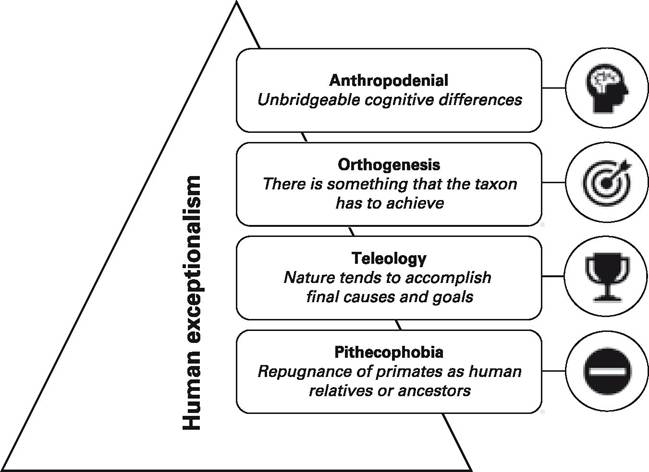
Figure 5 Biases supporting the concept of human exceptionalism
What makes us human
The story of the search for our distinctiveness is as old as human history itself. For a long time before Darwin, naturalists persistently strived to understand, order and classify the natural world (Stott 2012). Around the very end of the eighteenth century, scholars in the natural sciences were trying to make sense of a more or less progressive development in life forms through the deep, geological time of planet Earth (Corsi 2005). The ultimate breakthrough took place in the mid-nineteenth century, when Darwin and co-discoverer of natural selection Alfred Russel Wallace (1823-1913), standing on the shoulders of giants from the past, succeeded in getting the right theoretical toolbox to deconstruct and interpret the relationship between nature, time and change (Mayr 1991). The very concept of ‘what makes us human' suddenly became somehow redundant and in need of thoughtful revision. In the words of Matthew Day, ‘[w]hat, if anything, is a uniquely human trait? [...] If we take the lessons of modern evolutionary theory seriously, it seems as though any claim regarding human uniqueness must either ignore the significance of inter-species continuity or discount the lessons of intra-species variation' (Day 2008: 49-50).
Amid an endless catalogue of moral virtues, religion has always been one of the quintessential traits of human self-depictions: ‘as early as the mid-seventeenth century, religion had been identified as a, if not the, uniquely human trait' (Day 2008: 50), but even this revered concept did not manage to save itself from the changing tide. Darwin posited a two-fold strategy:
1. a ‘strong allegiance to philosophical materialism - the notion that matter is the ground of all existence and that “spirit” and “mind” are the products or inventions of a material brain' (Luria, Gould and Singer 1985: 585);
2. a redescription of religion as the precipitate of various concurrent mental by-products (cf. Guthrie 2002; Day 2008).
What if religion is recognized not to be an essentialist category but a componential assemblage of emotional, cognitive and behavioural patterns and mechanisms, each one of them either shaped by natural selection or the result of imperfect by-products coming from the deep time of evolution and widespread in the animal kingdom - and only later co-opted in human ultrasociality? (cf. Whitehouse 2013a; Girotto, Pievani and Vallortigara 2014; Ferretti and Adornetti 2014). Darwin laid the foundations for Tylor's componential approach and survival, while forcing his contemporaries to look at themselves in the mirror and recognize their unequivocal primate ancestry: ‘the mind of man is no more perfect than instincts of animals to all & changing contingencies, or bodies of either. - Our descent, then, is the origin of our evil passions!! - The Devil under form of Baboon is our grandfather!' (Darwin 1838, Notebook M; from Barrett et al. 1987: 549-50).
It is quite self-evident to note that, instead, the general assumption that shaped the study of the Humanities, before and during the beginning and establishment of modern academia, and which prevailed until the mid-twentieth century, was one of an undeniable, essential superiority of H. sapiens. The original intellectual quest for discovering what makes us human has consequently been led under the aegis of a qualitative difference given for granted on the basis of the essentialist meta-belief known as human exceptionalism (de Waal 2013): we are cognitively bound to intuitively set ourselves apart from other living beings and to cement this divide via our genealogical storytelling (Goldenberg et al. 2001; Coley 2007). In a sense, what makes us humans is the neverending effort to define what it is that makes us human.
The Origin of Species, 1859: Breaking the chain of being
Human genealogies have been orally or materially translated in various forms, written or visual, since the very inception of our taxon. Kinship is one of the most ancient forms of historical thinking of H. sapiens, and innumerable genealogies in the form of trees (frequently focused on male social power and patrilineal descent) crowd the sacred texts of ancient religions and the codices of royal dynasties (Shryock, Trautmann and Gamble 2011: 34). Universal histories, religions and mythologies justified kin recruitment in large societies by connecting human beings to mythic ancestors through an imaginary and prestigious common descent (Martin 2000; Christian 2010; L. H. Martin 2014: 80-93, 94-106). The classical idea of the chain of being, which tied every living organism in a fixed formula - with a male individual of H. sapiens at the
end of the chain - traces its origins in this context of genealogical pedigree (Gould 1989: 28).
Now, Darwin took this intuitively upward progression embedded in kinship thinking and dismantled it, obviously alienating his peers' sympathy. When Darwin's research programme about evolution began to circulate after the publication of the Origin of Species (1859), Darwin himself remained for a long time alone in considering that ‘higher' or ‘lower' were useless heuristic tools for the analysis of the natural world: adaptation is not equivalent to progress (Gould 1977: 34-8). In Darwin's own words, ‘natural selection includes no necessary and universal law of advancement or development - it only takes advantage of such variations as arise and are beneficial to each creature under its complex relations of life' (Darwin 1861: 135). To put it differently, evolution has no designed meaning, no ultimate goals and no preordained optimality to achieve insofar as it is simply involved in the tinkering of good-enough solutions (Jacob 1977). Following an argument famously made by Stephen J. Gould, the apparent progressive and upward trend from primeval bacteria to vertebrates is the result of the optic distortion from our present, chauvinistically limited perspective: bacteria outnumber everything else on this planet, and they still reign supreme. What we have is, instead, an increase in variation and complexity through deep time (Gould 1996; cf. Allmon 2002: 49-51, and Sterelny 2007: 90-3).
The firm refutation of ascending progress, teleology, and essentialism was an epistemic consequence of the Darwinian framework. But what did this framework look like? Evolutionary biologist Ernst Mayr (1904-2005) deconstructed and reorganized the bulk of Darwin's evolutionary proposal into five strictly related subtheories (Mayr 1991: 35-7):
1. evolution as the deep-historical, ongoing, contingent, differential development of organisms though time;
2. common descent of all living organisms from a common ancestor via a process of continuous branching;
3. populational speciation, i.e. the multiplication of species from previous species thanks to a combination of geophysical isolation and presence of individual variations in any given population (i.e. population thinking);
4. gradualism, that is, the slow and steady accumulation of diverging anatomical features through time;
5. natural selection, i.e. the differential rate of survival of individual organisms due to the relationship between environmental constraints and phenotypic differences (i.e. external and behavioural features).5 Because of complex factors such as ecological change and genetic recombination occurring in each generation, this relation is ever-changing (resulting in the evolvability of evolution itself).6
In 1859, Darwin thought it was inappropriate to reveal the application of such a model to the evolution of humankind, limiting his thoughts to the following laconic, yet groundbreaking, statement: ‘in the distant future I see open fields for far more important researches. Psychology will be based on a new foundation, that of the necessary acquirement of each mental power and capacity by gradation. Light will be thrown on the origin of man and his history' (Darwin 1859: 488). And yet, this apparently harmless assertion barely disguised what was almost painfully evident for his audience: the Origin of Species was all about humankind, now dethroned and reinserted into the deep-historical fabric of the biological world (Ruse and Richards 2009: xvii). And if that were not enough, the ‘distant future' envisaged by Darwin was just around the corner.
The Descent of Man, 1871: Degrees, not kinds
Indeed, a mere 12 years after the publication of the Origin of Species, that‘distant future' had finally come. Almost forced by a cultural environment eager to apply evolutionary schemes to human cultures (e.g. Tylor's Primitive Culture; see Desmond and Moore 2009), in The Descent of Man Darwin set out to show that evolved psychological features critical for the elaboration of religious thought, like agency detection and related emotional responses, are present in different degrees in nonhuman animals. The roots of this interpretation go back to Darwin's famous account of his dog scared by a moving parasol, and the related passage in the Descent of Man concluded with the following reflection:
he [i.e. Darwin's dog] must, I think, have reasoned to himself in a rapid and unconscious manner, that movement without any apparent cause indicated the presence of some strange living agent, and no stranger had a right to be on his territory. The belief in spiritual agencies would easily pass into the belief of one or more gods.
Darwin 1871,1: 67
In other words, with evolution finally reconnected with anthropological works previously inspired by the Origin of Species (such as, once again, Tylor's Primitive Culture), Darwin dug deeper into the history of cognition as he highlighted a continuity between the dog's response and the beliefs in animated beings diffused in non-Western societies as identified by Tylor and other anthropologists (Guthrie 2002; Day 2008: 59; Girotto, Pievani and Vallortigara 2014: 391).7 The analysis of canine psychology was also instrumental in revealing other basic componential blocks for religion, such as the ‘deep love of a dog for his master, associated with complete submission, some fear and perhaps other feelings' (Darwin 1871, 1: 68; see Chidester 2009; on emotions, see Darwin 1872a).
The deep-historical continuity revealed by comparative psychology was the direct consequence of Darwin's revolution; any difference between human and nonhuman animals was measurable in ‘degrees' (quantity) and not in ‘kinds' (quality; Darwin 1871, 1: 105).8 Darwin also included pro-social morality - i.e. emotions and ideas supporting religious and ideological beliefs such as ‘patriotism, fidelity, obedience, courage and sympathy' - as an integral part of natural selection on the basis of their value to promote abnegation and self-sacrifice at the service of the overall fitness of the in-group (Darwin 1871, 1: 166). As David Sloan Wilson has remarked, Darwin envisaged a multilevel process of selection where the diversity of phenotypic differences (in this case, different degrees of moral judgement across and among groups) is the result of the aforementioned materialistic account of mental capacities. According to such perspective, mental traits can be culturally elaborated and passed through generations thanks to their capacity to reinforce social conformity and promote in-group welfare. Then, such traits might be selected via inter-group competition (i.e. warfare; Wilson 2002: 9). As a result, religion is biologically interwoven with culture lato sensu: ‘the effects of habit, the reasoning powers, instruction, religion, etc.' are able to interact with natural selection and modify the adaptive value of certain behaviours (Darwin 1871, 2: 404; see Pievani and Parravicini 2016 on multilevel selection).
Finally, Darwin's naturalistic account of the continuity between H. sapiens and other nonhuman taxa also entailed the deconstruction of previous ideological and socio-political tenets about the uniqueness of H. sapiens itself (Day 2008; Desmond and Moore 2009). Ever the conscious and self-aware theorist, Darwin distanced himself from both those commonly, and erroneously, labelled as ‘social Darwinists' and progressionist thinkers. Two main features of Darwin's work stand out:
1. Culture might be able to overcome and reverse the blind forces of natural selection thanks to what has been called ‘the reversive effect of evolution', according to which the extension of communitarian ethics and sympathy towards disadvantaged individuals (e.g. those affected by ailments or impairments) runs counter to the selective pressure which targets individuals and yet, notwithstanding an immediate loss of fitness in terms of resources, it promotes social cohesion, thus reinforcing in-group solidarity and cooperation which, in a loop and in the long run, promotes in-group fitness (Tort 2008).
2. Competition does not lead unequivocally to better stocks of human groups, nations might lose their advanced status, and war does not improve automatically the fittest individuals (e.g. the youngest, and probably the fittest, individuals are sent to die). Progressive development due to evolutionary forces, in the end, ‘is not an iron rule, but a probabilistic one' (Glick 2008: 227). As Darwin himself recalled, ‘natural selection acts only in a tentative manner (Darwin 1871, 1: 178; my emphasis).
As far as religion was concerned, the groundbreaking result of Darwin's approach was two-fold: on the one hand, religious intuitions and beliefs were thought to be ultimately (and materially) caused by a mind that had a deep evolutionary history shared with nonhuman animals; on the other hand, religious behaviours finally entered the evolutionary playground as part and parcel of the evolution of sociality and cooperation, making virtually possible the development of any scientific analysis relating to the potentially (non-)adaptive value of religious behaviours and beliefs (for an overview, see Bulbulia et al. 2008). It is not difficult to see why Darwin might also be considered the very first modern historian of religions, and it is no wonder that, less than 30 years after the death of Darwin, classicist Jane E. Harrison, while acknowledging forerunners like Hume, attributed the ‘creation' of the modern ‘scientific study of Religions' to ‘Darwinism' itself (Harrison 1909: 494).
The Rubicon: Max Müller versus Darwin
Surprisingly, the first bone of contention between evolutionary biology and comparative religion was centred on an entirely different topic: language. And yet, this choice is not as odd as it might seem at first sight. Language played a considerable part in Darwin's evolutionary account, as it did in Max Müller's own works. As recalled at the beginning of this chapter, Max Müller was an early adopter of Darwin's selective mechanism translated into the domain of language development and differentiation - not just between languages, but even within each language.9 Max Müller also conceived myths as pre-rational explanations of natural phenomena (as evidenced by the very names and epithets of the gods he studied), and thus he posited a sort of developmental or evolutionary process of rationality-acquisition by degrees. However, Max Müller was also a staunch supporter of the unbridgeable gap between humankind and animals. As Max Müller wrote, language was
our Rubicon, and no brute will dare to cross it. This is our matter-of-fact answer to those who speak of development, who think they discover the rudiments at least of all human faculties in apes, and who would fain keep open the possibility that man is only a more favoured beast, the triumphant conqueror in the primeval struggle for life.
Max Müller 1864: 367-8; cited in Richards 1987: 203
Language was inextricably intertwined with conscious thought, and since Max Müller - like many other scholars at that time - considered nonhuman animals as deprived of conscious thought, language and rational thought were pinpointed as a perfect and complex set of exclusively human features, ultimately granted by a divine power. No evolutionary, gradual process was possible. Languages had developed from ‘roots' which were tautologically tied to rational thought: ‘without roots, no concepts; without concepts, no roots' (Max Müller 1875: 477; from Nicholls 2014: 93). A Cartesian, mechanistic view of animals as automata deprived of conscious thought and language echoed in Max Müller's critique to Darwin's gradual evolution of language. To this background, Max Müller added a Kantian penchant for a priori categories, prominent in his Lectures on Mr. Darwins Philosophy of Language (Max Müller 1873; cf. Nicholls 2014; Davis and Nicholls 2016: 90, 93-4).
In the Descent of Man, Darwin had previously pointed out that concepts, or a ‘long succession of vivid and connected ideas', might be present even in the absence of language (resorting to another example with a sleeping and dreaming dog; Darwin 1871, 1: 58). Like Robert J. Richards recapped, according to Darwin ‘complexity [of languages] itself was no sure sign of perfection' (Richards 1987: 204-5). Darwin will respond directly to Max Muller's criticism in the 1874 edition of the Descent of Man, positing the co-evolution of mind and thought (Alter 2009). In the wake of the Humean empiricist tradition, and rejecting on the ground of comparative evidence the Kantian approach hailed by Max Müller, Darwin built a compelling evolutionary account in which human proclivities (such as singing) were combined with the sustained use of gradual, onomatopoeic imitation of sounds, both boosted by a cultural environment sensitive to innovations which might have resulted in a deep-historical, loop effect on adaptive fitness (see Darwin 1871, 1: 57-62; Nicholls 2014). When Darwin read the Lectures, he duly noted on his copy how aphasia and impairments in the formulation of speech attested to a cogent falsification of Max Muller’s hypothesis, declaring ‘monstrous sentence - “No thought without words no words without thinking”’ (Darwin Pamphlet Collection, R240, CUL; from Alter 2009: 46). In the second edition of the Descent of Man, Darwin expanded on his negative judgement of Max Muller’s Lectures (Darwin 1874: 89-90 n. 63). Commenting on Max Muller’s ideas according to which ‘the use of language implies the power of forming general concepts; and [since] no animals are supposed to possess this power, an impossible barrier is formed between them and man’, Darwin pointed out that animals, infants and ‘deaf-mutes’ are able to ‘connect certain sounds’ with ‘ideas’, concluding that it is possible to use sign language to communicate in a perfectly fine way (Darwin 1874: 89).
Notwithstanding the support of linguists and philologists such as Hensleigh Wedgwood, Frederic William Farrar and William Dwight Whitney (Alter 2009; Davis and Nicholls 2016), even Darwin’s closest supporters were unwilling to renounce the human Rubicon. Notwithstanding his work on the continuity between human beings and apes (Mans Place in Nature, 1863), Darwin’s friend and colleague Thomas H. Huxley (1825-1895) remained unconvinced by Darwin’s gradualism, advocating instead a saltationist approach (i.e. rapid evolutionary leaps), and thinking that animals were more or less ‘mindless automata’ (de Waal 2013: 40 on a letter sent by Darwin to Huxley, 27 March 1882, Darwin Correspondence Project, DCP-LETT-13744; see also Gould 1991: 129-34; Lyons 1995; Desmond 2009). A third way out of the problematic inclusion of humankind within the fabric of evolution was sought by Wallace, specifically excluding H. sapiens from natural selection and inserting it in the grand old scheme of teleological - and supernatural - progressionism (Gould 1980: 47-58; see also Shermer 2002, and Smith and Beccaloni 2008). Wallace, who embraced an ‘idiosyncratic theism linked to the spiritualist movement and the growing interest in psychical research’ (Wheeler-Barclay 2010: 101), even criticized Tylor’s animism for its anti-spiritualistic penchant, claiming that ‘it is unsafe to deny facts [elsewhere in his paper thought to be based upon “possible realities”] which have been vouched for by men of reputation after careful enquiry, merely because they are opposed to our prepossessions’ (Wallace 1872: 71). For all their differences, Huxley’s and Wallace’s perspectives were to recur repeatedly in the history of the HoR, where human uniqueness had to be preserved whatever the cost. Primatologist Frans de Waal has recently coined the term a nthropodenial to define this tendency to highlight some unbridgeable differences between ‘us’ (H. sapiens) and ‘them’ (nonhuman hominoids; de Waal 2001: 69; cf. Waldau 2013: 155-6), which is the false-negative counterpart of attributing human-like cognitive states to animals, i.e. anthropomorphism (Andrews 2011: 473-4). Even in the absence of an openly acknowledged disdain for primate ancestry, the Rubicon was hardly forded at all.
Max Muller tried to combine British empiricism with German philosophical tradition. His rejection of evolution whenever applied to some ‘higher’ qualities of humankind, on the basis of teleological evolution and Romantic idealism, was nevertheless accompanied by the adoption of evolutionary mechanisms to explain linguistic development and the development of life. As such, his model was doomed to fail. As Angus Nicholls has underscored, ‘Muller’s explanation of language was ultimately a failure as both Darwinian science and as Kantian Wissenschaft’ (Nicholls 2014: 94). Max Muller’s attempt provides a significant example of the difficult and contrasted relationship between social sciences and natural sciences. And yet it also testifies to the early adoption of scientific methodologies and willingness to engage directly with cutting-edge scientific research. A bona-fide openness to falsification was also remarkable. When Max Müller ‘paid a courtesy visit’ to Darwin at Down House in 1874, he summarized his views before taking leave, to which Darwin commented by laconically saying ‘[y]ou are a dangerous man’. Max Müller ventured to reply: ‘There can be no danger in our search for truth’ (Alter 2009: 48; Max Müller 1899: 203). As Max Müller wrote to Darwin some time later,
‘more facts & fewer theories’ is what we want, at least in the Science of Language, and it is a misfortune if the collectors of facts are discouraged by being told that facts are useless against theories. I have no prejudice whatever against the faculty of language in animals: it would help to solve many difficulties. All I say is, let us wait, let us look for facts, & let us keep la carrière ouverte.
Max Müller to Darwin, 13 October 1875; Darwin Correspondence Project, DCP-LETT-10194
Max Müller was firm in his a priori assumptions and religious views, but in the end, loyal to this scientific ethos, he had to acknowledge bon gre, mal gre the epistemic shortcomings of his hypothetical and exclusively human ‘faculty of faith’, he bit the bullet and rejected the idea of a divine revelation and, accordingly, he revised his ideas to embrace both a more empiricist psychology and the ‘historical evolution’ of societies (Wheeler-Barclay 2010: 56-7; see Max Müller 1878: 30).10 For all their differences in this regard, the same longing for the adoption of a scientific framework to study religion was shared by Max Müller’s Cantabrigian, and die-hard rationalist and atheist colleague, Frazer.11
Ladders, progress and pithecophobia
As the confrontation between Darwin and Max Müller reveals, and notwithstanding Darwin’s efforts, the distortions that have connected ascending progress (and intuitively positive meaning) to structural complexity have always proved to be much more fascinating, powerful and resilient (Mayr 1991: 35-47). Human exceptionalism has exerted an appealing legitimacy to such anti-Darwinian theories (Shryock and Smail 2011b: 8), to the extent that early Darwinian suggestions and approaches to study religious beliefs and the evolution of religious institutions, in line with the five core sub-theories listed earlier, barely had any echo in the historical and comparative study of religion.
It should not be a surprise that one of the most striking features in past and present widespread ideas of evolution is the ladder of progress, which has been visually translated into myriads of forms and styles (Gould 1989; Pietsch 2012) and should not be confused with the Darwinian, quite messy, ‘coral of life’ and related forms of phylogenetic systematics that help visualize immediately the deep-historical relations between extinct and extant organisms.12 Unfortunately, each one of those ladders leads the reader on to the slippery slope of an ‘iconography of hope’ piously devoted to illustrate an appealing, inevitable and linear ascent of H. sapiens from the chaotic and primeval slime which dwelt in the oceans some 3.5 billion years ago to the pinnacle of evolution on planet Earth (Pievani 2012). This view crystallized in the march of progress which usually portrays a bunch of male hominins walking in a single line from the most primordial to the more advanced - which is, and it goes without saying, H. sapiens itself (Gould 1989; Figure 6). Two main fallacious ideas were instrumental in the diffusion of this representation: orthogenesis, namely the concept of an inner thrust towards a predetermined evolutionary path (originally reserved for non-adaptive evolution), and teleology, that is, the idea that nature tends to accomplish final causes and goals. Both were often infused with meanings about ultimate, transcendent concerns in life. Since then, they have been scientifically disproved, but nonetheless they have remained diehard ideas in the Humanities (Bowler 1992; Russell 2011). Teleology, in particular, is one of the most important, intuitive pillars that support unnatural religion, so much so that a so-called cognitive ‘promiscuity’ affects the intuitive application of teleology and design stance to multiple ontological domains (e.g. Kelemen 1999a; Kelemen 1999b; Kelemen and Rosset 2009). As is the case with such immediate and intuitive cognitive mechanisms, a sense of gratifying yet misguided epistemic satisfaction prompts and reinforces their continued use (Buekens 2013). Indeed, Gould outlined that ‘[t]he familiar iconographies of evolution are all directed - sometimes crudely, sometimes subtly - toward reinforcing a comfortable view of human inevitability and superiority’ (Gould 1989: 28). Unsurprisingly, most research in historiography and comparative religion of the past centuries has exploited, and possibly expanded, this commonsensical and fallacious view of life.
Moreover, this goal-oriented view of life successfully promoted a marriage between sacred history and the appealing orthogenesis which inferred evolutionary periods of progression, regression (e.g. delinquency and ‘racial senility’, that is, physical, intellectual, or moral degeneration on both individual and national levels), and s tasis (i.e. the so- called ‘living fossils’), each one coupled with a significant, and preconceived, value judgement (Bowler 1989; Milner 2009: 128-9; see Figure 7). For instance, the newly established twentieth-century academic discipline of historiography was devoted to the faithful application of this framework to the ontogenesis of the national states, providing (directly or indirectly) legitimacy, justification and support in the context of the nation-building process. A more or less invented, prestigious deep past justified the present cultural and political claims, such as missionizing, colonialism and imperialism (Bowler 1989; Smail 2008; Milner 2009: 128-9; Hobsbawm and Ranger 1992). Then, philosophies of history inspired by Hegelian, Spencerian and Bergsonian principles (to recall just a sample from the most influential thinkers of the period) substituted - or accompanied - divine agency in history with the prototype of the Western wealthy male and reinforced the aspirations to a teleological point of view in historiography (Shryock and Smail 2011a: 10).
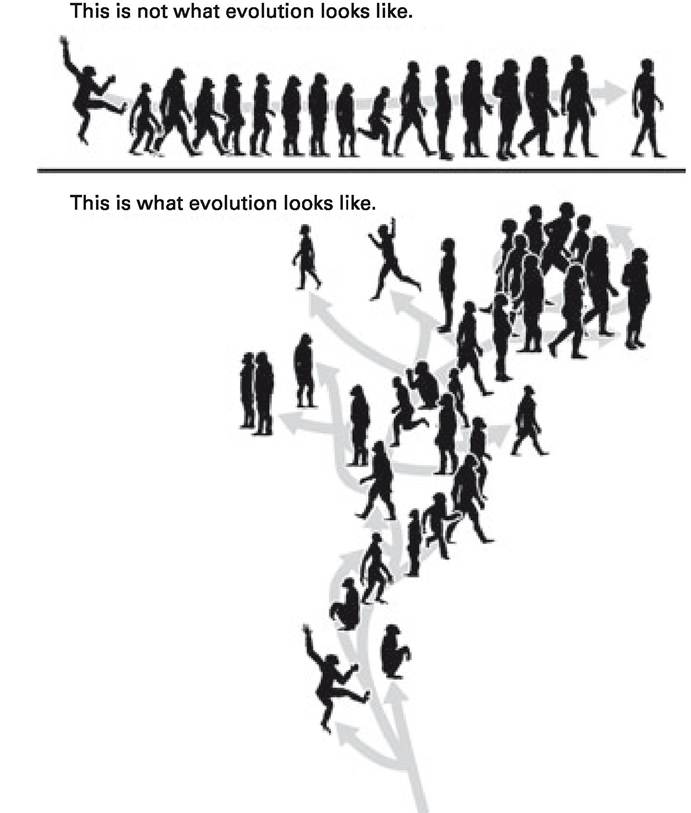
Figure 6 The march of progress ( top) vs. the bush of evolution ( bottom)
Although a largely understudied topic, the denial or neglect of the primate ascendance of H. sapiens is another important theme that needs to be factored in when evaluating the anti-scientific tendencies of academic historiography. For instance, one of the main pillars of post-Darwinian human exceptionalism in the study of religion was pithecophobia, originally diagnosed by zoologist and palaeontologist William King Gregory (1876-1970) as the ‘irrational fear of apes and monkeys as potential ancestors [...] brought on by greater knowledge of our own evolution' (Beard 2004: 289-90;
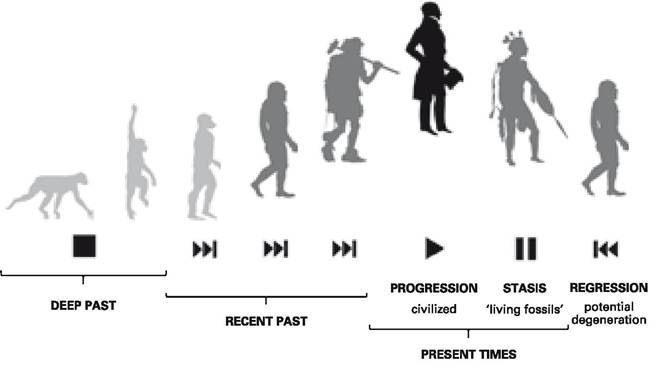
Figure 7 A simplified version of Victorian progressionism
Gregory 1927). In other words, the accumulation of undeniable palaeontological and palaeoanthropological data backfired spectacularly, promoting a directly proportional refusal or denial of their import for human evolution. Max Müller, and even Darwin's closest friends, were at odds with Darwin as far as the gap between human and nonhuman taxa was concerned. Pithecophobia informed a great many works in the Humanities (a topic which definitely needs more dedicated studies) and, as far as the study of religions was concerned, it tinkered with esotericist, orientalist, Indocentric and theological perspectives, and it may still exert an unquestionable charm in some academic quarters. This intellectual malady was also one of the main forces behind the idea that the cradle of humanity, arisen and already formed as Athena from the head of Zeus, lay somewhere in central Asia, a territory which a Romantic vogue endowed with absolute, archaic and mysterious prestige (cf. De Quincey 2013: 72-3). A similar attitude characterized the cultural fascination exerted by the vastly unexplored lands of continental Asia on ancient Greek culture.
As Jonathan Z. Smith has rightly pointed out, a mixture of all these old and new ideas was to characterize precisely the incipient comparative approach to religion, casting a long shadow over the future of the field: ‘evolution, as represented by the nineteenth- and early twentieth- century practitioners of anthropology and comparative religions, was an illegitimate combination of the morphological, ahistorical approach to comparison and the new temporal framework of the evolutionists' (Smith 1982: 24).
Original sin
Since the very beginning of modern scientific research, the domains of cognition and human social behaviour were strictly intertwined with religion and evolution. The Descent of Man proved a baptism of fire for the newborn comparative religion. The test was too hard and stressful for the young discipline. As we will see later on, the failure of comparative religion was due to the intuitive force of religious and anti-positivistic biases in the cultural environment of the Humanities, and Victorian science of religion’s heir, i.e. the HoR, was deliberately designed to counteract the scientific invasion of the theological and religious pitch. In a sense, HoR was the result of the conscious rejection of the deep history provided by evolution, with homo religiosus’ behaviours completely detached from those of other nonhuman animals. In a curious U-turn, the study of this bizarre theological species was to be conducted without interferences from the blooming natural sciences.
Quite surprisingly, the need for a scientific explanation in the historical and comparative study of religion - as well as the use of the epistemological and methodological toolbox carefully assembled by Darwin himself - was soon eschewed, skirted or bypassed by appealing to a tautological religious understanding of religious facts and beliefs. In a sense, standing proudly on its natural and evolutionary scaffolding made of intuitive biases and logical fallacies, unnatural religion declared victory over a humbling but unwelcome natural understanding of religion itself. Consequently, the import of the Darwinian panda principle for comparative religion was eventually forgotten. The panda principle urged researchers to focus on similar environmental forces which might affect the evolution of similar, yet phylogenetically unrelated, traits. Diametrically opposed, the original sin of the whole historiography of comparative religion was the disregard for differential context, which led exactly to the error effortfully avoided by Darwin. One has only to think about the famous comparative work by Jesuit missionary Joseph-Francois Lafitau (1681-1746), Moeurs des Sauvages Ameriquains, Comparees aux Moeurs des Premiers Temps (1724), in which Native Americans’ customs and religious beliefs were interpreted as homological with (i.e. inherited from) ancient pre-classical (and pseudo-historical) Greek tribes, of which they were thought to be the descendants. As time went by, so Lafitau argued, their primordial and pure religiosity degenerated, resulting in modern-day corrupted customs (Borgeaud 2013: 93-8). Lafitau’s homological and fallacious modus operandi is exemplary for the field because it was never theoretically amended and falsified, but continuously reiterated, and Lafitau himself has been often included in the innumerable foundational lists of disciplinary forerunners (see di Nola 1977a: 283; Brandewie 1983: 130). Yet, as we have seen, the possession of a comparative method per se is a necessary but not sufficient condition: every human being, and nonhuman animal alike, might engage in categorization and systematization. In other words, epistemology maketh the discipline, for methodology alone is barely sufficient (cf. Sharpe 1986: 2).
However, as feared by Frazer himself, the fideistic rej ection and the accommo dationist reaction by the community of colleagues and peers revealed how fragile was the appeal of positivism and how powerful the grip of non-negotiable dogmas. In the long run, Darwin’s verdict about the danger of Max Muller’s anthropocentric biases justified by religious convictions was to prove correct in the decades to come. As comparative religion ‘went on a decline in a post-Frazerian critique of rampant comparative exercises of things stripped of their contexts’ (Jensen 1993: 126), its evolutionary methodology was abandoned in favour of functionalism (eagerly adopted by anthropology) and a neo-theological phenomenology (which became the blazon of the new HoR stuck in Lafitaus mistake). In the following chapter, we will tackle the decline of the Victorian science of religion and the inception of the new HoR, with a specific focus on the trailblazing Dutch, Austrian and Italian disciplinary schools.
54