Life Lessons in Myths
Native mythologies contain teachings about how to live properly in the world. From myths, people learn to live respectfully with others in society, to make a living off of the land, and to understand the meaning of life.
In many Native myths, these lessons are taught through the exploits of a character known as a trickster. The trickster figure is often an animal who has adventures and engages in all manner of mischief. In many myths, the trickster suffers repercussions because of his failure to follow established rules about social behavior. Therefore, those hearing the myth are warned about the importance of proper behavior.One trickster tale featuring Coyote comes from the Pima of Arizona. In the past, Bluebird was an unattractive color. The bird decided to bathe in a special blue lake every morning for four days. After the fourth dip in the lake, the bird grew beautiful blue feathers. Coyote, who was green at the time, saw the new color and asked Bluebird how he could become beautiful, too. The bird explained his method, and Coyote turned blue. Coyote was very proud, and he looked around arrogantly as he walked to make sure he was being admired. But he did not watch where he was going, and he tripped and fell in the dirt. When he got up, he was the color of dirt, and now all coyotes are dirt-colored.- This short tale teaches an important lesson about the dangers of arrogance.
Myths of North America may also account for the origins of subsistence activities, such as hunting and farming. Often, the subsistence practices of a people are said to have been determined by the gods. This divine origin of daily activity casts everyday life and everyday activities, such as planting crops or preparing food, in a sacred dimension.7
Consider, for example, the many diverse myths about the origins of corn. Corn, or maize, has been a staple crop of great importance throughout North America.
Some myths explain that human beings have a special duty to raise com. Myths may tell of a particular god who is responsible for providing the crop or for protecting the fertility of the earth. The Cherokee, historically of the southeastern United States, tell a myth in which the goddess Corn Woman produced com through the treachery of her son and his playmate. In the myth, Corn Woman rubbed her body to produce food. One day, the two boys saw her doing this. They thought she was practicing witchcraft and so decided to kill her. After they attacked her, she instructed the boys to drag her injured body over the ground. Wherever her blood fell, com grew. This myth teaches about the relationship between life and death: the blood that causes death can also produce life.-Many other myths teach about life and death. The following passage from the Popol Vuh is a moving speech made by the heroic twin gods to the maiden Blood Moon. At this point in the myth, the lords of the underworld have defeated the twins. The severed head of one of the twins has been placed in a tree, and his skull impregnates the maiden with his spittle when she holds out her hand. Blood Moon will eventually bear the next generation of hero twins who avenge their fathers’ deaths and prepare the world for the arrival of humans. In the twins’ poignant speech to the maiden, we learn something about the Mayan view of the meaning of life: even after death, we live on in our children.
And then the bone spit out its saliva, which landed squarely in the hand of the maiden....
“It’s just a sign I have given you, my saliva, my spittle. This, my head, has nothing on it—just bone, nothing of meat. It’s just the same with the head of a great lord: It’s just the flesh that makes his face look good. And when he dies, people get frightened by his bones. After that, his son is like his saliva, his spittle, in his being whether it be the son of a lord or the son of a craftsman, an orator. The father does not disappear, but goes on being fulfilled. Neither dimmed nor destroyed is the face of a lord, a warrior, a craftsman, orator. Rather, he will leave his daughters and sons. So it is that I have done likewise through you. Now go up there on the face of the earth; you will not die. Keep the word. So be it.”9
Stories of heroic twins are also common in other indigenous American mythologies. This shows an important degree of continuity between traditions throughout regions of North America. As you recall, Navajo mythology includes a similar tale of heroic twins preparing the world for humanity. The Apache, also of the southwestern United States, share a similar tale.
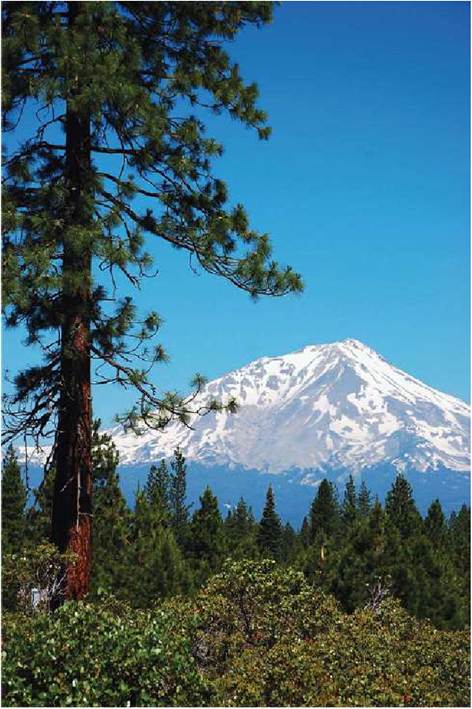
Mount Shasta, in Northern California, is regarded as sacred by many tribes in the region.