Religious Observances Throughout the Year
Because of the diversity in Japanese religion, the yearly round of customary ritual observances is correspondingly diverse in religious orientation. Excluding the various local festivals that pay tribute to particular Shinto kami and Buddhist feasts that honor the Buddha and specific bodhisattvas, the following are the most popularly observed annual ritual occasions.
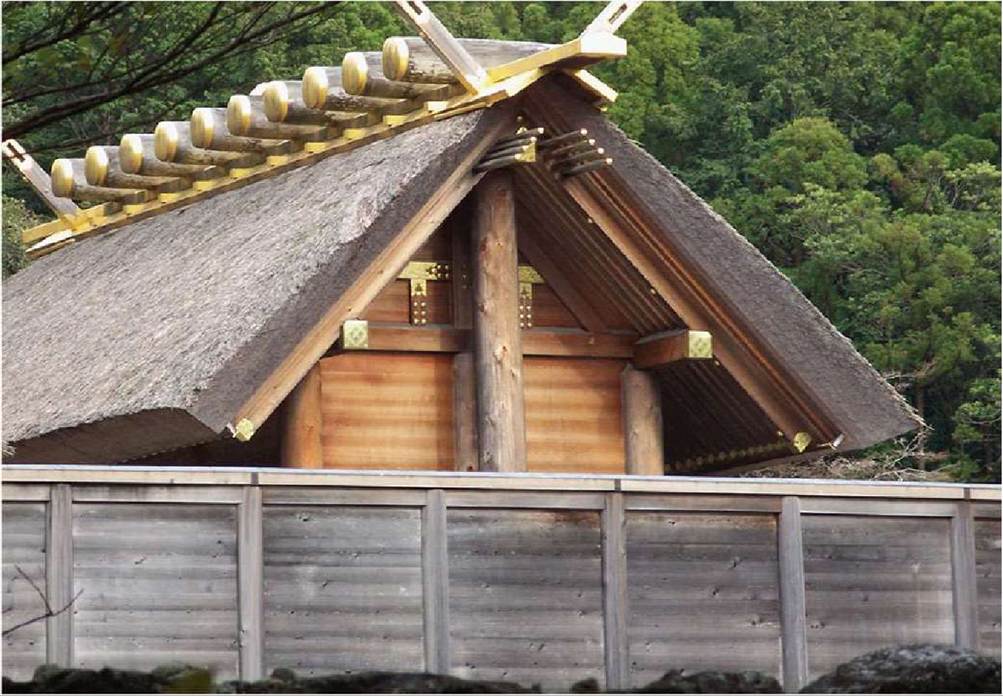
The inner shrine of Amaterasu at Ise.
New Year (Oshogatsu)
People prepare for the New Year each January 1 by cleaning their houses thoroughly to get rid of both physical and spiritual dirt. On New Year’s Eve near midnight, they visit one of the major Shinto shrines such as the Meiji Shrine in Tokyo or a prominent Buddhist temple such as the Honganji in Kyoto to welcome in the New Year. Beginning on New Year’s Day, they visit friends and relatives to offer their greetings and renew their relationship.
The Turn of the Seasons (Setsubun)
This festival is observed on February 3, the last day of the winter season. The entire family performs a special purification ritual that involves the throwing of roasted beans from the house into the yard, yelling Oni wa soto! (Demons get out!) and, from the yard into the house, calling out Fuku wa uchi! (Fortunes come in!). Shinto shrines in the community do the same, though on a much larger scale.
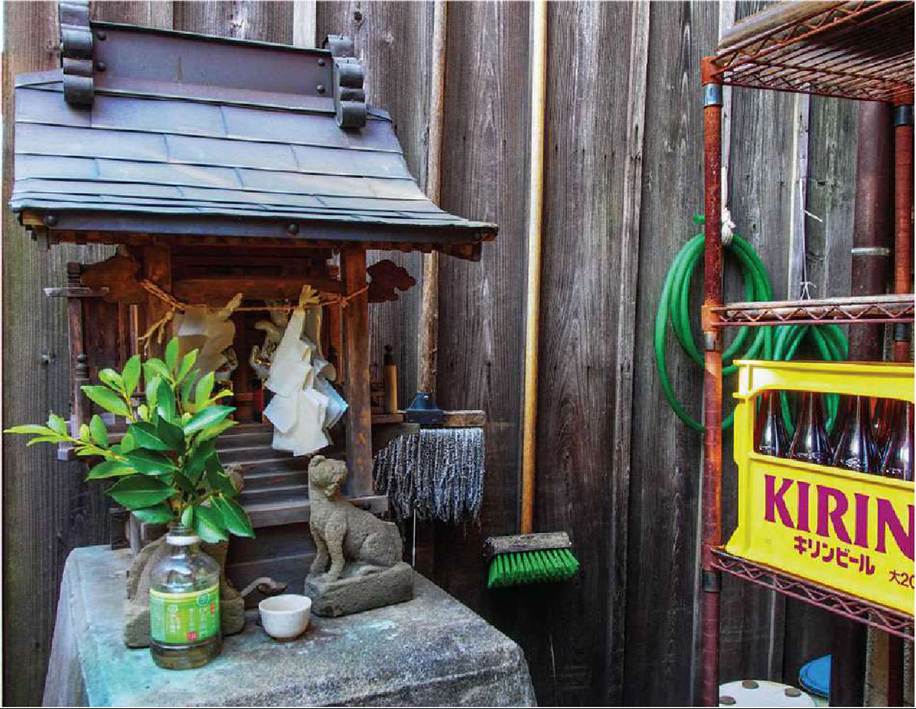
A household Shinto shrine in the backyard of a restaurant in Kawagoe, Japan, includes a kamidana (god shelf), kitsune (fox) statues; torii (gates), and offerings to the gods.
Doll Festival (Hina Matsun)
March 3 is devoted to the celebration of girls and daughters in the household. A notable feature of the observance of this special day is the prominent display of tiers of dolls with elaborate costumes that represent the styles of the court ladies of the ancient imperial period.
These dolls are expensively made and serve as a reflection of the family’s financial standing.Boys’ Day (Tango no Sekku) This counterpart of the Doll Festival is celebrated on May 5. Dedicated to celebrating the healthy growth of boys, this day refers to the annual festival (sekku) held on the day of the horse {go) at the beginning (tan) of May. It also involves the display of figurines of armored fighters and the flying of carp-shaped paper or fabric streamers on a tall pole.
Star Festival (Tanabata)
This festival was introduced from China to commemorate the romantic story of two stars, Vega and Altair, personified, respectively, as a young weaver maiden and her lover the cowherd, who are allowed this one-time-a-year rendezvous in the heavens. Observed on July 7, it is a festival for young lovers and for unmarried girls who want to improve their chances of marriage by honing their skills in weaving, sewing, and embroidery or any arts and crafts requiring manual dexterity.
VISUAL GUIDE
Shinto
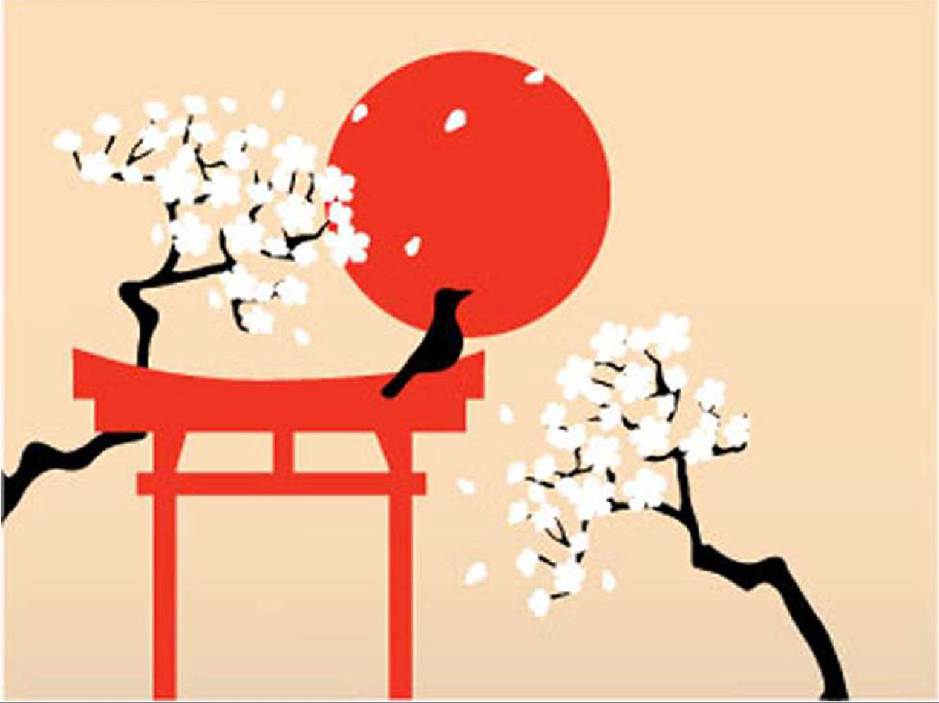
This image contains three major aspects of Japanese religiosity—the sun, the Shinto torii, and cherry blossoms. The sun is the chief deity responsible for the rise of the Japanese state, the torii (lit. “bird dwelling,” hence the bird atop the arch) marks the sacred space of the Shinto shrine ground, and cherry blossoms convey the Japanese sense of fragile beauty and transience.
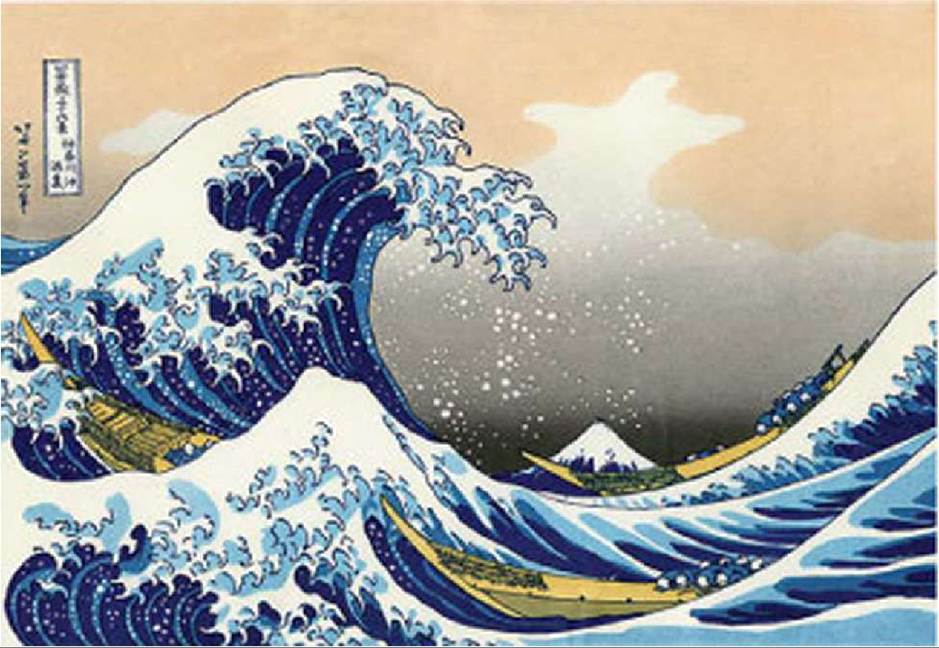
A most widely recognized and universally appreciated woodblock print of a giant wave towering over a dwarfed Mt. Fuji by the artist Hokusai, produced in 1832.
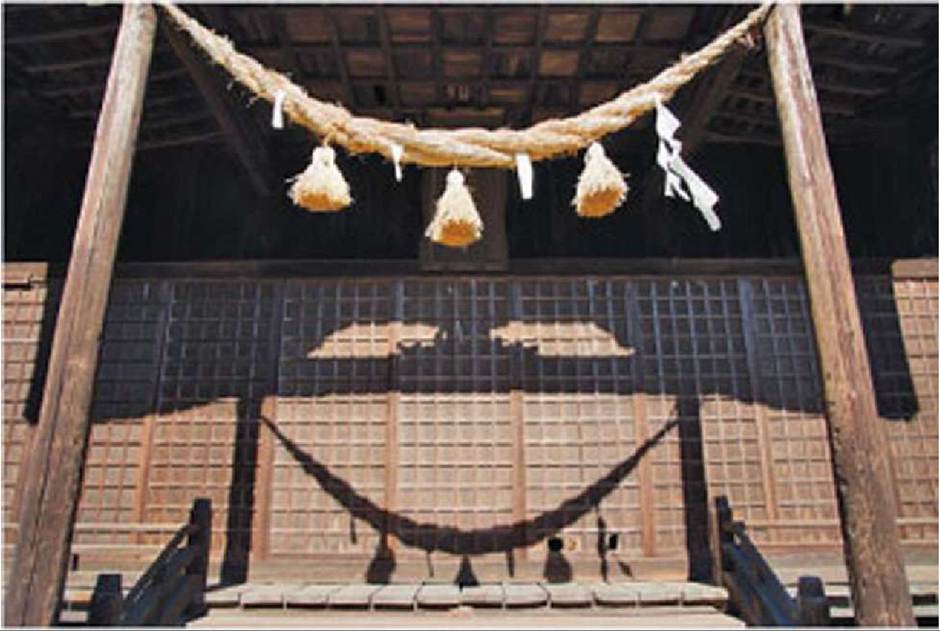
The shimenawa in front of a Shinto shrine. A giant rope made of rice stalk, the shimenawa marks off the sacred space within the shrine complex.
Worshipers believe that beyond the line resides the spirit of the kami.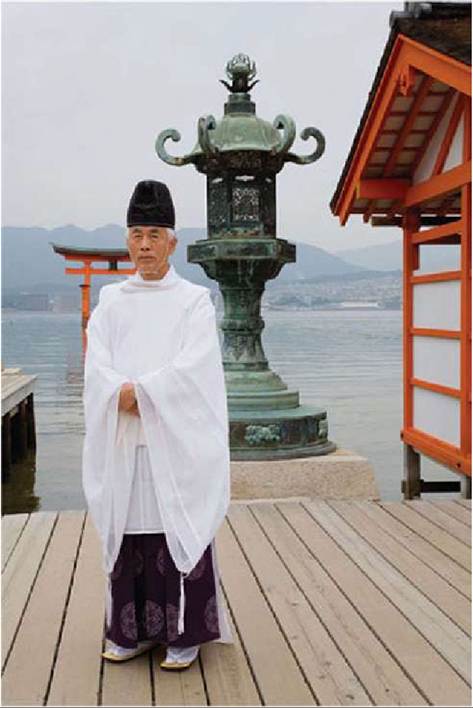
A Shinto priest at the Itsukushima Shrine in Miyajima, Japan. The priest acts as a bridge between the worshipers and the kami housed at the shrine. He makes presentation to the deity on behalf of the community, purifies the shrine visitors with prescribed rituals, and presides over community events.
Ghost Festival (Obon)
Unlike the other festivals listed here, the Ghost Festival’s date each year is not determined by the solar calendar. Instead, it falls on the fourteenth day of the seventh month in the lunar calendar. This is the Japanese version of the Yulanpen, a Chinese Buddhist festival. Bon is the Japanese pronunciation of the Chinese word pen ("bowl of offerings”), and o is the honorific. This festival welcomes the ancestral spirits to return home with food and offerings. Families clean the graves of their ancestors and wash the headstones. On the previous evening, people build a small fire outside the gate of their homes to greet the returning spirits. Sometimes Buddhist monks are invited to the house to recite sutras to soothe the souls of the deceased and comfort the living. Over the next two days, people participate in communal folk dances called bon odori to please the spirits and to enhance communal solidarity.
Harvest Festival (Niiname-sai)
This giving of thanks by the community for the rice harvest occurs on November 23. In modern Japan, it has been renamed “Labor Thanksgiving Day” and is designated a national holiday. Celebrating the harvest with the people, the Japanese emperor traditionally would taste the newly ripened rice and would offer it to the kami on behalf of his subjects. The festival also links all local shrines to the imperial court, as the emperor is believed to be the representative of the people to thank the kami for providing fertility and bountifulness.