§ 1. General Characteristics.
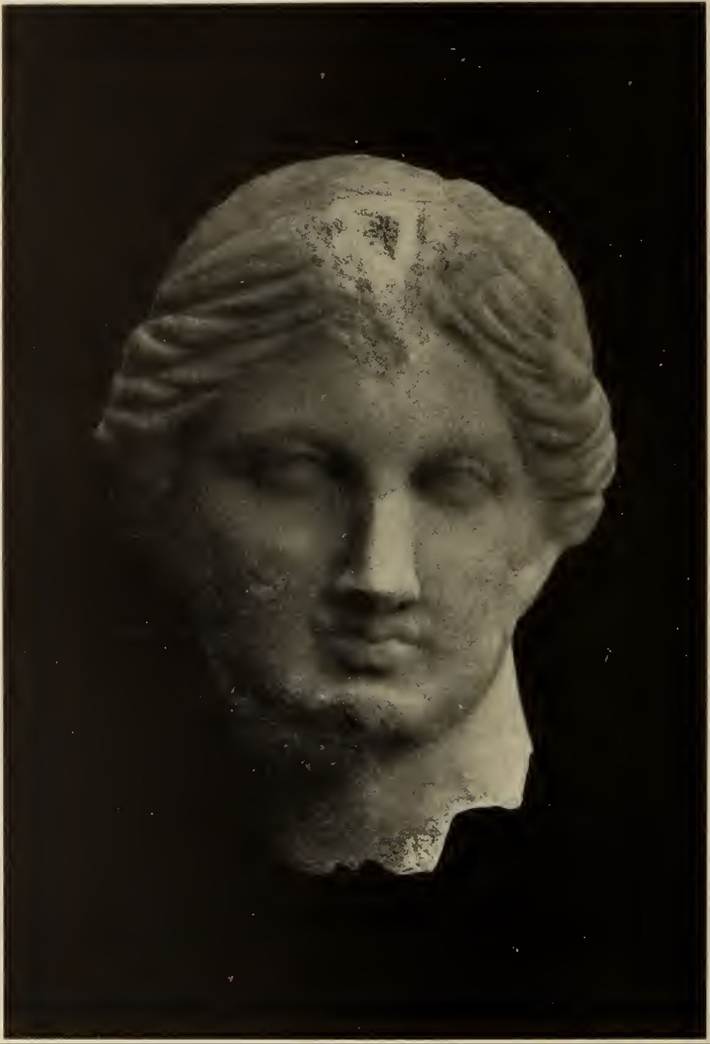
Fig. 208. Hygiea(?). Olbia. BCA. xm. Pl. 11. v. p. 297. Nose restored.
Scvtiiic art has a special interest because it is one of the most important sources of information as to the origin of the nomads of South Russia, and its productions are all that is left us of a great nation : accordingly its remains have been examined in some detail.
The specimens of Greek art found in Scythia or in the coast settlements are, on the contrary, but a small part of the total mass of Greek art-work known, this small part being selected from the greater whole by the taste and commercial connexions of the three or four chief colonies. Still, this comparatively small part has yielded what is absolutely an enormous number of works of art, and it will be impossible to treat these as fully as the Scythic objects. It might be thought safe entirely to ignore the finds made in such obscure towns as being unlikely to tell us anything which would not be more satisfactorily attained by investigations at the great centres of Greek art and civilization, but it just happens that certain crafts of the ancient world have left better specimens in this region than in any other. Whereas we shall find hardly any architecture or sculpture worth serious attention, decorative painting in its latest form is represented ; almost the only Greek carpentry, inlaying and drawing on wood and almost the only textiles preserved have been saved for us in South Russian graves ; the later styles of ceramics can be well studied, and some special developments observed, and terra-cottas without attaining to a high level shew how the Bosporan artists followed at a distance the movements of taste and fashion in the main centres of life. In bronze work also we have artistic specimens of mirrors and mirror cases, horsetrappings and various vessels with relief work dating from the early vth century onwards. But it is in the precious metals that the South Russian discoveries are richest. In silver, besides the peerless Chertomlyk vase, we have vessels of all kinds of shapes and very varied decoration dating from the late archaic to Roman times. In gold work not even Etruscan tombs have furnished such perfect specimens. In their own way the necklets from Kul Oba, from Theodosia and the Great Bliznitsa, the earrings from Theodosia and Chersonese, one or two of the gold wreaths, the calathi from the Bliznitsa, the Nereid temple-ornaments from the same tomb, and those with Athena Parthenos and the Sphinx bracelets from Kul Oba, have never been surpassed as triumphs of the goldsmith’s art.It is possible to guess at some of the causes that determined the character of the finds, at least that of those made about the Cimmerian Bosporus. Here we had Greeks living under strong barbarian influence, their archons were of barbarian extraction, and ruled as kings over neighbouring barbarous tribes. The Milesians themselves were largely crossed with Asiatic blood : the barbarians both of Asia and of Scythia had very strong beliefs in the necessity of providing the dead with a permanent dwelling and with all that they could want in the next world. Hence the Ionian colonists in Scythia were especially likely to raise solid memorials to their dead and fill the well-built sepulchral chambers with precious things, more likely than the home Greeks, whose notions of the next world were more exposed to scepticism. The Bosporans, too, were rich with the riches of a commercial class and had a taste for ornaments of gold upon their apparel. Moreover, their land produced little fine stone (hence the wooden sarcophagi), but easily worked coarse stone (hence the vaults that often kept all these things in good preservation). Further, we must not forget that the most precious things of all come from frankly barbarian graves. The combination of circumstances is best paralleled by the state of Etruria, where the wealthy lucumones had a taste for Greek art, and fitted up their everlasting abodes with beautiful things of Greek, or imitation Greek, style. But the time of Etruscan wealth, though in all it lasted longer, came to an end sooner than Bosporan and Scythian prosperity, and the one region yields products of stiff archaic art, the other, mostly objects which shew the most delicate and fanciful, if rather overblown, art of the times succeeding Alexander. In this the resemblance is rather to Grecian Egypt, from which many parallels will be quoted.
More on the topic § 1. General Characteristics.:
- Evolution is descent with modification
- Agrawal M.. Textbook of Pediatrics. 3rd ed. — CBS Publishers,2025. — 973 p., 2025
- Marriage and marriage dissolution
- First aid for drowning
- REVIEW OF FORENSIC ASSESSMENT INSTRUMENTS
- AVIAN CHOLERA
- Control of BTB in Ethiopia
- Indicators of Soil Pollution
- Background Context
- The British in the Coral Sea: Fiji