Coronary Artery Bypass Grafting
An increased rate of acute coronary syndromes has been reported in HIV-infected patients after the introduction of protease inhibitors. However, the substantial benefits of combination antiretroviral therapy clearly continue to outweigh the increased risk of myocardial infarction associated with this therapy [24].
Although valvular surgery was and is still the most common cardiac intervention in HIV-infected patients (70% of the HIV-infected patients for Mestre et al. [8], 65% at La Pitie), coronary artery bypass grafting (CABG) is more and more frequent in HIV-infected patients (30 CABG among 37 interventions for Tra- chiotis et al. [7]). According to the limited experience reported by different surgical centers (Table 1), the perioperative course of these patients is unremarkable [25, 26]. Surgical revascularization is sometimes performed in an urgent or emergent condition involving the lesions of coronary arteries but never in patients with end-stage HIV disease. These patients are younger than other patients referred for CABG, with the majority being men. The surgical strategy and technique are unremarkable. Full arterial revascularization is a good option because of the age of these patients. The incidence of mediastinitis despite bilateral mammary harvesting, frequent diabetes mellitus, and immunodeficiency is not higher than in comparable patients (2.7%) [7]. Due to the lack of controlled trials and large patient reviews, no firm recommendations about the strategy and technique of surgical revascularization can be provided [25].Aneurysm or false aneurysm of the coronary artery is a rare lesion in HIV-positive patients; it can require cardiac surgery under ECC (exclusion of the aneurysm and CABG). After CABG, lipid-lowering therapy should be prescribed cautiously in HIV-infected patients because of the potential of a lethal interaction between statin (except pravastatin, fluvastatin and rosuvastatin) and protease inhibitors.
Table 1 Cardiac surgery excluding transplantation in HIV-infected patients
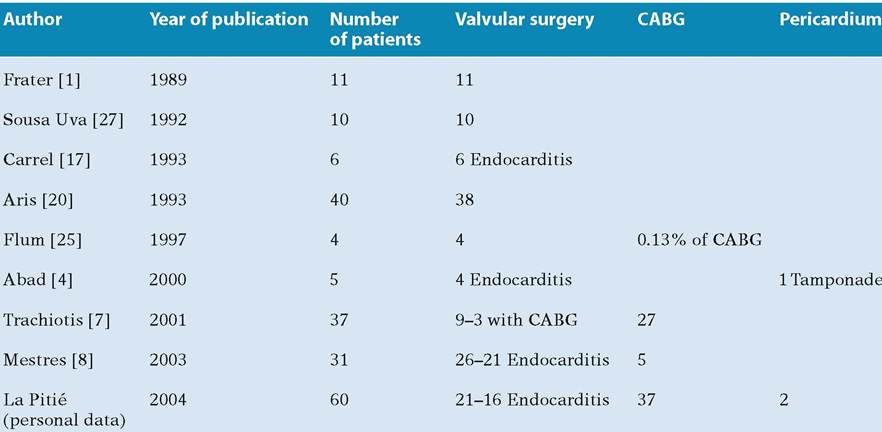
CABG, coronary artery bypass grafting