Heart Transplantation
HIV disease is recognized as an important cause of dilated cardiomyopathy with a reported prevalence of 3.6% among patients with cardiomyopathy, a proportion that is increasing as patients with HIV infection live longer.
The pathogenesis of HIV-related cardiomyopathy is very likely to be multifactorial. HIV-associated symptomatic heart failure may become one of the leading causes of heart failure worldwide [21]. It explains why, despite a complex pharmacological and immunological status in these patients, several heart transplantations following other solid-organ transplantations [28-30] have been reported in HIVpositive recipients (Table 2) [31]. Although Calabrese et al. [32] reported a successful cardiac transplantation in 2003 in an HIV- infected patient with advanced disease, we reserve this therapeutic strategy to well- controlled HIV-positive patients (undetectable viral load, CD4 count >400∕mm3)Table 2 Cardiac transplantations
| Author | Year of publication | Number |
| Tzakis [34] | 1990 | 1 |
| Calabrese [31] | 2003 | 1 |
| Bisleri [30] | 2003 | 1 |
| La Pitie (personal data) | 2004 | 2 |
without opportunistic infection and without a history of Kaposi’s sarcoma. Two cardiac transplantations with a simple postoperative course and no specific complications during follow-up have been performed at La Pitie during the last 2 years. A multidisciplinary team is required for this therapeutic technique because numerous complex and unpredictable pharmacological and immunological adverse events can occur (Fig. 5) [33].
There is no report of a cardiac assist device
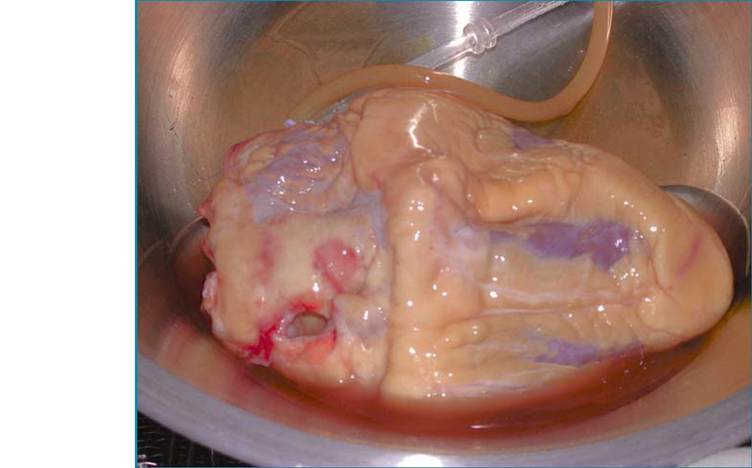
Fig. 5 Heart prepared for transplantation
in HIV-infected patients, but it is only a matter of time before these devices are used in HIV patients. When the patient is on the waiting list for cardiac transplantation, he or she is eligible for a mechanical bridge. Nevertheless, this therapy will be a challenge because the major complication of ventricular assist devices is sepsis. If the number of HIV-infected patients on waiting lists for cardiac transplantation increases in a high proportion, we should ask the controversial question concerning the harvesting of a heart in HIV-infected donors.
More on the topic Heart Transplantation:
- Liver Transplantation
- Transplantation
- Principles of Stem Cell Transplantation
- HEMATOPOIETIC STEM-CELL TRANSPLANTATION
- DISORDERS OF THE HEART AND CIRCULATION
- Acute Rejection, Heart
- CONGENITAL HEART DISEASE
- Coronary Heart Disease
- Coronary Heart Disease and Stable Angina
- Congestive Heart Failure