DISORDERS OF THE HEART AND CIRCULATION
As with respiratory diseases, many conditions of the heart and general circulation have been discussed already, for example:
• degeneration of the heart muscle in white muscle disease (Chapter 3)
• pericarditis, an infection of the heart sac caused by a wire (page 400)
• pulmonary haemorrhage, redwater and tick fever, described in the previous section.
This section describes two other conditions.
Endocarditis
The word endocarditis means inflammation of the inside of the heart and is normally used to describe infection of the heart valves. Plate 13.21 shows a typical example. The infection could have originated from any site in the body, for example a foot infection, mastitis or liver abscess, and travelling through the bloodstream it is by chance that it localises on the heart valve. If small abscesses have also developed in the liver, lungs and kidneys, the animal is said to have pyaemia. Pyaemia can only be diagnosed at post-mortem and may be a cause of carcase rejection at the abattoir. It could also be that the heart valve infection (i.e. endocarditis) was primary and pyaemia spread from there.
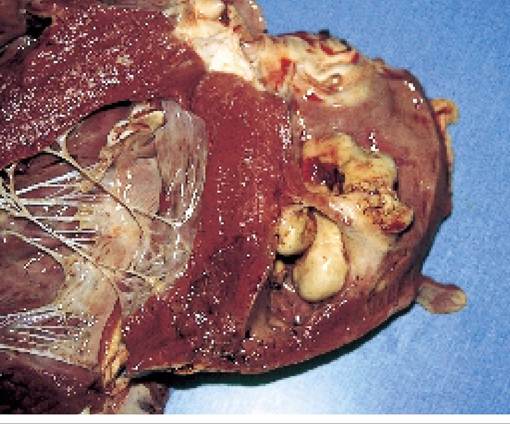
Plate 13.21 Endocarditis: large lumps of pus on the valves cause the heart to ‘leak', producing an animal with poor circulation.
Streptococcus uberis is becoming an increasingly common cause of endocarditis. Infection is seen particularly in first lactation heifers in high stress housing situations.
In the early stages of endocarditis the animal will be a bit lethargic, with a drop in milk yield and a mild temperature. High level antibiotic for seven to ten days at this stage can sometimes produce a cure. However, when the general circulation starts to fail (see next section) casualty slaughter is usually the best option.
Congestive Heart Failure
This occurs as a result of endocarditis, but can also be due to pericarditis (caused by a wire) or any other condition interfering with heart function. With endocarditis the valve fails to close properly and when the heart contracts to pump blood into the lungs, some of the blood is pushed back into the circulation again. This results in a swelling of blood vessels, particularly seen in the jugular vein in the neck (Plate 13.22) and an accumulation of fluid (dropsy) under the jaw (bottle jaw) and sternum. The Limousin steer in Plate 13.23 was so badly affected that the whole of his lower body, from brisket to belly, and all four legs were swollen. At post-mortem he was found to have pericarditis.
More on the topic DISORDERS OF THE HEART AND CIRCULATION:
- Important developmental aspects of cardiovascular physiology may be broadly divided into four components: (a) Development of the heart, (b) Fetal circulation, (c) Adoptive circulatory changes at birth and (d) Adult circulation.
- POSTNATAL CIRCULATION
- FETAL CIRCULATION
- Atmospheric and Oceanic Circulation
- Atmospheric circulation cells create surface wind patterns
- P Keerthi Kundana, Mona Gajre, Alpana Kondekar, Mukesh AgrawalNeurological disorders account for ~15-20% of hospitalizations, which may be divided into three major categories: (a) central nervous system disorders, involving brain and spinal cord, (b) neuromuscular disorders involving peripheral nerves and muscles, and rare disorders of autonomic nervous system.
- First aid for heart failure
- Atmospheric circulation cells are established in regular latitudinal patterns
- Oceanic circulation and the distribution and topography of continents influence global temperatures
- Heart Transplantation
- CONGENITAL HEART DISEASE
- Coronary Heart Disease
- Coronary Heart Disease and Stable Angina
- Congestive Heart Failure
- Valvular Heart Disease