Atmospheric and Oceanic Circulation
CONCEPT 2.2 Winds and ocean currents result from differences in solar radiation across Earth's surface.
Learning Objectives
2.2.1 Draw connections between differential heat gain across Earth’s surface and the development of atmospheric circulation cells.
2.2.2 Explain how surface winds and ocean currents move heat between the tropics and the poles.
It's hot near the equator and cold at the poles. Why is this true, and how does it relate to global climate patterns? Near the equator, the sun's rays strike Earth's surface perpendicularly. Toward the North and South Poles, the angle of the sun's rays becomes steeper, so the same amount of energy is spread over a progressively larger area of Earth's surface (FIGURE 2.6). In addition, the amount of atmosphere the rays must pass through increases toward the poles, so more radiation is reflected or absorbed before it reaches the surface. As a result, more solar energy is received per unit of area in the tropics (between latitudes 23.5°N and S) than in regions closer to the poles. This differential input of solar radiation not only establishes latitudinal gradients in temperature, but also is the driving force for climate dynamics such as warm and cold fronts and large storms (e.g., hurricanes). In addition, the movement of Earth around the sun, in combination with the tilt of Earth's axis of rotation, results in changes in the amount of solar radiation received at any location over the course of the year, as we'll see in Concept 2.5. These changes are the cause of seasonal climate variation: winter-spring-summer-fall changes at high latitudes and wet-dry shifts in tropical regions.
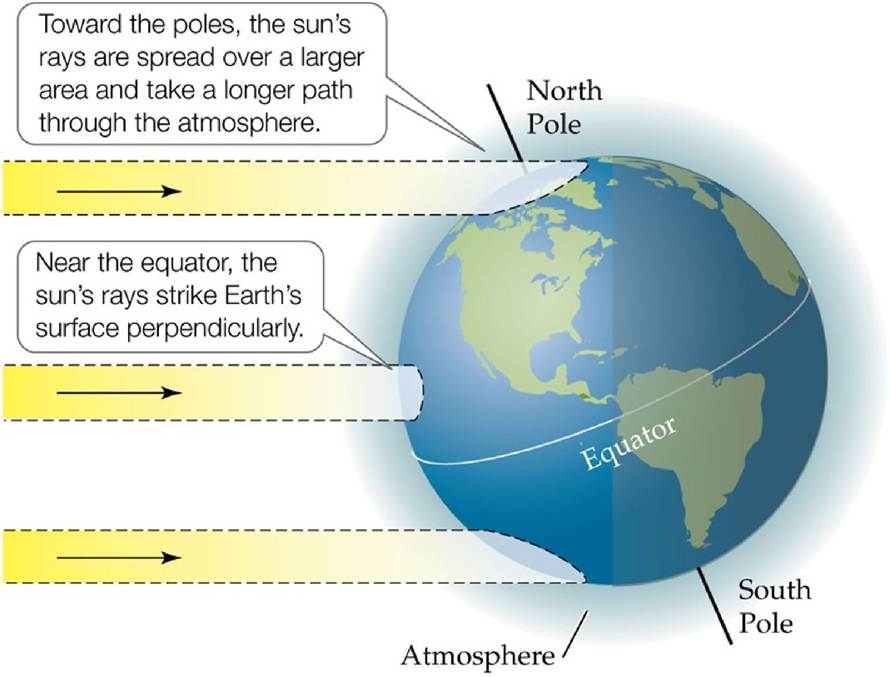
FIGURE 2.6 Latitudinal Differences in Solar Radiation at Earth's Surface The angle of the sun's rays affects the intensity of the solar radiation that strikes Earth's surface. View larger
image