DISORDERS OF THE UROGENITAL SYSTEM
The urogenital system includes the reproductive organs, kidneys and bladder. The majority of the problems affecting the uterus (endometritis, metritis, torsion, prolapse etc.) were dealt with in Chapters 5 and 8.
This section includes a few more female and male reproductive disorders and diseases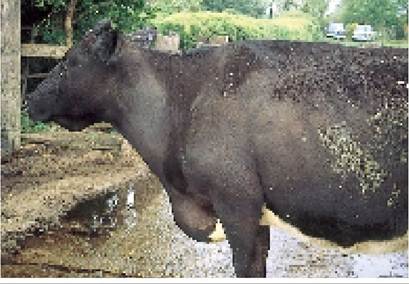
Plate 13.22. Heart failure: the thickened jugular vein is clearly seen running down the neck and there is oedema under the jaw and brisket.
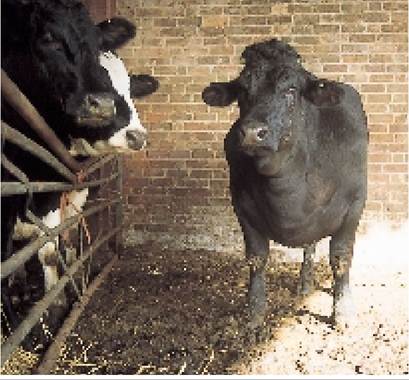
Plate 13.23. Heart failure. This Limousin steer was so badly affected that the whole of his lower body became enlarged.
of the urinary system.
Hydrops of the Uterus
In the sixth to seventh month of pregnancy there is normally a marked increase in the production of allantoic fluid, but in some cows this becomes uncontrolled so that the uterus continues to accumulate fluid. Some 250-300 litres may be present. The cow’s abdomen becomes massively dilated and she loses weight rapidly. Once she becomes recumbent, slaughter is necessary, although if the condition is recognised soon enough, termination of the pregnancy, for example with prostaglandin, cortisone or a caesarean section may be effective. Even then the sudden loss of fluid may lead to death from shock.
There was originally some confusion as to whether the fluid was accumulating in the allantoic or amniotic sacs (see Chapter 5 for explanation of these terms), and hence the condition is sometimes referred to as ‘hydrops amnion’ or ‘hydramnios’, rather than the correct name of ‘hydrops allantois’ or
‘hydrallantois’. Hydrops amnion can occur, but is rare.
The cow in Plate 13.24 was a long time (six weeks!) overdue to calve and had been slowly getting bigger.
Her abdomen was swollen on both sides, the skin was very tense and she was losing weight. She was induced to calve. Afew days later a ‘monster’ calf (Chapter 5) was delivered, but she did not recover.Abscesses, Tumours and Polyps
Abscesses and tumours are occasionally found in the kidneys, and sometimes the bladder may turn itself inside out and is seen as a prolapse through the vagina. This is shown diagrammatically in Figure 13.9. It should not be confused with a vaginal polyp (Plate 13.25), which is a tumour attached to the vaginal wall by a long stalk and which may also be seen protruding through the lips of the vulva. When the cow stands up, polyps are often pulled back into the vagina. Tumours of the bladder wall (squamous cell carcinomas) can be induced by bracken poisoning (page 447). The only clinical signs are those of cystitis.
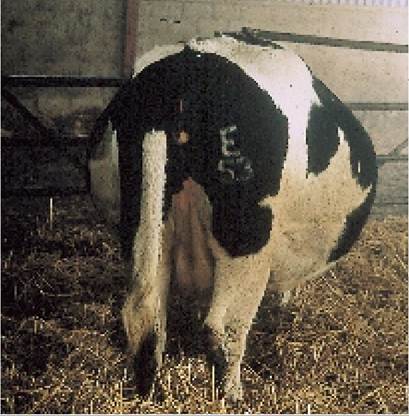
Plate 13.24. Hydrops of the uterus (hydrallantois). The cow was grossly enlarged, her abdomen very tense, and she had lost weight. After induction of abortion, an 11-month prolonged gestation ‘monster' calf was delivered, but she did not recover.
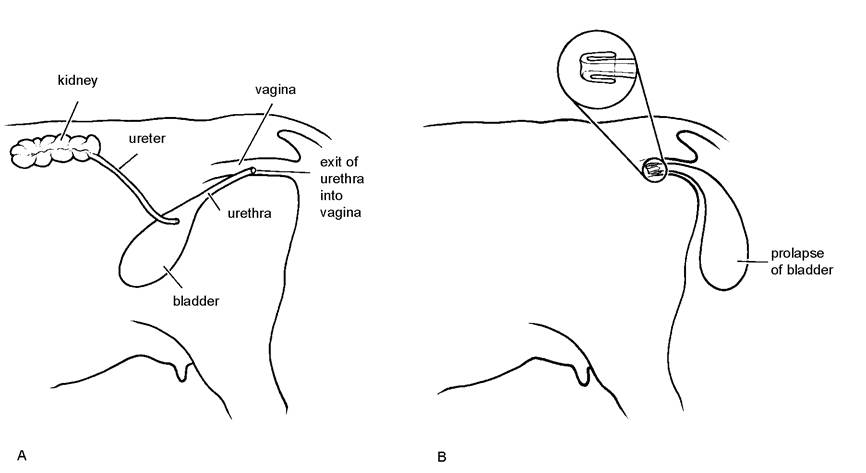
Figure 13.9. The positions of normal (a) and prolapsed (b) bladders.
Cystitis and Pyelonephritis
The word cystitis means inflammation of the bladder and pyelonephritis means inflammation and pus in the kidney. One of the common causes is infection with the organism Corynebac- terium renale. This is a condition seen chiefly in cows and heifers, as males are rarely affected. They run a moderate temperature, will be off their food for a few days and the urine may be a red colour, due to blood leaking from the inflamed surface of the bladder. This should not be confused with the darker purple-red urine of redwater, however.
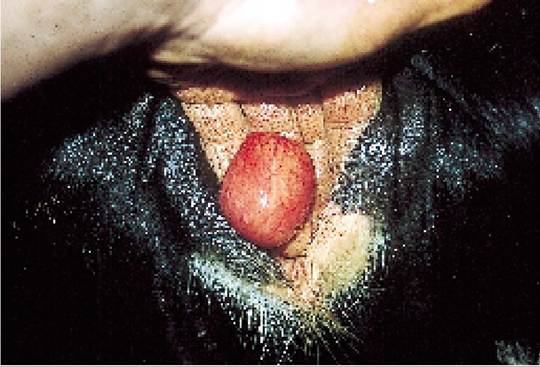
Plate 13.25.
Avaginal polyp is often seen only when the cow is lying down.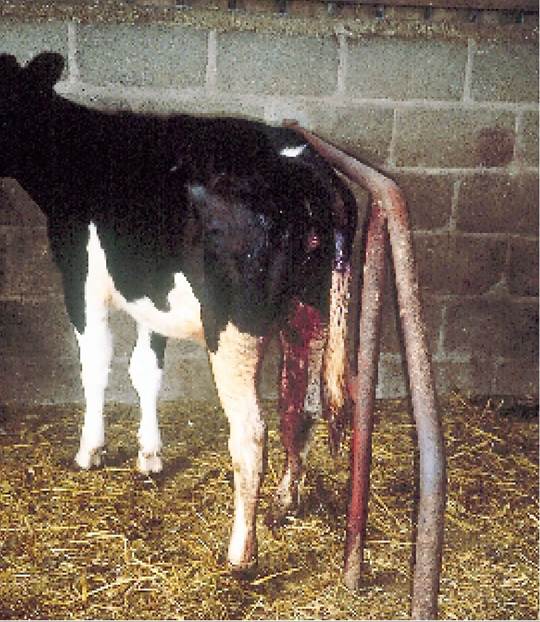
Plate 13.26. Cystitis. The strong smell of urine and grey-brown staining around the vulva are typical signs.
Provided that treatment is given fairly promptly, recovery rates are good. Your vet will probably use streptomycin, ampicillin, sulphonamides or some other antibacterial drug which is excreted via the urine, thus achieving a high concentration at the site of the bacterial attack. If the condition is allowed to progress, infection can track up the ureter towards the kidneys (see Figure 13.9 and note the unusual shape and structure of kidneys in cattle). Once the kidneys become badly infected and abscesses develop, treatment is unlikely to be successful. The animal loses weight rapidly and may become toxic and die.
Cystitis can also develop as a consequence of other diseases. The heifer in Plate 13.26 had scoured badly as a calf and then developed cystitis at three to four months old, presumably as a consequence of the scouring. Note the badly stained legs from frequent urination and urine dribbling down her thighs. Cystitis can also occur as a complication of navel ill, as discussed in Chapter 2.
More on the topic DISORDERS OF THE UROGENITAL SYSTEM:
- Urogenital System
- P Keerthi Kundana, Mona Gajre, Alpana Kondekar, Mukesh AgrawalNeurological disorders account for ~15-20% of hospitalizations, which may be divided into three major categories: (a) central nervous system disorders, involving brain and spinal cord, (b) neuromuscular disorders involving peripheral nerves and muscles, and rare disorders of autonomic nervous system.
- Disorders of the Urogenital Systems GlomerulonephritisiGlomerulopathy
- Rheumatic disorders (connective tissue disorders or collagen vascular disorders') is a collective term to denote a large group of conditions with variable manifestations but two common characteristics: (a) acute or chronic inflammation of multiple target organs, specially musculoskeletal system and vasculitis, and (b) an underlying abnormal immune response, e.g. autoimmune etiology.
- DISORDERS OF LYMPHATIC SYSTEM
- 15 Disorders of Hepatobiliary System
- Disorders of Cardiovascular System
- Disorders of Endocrine System
- DISORDERS OF LACRIMAL SYSTEM
- Disorders of the Endocrine System
- Disorders of Central Nervous System
- Disorders of the Gastrointestinal System Malocclusion