Epidemiology of HIV-1 and HIV-2 infections in developing countries
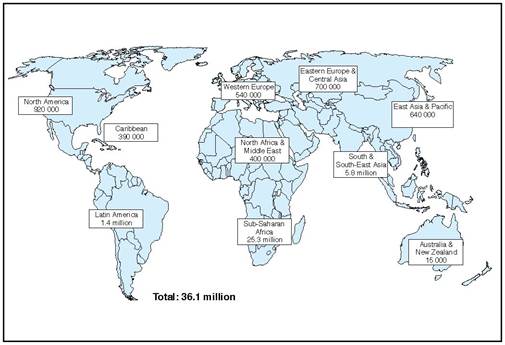
Figure 10.1 UNAIDS estimates that 95% of people living with HIV/AIDS are in developing countries
The epidemiology and burden of HIV in the developing world are discussed earlier (see chapter 1).
Two distinct viruses, HIV types 1 and 2 (HIV-1/HIV-2), cause AIDS. HIV-1 is responsible for the great majority of infections globally, HIV-2 being very rare outside of West Africa. Individual cases of HIV-2 infection have been described in other parts of Africa, Europe, the Americas and Asia (India), but most people with HIV-2 infection have some epidemiological link to West Africa.The routes of transmission of HIV-1 and HIV-2 (as described in chapter 1) are the same worldwide, but the relative importance of different modes of transmission differs according to region. In most developing countries, heterosexual transmission is the dominant mode of spread, and mother-to- child transmission of HIV is much more common than in industrialised countries. Homosexual transmission is rare in Africa, but is more common in south-east Asia and central and south America. Transmission associated with injecting drug use is particularly frequent in parts of south and south-east Asia and central and south America. Acquisition of infection from contaminated blood remains a problem, especially in parts of sub-Saharan Africa and south Asia; in some countries commercial blood donation acts to amplify the spread of transfusion-transmitted HIV infection, both to the recipients of blood as well as to donors who may become infected through exposure to unsterile equipment. Women and children are at especially high risk for transfusion-transmitted HIV infection, the former because of the high incidence of anaemia and haemorrhage associated with pregnancy and childbirth, and the latter because of malarial anaemia.
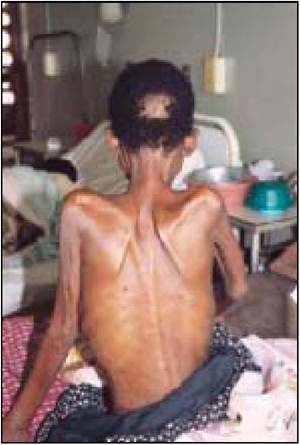
Figure 10.2 A common clinical presentation of advanced HIV disease in African countries
The transmission of HIV-2 infection is less efficient than that of HIV-1; this applies particularly to mother-to-child transmission, with only about 1% of HIV-2 infected mothers passing the infection on to their offspring. By comparison, up to 42% of HIV-1 infected mothers pass the infection to their children by all routes (intrauterine, puerperal and breast milk). Sexual transmission of HIV-2 is also less efficient, especially before the development of end-stage immune deficiency. Postnatal transmission of HIV-1 by breast milk is more important than previously believed and approximately doubles the risk of mother-to-child transmission.
is with marked wasting, known in Uganda as “slim” disease (courtesy of Professor Sebastian Lucas)

Figure 10.3 Pruriginous dermatitis. This may be an early manifestation of HIV infection
More on the topic Epidemiology of HIV-1 and HIV-2 infections in developing countries:
- Natural history of HIV-1 and HIV-2 infections in developing countries
- What is HIV counselling?
- Alder M.W.. ABC of AIDS. Fifth edition. —BMJ Publishing Group,2001. — 126 p., 2001
- Voluntary counselling and HIV testing
- Epidemiology
- INTERACTIONS OF COMPLEMENT WITH HIV.