FUSION INHIBITORS
The most recent class of anti-HIV medications to reach the market is fusion inhibitors, so called because they interfere with the last stage of virion binding and entry processes.
There are three basic steps in HIV virion entry, including CD4 binding, co-receptor binding, and hairpin formation/ membrane fusion.84 Each of these steps is currently being heavily targeted for drug development, and there are multiple compounds in clinical trials for each of the three stages. Currently, however, only enfuvirtide (T-20, fuzeon) has received FDA approval.HIV cell entry requires active conformational changes by gp41, triggered by co-receptor binding, that lead to so-called prehairpin intermediate formations (coiled-coil helical arrangements) among trimers of gp41. These prehairpin structures then drive into and anchor in the cell membrane before folding back at their middle into the hairpin structure. This action of gp41—its amino and carboxyl termini self-attracting- are what draw cell and virion membranes into contact. Although the gp41 trimers are arranged in the “prehairpin intermediate formation,” they are vulnerable to interference.85,86 Enfuvirtide, a 36-amino acid peptide homologous to particular repeat regions of HIV-1 gp41,87 was designed to competitively bind to the hydrophobic grooves of the gp41 carboxy terminus, preventing association with the gp41 amino-terminal region.
This type of interference, at the last stages of entry, might not have been expected to affect cellular apoptosis, but interestingly, Barretina et al. reported that not only was ex vivo treatment of CD4 lymphocytes with T-20 able to completely prevent syncytium formation but T-20 treatment also fully abrogated death of bystander cells with an IC50 of only 40 ng/ml.88 As mutant virus resistant to T-20 demonstrated the ability to induce bystander cell death in the presence of the drug,
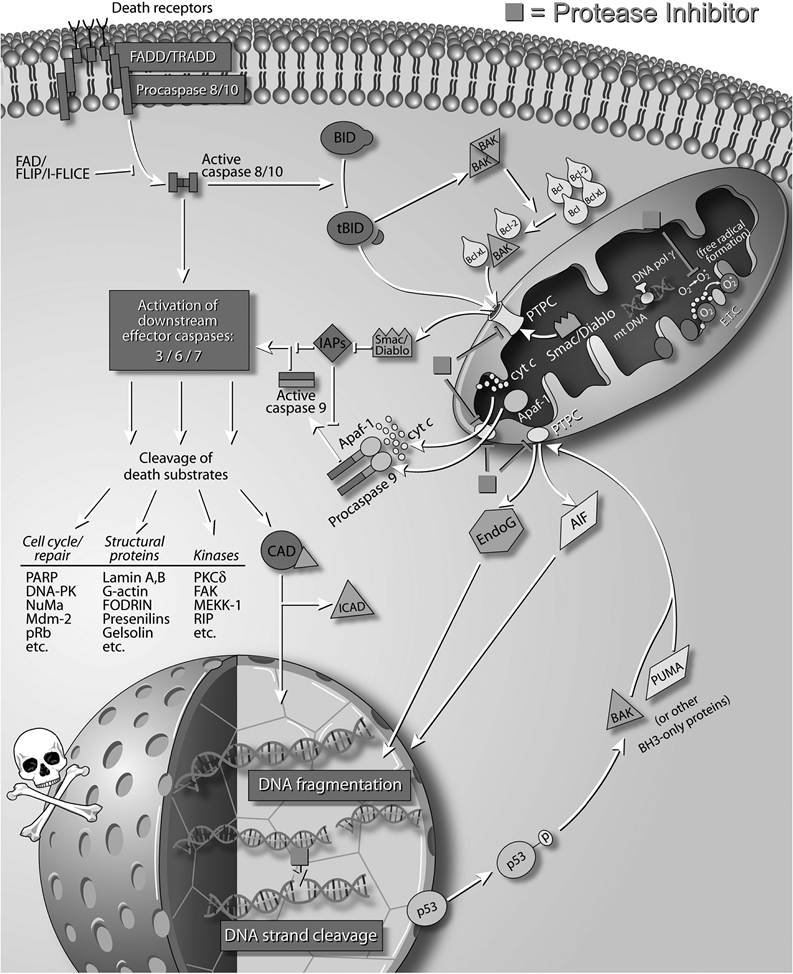
FIGURE 25.2 Apoptotic influences of Protease Inhibitors (PIs).
Although there is some suggestion that certain PIs may contribute to DNA strand cleavage (mechanism unknown), most evidence now suggests that PIs may possess anti-apoptotic properties. Such anti-apoptotic effects may be mediated through amelioration of oxidative stress or alternately through a protection of mitochondrial membrane potential (prevention of mitochondrial membrane pore formation and/or release of pro-apoptotic factors).this suggests that gp41 is involved in mediating single-cell death. This also suggests that any anti- apoptotic property of T-20 may be indirect, through interference with gp120 signaling.
Conversely, others have reported that interfering with HIV binding to either CD4 or co-receptors CXCR4 and CCR5 successfully inhibits bystander apoptosis, whereas T-20 fusion inhibitor displayed no effect.89 In this system, Holm et al. produced molecularly cloned viruses that differed only in specific Env amino acids and tested them for their ability to induce apoptosis in herpesvirus saimiri-immortalized primary CD4 T cells. They observed that amino acid changes resulting in increased Env affinity for either CD4 or one of the co-receptors lead to increased abilities to induce bystander apoptosis. Furthermore, the enhanced apoptosis in bystander cells by these mutants could be inhibited by antibodies to CD4, CXCR4, or CCR5, or by the CXCR4 inhibitor AMD3100, but not by T-20.89 Such results argue that bystander apoptosis is due largely to co-receptor cross-linking; however, further investigations are needed. It should be noted that any compound able to enhance bystander lymphocyte survival in the context of HIV infection will be welcomed.
Future generation fusion inhibitors already are being tested. T-1249 is a current example of a compound that, although apparently more potent, seems to remain—as its forerunner—well tolerated.2 Two-week monotherapy studies in patients with advanced disease indicate that doses greater than 25 mg once per day significantly raise CD4 cell counts from baseline.90 Whether this increase results simply from decreased viral load or whether further research indicates these fusion inhibitors can directly prevent bystander apoptosis remains to be seen.
REFERENCES
1. Palella, F.J., Jr., Delaney, K.M., Moorman, A.C., Loveless, M.O., Fuhrer, J., Satten, G.A., Aschman, D.J., and Holmberg, S.D. (1998). Declining morbidity and mortality among patients with advanced human immunodeficiency virus infection. HIV Outpatient Study Investigators. N Engl J Med 338(13):853-60.
2. Cohen, C.J., Dusek, A., Green, J., Johns, E.L., Nelson, E., and Recny, M.A. (2002). Long-term treatment with subcutaneous T-20, a fusion inhibitor, in HIV-infected patients: patient satisfaction and impact on activities of daily living. AIDS Patient Care STDS 16(7):327-35.
3. Kilby, J.M., Lalezari, J.P., Eron, J.J., Carlson, Cohen, C., Arduino, R.C., Goodgame, J.C., Gallant, J.E., Volberding, P., Murphy, R.L., Valentine, F., Saag, M.S., Nelson, E.L., Sista, P.R., and Dusek, A. (2002). The safety, plasma pharmacokinetics, and antiviral activity of subcutaneous enfufirtide (T-20), a peptide inhibitor of gp41-mediated virus fusion, in HIV-infected adults. AIDS Res Hum Retroviruses 18(10):685-93.
4. Pezeshkpour, G., Illa, I., and Dalakas, M.C. (1991). Ultra structural characteristics and DNA immu- nocytochemisty in human immunodeficiency virus and zidovudine-associated myopathies. Hum Pathol 22(12):1281-8.
5. Styrt, B.A., Piazza-Hepp, T.D., and Chikami, G.K. (1996). Clinical toxicity of antiretroviral nucleoside analogs. Antiviral Res 31(3):121-35.
6. Reiss, P., Casula, M., de Ronde, A., Weverling, G.J., Goudsmit, J., and Lange, J.M. (2004). Greater and more rapid depletion of mitochondrial DNA in blood of patients treated with dual (zidovu- dine+didanosine or zidovudine+zalcitabine) vs. single (zidovudine) nucleoside reverse transcriptase inhibitors. HIV Med 5(1):11-4.
7. Ozawa, T. (1997). Oxidative damage and fragmentation of mitochondrial DNA in cellular apoptosis. Biosci Rep 17(3)237-50.
8. Dalakas, M.C., Illa, I., Pezechkpour, G.H., Laukaitis, J.P., Cohen, B., and Griffin, J.L. (1990). Mitochondrial myopathy caused by long-term zidovudine therapy.
N Engl J Med 322(16):1098-1105.9. Chariot, P. and R. Gheradi. (1991). Partial cytochrome c oxidase deficiency and cytoplasmic bodies in patients with zidovudine myopathy. Neuromuscul Disord 1(5):357-63.
10. Jay, C., M. Ropka, K. Hench, C. Grady, and M. Dalakas. (1992). Prospective study ofmyopathy during prolonged low-dose AZT: clinical correlates of AZT mitochondrial myopathy and HIV-associated inflammatory myopathy. Neurology 42(Suppl 3):145.
11. Arnaudo, E., Dalakas, M., Shanske, S., Moraes, C.T., DiMauro, S., and Schon E.A. (1991). Depletion of muscle mitochondrial DNA in AIDS patients with zidovudine-induced myopathy. Lancet 337(8740):508-10.
12. Mhiri, C., Baudrimont, M., Bonne, G., Geny, C., Degoul, F., Marsac, C., Roullet, E., and Gherardi, R. (1991). Zidovudine myopathy : a distinctive disorder associated with mitochondrial dysfunction. Ann Neurol 29(6):606-14.
13. Tomelleri, G., Tonin, P., Spadaro, M., Tilia, G., Orrico, D., Barelli, A., Bonetti, B., Monaco, S., Salviati, A., and Morocutti, C. (1992). AZT-induced itochondrial myopathy. Ital J Neurol Sci 13(9):723-8.
14. Chariot, P., Monnet, I., and Gherardi, R. (1993). Cytochrome c oxidase reaction improves histopathological assessment of zidovudine myopathy. Ann Neurol 34(4):561-5.
15. Cordiali, Fei, P., Siolmone, M., Viora, M., Vanacore, P., Pugliese, O., Giglio, A., Caprilli, F., and Ameglio, F. (1994). Apoptosis in HIV infection ; protective role of IL-2. J Biol Regul Homeost Agents 8(2):60-4.
16. Sailaja, G., Nayak, R., and Antony, A. (1996). Azidothymidine induces apoptosis in mouse myeloma cell line Sp2∕0. Biochem Pharmacol 52(6):857-62.
17. Schroder, J.M., Kaldenbach, T., and Piroth, W. (1996). Nuclear and mitochondrial changes of cocultivated spinal cord, spinal ganglia and muscle fibers following treatment with various doses of zidovudine. Acta Neuropathol (Berl) 92(2):138-49.
18. Viora, M., DiGenova, G., Rivabene, R., Malorni, W., and Fattorossi, A. (1997).
Interference with cell cycle progression and induction of apoptosis by dideoxynucleoside analogs. Int J Immunopharmacol 19(6):311-21.19. Hashimoto, K.I., Tsunoda, R., Okamoto, M., Shigeta, S., and Baba, M. (1997). Stavudine selectively induces apoptosis in HIV type 1-infected cells. AIDS Res Hum Retroviruses 13(2):193-9.
20. Martin, A., Smith, D.E., Carr, A., Ringland, C., Amin, J., Emery, S., Hoy, J., Workman, C., Doong, N., Freund, J., Cooper, D.A. (Mitochondrial Toxicity Group). (2004). Reversibility of lipoatrophy in HIV-infected patients 2 years after switching from a thymidine analogue to abacavir: the MITOX Extension Study. AIDS 18(7):1029-36.
21. McComsey, G.A., Ward, D.J., Hessenthaler, S.M., Sension, M.G., Shalit, P., Longergan, J.T., Fisher, R.L., Williams, V.C., Hernandez, J.E., Trial to Assess the Regression of Hyperlactatemia and to Evaluate the Regression of Established Lipodystrophy in HIV-1-Positive Subjects (TARHEEL; ESS40010) Study Team. (2004). Improvement in lipoatrophy associated with highly active antiretroviral therapy in human immunodeficiency virus-infected patients switched from stavudine to abacavir or zidovudine: the results of the TARHEEL study. Clin Infect Dis 38(2):263-70.
22. Saint-Marc, T. and J.L. Touraine. (1998). The effects of discontinuing stavudine therapy on clinical and metabolic abnormalities in patients suffering from lipodystrophy. AIDS 13(15):2188-9.
23. Mallal, S.A., John, M., Moore, C.B., James, I.R., and McKinnon, E.J. (2000). Contribution of nucleoside analogue reverse transcriptase inhibitors to subcutaneous fat wasting in patients with HIV infection. AIDS 14(10):1309-16.
24. Lo, J.C., Mulligan, K., Tai, V.W., Algren, H., and Schambelan, M. (1998) Body shape changes in HIV-infected patients. J Acquir Immune Defic Syndr Hum Retrovirol 19(3):307-8.
25. Bonfanti, P., Gulisano, C., Ricci, E., Timillero, L., Valsecchi, L., Carradori, S., Pusterla, L., Fortuna, P., Miccolis, S., Magnani, C., Gabbuti, A., Parazzini, F., Martinelli, C., Faggion, I., Landonio, S., Quirino, T., Vigevani, G., Coordinamento Italiano Studio Allergia e Infezione da HIV (CISAI) Group.
(2003) Risk factors for lipodystrophy in the CISAI cohort. Biomed Pharmacother 57(9):422-7.26. Saint-Marc, T., Partisani, M., Poizot-Martin, I., Rouviere, O., Bruno, F., Avellandra, R., Lang, J.M., Gastaut, J.A., and Touraine, J.L. (2000). Fat distribution evaluated by computed tomography and metabolic abnormalities in patients undergoing antiretroviral therapy: preliminary results of the LIPOCO study. AIDS 14(1):37-49.
27. Nolan D., Hammond, E., James, I., McKinnon, E., and Mallal, S. (2003). Contribution of nucleoside- analogue reverse transcriptase inhibitor therapy to lipoatrophy from the population to the cellular level. Antivir Ther 8(6):617-26.
28. Martin, J.L., Brown, C.E., Matthews-Davis, N., and Readon, J.E. (1994). Effects of antiviral nucleoside analogs on human DNA polymerase and mitochondrial DNA synthesis. Antimicrob Agents Chemother 38(12):2743-9.
29. Feng, J.Y., Murakami, E., Zorca, S.M., Johnson, A.A., Johnson, K.A., Schinarzi, R.F., Furman, P.A., and Anderson, K.S. (2004). Relationship between antiviral activity and host toxicity: comparison of the incorporation efficiencies of 2,,3,-dideoxy-5-fluoro-3,thiacytidine-triphosphate analogs by human immunodeficiency virus type 1 reverse transcriptase and human mitochondrial DNA polymerase. Antimicrob Agents Chemother 48(4):1300-6.
30. Lee, H., Hanes, J., and Johnson, K.A. (2003). Toxicity of nucleoside analogues used to treat AIDS and the selectivity of the mitochondrial DNA polymerase. Biochemistry 42(50):14711-9.
31. Johnson, A.A., Ray, A.S., Hanes, J., Suo, Z., Colacino, J.M., Anderson, K.S., and Johnson, K.A. (2001). Toxicity of antiviral nucleoside analogs and the human mitochondrial DNA polymerase. J Biol Chem 276(44):40847-57.
32. Kakunda, T. N. (2000). Pharmacology of nucleoside and nucleotide reverse transcriptase inhibitor- induced mitochondrial toxicity. Clin Ther 22(6):685-708.
33. Lewis, W., Copeland, W.C., and Day, B.J. (2001). Mitochondrial dna depletion, oxidative stress, and mutation : mechanisms of dysfunction from nucleoside reverse transcriptase inhibitors. Lab Invest 81(6):777-90.
34. Brinkman, K. and T.N. Kakuda. (2000). Mitochondrial toxicity of nucelsoside analogue reverse transciptase inhibitors: a looming obstacle for long-term antiretroviral therapy? Curr Opin Infect Dis 13(1):5-11.
35. Chen, C.H., Vazquez-Padua, M., and Cheng, Y.C. (1991). Effect of anit-human immunodeficiency virus nucleoside analogs on mitochondrial DNA an dits implication for delayed toxicity. Mol Pharmacol 39(5):625-8.
36. Hobbs, G.A., Keilbaugh, S.A., Rief, P.M., and Simpson, M.V. (1995) Cellular targets of 3'azido-3'- deoxythymidine: an early (non-delayed) effect on oxidative phosphorylation. Biochem Pharmacol 50(3):381-90.
37. Barile, M., Valenti, D., Hobbs, G.A., Abruzzese, M.F., Keilbaugh, S.A., Passarella, S., Quagliariello, E., and Simpson, M.V. (1994). Mechanisms of toxicity of 3'-azido-3'-deoxythymidine. Its interaction with adenylate kinase. Biochem Pharmacol 48(7):1405-12.
38. Barile, M., Valenti, D., Passarella, S., and Quagliariello, E. (1997). 3'-Azido-3'deoxythmidine uptake into isolated rat liver mitochondria and impairment of ADP/ATP translocator. Biochem Pharmacol 53(7):913-20.
39. Modica-Napolitano, J.S. (1993). AZT causes tissue-specific inhibition of mitochondrial bioenergetic function. Biochem Biophys Res Commun 194(1):170-7.
40. Hayakawa, M., Ogawa, T., Sugiyama, S., Tanaka, M., and Ozawa, T. (1991). Massive conversion of guanosine to 8-hydroxy-guanosine in mouse liver mitochondrial DNA by administration of azidothymidine. Biochem Biophys Res Commun 176(1):87-93.
41. de la Asuncion, J.G., del Olmo, M.L., Sastre, J., Pallardo, F.V., and Vina, J. (1999). Zidovudine (AZT) causes an oxidation of mitochondrial DNA in mouse liver. Hepatology 29(3):985-7.
42. Johnson, N. and J.M. Parkin. (1998). Anti-retroviral therapy reverse HIV-associated abnormalities in lymphocyte apoptosis. Clin Exp Immunol 113(2):229-34.
43. Bellet, V., Duval, R., Delebassee, S., Cook-Moreau, J., and Bosgiraud, C. (2004) AZT inhibits Visna/maedi virus-induced apoptosis. Arch Virol 149(3):583-601.
44. Hatse, S., Schols, D., De Clercq, E., and Balzarini, J. (1999). 9-(2-Phosphonylmethoyxethyl)adenine induces tumor cell differentiation or cell death by blocking cell cycle progression through the S phase. Cell Growth Differ 10(6):435-46.
45. Valerianove, M., Otova, B., Bila, V., Hanzalova, J., Votruba, I., Holy, A., Eckschlager, T., Krejci, O., and Trka, J. (2003). PMEDAP and its N6-substituted derivatives: genotoxic effect and apoptosis in vitro conditions. Anticancer Res 23 (6C):4933-9.
46. De Clercq, E., Andrei, G., Balzarini, J., Hatse, S., Liekens, S., Naesens, L., Neyts, J., and Snoeck, R. (1999). Antitumor potential of acyclic nucleoside phosphates. Nucleosides Nucleotides 18(4-5): 759-71.
47. Murono, S., Raab-Traub, N., and Pagano, J.S. (2001). Prevention and inhibition of nasopharyngeal carcinoma growth by antiviral phosphonated nucleoside analogs. Cancer Res 61(21):7875-7.
48. Hitt, M.M., Allday, M.J., Hara, T., Karran, L., Jones, M.D., Busson, P., Tursz, T., Ernberg, I., and Griffin, B.E. (1989). EBV gene expression in an NPC-related tumour. Embo J 8(9):2639-51.
49. Ren, J., Esnouf, R., Hopkins, A., Ross, C., Jones, Y., Stammers, D., and Stuart, D. (1995). The structure of HIV-1 reverse transciptase complexed with 9-chloro-TIBO: lessons for inhibitor design. Structure 3(9):915-26.
50. Ren, J., Esnouf, R., Garman, E. Somers, D., Ross, C., Kirby, I., Keeling, J., Darby, G., Jones, and Stuart, D. (1995). High resolution structures of HIV-1 RT from four RT-inhibitor complexes. Nat Struct Biol 2(4):293-302.
51. Spense, R.A., Kati, W.M., Anderson, K.S., and Johnson, K.A. (1995). Mechanism of inhibition of HIV-1 reverse transcriptase by nonnucleoside inhibitors. Science 267(5200):988-93.
52. Esnouf, R., Ren, J., Ross, C., Jones, Y. Stammers, D., and Stuart, D. (1995). Mechanism of inhibition of HIV-1 reverse transcriptase by non-nucleoside inhibitors. Nat Struct Biol 2(4):303-8.
53. De Clercq, E. (1999). Perspectives of non-nucleoside reverse transcriptase inhibitors (NNRTIs) in the therapy of HIV-1 infection. Farmaco 54(1-2):26-45.
54. Pilon, A.A., Lum, J.J., Sanchez-Dardon, J., Phenix, B.N., Douglas, R., and Badley, A.D. (2002). Induction of apoptosis by a nonnucleoside human immunodeficiency virus type 1 reverse transcriptase inhibitor. Antimicrob Agents Chemother 46(8):2687-91.
55. Barreiro, P., Soriano, V., Blanco, F., Casimiro, C., DelaCruz, J.J., and Gonzalez-Lahoz, J. (2000). Risks and benefits of replacing protease inhibitors by nevirapine in HIV-infected subjects under longterm successful triple combination therapy. AIDS 14(7):807-12.
56. Martinez, E., Conget, I., Lozano, L., Casamitjana, R., and Gatell, J.M. (1999). Reversion of metabolic abnormalities after switching from HIV-1 protease inhibitors to nevirapine. AIDS 13(7):805-10.
57. Collier, A.C., R.W. Coombs, D.A. Schoenfeld, R.L. Bassett, J. Timpone, A. Baruch, M. Jones, K. Facey, C. Whitacre, V.J. McAuliffe, H.M. Friedman, T.C. Merigan, R.C. Reichman, C. Hooper, and L. Corey. (1996) Treatment of human immunodeficiency virus infection with saquinavir, zidovudine, and zalcitabine. AIDS Clinical Trials Group. N Engl J Med 334(16):1011-7.
58. Piketty, C., Castiel, P., Belec, L., Batisse, D., Si Mohamad, A., Gilquin, J., Gonzalez-Canali, G., Jayle, D., Karmochkine, M., Weiss, L., Aboulker, J.P., and Kazatchkine, M.D. (1998). Discrepant responses to triple combination antiretroviral therapy in advanced HIV disease. AIDS 12(7):745-50.
59. Roger, P.M., Breittmayer, J.P., Arlotto, C., Pugliese, P., Pradier, C., Bernard-Pomier, G., Dellamonica, P., and Bernard, A. (1999). Highly active anti-retroviral therapy (HAART) is associated with a lower level of CD4+ T cell apoptosis in HIV-infected patients. Clin Exp Immunol 118(3):412-6.
60. Pajonk, F., Himmelsbach, J., Riess, K., Sommer, A., and McBride, W.H. (2002). The human immunodeficiency virus (HIV)-1 protease inhibitor saquinavir inhibits proteasome function and causes apoptosis and radiosensitization in non-HIV-associated human cancer cells. Cancer Res 62(18):5230-5.
61. Andre, P., Groettrup, M., Klenerman, P., deGuili R., Booth, B.L., Jr., Cerundolo, V., Bonneville, M., Jotereau, F., Zinkernagel, R.M., and Lotteau, V. (1998). An inhibitor of HIV-1 protease modulates proteasome activity, antigen presentation, and T cell responses. Proc Natl Acad Sci USA 95(22):13120-4.
62. Lenhard, J.M., Croom, D.K., Weiel, J.E., and Winegar, D.A. (2000) HIV protease inhibitors stimulate hepatic triglyceride synthesis. Arterioscler Thromb Vasc Biol 20(12):2625-9.
63. Berthold, H.K., Parhofer, K.G., Ritter, M.M., Addo, M., Wasmuth, J.C., Schliefer, K., Sspengler, U., and Rockstroh, J.K. (1999). Influence of protease inhibitor therapy on lipoprotein metabolism. J Intern Med 246(6):567-75.
64. Zhang, B., MacNaul., K., Szalkowski, D., Li, Z., Berger, J., and Moller, D.E. (1999). Inhibition of adipocyte differentiation by HIV protease inhibitors. J Clin Endocrinol Metab 84(11):4274-7.
65. Serghides, L., Nathoo, S., Walmsley, S., and Kain, K.C. (2002). CD36 deficiency induced by antiretroviral therapy. AIDS 16(3):353-8.
66. Dowell, P., Flexner, C., Kwiterovich, P.O., and Lane, M.D. (2000). Suppression of preadipocyte differentiation and promotion of adipocyte death by HIV protease inhibitors. J Biol Chem 275(52):41325-32.
67. Domingo, P., Matias-Guiu, X., Pujol, R.M., Francia, E., Lagarda, E., Sambeat, M.A., and Vazques, G. (1999). Subcutaneous adipocyte apoptosis in HIV-1 protease inhibitor-associated lipodystrophy. AIDS 13(16):2261-7.
68. Ikezoe, T., Daar, E.S., Hisatake, J., Taguchi, H., and Koeffler, H.P. (2000). Hiv-1 protease inhibitors decrease proliferation and induce differentiation of human myelocytic leukemia cells. Blood 96(10):3553-9.
69. Ikezoe, T., Saito, T., Bandobashi, K., Yang, Y., Koeffler, H.P., and Taguchi, H. (2004). HIV-1 protease inhibitor induces growth arrest and apoptosis of human multiple myeloma cells via inactivation of signal transducer and activator of transcription 3 and extracellular signal-regulated kinase 1/2. Mol Cancer Ther 3(4):473-9.
70. Sgadari, C., Barillari, G., Toschi, E., Carlei, D., Becigalupo, I., Baccarini, S., Palladino, C., Leone, P., Bugarini, R., Malavasi, L., Cafaro, A., Falchi, M., Valdembri, D., Rezza, G., Bussolino, F., Monini, P., and Ensoli, B. (2002). HIV protease inhibitors are potent anti-angiogenic molecules and promote regressin of Kaposi sarcoma. Nat Med 8(3):225-32.
71. Pati, S., Pelser, C.B., Dufraine, J., Bryant, J.L., Reitz, M.S., Jr., and Weichold, F.F. (2002). Antitum- origenic effects of HIV protease inhibitor ritonavir : inhibition of Kaposi sarcoma. Blood 99(10): 3771-9.
72. Chavan, S., Kodoth, S., Pahwa, R., and Sahwa, S. (2001). The HIV protease inhibitor Indinavir inhibits cell-cycle progression in vitro in lymphocytes of HIV-infected and uninfected individuals. Blood 98(2):383-9.
73. Barker, E., Kahn, J., Fujimaura, S., and Levy, S.A. (1998). Protease inhibitors do not increase the CD4+ cell count in HIV-uninfected individuals. AIDS 12(9):1117-8.
74. Lu, W. and Andrieu, J.M. (2000). HIV protease inhibitors restore impaired T-cell proliferative response in vivo and in vitro: a viral-suppression-independent mechanism. Blood 96(1):250-8.
75. Weichold, F.F., Bryant, J.L., Pati, S., Barabitskaya, O., Gallo, R.C., and Reitz, M.S., Jr. (1999) HIV-1 protease inhibitor ritonavir modulates susceptibility to apoptosis of uninfected T cells. J Hum Virol 2(5):261-9.
76. Phenix, B.N., Lum, J.J., Nie, Z., Sanchez-Dardon, J., and Badley, A.D. (2001). Antiapoptotic mechanism of HIV protease inhibitors : preventing mitochondrial transmembrane potential loss. Blood 98(4):1078-85.
77. Sloand, E.M., Kumar, P.N., Kim, S., Chaudhuri, A., Weichold, F.F., and Young, N.S. (1999). Human immunodeficiency virus type 1 protease inhibitor modulates activation of peripheral blood CD4(+) T cells and decreases their susceptibility to apoptosis in vitro and in vivo. Blood 94(3):1021-7.
78. Phenix, B.N., Angel, J.B., Mandy, F., Kravcik, S., Parato, K., Chambers, K.A., Gallicano, K., Hawley- Foss, N., Cassol, S., Cameron, D.W., and Badley, A.D. (2000). Decreased HIV-associated T cell apoptosis by HIV protease inhibitors. AIDS Res Hum Retroviruses 16(6):559-67.
79. Sloand, E.M., Maciejewski, J.P., Sato, T., Bruny, J., Kumar, P., Kim, S., Weichold, F.F., and Young, N.S. (1998). The role of interleukin-converting enzyme in Fas-mediated apoptosis in HIV-1 infection. J Clin Invest 101(1):195-201.
80. Sloand, E.M., Maciejewski, J.P., Kumar, P., Kim, S., Chaudhuri, A., and Young, N.S. (2000). Protease inhibitors stimulate hematopoiesis and decrease apoptosis and ICE expression in CD34(+) cells. Blood 96(8):2735-9.
81. Mastroianni, C.M., Mengoni, F., Lichtner, M., D’Agostino, C., d’Ettorre, G., Forcina, G., Marzi, M., Russo, G., Massetti, A.P., and Vullo, V. (2000). Ex vivo and in vitro effect of human immunodeficiency virus protease inhibitors on neutrophil apoptosis. J Infect Dis 182(5):1536-9.
82. Weaver, J.G., Rouse, M.S., Steckelberg, J.M., and Badley, A.D. (2004) Improved survival in experimental sepsis with an orally administered inhibitor of apoptosis. Faseb J 18(11):1185-91.
83. Mongia, A., Bhaskaran, M., Reddy, K., Manjappa, N., Baqi, N., and Singhal, P.C.. (2004). Protease inhibitors modulate apoptosis in mesangial cells derived from a mouse model of HIVAN. Kidney Int 65(3):860-70.
84. Cooley, L.A. and Lewin, S.R. (2003). Hiv-1 cell entry and advances in viral entry inhibitor therapy. J Clin Virol 26(2):121-32.
85. Eckert, D.M. and Kim, P.S. (2001). Design of potent inhibitors of HIV-1 entry from the gp41 N-peptide region. Proc Natl Acad Sci USA 98(20):11187-92.
86. Root, M.J., Kay, M.S., and Kim, P.S. (2001). Protein design of an HIV-1 entry inhibitor. Science 291(5505):884-8.
87. Rimsky, L.T., Shugars, D.C., and Matthews, T.J. (1998). Determinants of human immunodeficiency virus type 1 resistance to gp41-derived inhibitory peptides. J Virol 72(2):986-93.
88. Barretina, J., Blanco, J., Armand-Ugon, M., Gutierrez, A., Clotet, B., and Este, J.A. (2003). Anti- HIV-1 activity of enfuvirtide (T-20) by inhibition of bystander cell death. Antivir Ther 8(2):155-61.
89. Holm, G.H., Zhang, C., Gorry, P.R., Peden, K., Schols, D., De Clercq, E., and Gabuzda, D. (2004). Apoptosis of bystander T cells induced by human immunodeficiency virus type 1 with increased envelope/receptor affinity and coreceptor binding site exposure. J Virol 78(9):4541-4551.
90. Eron, J.J., Gulick, R.M., Bartlet, J.A., Merigan, T., Arduino, R., Kilby, J.M., Yangco, B., Diers, A., Drobnes, C., DeMasi, R., Greenberg, M., Melby, T., Raskino, C., Rusnak, P., Zhang, Y., Spence, R., and Miralles, G.D. (2004) Short-term safety and antiretroviral activity of T-1249, a second-generation fusion inhibitor of HIV. J Infect Dis 189(6):1075-83.