General health education
Government information campaigns and media attention in the 1980s raised the general public awareness of HIV/AIDS. Knowledge of transmission routes and risk reduction strategies (for example, condom use and reducing partner numbers) remains high, although public campaigns for HIV risk-reduction no longer have the same profile in the UK.
Recent increases in sexually transmitted infections (STI) (for example, chlamydia and gonorrhoea) and high teenage pregnancy rates indicate that safer sexual practises are not consistent among young people. Age at first intercourse continues to decline and while there is some evidence of increased condom use in many countries, there has been little change in the numbers of people reporting multiple sexual partners. Those at greatest risk of poor sexual health outcomes are men who have sex with men, the under 25s, injecting drug users and their partners, inner city populations and some ethnic minority populationsEpidemiological data show an increasing trend in the number of heterosexually acquired HIV infections diagnosed in many developed countries. In the UK in 1999, for the first time the number of newly diagnosed HIV infections acquired hetrosexually exceeded those acquired through sex between men. However the majority of heterosexually acquired infections in the UK remains among those with sexual partners in Africa (chapter 1).
These trends indicate the continued importance of general health education strategies for HIV prevention and sexual health promotion. Prevention messages can be delivered in many different settings, ranging from mass media, school sex education, community and youth organisations, through individual interventions in primary care, contraception services and specialist STD services. All health professionals can provide practical information and personally tailored messages to individuals.
Given the particular risk among young people, education for HIV prevention needs to take place in the broader context of sexual health education in schools, before young people become sexually active, as part of Personal Health and Social Education (PHSE). To remain effective over time, however, school-based sexual health and general HIV education strategies need to be
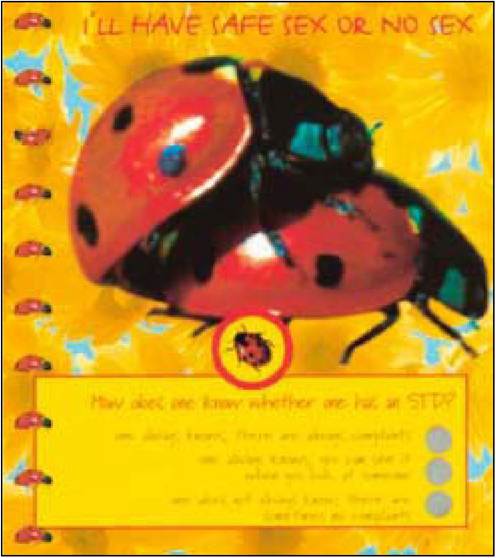
Figure 16.1 Dutch scratch card shows prevention messages can be delivered in different settings using a range of age appropriate techniques reproduced with permission from the Dutch Foundation for STD Control
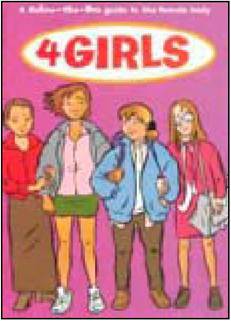

Figures 16.2a and b Sex education content and delivery should be gender sensitive and take account of the different needs of boys and girls reproduced with permission from the Family Planning Association
sustained, politically supported by central and local government, financially secure, and routinely assessed and revised to meet the changing needs of new generations of sexually active young people.
Box 16.1 Approaches to sex education most likely to improve sexual health outcomes in young people:
1. Begin early (i.e. sex education should start with pre-teens)
2. Cover issues in an incremental and age-appropriate fashion
3. Address knowledge and attitudes, and provide practical skills (for example, using condoms)
4. Provide information, improve knowledge and build confidence to access sexual health and contraceptive services
5. Employ participative approaches (for example, role play)
6. Ensure content and delivery are gender sensitive, taking into account the different needs of boys and girls
7. Ensure understanding of different sexual choices (for example, delaying first intercourse, resisting pressure for sex) and different sexualities
8. Deliver interventions in a range of settings across the community (for example, involve parents and youth services)
Current approaches to sex education in schools include both teacher-led and peer-led approaches. Generally outcomes of sex education have been poorly evaluated and the most effective methods of delivering sex education for achieving improvements in sexual health outcomes are uncertain. However, observational studies have indicated some key components of effective sex education programmes. Several randomised trials are currently under way examining a range of approaches, and they will hopefully provide some more definitive answers.
More on the topic General health education:
- GENERAL KNOWLEDGE REGARDING HEALTH AND PERFORMANCE
- General Health History
- UNICEF has called child sexual assault ‘a fundamental violation of children's rights',1 while the World Health Organization (WHO) has named it a ‘serious infringement on a child's right to health and protection'.[234] [235]
- Education
- Education
- Outreach Education
- Outreach Education
- Education Content
- Education Content
- HISTORY OF WOMEN’S EDUCATION IN SAUDI ARABIA
- Question-oriented education
- Continuing Education and Assessment
- Continuing Education and Assessment
- Our Space and Education
- Education and Learning
- The Central Role of Education for Democracy
- THE PROPER EDUCATION FOR PHILOSOPHIC NATURES
- Official Reports on Legal Education and Training
- Legal Education and Training Review
- Current Education and Training Requirements