Hospital care
HIV positivity per se is not an indication for isolating a patient in hospital. It may be necessary to consider source isolation, however, if there is evidence of active infection with other agents, such as Mycobacterium tuberculosis, varicella-zoster virus, or if there is a likelihood of extensive exposure to body fluids from, for example, haemorrhage or severe diarrhoea.
Medical practices should be of a sufficiently high standard to eliminate any risk of patient-to-patient spread of HIV in hospital. This is achieved, as part of general infection control procedures, by using disposables, and by paying careful attention to decontamination and sterilisation. Attempts to recycle disposables or to bypass accepted disinfection procedures may lead to nosocomial infection.
Staff should adopt sensible precautions if contamination with blood or other body fluids is likely. This applies particularly for the management of known virus carriers but should also be the routine for any patient. The concept of “universal precautions” for all patients is being introduced increasingly into healthcare. In most cases precautions entail no more than wearing disposable gloves and an apron, but in certain circumstances, such as bronchoscopy, protective spectacles and a mask may be necessary to protect the eyes and mouth. Most aspects of patient care and examination do not
Box 15.1 Selected guidelines
• United Kingdom Health Departments. Guidance for clinical health care workers: protection against infection with blood borne viruses. Recommendations of the Expert Advisory Group on AIDS. London: HMSO, March 1998
• A code of practice for sterilisation of instruments and control of cross infection. London: British Medical Association, June 1989
• The safe disposal of clinical waste. London: HMSO, 1992
• United Kingdom Health Departments. AIDS/HIV infected health care workers.
Guidance on the management of infected health care workers and patient notification. Recommendations of the Expert Advisory Group on AIDS. London: DOH, March 1998• Advisory Committee on Dangerous Pathogens. Protection against blood borne infections in the workplace: HIV and hepatitis. London, HMSO, 1995
• Royal College of Pathologists. HIV and the practice of pathology. London: Marks & Spencer Publication Unit of the Royal College of Pathologists, July 1995
• United Kingdom Health Departments. HIV post exposure prophylaxis: Guidance for the UK Chief Medical Officers Expert Advisory Groupj on AIDS, July 2000.
• General Medical Council. Serious communicable diseases. London: HMSO, 1997
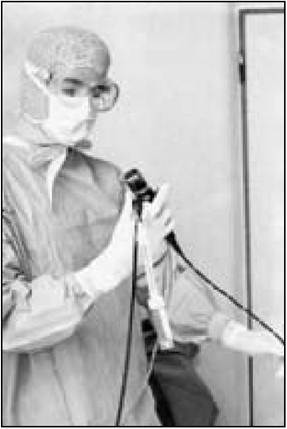
Figure 15.1 Bronchoscopy in a patient infected with HIV
expose the staff to body fluids, and protective clothing is not required.
Many staff sustain inoculation injuries while manipulating needles and sharp instruments. Education and careful attention to technique will reduce the risks to a minimum. No attempt should be made to resheathe needles unless a safe resheathing device is available, and needles should be placed immediately into safe sharps disposal containers, which should not be overfilled.
Although there is little epidemiological evidence of increased risk, many hospitals assume that special care should be taken during surgery on known or suspected HIV carriers. This usually means adopting pre-existing policies for hepatitis B carriers and may include the introduction of double-gloving and additional protective clothing. Preventing unnecessary exposure to body fluids and trying to reduce the incidence of penetrating injuries to a minimum are the best defence against infections, which may be present, but unsuspected, in any patient.
Reports of transmission of HIV from a dentist to his patients have raised public concerns about the risks of acquiring HIV and other blood-borne viruses from healthcare workers.
Guidelines produced by the UK Health Departments identify work practices known as “exposure-prone invasive procedures” as aspects of medical care that present a potential risk of transfer of a blood-borne virus from healthcare workers to patients.Exposure-prone procedures are those where there is a risk that injury to the worker may result in the exposure of the patient's open tissue to the blood of the worker. These procedures include those where the worker's gloved hands may be in contact with sharp instruments, needle tips or sharp tissues (spicules of bone or teeth) inside a patient's open body cavity, wound or confined anatomical space where the hands or fingertips may not be completely visible at all times.
Healthcare workers who are HIV positive or HbeAg positive carriers of hepatitis B are excluded from exposure prone procedures. HbeAb positive carriers are excluded if there is >103 copies/ml of HBV DNA in their blood. There are many reports of hepatitis B transmission from staff to patients but only one report of HIV transmission from a surgeon to one of his patients during orthopaedic surgery. T he risk of HCV transmission from staff to patient is still not known but may be higher than previously thought. Clearly, the risks to the patient from HIV in health care workers are extremely low but the frequency of inoculation injury to the surgeon during the course of major surgery highlights the need for continued surveillance.
More on the topic Hospital care:
- Hospital Care
- ‘Department of Clinical Immunology, Copenhagen University Hospital, Rigshospitalet and 2Clinical Research Centre 136, Copenhagen University Hospital, Hvidovre Hospital, Denmark.
- Primary care for children with special health care needs may include consideration for palliative care services
- Patient- and family-centered care (PFCC) is a philosophy of care that recognizes and respects the pivotal role of both the patient and the family in the delivery of medical care.
- Patient- and family-centered care (PFCC) is a philosophy of care that recognizes and respects the pivotal role of both the patient and the family in the delivery of medical care.
- BABY FRIENDLY HOSPITAL INITIATIVE
- Hospital- and Ventilator-Associated Pneumonia
- KANGAROO MOTHER CARE
- Financing Medical Care
- Preventing Transmission during Home Care
- Sample Position Description—Critical Care Transport Respiratory Therapist
- Sample Position Description—Critical Care Transport Respiratory Therapist
- Medical care systems
- Medical Care Systems
- Comprehensive Care Programs
- 3 The duty of care