Sharps disposal
Clinical laboratory staff are at risk from certain pathogens which may be present in specimens. The Advisory Committee on Dangerous Pathogens originally produced specific guidelines for work on samples from HIV positive patients.
These have now been reissued to encompass potential risks from all bloodborne viruses. The most important aspects of safety in the laboratory are education, training, and prevention of inoculation and skin contact with body fluids. It is important to review all laboratory procedures to reduce the use of needles and the danger of exposure to glass fragments. This may necessitate increased investment in automatic pipetting systems to replace the need for glass pipettes. The absence of evidence of airborne transmission means that HIV positive samples may be handled on the open bench providing the work is conducted in optimal facilities and the operator is free from distraction and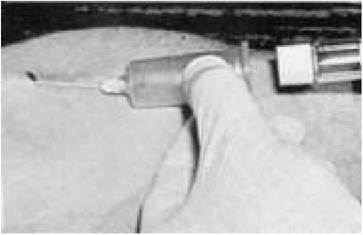
Figure 15.2 A vacuum collection system of the type shown reduces the risk of spillage when large volumes of blood are required
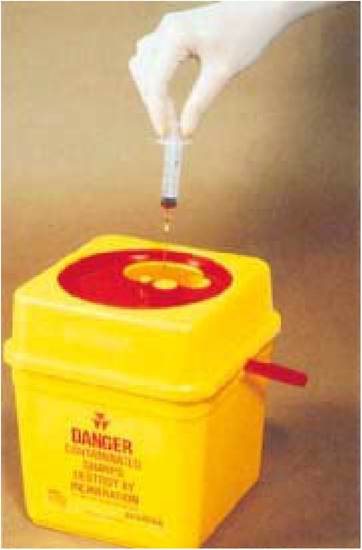
Figure 15.3 Safe sharps disposal
disturbance. The current practice of alerting laboratory staff to samples from known or suspected HIV positive patients by the use of biohazard stickers may be defended on the basis that it reduces risks. It must, however, be emphasised constantly that in the present epidemic no unfixed specimens can be considered free from infection.
Box 15.2 Community aspects of decontamination
• Cutlery, crockery, clothing
decontaminated by normal washing
• Decontaminate blood spillages with bleach (hypochlorite)