Patient Evaluation Criteria
Patients at risk of CVD/CHD must be routinely evaluated for risk factors (Fig. 2) such as family history, smoking, hypertension, hormonal status, body-fat distribution and obesity, physical activity (Fig.
3), alcohol abuse, hypogonadism, hypothyroidism, diabetes, and renal or hepatic disease. Guidelines include the measurement of total cholesterol, HDL, LDL, and VLDL cholesterol, TG, lactate [39-41, 49], the measure of body compartments, body circumferences and skinfolds [28], and resting metabolic rate (RMR) as a measure of the energy expended for maintenance of physiologic functions which generally represents the largest portion of daily energy expenditure (60-75%) [31-33]. We use the WHO equations for body weights and heights [34, 50] along with bioimpedance analysis (BIA) and indirect calorimetry to predict the RMRs and energy expenditure for different age and sex groups [35, 36, 51]. Energy production is estimated by measuring O2 consumption and CO2 production using a special calorimeter (e.g., Datex-Engstron Division Instrumentarium Corp. Helsinki, Finland; type MBM-200-23-01). RMR values normally range between 0.7 and 1.6 kcal/min according to the subject’s body composition, gender, and level of training.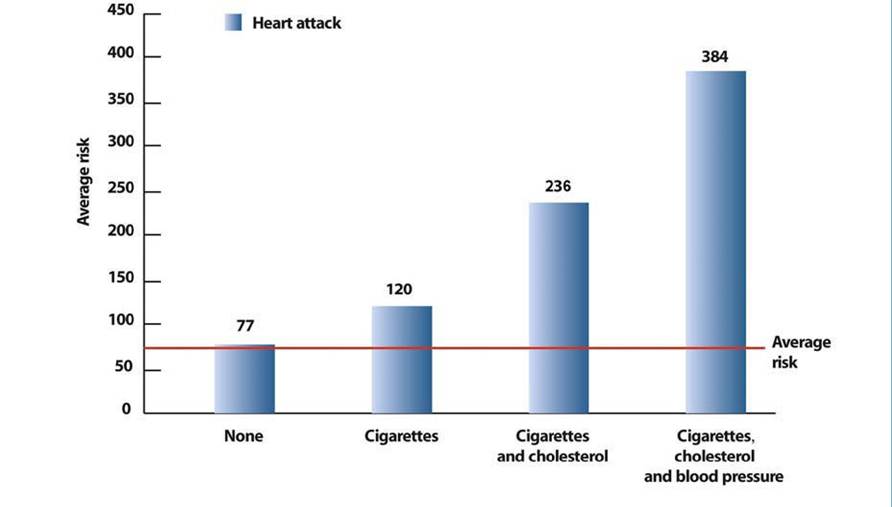
Fig. 2 People with combinations of three risk factors for coronary heart disease have a five times higher probability of heart attack than persons without risk factors. Physical inactivity is an additional risk factor
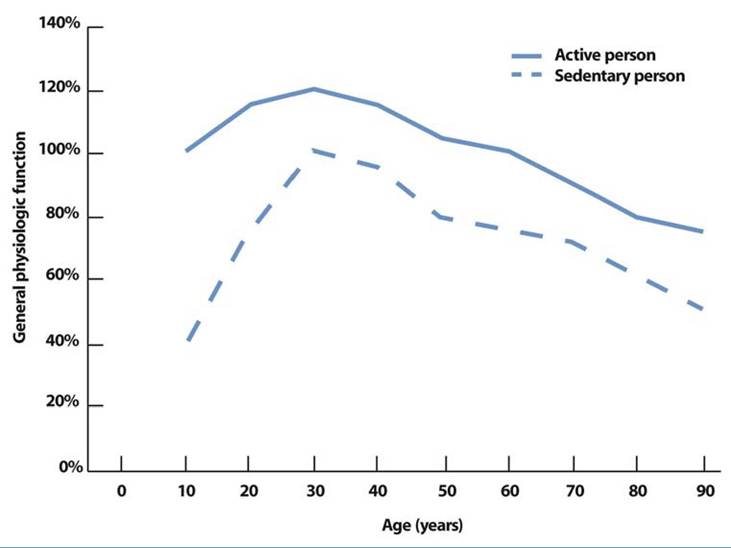
Fig. 3 Changes in physiologic functions with age and physical activity. The functional capacity of organs (e.g., cardiac index, breathing capacity, nerve conduction velocity, liver, kidneys, brain activity) declines with age and inactivity
More medical literature on Medic.Studio
More on the topic Patient Evaluation Criteria:
-
Infectious diseases -
Internal diseases -
Obstetrics and Gynaecology -
Pediatrics -
Veterinary medicine -
-
Conflictology -
Ecology -
Economy -
Finance -
History -
Law -
Medicine -
Philosophy -
Religious studies -