Appendix Two A Little History: Consequentiae
Conseouentiae
In chapter 12 we saw how the Hypothetical Syllogism could be expressed as a valid sequent schema

We saw too how the same information could be expressed as

where (2) may be obtained from (1) by Conditionalizing, i.e., supposing its two premises.
This example has some historical significance. Aristotle, who apparently single-handedly invented what we now call Predicate Logic, did not recognize conditional statements and rules of inference based on them as the proper subject of logical inquiry. Yet he would make statements like(3) “If every A is B, and every B is Γ, then every A is Г.”
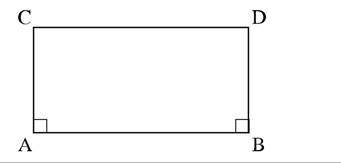
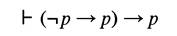
to justify inferring “every A is Г” from the two premises “every A is B” and “every B is Г.”1 (3) is a conditional statement. Aristotle’s pupil and immediate successor Theophrastus, however, expressed such rules as explicit argument schemas: [92] [93] (4) “Every A is B; and every B is Γ; therefore every A is Г.” Clearly this amounts to the same thing, if all one is concerned with is what follows from what. Yet Theophrastus’ casting of (3) into the form (4) allowed him to formulate rules of inference for conditional statements themselves. The rule that one can find implicit in Aristotle as (5) “If given that-P it is necessary that-Q, and given that-Q it is necessary that-R, then given that-P it is necessary that-R.” is explicitly expressed by Theophrastus as an argument schema for the Hypothetical Syllogism: (6) “If A then B; and if B then Γ; therefore if A then Г.” In the Middle Ages, some logicians would slip back and forth between these two ways of stating rules as if they were the same thing. THE CONSEOUENTIA MIRABILIS One Consequentia with a particularly interesting history is the so-called Consequentia mirabilis (Marvellous Consequence). This is the sequent schema Consequentia mirabilis: Here strictly speaking the first premise is not necessary, since we can derive it as a theorem. Only the convention, found in both Aristotle and the Stoics, that every argument or sequent must have exactly two premises and one conclusion makes it necessary. The Stoics, in fact, had derived it from their argument schema: q stands for any statement, we can let it stand for whatever p stands for (i.e., sub p for q), yielding But although the Consequentia mirabilis was known in antiquity—indeed, it is exploited in an ingenious proof in Euclid’s Elements—it was made famous in the early modem period by Gerolamo Saccheri (1667-1733).[95] In his Logica Demonstrativa (1697) Saccheri explicitly identified it, named it, and sought to make it the basis of proof for all tautologies in logic. If a straight line falling on two straight lines makes the interior angles on the same side less than two right angles, the two straight lines, when produced indefinitely, meet on that side on which the angles are less than two right angles. Cardan had shown that this was equivalent to Constmcting a quadrilateral by erecting equal perpendiculars AC and BD on a straight line AB, and then positing that the two equal angles at C and D must be right angles (call this R). Saccheri5s idea was to suppose R was false, and then from this supposition together with the other postulates of Euclidean geometry to prove R’s tmth. There were two cases: the angles at C and D are either (i) obtuse, or (ii) acute. For case (i) Saccheri worked out lots of consequences of the first four postulates + -і R (thus proving theorems in what would later be termed elliptic geometry), and thought he had proved that -∣R implies R; but he had unwittingly smuggled in an assumption that is true for Euclidean geometry, but untrue in elliptic geometry. For case (ii) (what is now called hyperbolic geometry) his claim that -∣R leads to contradiction (and thus to R by reductio) also contains a blemish (ironically); otherwise Saccheri might have discovered non-Euclidean geometry almost a century before hyperbolic geometry was surmised by Gauss and independently worked out by Lobachevsky in the 1820s, and even longer before Riemann’s discovery of elliptic geometry became known in 1867.[96] It was mentioned above that the first premise of the Consequentia mirabilis is a logical truth, and actually redundant. Shorn of this redundant first premise, it may be expressed In this form, the Consequentia mirabilis reappears as the third of Lukasiewicz’s three axiom schemas for statement logic, (-∣p → p) → p: see chapter 12. Other examples of the application of the Consequentia mirabilis may be found in the exercises to that chapter.

 Here, since
  . They had even used it to refute skepticism, arguing as follows: If there is proof, there is proof; but if one succeeded in proving that there were no proof, then there is proof. Therefore, there is proof.[94]