Inefficient Economic Institutions: A First Pass
I will now use the framework from the previous section to make a first attempt to understand (i) the conditions under which equilibrium economic institutions might put limits on distortionary policies and (ii) the conditions under which economic institutions might go on to the other extreme, involving the elite using inefficient instruments to reduce output and block economic development.
To communicate the ideas in the simplest possible way, I will consider two prototypical economic institutions that affect the policy choices by the elite: (1) Security of property rights; there may be constitutional or other limits on the extent of redistributive taxation and/or other policies that reduce profitability of producers’ investments. In terms of the model above, we can think of this as determining the level of Regulation of technology, which concerns direct or indirect factors affecting the productivity of producers, in particular middle class producers.
 The analysis of factor price manipulation in the previous subsection already provides a partial answer to one of the questions raised above: why would the political system use inefficient instruments ? A full analysis to this question requires a setup with a richer menu of fiscal instruments, such as lump-sum taxes. A glimpse of how such an analysis might go is 964
provided in Exercise 22.15 below. For now, note that the analysis in Propositions 22.5 and 22.6 already provide the beginning of an answer, since they show that the equilibrium tax rate would be strictly above the revenue-maximizing level. Our first task is to derive some implications from these observations about constitutional limits on taxation by the elite.
22.4.1. Emergence of Secure Property Rights. The environment is the same as in the previous section, with the only difference that at time t =O, before any decisions are taken, the elite can change the constitution so as to reduce to some level in
the interval [0,th], thus creating an upper bound on taxes and providing greater security of property rights to the middle class.
Here, we are thinking of as technologically imposed, for example, because if the tax rate were above th, middle-class entrepreneurs would flee to the informal sector. Naturally, a key question is how such a constitution would be made credible. For now, we do not address this question and take it as given that such a constitutional limits on future taxes can be imposed (though this, to some degree, goes against the presumption we have made so far that commitment to future policies is not possible; in some sense, we are relaxing this somewhat by assuming that commitment to an upper bound on policies is possible). The key question is whether the elite would like to do so, i.e., whether they prefer
 Also, to start with, we take the natural benchmark in which
 economic institutions (here constitutional limits on taxation) are decided by the elite, who hold political power at t = 0 when these restrictions are introduced.
The next three propositions answer this question in various different versions of the environment studied so far in this section:
Proposition 22.12. Without holdup and technology adoption, the elite prefer
The proof of this result is immediate, since without holdup or technology adoption, putting further restrictions on the taxes can only reduce the elite’s utility. This proposition implies that when economic institutions are decided by the elite, who will hold political power in the future as well, they will have no interest in introducing constitutional limits on their future taxes and will not introduce security of property rights to other producers.
The results are different when there are holdup problems. To illustrate this, let us go back to the situation with holdup (where taxes for time t are decided after the capital stock for time t is determined).
Let us focus on the general case where both the revenue extraction and factor price manipulation motives are present. Moreover, let us for now focus on the MPE.PROPOSITION 22.13. Consider the game with holdup and suppose that Conditions 22.1 and 22.2 hold and φ > 0. Then the unique MPE involves given by (22.28) is strictly less than
 the elite prefer to
Proof. See Exercise 22.12. ?
The intuition for this proposition is simple: in the presence of holdup problems, Proposition 22.8 shows that the unique MPE involves However, this is (Pareto) inefficient and in fact, if the elite could commit to a tax rate of
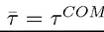 , they would increase their
consumption (and also the middle class and the workers would achieve greater consumption at each date). If the elite could use economic institutions, for example by setting constitutional limits on taxes, then they would like to use these to manipulate equilibrium taxes. By manipulating economic institutions, the elite may approach their desired policy (in fact, in this simple economy, they can exactly commit to the tax rate that maximizes their utility).
This result shows that the elite may wish to change economic institutions to provide additional property rights protection to producers in the presence of holdup problems. Note however that the restriction to MPE is important in this proposition. If we allow historydependent punishment strategies and look at the SPE, the elite would be able to improve over the MPE allocation in Proposition 22.9, and depending on parameters, they may even be able to implicitly (and credibly) commit to an equilibrium in which the tax rate at each date is equal to τcom.
If this were the case, there would be less need for changing economic institutions in order to place limits on future taxes. Whether the MPE or the SPE is more relevant in such a situation depends on what the expectations of the different parties are and what degree of coordination can be achieved among the players. It is generally difficult to ascertain whether one or the other equilibrium concept would be more appropriate without specifying other (institutional or historical) details of the situation.However, interestingly, when the source of additional inefficiency is technology adoption rather than the holdup problem (resulting from the timing of taxes), there will be a need for a change in economic institutions even if we focus on the SPE. This is shown in the next proposition:
PROPOSITION 22.14. Consider the game with technology adoption, and suppose that Condition 22.1 holds and φ > 0. Then the unique MPE and the unique SPE involve 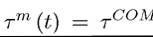 given by (22.28) for all t. If
 is strictly greater than
 defined
in Proposition 22.11, then the elite would prefer to set
This proposition therefore highlights that when we focus on long-term investments or technology adoption decisions, implicit promises as in Proposition 22.9 will be of little use and explicit guarantees through economic institutions would be the only way of providing incentives to middle-class entrepreneurs to undertake the appropriate technology investments.
966
Thus, while implicit promises and other informal arrangements might play the role of economic institutions under some circumstances, there will be limits to how well they can perform this role and in many environments, constitutional limits on distortionary policies and expropriation (if feasible) would endogenously emerge in the political equilibrium.
22.4.2. Blocking Economic Development. The focus in the previous subsection was on choosing economic institutions at t = 0 to provide more secure property rights and better investment incentives to middle-class entrepreneurs. These types of economic institutions play an important role in practice and variation in the security of property rights for businesses across societies likely explains part of the variation in economic performance. Nevertheless, security of property rights and limits on taxes are only one aspect of the potential effect of institutions on economic activity and economic development. As briefly discussed in Chapter 4, in many societies, rather than encouraging economic activity, the elite actively tries to block economic development. Why would the elite in some societies choose specifically inefficient policies in order to reduce the productivity of entrepreneurs and block economic development?
We now discuss this question and try to shed light on the aspects of equilibrium economic institutions related to the regulation of technology. Once again, to provide the basic ideas in the simplest possible way, we will extend the basic framework in this section in one direction. We will assume that at time t = 0, the government (thus the elite controlling political power) chooses a policy affecting the technology choices of producers, denoted by g ∈ {0,1}. This choice can be thought of investment in infrastructure, protection of intellectual property rights, or the provision of law and order (with g = 0 corresponding to not making these investments and g = 1 corresponding to creating a better business environment). Alternatively, g = 0 may directly correspond to actions taken by the elite to block the technology adoption decisions of the entrepreneurs. We assume that g ∈ {0,1} affects the productivity of middleclass producers in all future periods, and in particular Am = Am (g), with Am (1) > Am (0).
To simplify the discussion, we assume that g has no effect on the productivity of the elite and also g = 1 has no direct cost relative to g = 0. The key question is this: Will the elite always choose g = 1, increasing the middle class producers’ productivity, or will they try to block technology adoption by the middle class?When the only mechanism at work is revenue extraction, the answer is that the elite would like the middle class to have the best technology:
Proposition 22.15. Suppose that Condition 22.1 fails to hold and φ > 0. Then the economic equilibrium always involves w (t) = 0 and the elite always choose g = 1.
Therefore, this proposition shows a range of situations in which the elite would not block the technology adoption decisions of middle-class entrepreneurs. This result follows immediately since g = 1 increases the tax revenues and has no other effect on the elite’s
consumption. Consequently, in this case, the elite benefit from the increase in the productivity of the middle-class entrepreneurs and thus would like them to be as productive as possible. Intuitively, there is no competition between the elite and the middle class (either in factor markets or in the political arena), and when the middle class entrepreneurs are more productive, they generate greater tax revenues for the elite.
However, the situation is different when the elite wish to manipulate factor prices:
Proposition 22.16. Suppose Condition 22.1 holds and Condition 22.2 holds (with Am (g = 0) replacing Am), φ = 0, and Then in any MPE or SPE, the elite choose g = о.
Proof. See Exercise 22.14. ?
Intuitively, with labor demand from the middle class is high enough to generate positive equilibrium wages. Since φ = 0, taxes raise no revenues for the elite, and their only objective is to reduce the labor demand from the middle class and wages as much as possible. This makes g = 0 the preferred policy for the elite. Consequently, the factor price manipulation mechanism suggests that, when it is within their power, the elite will choose economic institutions so as to reduce the productivity of competing (middle class) producers. Proposition 22.16 therefore shows how the elite may take actions to directly reduce the productivity of the (other) entrepreneurs in the economy, thus retarding or blocking economic development.
The next proposition shows that a similar effect applies when the political power of the elite is contested.
PROPOSITION 22.17. Consider the economy with political replacement. Suppose Condition 22.1 fails to hold and φ = 0. Then in any MPE or SPE, the elite prefer g = 0.
Proof. See Exercise 22.15. ?
In this case, the elite cannot raise any taxes from the middle class since φ = 0. But differently from the previous proposition, there are no labor market interactions, since there is excess labor supply and wages are equal to zero. Nevertheless, the elite would like the profits from middle class producers to be as low as possible so as to consolidate their political power. They achieve this by creating an environment that reduces the productivity of middle class producers.
Overall, this section has demonstrated how the elite’s preferences over policies, and in particular their desire to set inefficient policies, translate into preferences over non-growth enhancing (or “inefficient”) economic institutions. When there are no holdup problems, introducing economic institutions that limit taxation or put other constraints on policies 968
provides no benefits to the elite. This is intimately related to the fact that in the absence of holdup problems and given the menu of fiscal instruments, the equilibria characterized above corresponded to allocations maximizing a weighted social welfare function (and were thus constrained Pareto efficient). However, when the elite are unable to commit to future taxes (because of holdup problems), the equilibrium is no longer Pareto efficient and equilibrium taxes may be too high even from the viewpoint of the elite. In this case, using economic institutions to manipulate future taxes may be beneficial for the elite who control the political power of the state. Similarly, the analysis reveals that the elite may want to use economic institutions to discourage productivity improvements by the middle class. Interestingly, this never happens when the main mechanism leading to inefficient policies is revenue extraction. Instead, when factor price manipulation and political consolidation effects are present, the elite may want to discourage or block technological improvements by the middle class.
The analysis so far has focused on the basic forces leading to non-growth enhancing policies and economic institutions in the context of a simple society with linear preferences. The rest of this chapter investigates how relaxing these assumptions changes the insights. The next section is concerned with the case in which preferences are concave, while the following two sections introduce a richer structure of heterogeneity among the agents.
22.5.