Migration, Urbanization and The Dual Economy
Another major structural transformation over the process of development relates to changes in social and living arrangements. For example, as an economy develops, more individuals move from rural areas to cities and also undergo the social changes associated with separation from a small community and becoming part of a larger, more anonymous environment.
Other social changes might also be important. For instance, certain social scientists regard the replacement of “collective responsibility systems” by “individual responsibility systems” as an important social transformation. This is clearly related to changes in the living arrangements of individuals (villages versus cities, or extended versus nuclear families). It is also linked to whether different types of contracts are being enforced by social norms and community enforcement, or whether they are enforced by legal institutions. There may also be a similar shift in the importance of the market, as more activities are mediated via prices rather than taking place inside the home or an extended family or a community. This process of social change is both complex and interesting to study, though a detailed discussion of the literature and possible approaches to this complex set of issues falls beyond the scope of the current book. Nevertheless, a brief discussion of some of these social changes are useful to illustrate other, more diverse facets of structural change associated with economic 865development. I will illustrate the main ideas by focusing on the process of migration from rural areas and urbanization. Another reason to study migration and urbanization is that the reallocation of labor from rural to urban areas is closely related to the popular concept of the dual economy, which is an important theme of some of the older literature on development economics. According to this notion, less-developed economies consist of a modern sector and a traditional sector, but the connection between these two sectors is imperfect.
The model of industrialization in the previous chapter (Section 20.3) featured a traditional and a modern sector, but these sectors traded their outputs and competed for labor in competitive markets. Dual economy approaches, instead, emphasize situations in which the traditional and the modern sectors function in parallel but with only limited interactions. Moreover, the traditional sector is often viewed as less efficient than the modern sector, thus the lack of interaction may also be a way of shielding the traditional economy from its more efficient competitor. A natural implication of this approach will then be to view the process of development as one in which the less efficient traditional sector is replaced by the more efficient modern sector. Lack of development may in turn correspond to an inability to secure such reallocation.In this section I first present a model of migration that builds on the work by Arthur Lewis (1954). A less-developed economy is modeled as a dual economy, with the traditional sector associated with villages and the modern sector with the cities. The model enables us to study how and whether the reallocation of resources from the traditional sector to the modern sector will take place. I will then present a model inspired by Banerjee and Newman’s (1998) article, as well as by Acemoglu and Zilibotti (1999), in which the traditional sector and the rural economy have a comparative advantage in community enforcement, even though in line with the other dual economy approaches, the modern economy (the city) enables the use of more efficient technologies. This model will also illustrate how certain aspects of the traditional sector can shield the less productive firms from more productive competitors and slow down the process of development. Finally, I will show how the import of technologies from more developed economies, along the lines of the models discussed in Section 18.4 of Chapter 18, will also naturally lead to a dual economy structure, as a consequence of the less-developed economy’s efforts in using the more skill-intensive, modern technologies.
21.3.1. Surplus Labor and the Dual Economy. The main emphasis of Lewis’s work was on the idea of surplus labor. Lewis argued that less-developed economies typically had surplus labor, that is, unemployed or underemployed labor, often in the villages. The dual economy can then be viewed as the juxtaposition of the modern sector where workers are 866
gainfully and productively employed together with the traditional sector where they are underemployed. The general tendency of less-developed economies to have higher levels of unemployment (and lower levels of employment to population ratios) was one of the motivations for Lewis’s model. A key feature of Lewis’s model is the presence of some barriers preventing, or slowing down, the allocation of workers away from the traditional sector towards urban areas and the modern sector. I now present a reduced-form model that formalizes these notions.
Consider a continuous-time infinite-horizon economy that consists of two sectors or regions, which I will refer to as urban and rural. Total population is normalized to 1. At time t = 0, Lu (0) individuals are in the urban area and Lr (0) = 1 — Lu (0) are in the rural area. In the rural area, the only economic activity is agriculture and, for simplicity, we assume that the production function for agriculture is linear, thus total agricultural output is 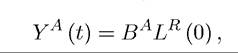 where Ba > 0. In the urban area, the main economic activity is manufacturing. Manufacturing can only employ workers in the urban area. The production function therefore takes the form
where K (t) is the capital stock, with initial condition K (0). F is a standard neoclassical production function satisfying Assumptions 1 and 2. Let us also assume, for simplicity, that the manufacturing and the agricultural goods are perfect substitutes.
Labor markets both in the rural and urban area are competitive. There is no technological change in either sector.The key assumptions of this model will be twofold. First, the marginal product of labor, and thus the wage, in manufacturing will be higher than in agriculture. Second, because of barriers to mobility, there will only be slow migration of workers from rural to urban areas.
In particular, let us capture the dynamics in this model in a reduced-form way whereby capital accumulates only out of the savings of individuals in the urban area, thus we have  where s is the exogenous saving rate and δ is the depreciation rate of capital. The important feature implied by this specification is that greater output in the modern sector leads to further accumulation of capital for the modern sector. An alternative, adopted in Section 20.3 of the previous chapter that will also be used in the next subsection, is to allow the size of the modern sector to directly influence its productivity growth, for example because of learning-by-doing externalities as in Romer (1986) or because of endogenous technological change depending on the market size commanded by this sector (e.g., Exercise 20.19). For the purposes of the model in this subsection, which of these alternatives is adopted has no major consequence.
Given competitive labor markets, the wage rates in the urban and rural areas at date t

Let us assume that

so that even if all workers are employed in the manufacturing sector at the initial capital stock, they will have a higher marginal product than working in agriculture.
Migration dynamics are assumed to take the following simple form:

This equation implies that as long as wages in the urban sector are greater those in the rural sector, there is a constant rate of migration.
The speed of migration does not depend on the wage gap, which is an assumption adopted only to simplify the exposition. We may want to think of μ as small, so that there are barriers to migration and even when there are substantial gains to migrating to the cities, migration will take place slowly. When there is no wage gain to migrating, there will be no migration.Now (21.25) implies that at date t = 0, there will be migration from the rural areas towards the cities. Moreover, assuming that K (0) /Lu (0) is below the steady-state capitallabor ratio, the wage will remain high and will continue to attract further workers. To analyze this process in slightly greater detail, let us define
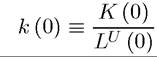
as the capital-labor ratio in manufacturing. As usual, let us also define the per capita production function in manufacturing as f (k (t)). Clearly,

Combining (21.24) and (21.26), we obtain that, as long as f (k (t)) — k (t) f' (k (t)) > B A, the dynamics of this capital-labor ratio will be given by

where ν (t) ? Lr (t) /Lu (t) is the ratio of the rural to urban population. Notice that when urban wages are greater than rural wages, the rate of migration, μ, times the ratio ν (t), plays the role of the rate of population growth in the basic Solow model of Chapter 2. In contrast, when f (k (t)) — k (t) f' (k (t)) ≤ BA, there is no migration and k (t) = sf (k (t)) — δk (t). Let us focus on the former case. Define the level of capital-labor ratio k such that

where urban and rural wages are equalized. Once this level is reached, migration will stop, and therefore ν (t) will remain constant.
After this level of capital-labor ratio is reached, equilibrium dynamics will again be given by Therefore, the steady
 state must always involve

For the analysis of transitional dynamics, which are our primary interest here, there are several cases to study. Let us focus on the one that appears most relevant for the experiences of many less-developed economies (leaving the rest to Exercise 21.4). In particular, suppose that the following conditions hold:
(1) k (0) < k, so that the economy starts with lower capital-labor ratio (in the urban sector) than the steady-state level. This assumption also implies that sf (k (0)) — δk (0) > 0.
(2) 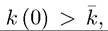 which implies that f (k (0)) — k (0) f' (k (0)) > B A, that is, wages are initially higher in the urban sector than in the rural sector.
(3)  given the distribution of population between urban and rural areas, the initial migration will lead to a decline in the capital-labor ratios.
In this case, the economy starts with rural to urban migration at date t = 0. Since initially ν (0) is high, this migration reduces the capital-labor ratio in the urban area (which evolve according to the differential equation (21.27)). There are then two possibilities. In the first, the capital-labor ratio never falls below k, thus rural to urban migration takes place at the maximum possible rate, μ, forever. Nevertheless, the effect of this migration on the urban capital-labor ratio is reduced over time as ν (t) declines with migration. Since we know that  at some point the urban capital-labor ratio will start increasing, and it will eventually converge to the unique steady-state level k. This convergence can take a long time and notably, it is not monotonic. The capital-labor ratio, and urban wages, first fall and then increase. The second possibility is that the initial surge in rural to urban migration reduces the capital-labor ratio to k at some point, say at date t'. When this happens, wages remain constant at BA in both sectors and the rate of migration
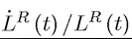 adjusts exactly
so that capital-labor ratio remains at k for a while (recall that when urban and rural wages are equal, (21.26) admits any level of migration between zero and the maximum rate μ). In fact, the urban capital-labor ratio can remain at this level for an extended period of time. Ultimately, however, ν (t) will again decline sufficiently that the capital-labor ratio in the urban sector must start increasing. Once this happens, migration takes place at the maximal rate μ and the economy again slowly converge as to the capital-labor ratio k in the urban sector.
Therefore, this discussion illustrates how a simple model of migration can generate rich dynamics of population in rural and urban areas and wage differences between the modern and the traditional sectors.
In dynamics discussed above, especially in the first case, the economy has the flavor of a dual economy. Wages and the marginal product of labor are higher in the urban area than in the rural area. If, in addition, μ is low, the allocation of workers from the rural to the urban areas will be slow, despite the higher wages. Thus the pattern of dual economy may be pronounced and may persist for a long time. It is also notable that rural to urban migration increases total output in the economy, because it enables workers to be allocated to activities in which their marginal product is higher. This process of migration increasing the output level in the economy also happens slowly because of the relatively slow process of migration.
The above discussion implies that, for the parameter configuration refocused on, the dual economy structure not only affects the social outlook of the society, which remains rural and agricultural for an extended period of time (especially when μ is small), but also leads to lower output than the economy could have generated by allocating labor more rapidly to the manufacturing sector. One should be cautious in referring to this as a “market failure,” however, since we did not specify the reason why migration is slow. Without providing a micro model for migration, it is difficult to conclude whether the migration decisions are socially optimal or not (in the same sense as without a micro-founded model of savings, we could not talk of whether there was the right amount of savings and capital accumulation in the basic Solow growth model).
The model presented in this subsection therefore gives us a first formalization of a dual economy structure, which many development economists view as a good representation of the workings of less-developed economies. While dual economy features indeed appear to be important in practice and the model presented here is indeed simple and tractable, there are various reasons for striving for more sophisticated models. First, the migration behavior in the current model is extremely reduced-form. This is important, since the migration behavior is at the heart of the model. The reduced-form formulation implies that we cannot ask questions about whether migration is optimal or suboptimal. Second, the model gives the flavor of too little migration, though in many less-developed economies many urban centers appear to be overpopulated. Thus it is useful to seek more insights on whether there will be too much or too little migration. Finally, the assumption that the manufacturing sector is more productive than agriculture is somewhat crude. While the dual economy structure suggests that one part of the economy will be more productive, it would be more satisfactory and insightful if there are some compensating differentials in the less productive sector. The model presented in the next subsection will rectify some of these shortcomings.
21.3.2. Community Enforcement, Migration and Development. I now present a model inspired by Banerjee and Newman (1998) and Acemoglu and Zilibotti (1999). Banerjee and Newman consider an economy where the traditional sector has low productivity but is less affected by informational asymmetries and thus individuals can engage in borrowing and lending with limited monitoring and incentive costs. In contrast, the modern sector is more productive but informational asymmetries create more severe credit market problems. Banerjee and Newman discuss how the process of development is associated with the reallocation of economic activity from the traditional to the modern sector and how this reallocation is slowed down by the informational advantage of the traditional sector. Acemoglu and Zilibotti (1999) view the development process as one of “information accumulation,” and greater information enables individuals to write more sophisticated contracts and enter into more complex production relations. This process is then associated with changes in technology, changes in financial relations and social transformations, since greater availability on information and better contracts enable individuals to abandon less efficient and less information-dependent social and productive relationships.
The model in this subsection is simpler than both of these papers, but features a similar economic mechanism. Individuals who live in rural areas are subject to community enforcement. This means that they can enter into economic and social relationships without being unduly affected by moral hazard problems. When individuals move to cities, they can take part in more productive activities, but other enforcement systems are necessary to ensure compliance to social rules, contracts and norms. These systems will typically be associated with certain costs. As in the model of industrialization in the previous section, I will also assume that the modern sector is subject to learning-by-doing externalities. Thus the productivity advantage of the modern sector grows as more individuals migrate to cities and work in the modern sector. However, the community enforcement advantage of villages slows down this process and may even lead to a development trap. Since the mathematical structure of the model is similar to that in the last section, my treatment will be relatively brief.
The basic structure of the model is similar to that in the previous section. All labor markets are competitive and population is normalized to 1. There are three differences from the model in the previous subsection. First, migration between the rural and urban areas is costless. Thus at any point in time an individual can switch from one sector to another. Second, instead of capital accumulation, there is an externality in the manufacturing sector. In particular, suppose that output of the manufacturing sector is given by

where X (t) denotes the productivity of the modern sector, which will be determined endogenously via learning-by-doing externalities. In addition, Z denotes another factor of production 871
and fixed supply (so that there are diminishing returns to labor), and the production function F satisfies our standard assumptions, Assumptions 1 and 2. Moreover, let us assume that the technology in the manufacturing sector evolves according to the differential equation  where
where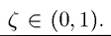 This equation builds in learning-by-doing externalities along the lines of
Romer’s (1986) paper and is also similar to the industrialization model of Section 20.3 in the previous chapter. The fact that implies that these externalities are less than what would be necessary to sustain endogenous growth.
Finally, let us also assume that rural areas have a comparative advantage in community enforcement. In particular, individuals engage in many social and economic activities, ranging from financial relations and employment to marriage and social relations. Many of these relationships in cities are anonymous and enforcement is through some type of monitoring by the law and relies on complex institutions. Such institutions often work imperfectly in most societies and particularly in less-developed economies. In contrast, rural areas house small number of individuals who are in long-term relationships. These long-term relationships enable the use of community enforcement in many activities. Thus with long-term relationships, individuals can pledge their reputation to borrow money to smooth consumption, to obtain information about which individual would be most appropriate for a particular job, or to ensure cooperation in other work or social relations. We represent these in a reduced-form way by assuming that an individual pays a flow cost of ξ > 0 due to imperfect monitoring and lack of community enforcement when he is in the urban area.
All individuals maximize their utility, and since savings do not matter for the key allocation decisions, I do not specify utility functions. The key observation is that all individuals would like to maximize the net present discounted value of their lifetime incomes. But since moving between urban and rural areas is costless, this implies that each individual should work in the sector that has the higher net wage at that time. This implies that in an interior equilibrium (where both the rural and the urban sectors are active), the following wage equalization condition must hold:
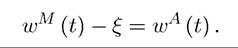
Competitive labor markets imply that
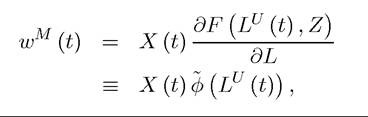
where the second line defines the function φ, which is strictly decreasing in view of Assumption 1 on the production function F. Substituting from the above relationships, labor market 872
clearing implies that

or
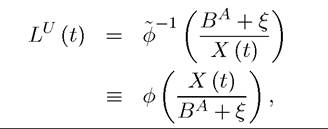
where again the second line defines the function φ, which is strictly increasing in view of the fact that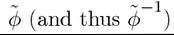 was strictly decreasing. Therefore, the evolution of this economy
can be represented by the differential equation 
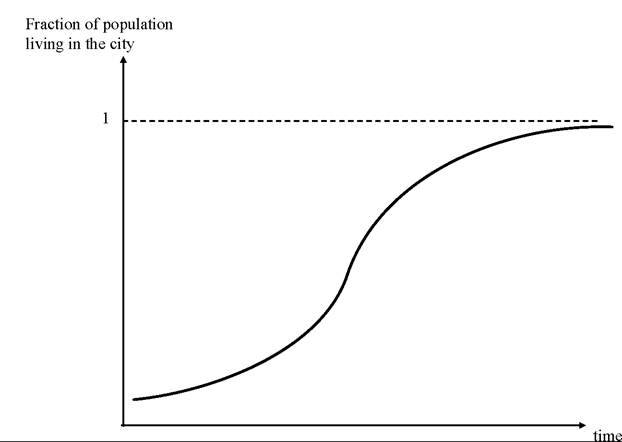
Figure 21.3. The dynamic behavior of the population in rural and urban areas.
A number of features about this law of motion are worth noting. First, the typical evolution of X (t) will be given as in Figure 21.3, with an S-shaped pattern. This is because when X (0) is low, we would expect that φ (X (t) / (Ba + ξ)) to be also low the early stages of development and thus manufacturing technology to progress only slowly. However, as X (t) increases, φ (X (t) / (Ba + ξ)) will also increase, raising the rate of technological change in the manufacturing sector. Ultimately, however, Lu (t) cannot exceed 1, so φ (X (t) / (Ba + ξ)) will tend to a constant, and thus the rate of growth of X will decline. Therefore, this reduced- form model generates an S-shaped pattern of technological change in the manufacturing 873
sector, and associated with that the migration of workers from rural to urban areas will also follow an S-shaped pattern.
Second and more importantly, the process of technological change in the manufacturing sector and migration to the cities are slowed down by the comparative advantage of the rural areas in community enforcement. In particular, the greater is ξ, the slower is technological change and migration into urban areas. Since employment in the urban areas creates positive externalities, the community enforcement system in rural areas slows down the process of economic development in the economy as a whole. We may therefore conjecture that high levels of ξ, corresponding to greater community enforcement advantage of the traditional sector, will generally reduce growth and welfare in the economy. Contracting this, however, are the static gains created by the better community enforcement system in rural areas. A high level of ξ will increase the initial level of consumption in the economy. Consequently, there is a tradeoff between dynamic and static welfare implications of different levels of ξ and this tradeoff is investigated formally in Exercise 21.5.
Finally, this model also offers a formalization of some of the ideas related to the dual economy. In contrast to the model of subsection 21.3.1, there are no mobility barriers, thus workers in the villages and cities receive the same wage. However, the functioning of the economy and the structure of social relations are different in these two areas. While villages and the rural economy rely on community enforcement, the city uses the modern technology and impersonal institutional checks in order to enforce various economic and social arrangements. Consequently, the dual economy in this model exhibits itself as much in the social dimension as in the economic dimension.
21.3.3. Inappropriate Technologies and the Dual Economy. I now discuss how ideas related to the issue of appropriate technology discussed in Chapter 18 (Section 18.4) may provide promising clues about the nature of the dual economy patterns. Recall from Section 18.4 that less-developed economies often import their technologies from more advanced economies and that these technologies are typically designed for different factor proportions than those of the less-developed economy. For example, in Section 18.4, I emphasized the implications of a potential mismatch between the skills of the workforce of a less-developed economy and the skill requirements of modern technologies. However, the model in that section was designed such that the equilibrium (and the best option) for the less-developed economy was always to use the modern technology.
Consider a variant of a model in that section, where each technology is of the Leontief type, so that it requires a certain number of skilled and unskilled workers. For example, technology Ah will produce a total of AhL units of the unique final good, where L is the number of unskilled workers, but this technology requires a ratio of skilled to unskilled workers 874
exactly equal to h (for example, the skilled workers will be the managers or the supervisors for the unskilled workers). Suppose Ah is increasing in h, so that more advanced technologies are more productive.
Now consider a less-developed economy that has access to all technologies A⅛ for h ∈ [0, h] for some h < ∞. Suppose that the population of this economy consists of H skilled and L unskilled workers, such that H/L < h. This inequality implies that not all workers can be employed with the most skill-intensive technology. What will be form of equilibrium be in this economy?
To answer this question, imagine that all markets are competitive, so that the allocation of workers to tasks will simply maximize output. Then the problem can be written as

where L (h) is the number of unskilled workers assigned to work with technology A⅛. The first-order conditions for this maximization problem can be written as

where Al is the multiplier associated with the first constraint and Ah is the multiplier associated with the second constraint. The first-order condition is written as an inequality, since not all technologies h ∈ [0, h] will be used, and those that are not active might satisfy this condition with a strict inequality.
Inspection of the first-order conditions implies that if Ajl is sufficiently high and if Ao > 0, the solution to this problem will have a very simple feature. All skilled workers will be employed at technology h, and together with them, there will be L (h) = H/h unskilled workers employed with this technology. The remaining L — L (h) workers will be employed with the technology h = 0 (see Exercise 21.6). This equilibrium will then have the feature of a dual economy. Two very different technologies will be used for production, one more advanced (modern), and the other corresponding to the least advanced technology that is feasible. This dual economy structure emerges because of a non-convexity—to maximize output, it is necessary to operate the most advanced technology, but this exhausts all of the available skilled workers, implying that unskilled workers have to be employed in technologies that do not require skilled inputs or supervision. This perspective therefore suggests that a dual economy structure might be the natural outcome of technology transfer, especially 875
in situations where less-developed economies import their technologies from more advanced nations and these technologies are inappropriate to the needs of less-developed countries.
Models of dual economy based on this type of appropriate technology ideas have not been investigated in detail, though the literature on appropriate technology, which was discussed in Chapter 18, suggests that they may be important in practice. While this model focuses on the dual economy aspect in production, one can easily generalize this framework by assuming that the more advanced technology will be operated in urban areas and with contractual arrangements enforced by modern institutions, while the less advanced technology is operated in villages or rural areas. Thus models based on appropriate (or inappropriate) technology may be able to account for broader patterns related to dual economy, including rural to urban migration and changes in social arrangements.
21.4.