References and Literature
The growth accounting framework is introduced and applied in Solow (1957). Jorgensen, Gollop and Fraumeni (1987) give a comprehensive development of this framework, emphasizing how competitive markets are necessary and essentially sufficient for this approach to work.
They also highlight the measurement difficulties and emphasize how underestimates of the quality improvements in physical and human capital will lead to overestimates of the contribution of technology to economic growth. Jorgensen (2005) contains a more recent survey.Regression analysis based on the Solow model has a long history. More recent contributions include Baumol (1986), Barro (1991) and Barro and Sala-i-Martin (1992). Barro (1991) has done more than anybody else to popularize growth regressions, which have become a very commonly-used technique over the past two decades. See Durlauf (1996), Durlauf, Johnson and Temple (2005) and Quah (1993) for various critiques of growth regressions, especially 125
focusing on issues of convergence. Wooldridge (2002) contains an excellent discussion of issues of omitted variable bias and how different approaches can be used (see, for example, Chapters 4, 5, 8, 9 and 10). The difficulties involved in estimating models with fixed effects and lagged dependent variables are discussed in Chapter 11.
The augmented Solow model with human capital is a generalization of the model presented in Mankiw, Romer and Weil (1992). As noted in the text, treating human capital as a separate factor of production may not be appropriate. Different ways of introducing human capital in the basic growth model are discussed in Chapter 10 below.
Mankiw, Romer and Weil (1992) also provide the first regression estimates of the Solow and the augmented Solow models. A detailed critique of the Mankiw, Romer and Weil is provided in Klenow and Rodriguez (1997).
Hall and Jones (1999) and Klenow and Rodriguez (1997) provide the first calibrated estimates of productivity (technology) differences across countries. Caselli (2005) gives an excellent overview of this literature, with a detailed discussion of how one might correct for differences in the quality of physical and human capital across countries. He reaches the conclusion that such corrections will not change the basic conclusions of Klenow and Rodriguez and Hall and Jones, that cross-country technology differences are important.The last subsection draws on Trefler (1993). Trefler does not emphasize the productivity estimates implied by this approach, focusing more on this method as a way of testing the Heckscher-Ohlin model. Nevertheless, these productivity estimates are an important input for growth economists. Trefler’s approach has been criticized for various reasons, which are secondary for our focus here. The interested reader might also want to look at Gabaix (2000) and Davis and Weinstein (2001).
3.9. Exercises
Exercise 3.1. Suppose that output is given by the neoclassical production function Y (t) = F [K (t),L (t),A (t)] satisfying Assumptions 1 and 2, and that we observe output, capital and labor at two dates t and t + T. Suppose that we estimate TFP growth between these two dates using the equation

where g (t,t + T) denotes output growth between dates t and t + T, etc., while ακ (t) and ¾ (t) denote the factor shares at the beginning date. Let x (t,t + T) be the true TFP growth between these two dates. Show that there exists functions F such that x(t,t + T) /x (t, t + T) can be arbitrarily large or small. Next show the same result when the TFP estimate is constructed using the end date factor shares, i.e., as

126
Explain the importance of differences in factor proportions (capital-labor ratio) between the beginning and end dates in these results.
EXERCISE 3.2. Consider the economy with labor market imperfections as in the second part of Exercise 2.13 from the previous chapter, where workers were paid a fraction β > 0 of output. Show that in this economy the fundamental growth accounting equation leads to biased estimates of TFP.
Exercise 3.3. For the Cobb-Douglas production function from Example 3.1 Y (t) =  derive an exact analog of (3.8) and show how the rate of convergence, i.e., the coefficient in front of (log у (t) — log y* (t)), changes as a function of log у (t).
EXERCISE 3.4. Consider once again the production function in Example 3.1. Suppose that two countries, 1 and 2, have exactly the same technology and the same parameters α, n, δ and g, thus the same y* (t). Suppose that we start with yι (0) = 2y2 (0) at time t = 0. Using the parameter values in Example 3.1 calculate how long it would take for the income gap between the two countries to decline to 10%.
Exercise 3.5. Consider a collection of Solow economies, each with different levels of δ, s and n. Show that an equivalent of the conditional convergence regression equation (3.10) can be derived from an analog of (3.8) in this case.
Exercise 3.6. Prove Proposition 3.2.
EXERCISE 3.7. In the augmented Solow model (cfr Proposition 3.2) determine the impact of increase in s∣,, ⅝ and n on h* and k*.
Exercise 3.8. Suppose the world is given by the augmented Solow growth model with the production function (3.13). Derive the equivalent of the fundamental growth accounting equation in this case and explain how one might use available data in order to estimate TFP growth using this equation.
EXERCISE 3.9. Consider the basic Solow model with no population growth and no technological progress, and a production function of the form F (K, H), where H denotes the efficiency units of labor (human capital), given by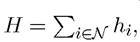 where N is the set of all individuals in
the population and hi is the human capital of individual i.
Assume that H is fixed. Suppose there are no human capital externalities and factor markets are competitive.(1) Calculate the steady-state equilibrium of this economy.
(2) Prove that if 10% higher h at the individual level is associated with α% higher earnings, then a 10% increase in the country’s stock of human capital H will lead to a% increase in steady-state output. Compare this to the immediate impact of an unanticipated 10% increase in H (i.e., with the stock of capital unchanged).
Exercise 3.10. Consider a constant returns to scale production function for country j, Yj = F (Kj,AjHj), where Kj is physical capital, Hj denotes the efficiency units of labor and 127
Aj is labor-augmenting technology. Prove that if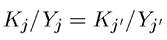 in two different countries
j and j,, than the rental rates of capital in the two countries, Rj and Rji will also be equal. Exercise 3.11. Imagine you have a cross-section of countries, i = 1.....N, and for each country, at a single point in time, you observe labor Li, capital Ki, total output Yi, and the share of capital in national income, σκ. Assume that all countries have access to a production technology of the following form
F (L.K. A)
where A is technology. Assume that F exhibits constant returns to scale in L and K, and all markets are competitive.
(1) Explain how you would estimate relative differences in technology/productivity across countries due to the term A without making any further assumptions. Write down the equations that are involved in estimating the contribution of A to crosscountry income differences explicitly.
(2) Suppose that the exercise in part 1 leads to large differences in productivity due to the A term. How would you interpret this? Does it imply that countries have access to different production possibility sets?
(3) Now suppose that the true production function is F (H. K. A) where H denotes efficiency units of labor. What other types of data would you need in order to estimate the contribution of technology/productivity across countries to output differences.
(4) Show that if H is calculated as in Section 3.5, but there are significant quality-of- schooling differences and no differences in A, this strategy will lead to significant differences in the estimates of A.
More on the topic References and Literature:
- References
- References
- Oetzel John, Ting-Toomey Stella. The SAGE Handbook of Conflict Communication: Integrating Theory, Research and Practice. SAGE Publications,2013. — 912 p., 2013
- Backhouse Roger, Baujard Antoinette. Welfare Theory, Public Action, and Ethical Values: Revisiting the History of Welfare Economics. Cambridge University Press,2021. — 301 p., 2021
- Conclusion
- REVIEW OF FORENSIC ASSESSMENT INSTRUMENTS
- North Korea's Cultural Revolution in 1972
- Molecular Epidemiology of Bovine Tuberculosis in Uganda
- Economics as a Moral Science
- �If he has health and leisure to complete’