The Historical Background
SHARIA HAS GONE THROUGH MANY TWISTS AND TURNS OVER THE course of Malay history. Muslim merchants, traders, and mystics brought Islam to Island Southeast Asia at least as early as the thirteenth century.
They sailed along the monsoon winds that delivered Hinduism and Buddhism throughout much of the region during preceding centuries. Islam took root in the coastal maritime kingdoms joining Hinduism, Buddhism, and other beliefs and customs in local cultural tapestries. These Islamic kingdoms, part of political and economic networks in China, India, Persia, and Arabia, spread Islam to their subjects and throughout the region. During the era of European expansion and colonization, this process was disrupted in some respects and spurred on in others. Eventually, Island Southeast Asia was divided between areas under British, Dutch, and Spanish control. The Malay Peninsula and Singapore—an island at its southern tip—and Brunei, Sabah, and Sarawak—territories on the island of Borneo (Kalimantan)—fell under British colonial administration (see map on following page). Malaya, later Malaysia, attained a negotiated political independence in 1957; and in 1963 Singapore and the two Borneo states of Sabah and Sarawak joined the federation, but Singapore seceded from it in 1965. Brunei refused to join the Federation of Malaysia and regained independence in 1984. Postcolonial Malaysia appeared in a modern world characterized by nation-states and the dominance of global capitalism. The new nation-state was confronted with the challenges of constructing a sense of nationality for its diverse population and coping with the transformations of urbanization and globalization. Conceptions of sharia connected and combined with a variety of other notions during these precolonial, colonial, and postcolonial eras.Sharī‘a is an Arabic term referring to “the revealed law of Islam” and “the right Way of Religion” (Wehr [1960] 1979, 544; Abdullah Yusuf 1992, 1536).
Muslim scholars and everyday Muslims interact with revealed knowledge, making a variety of interpretations about what are the divine rules and proper prescriptions for conduct. By the time Islam reached the shores of Island Southeast Asia, Muslim scholars had already consolidated the four main schools of jurisprudence (fiqh) in Sunni Islam. The Shāfi’ī school came to predominate in Malaysia, as it did in Indonesia, Lower Egypt, Hijaz, South Arabia, East Africa, and coastal parts of India (Riddell 2001, 55). Southeast Asian Muslims localized ideas about sharia, including them within cultural models used to interpret and shape behavior in various domains of life.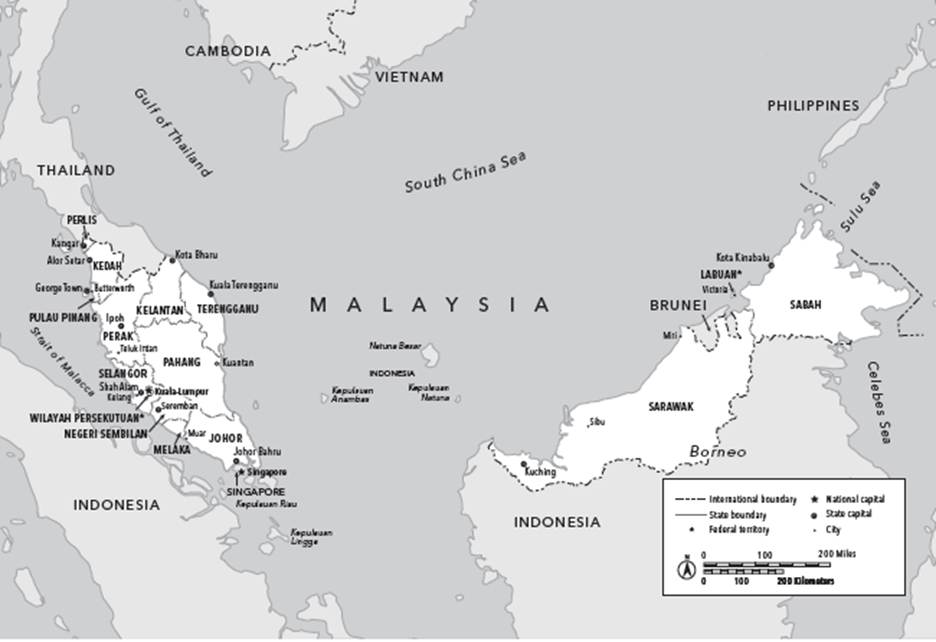
Furthermore, this history is not divorced from the dynamics of sharia and other sociopolitical projects in contemporary Malaysian society. Across the diverse ethnic and religious tapestry of Malaysia, people negotiate the meanings of Malaysian history, imagining and framing it within their ideological perspectives. Although their discourses are, in many instances, about ethnicity, race, gender, or nationality, sharia and the place and character of Islam in society figure prominently within them. Both the broad contours of the history of sharia and the voices of Malaysians inform this narrative.
More on the topic The Historical Background:
- Historical Background
- Historical Background
- Historical and legal background
- Observations on the Problem of “Historical” and “ Non-historical ” Nations
- Background
- Background
- The background
- Historical Perceptions
- Historical Overview
- BACKGROUND