Lymphatic drainage of the pelvis
The lymphatic drainage from the pelvis varies with each organ (Figure 3.6). However, there is a widespread network of lymph channels within the pelvis for lymph drainage to occur.
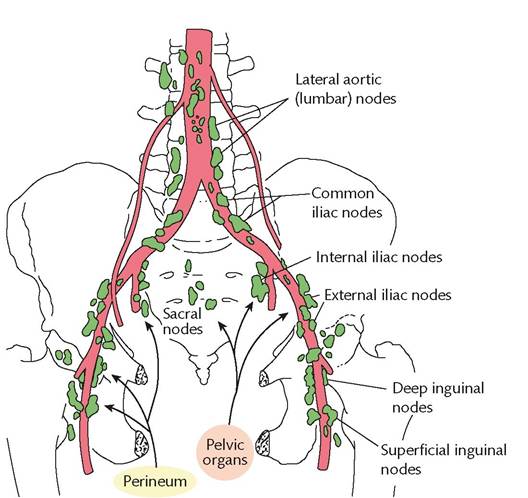
Figure 3.6 Lymphatic drainage.
From the vulva, the lymph drainage is reported to pass to the deep and superficial inguinal nodes passing up to the femoral nodes. These lymph channels continue up the major blood vessels of the pelvis (external iliac, and common iliac).
The lower third of the vagina has similar lymph drainage to the vulva with the upper two-thirds having a lymph drainage more similar to the cervix. The cervix has lymph channels that pass laterally from the uterine artery to the internal iliac chain, as well as to the obturator group and external iliac chain. Some lymph tracts pass to the presacral nodes and then on to the para-aortic nodes.
The corpus of the uterus is classically described as having lymph drainage to the obturator, internal iliac, external iliac, and pre- sacral nodal groups as well as nodes in the uterine parametrium. Sometimes lymph spread can occur along the round ligament to the superficial inguinal nodes.
The lymph drainage of the ovaries is classically described as passing along the vessels of the infundibulopelvic ligament and ovarian arteries towards the para-aortic chain just below the renal vessels. However, there is considerable interlinking of pelvic lymphatics and therefore cancer lymphatic spread in ovarian cancer can follow these chains of nodes or those from the uterus via links in the mesosalpinx (see Chapter 64).
Clinical considerations
Gynaecological cancers can spread via the lymph nodes. For this reason, lymph nodes are often removed surgically during treatment for these cancers. When lymph nodes are removed, cysts of lymph fluid can collect called lymphocysts. If the channels are completely divided, this can result in a build-up of lymph tissue in the lower limbs and swelling of the legs called lymphoedema.
Modern-day strategies for the treatment of gynaecological cancers have therefore centred on more conservative approaches to the lymph glands with removal of the first (sentinel) lymph node identified after an injection of dye or selecting cases where no lymph nodes are removed at all.