Multiple Pregnancy Resources for Professionals and the Public
Natasha Fenwick and Jane Gorringe
Multiple Pregnancy Care
Outcomes, Guidelines and Policies for Multiple Pregnancies
Twin and higher-order multiple pregnancies constitute a high-risk group, with stillbirth and neonatal death rates much higher than a singleton pregnancy.
Although stillbirth rates fell by almost 50% and neonatal death rates fell by more than 30% between 2014 and 2016,1 both rose slightly in 2017 and remain much higher than singleton rates.2 Key guidelines, policies and programmes seek to address this inequality in order to make multiple pregnancy safer and to improve the chance of mothers having a positive birth experience and healthy babies. Guidelines for multiple pregnancies in the UK include the National Institute for Health and Care Excellence (NICE) Guideline 137 for Twin and Triplet Pregnancy,6 the NICE Quality Standard 46 for Twin and Triplet Pregnancy (see Figure 30.1),5 Green-Top guideline number 51 on the management of monochorionic pregnancy4 and the International Society of Ultrasound in Obstetrics and Gynecology (ISUOG) practice guidelines on the role of ultrasound in twin pregnancy.3 Meanwhile, elements of the NICE guidance such as personalised care, continuity of care and multi-professional working are known to reflect in improved maternity care.7 Implementation of the NICE guidance is also recommended by the Saving Babies' Lives Care Bundle as an important step towards achieving best practice in antenatal care and meeting the aim of halving stillbirths by 2025.8Multiple-Specific Care in Practice
In 2019 Twins Trust10 conducted the BeCOME survey of more than 1,000 parents' and 76 health professionals' experiences of antenatal and neonatal care between January 2015 and April 2019, based on NICE quality standard 46.
The survey found that approximately a third of multiple pregnancies were seen by a multidisciplinary specialist core team, with a decrease in the number seeing a specialist obstetrician since the previous survey in 2015. Discussions about the risks and signs of preterm labour only took place before 24 weeks in 28% of pregnancies. These rates are worryingly low given that Twins Trust's Maternity Engagement Quality Improvement project produced clear evidence that following the NICE guidelines for the antenatal care of multiple pregnancies will improve the outcomes of those pregnancies.9 The survey also showed that health professionals are likely to overestimate the level of NICE adherence in their hospital.Qualitative feedback from parents demonstrated that they truly value NICE implementation and feel reassured that specialist care is available to help them through their high-risk pregnancy. Continuity of care allows them to maximise time to address concerns during
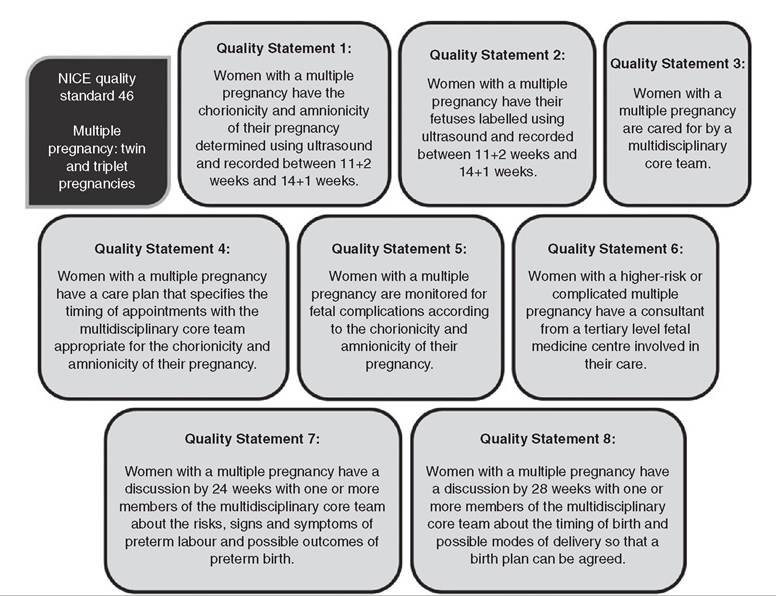
Figure 30.1 NICE Quality Standard 46 for Twin and Triplet Pregnancies5
appointments rather than recounting their pregnancy details each time and it allows concerns or changes to be quickly picked up. Having access to a knowledgeable specialist team reassures parents that the professionals caring for them have the knowledge to deliver their babies safely and at the right time. Parents who are kept informed feel positively about their pregnancy and towards the staff caring for them, while those who feel uninformed become anxious and may feel they need to do their own research to compensate.
In order to continue improving outcomes, it is vital that maternity units increase their adherence to NICE guidelines, as well as improving the overall patient experience, and resources are available to help achieve this.
Support for Healthcare Professionals
Multiple pregnancies require additional monitoring and specialist care, and despite its importance, some may find particular aspects difficult to implement.
Through learning opportunities, free resources and practical support to improve care and address potential barriers, most charities are committed to supporting professionals to ensure the best-quality care is given to parents with a multiple pregnancy and to ensure parents are supported during the pregnancy, through birth and in the postnatal period.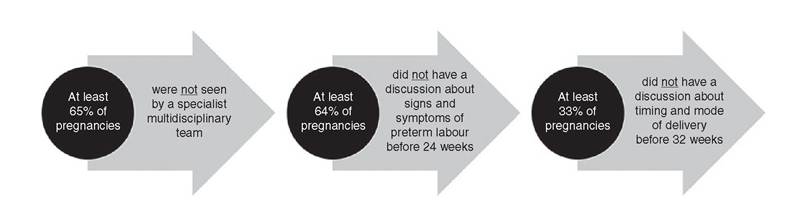
Figure 30.2 Parents' experiences of care from Twins Trust's BeCOME survey10
Maternity Engagement Quality Improvement Project
The Maternity Engagement team works with maternity units across the UK to ensure families expecting a multiple pregnancy receive the correct level of clinical care. The aim is to improve outcomes for twin and other multiple pregnancies by ensuring multiple pregnancy care is delivered consistently and in line with national guidance - specifically NICE Quality Standard 46. Unit adoption of this standard has proven to be an indicator of good practice and has been shown to reduce stillbirths, neonatal admissions, neonatal deaths and emergency caesarean section rates.
The team works alongside specialist midwives who visit maternity units and conduct an audit to assess local practice. An action plan is created to provide a platform for improving care and support is provided throughout the year, along with access to a wide range of resources. After 12 months a re-audit is conducted to assess changes made and their impact. In just 12 months the 30 units that participated in the first phase of the project saw a 5.8% reduction in neonatal admissions, equating to a cost saving of £51,000 per unit and a 3.1% reduction in emergency caesarean sections. After two years this increased to a 23% reduction in neonatal admissions, an 18% reduction in neonatal deaths, a 7% reduction in stillbirths and a 6% reduction in emergency caesarean sections.
NICE-Endorsed Multiple Pregnancy Care Pathway and Parents' Proforma
Twins Trust has worked very closely with several hospitals to develop a multiple pregnancy care pathway that healthcare professionals can use for all permutations of multiple pregnancy and covers the eight statements within the NICE guideline.
It clearly identifies the appointment schedule for each type of pregnancy and the number of appointments that should take place with a specialist consultant. The pathway was endorsed by NICE in 2018 and was subsequently updated and re-endorsed to reflect the amendments to the guideline that took place in September 2019. The care pathway features on the NICE website, where they refer to it to give the appointment schedule for each variation of multiple pregnancy. In addition to the care pathway for healthcare professionals, the charity has produced a version for parents. This enables parents to understand the appointment schedule they should be following and what will happen at each appointment. It is a useful prompt to have the relevant discussions about being of aware of the risks and symptoms that may occur with a multiple pregnancy and the timing and mode of delivery.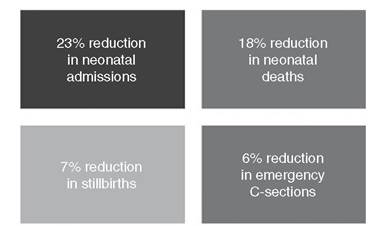
Figure 30.3 Results of the Twins Trust Maternity Engagement programme after one year9
Twins Trust Continuing Professional Development Area
There is a dedicated area on the Twins Trust website (www.twinstrust.org) for healthcare professionals. It offers a suite of video-recorded presentations that provide CPD learning on antenatal, intra-partum and neonatal care, as well as best practice in areas such as multiple midwives and sonography for multiples. It also focuses on certain complications that occur in multiple pregnancies such as twin-twin transfusion syndrome (TTTS), twin-reversed arterial perfusion (TRAP) sequence and twin anaemia-polycythaemia sequence (TAPS). Viewers can add a certificate to their CPD portfolio for each video watched. As well as these videos, a range of other resources are available.
Study Days
As part of the Maternity Engagement project, Twins Trust has run study days to encourage sharing of knowledge and multiple-birth expertise among the healthcare professionals who care for these pregnancies.
This has covered areas such as• NICE Guidance
• The sonographer's role in multiple pregnancy
• Reducing preterm birth
• The role of the specialist midwife
• Timing and mode of birth
• Intra-partum and postnatal care
• Neonatal care of multiple pregnancies
The team is now working to provide more of these study days over the coming years.
Postnatal Support
The parents in the BeCOME study reported very poor postnatal care once their twins or higher-order multiples were born. They felt staff, although well-intentioned, were too stretched to support them adequately. Leaving the specialist care of the antenatal clinic whilst still having specific needs is a huge challenge, as many parents struggle to care for more than one baby during their recovery. Parents face additional challenges with feeding their babies, but often there is nowhere to turn for support as services are not made available and staff are unable to dedicate the time to establish feeding with multiple babies, sometimes recommending that parents use formula rather than breastfeeding. They often find that they are unable to feed in the way they wish to because of this lack of support. Some parents also reported complications following the birth which were not appropriately managed and led to additional hospital admissions later on.
Families with babies in neonatal care typically report care of their babies to be of a very high level, but they struggle to understand how the neonatal wards work and how they can become involved in the care of their babies in order to bond with the babies and feel like a parent. Some also report that communication between the postnatal and neonatal wards is poor and they find it difficult to balance the different routines and time spent on each ward.
Once the family are home, they can struggle to get out of the house, being unable to attend check-ups, clinics or social groups. Additionally, parents of multiples are more likely to experience mental health difficulties and postnatal depression, compounded by sleep deprivation, financial worries and social isolation.
It is vital that families access specialist support during the early days, weeks and months to protect the well-being of the whole family.Resources and Services for Parents
When considering how to support parents of multiples, professionals should remember their needs are very different to parents of singletons and they are likely to need extra support during and after pregnancy. Twins Trust has a range of resources available to support parents at every stage with common worries and difficulties, many of which are free to access online (with the exception of courses and webinars). More information about all the support available can be found on the Twins Trust website. Some of the common areas in which parents need support or information are listed in what follows, with suggestions of help available to address these particular concerns.
Pregnancy
It often comes as a shock to parents when their pregnancy is diagnosed as twins, triplets or more. As well as the worry of a high-risk pregnancy (with increased risk of stillbirth and neonatal death compared to a singleton pregnancy), parents have to navigate specialist antenatal care and cope with the increased risk of sick leave or hospitalisation. All this happens while they are getting ready to welcome their babies home and finding the finances and the space to accommodate their new arrivals. The Pregnancy Countdown tool available on the Twins Trust website allows parents to see what is happening during each week of
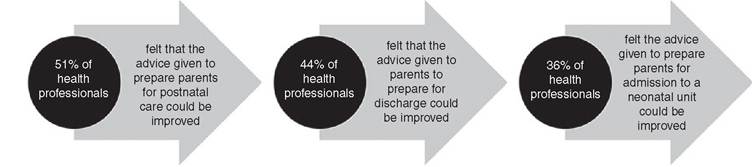
Figure 30.4 Healthcare professionals' experiences of postnatal care from Twins Trust's BeCOME survey10
pregnancy as well as informs them about the care they can expect to receive and the discussions they should be having with their care providers. It covers physical and emotional changes, babies' development, antenatal care pathways and signposting to other resources.
The Healthy Multiple Pregnancy Guide provides an overview of multiple pregnancies from conception, throughout pregnancy, to after birth. It is designed to complement the antenatal care parents receive and enable them to become more informed and reassured at what can be a stressful time. The guide is available to download for free online or as a paid- for physical copy. It covers topics such as
• Pregnancy and preparing for the babies' arrival
• Types of available support and how to access them
• Looking after babies in hospital
• Going home and establishing life with the babies
• Keeping babies safe
• Common illnesses and how to manage them
• Further information and sources of support
Twins Trust's antenatal courses are specifically designed to answer questions around the birth of two or more babies. Since multiple pregnancies follow their own antenatal care pathways, the timing and mode of delivery may be different from a singleton birth, and they differ based on the number of babies, chorionicity and amnionicity as well. This course will inform parents about the factors which can affect timing and mode of delivery, as well as the increased risk of premature birth and the practical aspects of caring for more than one baby in the early days.
Neonatal Care
Twins and higher-order multiples are more likely to be born early and in need of neonatal care. Having two or more babies' needs to consider can be difficult at the best of times, but when babies are split between hospitals, units or the family home, parents can feel anxious and guilty about dividing their time between their babies. Visiting the neonatal unit can be daunting and parents may need time to adjust to the particular way of working and how they can best be involved in care of their babies at this time. The guide to neonatal care offers information on preparation for premature birth, what to expect from neonatal care, how they might consider feeding multiple babies, the transition from hospital to home and the support available to parents who are struggling. The guide provides an invaluable insight into one of the most common challenges for multiple-birth families, caring for two or more babies born prematurely or with additional complications.
Bereavement
The death of any baby is devastating for a family, but in the case of twins, triplets or more it can be a very complex situation. Alongside the loss of one or more babies comes the loss of the special feeling of being a parent of multiples and the loss of the multiple relationship for the children. Grief can be difficult to manage, especially if there is a surviving multiple to care for and bond with. Specialist support is vital to help these parents through this difficult time and the mixed emotions it brings.
Twins Trust offers support to families facing a bereavement through its Bereavement Support Group, a closed online group for parents to meet others affected by the loss of one or more babies, offer peer support and share experiences in a safe space. The group also offers a newsletter which keeps the community informed of events and provides an opportunity for parents to share their stories.
The Bereavement Support booklet is a collection of personal stories, suggestions and sources of support for families who have lost babies from a multiple set. Parents may find comfort in knowing others have faced similar experiences and this guide can also help parents to plan for the birth, funeral and remembering their babies in the future. It offers anecdotes of parents' fundraising efforts and perspectives from families in many different situations. This booklet can be downloaded from the Twins Trust website or requested as a physical copy. Twins Trust also offers a befriending service to bereaved parents who wish to access individual peer support. Parents or grandparents are matched to a befriender who may have had a similar experience. This is not a counselling service but can nonetheless be beneficial to parents looking for someone to talk to about their loss.
Practical Challenges
The practical challenges of caring for two or more babies should not be underestimated. Parents have to learn to divide their time between all their babies, finding ways to engage them all in playtime or feed them together, whilst providing two or three times the care of a singleton parent. There is the challenge of funding equipment, clothes and toys for more than one baby and finding space for it all. Multiple parents benefit from all the support available to them. The Practical Preparing for Parenthood course, which is also available as a webinar, is an opportunity for expectant parents to meet each other, learn about what to expect from having more than one baby and prepare for the journey that lies ahead. These courses take place over two hours for an in-person course or as a webinar online, and cover topics such as those listed in what follows.
Similar topics are covered in the Preparing for Parenthood booklet, which guides parents through the different aspects of parenting they might need to consider and the things they need to organise, do or buy before the arrival of their babies and in the early days. For some parents, affording two or three times the equipment can be a concern. Where it is safe to do so, parents can acquire second-hand equipment from a local baby bank. Another need of some parents may be practical support. Home-Start is an organisation with branches across the country which offer around two hours per week of volunteer-led support at home to families with young children. A map on the Home-Start website (www.home-start.org.uk) shows all active branches as provision varies dependent on location. For families who experience additional circumstances, such as a bereavement, serious illness or postnatal depression, which tip them into desperate need or crisis, Twins Trust offers support through the Family Crisis Support service. Families who meet eligibility criteria are offered short-term, tailored support at home with multiple-specific challenges such as establishing a routine, getting out of the house, behaviour, feeding or sleep. Families can also be referred to other Twins Trust or external services, be given free resources or be offered remote support by
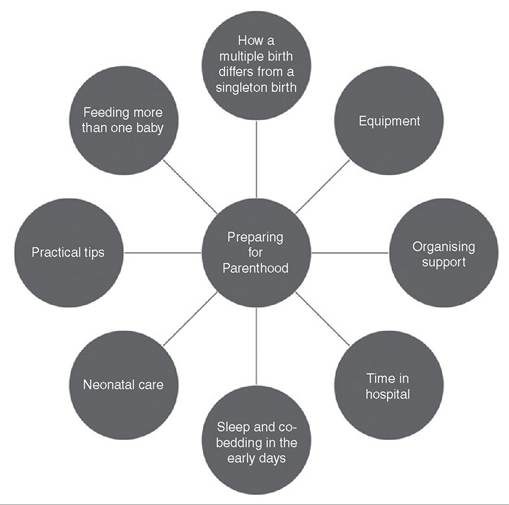
Figure 30.5 Multiple-birth parents' experiences of postnatal depression
phone or email. Families can self-refer or be referred by a healthcare professional on the Twins Trust website.
Feeding
Parents of twins, triplets and more often find that there is a lack of support when it comes to feeding, something which is more complex when there are multiple mouths to feed. Parents may have in mind their preferred method of feeding their babies, yet need some support to achieve it. Many are left feeling lost and disheartened when professionals are too stretched to give them the attention they need to succeed, and competing opinions of how parents should feed their multiples can add to the pressure. The Twins Trust website offers parents a wealth of information on breastfeeding, bottle feeding, mixed feeding and expressing, which is designed to help them achieve their feeding goals, whichever method they use. Twins Trust’s breastfeeding booklet and webinar also provide invaluable information for parents and their partners who wish to breastfeed multiple babies full-time or in combination with other methods. These resources answer common questions and offer different techniques and tips for success. For those who need a bit of extra support with any aspect of breastfeeding or mixed feeding, peer supporters can offer information and support via phone and email.
Sleep
Sleep deprivation can be one of the biggest challenges new parents face, and having multiple babies with different sleep patterns can further complicate the situation. Exhaustion can severely impact a parent's physical and mental well-being and this can have an effect on their ability to cope day to day. Twins and higher-order multiples are more likely to have been born prematurely and to have spent time in the neonatal unit, and they may now be separated between home and hospital, cared for by multiple adults or sharing a cot or bedroom. This unique set of circumstances has the potential to affect their sleep as well. The Sleep Top Tips for Multiples factsheet explains how babies sleep and how sleep cycles, associations, routines and environment can all play a part in babies' sleep. The Sleep Expectations factsheet explains how much sleep babies need at each stage and the different factors that might affect their sleep as they grow.
The Safer Sleeping factsheet explains the guidance for keeping babies safe and at a lower risk of sudden infant death syndrome (SIDS). It includes general advice for all babies and specific advice for twins and more. The Lullaby Trust also offers information and support about safer sleep to families of singletons and twins and is a good source of information for questions about reducing the risk of SIDS. For babies who are more than a year old, the sleep webinar is available to offer advice on why babies may struggle with sleep at this age and how parents can create environments and routines to encourage regular sleep. It also gives parents an opportunity to have their questions answered by sleep experts.
Mental Health
The issue of mental health is key for multiple-birth parents, who are at higher risk of postnatal depression and poor mental well-being. In addition to the specialist services and organisations which support families experiencing mental health difficulties, Twins Trust provides information for multiple birth families, their partners and the professionals caring for them.
Perinatal Mental Health: Top Tips for Multiples offers advice to those experiencing mental health difficulties on how to cope with a mental health condition and caring for multiple babies. How Partners, Family and Friends can help those with postnatal depression is a guide for those who want to support someone with postnatal depression to know how they can help the whole family and themselves.
Conclusion and Further Support
Twins Trust is committed to support families of twins, triplets and more, and the professionals who care for them, by ensuring that the care provided aligns with current guidance, and that services and resources are freely available to families in need.
All the resources and support services listed earlier in this chapter can be found on the Twins Trust website. Professionals who wish to learn more about the Maternity Engagement project findings or how they can improve their care should contact Mat ernityEngagement@twinstrust.org. Families in need of additional support can access Twinline on 0800 138 0509 (Monday-Friday, 10am-1pm and 7pm-10pm), Ask Twinline at AskTwinline@twinstrust.org, or the Twins Trust Support Team at support-team@twinstrust.org.
References
1. Draper ES, Gallimore ID, Kurinczuk JJ et al. MBRRACE-UK Perinatal Mortality Surveillance Report, UK Perinatal Deaths
for Births from January to December 2016. [Internet]. Leicester: The Infant Mortality and Morbidity Studies, Department of
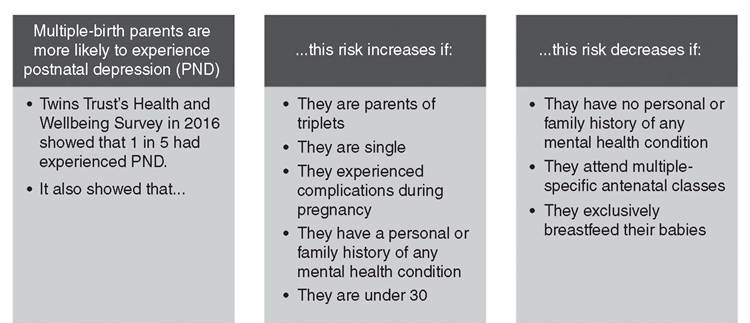
Figure 30.6 Twins and Multiple Births Association. PerinatalMentalHealth for Multiple Birth Families. Aldershot:
Tamba, 2017. Available from https://twinstrust.org/uploads/assets/ce32ec05-6501-4da6-b3621f9b8bb54b40/PND- for-Health-Professionals.pdf
Health Sciences, University of Leicester;
2018. Available from www.npeu.ox.ac.uk/ downloads/files/mbrrace-uk/reports/MBRR ACE-UK%20Perinatal%20Surveillance%20 Full%20Report%20for%202016%20-%20 June%202018.pdf
2. Draper ES, Gallimore ID, Smith LK et al. MBRRACE-UK Perinatal Mortality Surveillance Report, UK Perinatal Deaths for Births from January to December 2017 [Internet]. Leicester: The Infant Mortality and Morbidity Studies, Department of Health Sciences, University of Leicester;
2019. Available from www.npeu.ox.ac.uk/ downloads/files/mbrrace-uk/reports/MBRR ACE-UK%20Perinatal%20Mortality%20 Surveillance%20Report%20for%20Births%2 0in%202017%20-%20FINAL%20Revised.pdf
3. Khalil A, Rodgers M, Baschat A et al. ISUOG Practice Guidelines: role of ultrasound in twin pregnancy. Ultrasound Obstet Gynecol 2016;47(2):247-63.
4. Kilby MD, Bricker L on behalf of the Royal College of Obstetricians and Gynaecologists. Management of monochorionic twin pregnancy. BJOG 2016;12(4):e1-e45.
5. National Institute for Health and Care Excellence. Multiple pregnancy: twin and triplet pregnancies: quality standard [Internet]. London: NICE; 2019. Available from http://nice.org.uk/guidance/ qs46/resources/multiple-pregnancy- twin-and-triplet-pregnancies-pdf- 2098670068933
6. National Institute for Health and Care Excellence. Twin and triplet pregnancy: NICE guideline [Internet]. London: NICE; 2019. Available from www.nice.org.uk/ guidance/ng137/resources/twin-and-triplet- pregnancy-pdf-66141724389829
7. National Maternity Review. Better births: improving outcomes of maternity services in England - a five year forward view for maternity care [Internet]. London: NHS England; 2016. Available from www.england.nhs.uk/wp-content/uploads/ 2016/02/national-maternity-review-report. pdf
8. NHS England. Saving Babies' Lives Version Two: a care bundle for reducing perinatal mortality [Internet]. London: NHS England; 2019. Available from www.england.nhs.uk/ wp-content/uploads/2019/07/saving-babies- lives-care-bundle-version-two-v5.pdf
9. Twins and Multiple Births Association. NICE Works: The Final Report. Aldershot: Tamba, 2019.
10. Twins Trust. Better Care of Multiple Pregnancies in the UK: An Exploration. Aldershot: Twins Trust, 2020.