The biology of cervical intraepithelial neoplasia and cervical cancer
The concept of a continuum, first proposed by Richart (17), has persisted until relatively recently. Greater understanding of the biology of oncogenic HPV has led to a different concept, that is, that there are two different types of HPV infection, the first of which is an innocent and transient infection which may produce mild or low- grade lesions that have limited if any precancerous potential for progression to cancer.
This is called a productive infection. The key step in the pathogenesis of HPV-linked cancers is the activation of the viral oncogenes E6 and E7 in the basal and parabasal cells of the infected epithelium (18-20). These viral genes if expressed in basal or parabasal cells trigger chromosomal instability and maj or numerical and structural alterations of the host cell chromosomes. This leads to uneven distribution of the overall DNA content, aneuploidy, and is reflected by shifts of the nuclear staining pattern, the staining intensity. This type of infection is more readily recognized cytologic- ally, colposcopically, and histologically and is called a transforming infection (19).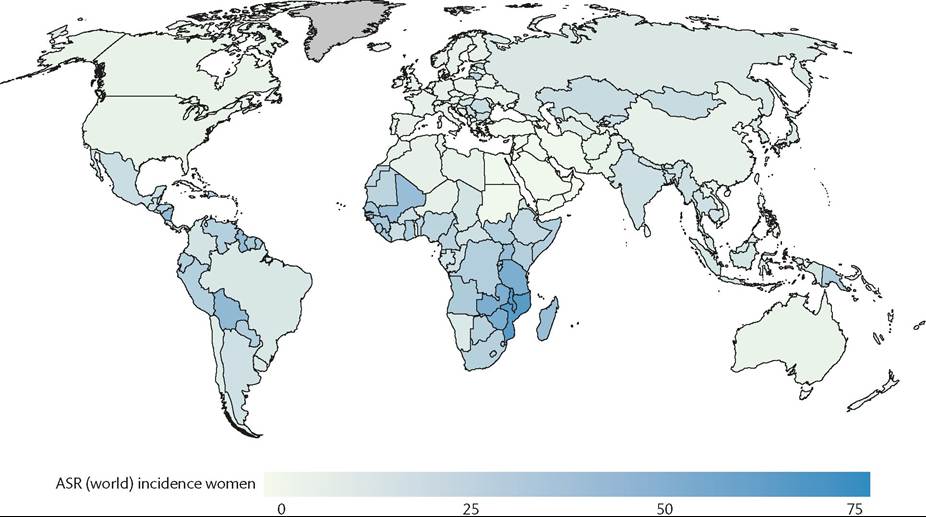
Figure 62.1 Transformation zone (TZ) types. (a) Diagrammatic representation of a type 1 TZ, which is completely ectovervical, fully visible, and may be small or large. (b) Diagrammatic representation of a type 2 TZ which has an endocervical component but is still fully visible; the ectocervical component may be small or large. (c) Diagrammatic representation of a type 3 TZ which has an endocervical component and the upper limit is not fully visible. The ectocervical component if present may be small or large.
Source data from Sankaranarayanan International Agency for Research on Cancer (WHO) Lyon, France 2016.
Sometimes, moderate dyskaryosis (at cytology) or moderate dysplasia (at histology) may contain both types of infection and these are difficult to distinguish using cytology or histology. Fortunately, developments in molecular biology have led to specific biomarkers of cell biology that can discriminate between these types where doubt exists.
LLETZ should usually be performed in a clinic with access to resuscitation facilities. For high-grade lesions, excision may often be performed at the first visit providing the patient is fully informed, there is no disparity between the referral cytology and the colposcopic assessment, and the TZ is sufficiently small and accessible (i.e. type 1 or shallow type 2 TZ). For every other circumstance there is no urgency about management, providing the risk of default to follow-up attendance is low.