COMMON RESPIRATORY PROBLEMS
Some important causes of respiratory distress in newborns are as follows:
Hyaline membrane disease (HMD) is a common cause of respiratory morbidity/mortality in preterms, denoting developmental immaturity of lung surfactant.
Surfactant deficiency leads to end-expiratory alveolar collapse and poor alveolar expansion on inspiration, with consequent decrease in lung compliance, complex ventilation-perfusion abnormalities and progressive respiratory failure.Incidence of HMD is inversely related to gestational age. HMD may develop in 60-80% of preterms lt;28 weeks, 15-30% of preterms between 28 and 32 weeks and very rarely after 34 weeks. Incidence in Indian newborns is relatively less, probably due to high incidence of maternal infections that accelerate lung maturity.
Pathogenesis: Lack of the surfactant—a complex mixture of phospholipids and proteins that lines the inner surface of alveoli, is the core-pathology in HMD. Surfactant is secreted by alveolar type II pneumocytes from ~20th week onwards in increasing quantity, specially in last trimester. Main function of this surfactant is to prevent complete alveolar collapse during expiration and facilitate their expansion on next inspiration.
Surfactant deficiency is mostly developmental, in preterms. Other uncommon causes include—(a) delayed maturity in infants of diabetic mothers, and (b) destruction of type II alveolar cells due to perinatal complications, e.g. birth asphyxia, acidosis, hypothermia, Rh hemolytic disease and shock.
Surfactant deficiency means more negative pressure is required during inspiration to expand the collapsed alveoli of fetal lung. Inability of the highly compliant chest wall in preterms to generate enough negative inspiratory pressure leads to progressive alveolar atelectasis and hypoxia.
Diffuse atelectasis and hypoxia/acidosis-led vasoconstriction elevate pulmonary vascular pressure, leading to pulmonary hypertension gt; right to left shunt through PDA gt; ventilation-perfusion mismatch with increased alveolar:arterial oxygen gradient; and ultimately, respiratory failure (Fig.
12.13).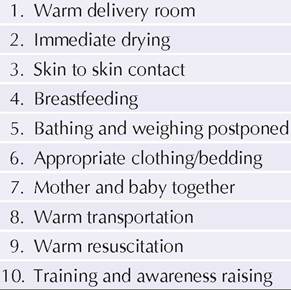
Fig. 12.13: Pathogenesis of HMD.
‘Pulmonary hypertension gt; #8593; Rt ventricular pressure gt; PDA with Rtgt;Lt shunt
Autopsyfindings in HMD reveal—(a) poorly expanded lungs, which do not float on water, (b) diffuse atelectesis, and (c) characteristic hyaline membrane on inner alveolar surfaces.
Clinical manifestations: HMD presents with progressive RD since birth, with—(a) tachypnea, (b) inspiratory chestwall retractions, (c) expiratory grunt due to partially closed glottis—a protective mechanism to prevent end-expiratory alveolar collapse, and (d) cyanosis. Auscultatory findings are non-specific, with diminished breath sounds and fine inspiratory rales.
Untreated cases rapidly progress to respiratory failure in next 2-3 days, complicated with acidosis, hypotension, hypothermia and hypoglycemia.
Diagnosis of HMD should be considered in any preterm with progressive RD since birth, confirmed by:
• Chest X-rays: Radiological picture changes during the course of disease with (a) characteristic fine reticular granularity with air bronchogram, (b) complete white-out appearance in severe disease due to collapsed lungs, and (c) late complications, e.g. hyperinflation or pneumothorax (Fig. 12.14).
• Surfactant maturity tests by—(i) shake test, (ii) biochemical tests, e.g. Lecithin-sphingomyelin ratio (L:S gt; 2 indicates adequate maturity).
Shake test is a simple and bedside qualitative test to detect surfactant activity in amniotic fluid (antenatal prediction) or gastric juice (postnatal diagnosis). Add 0.5 ml of amniotic fluid/gastric aspirate in a mixture of normal saline (0.5 ml) and 95% ethyl alcohol (1.0 ml). Shake the mixture vigorously for 15 seconds and allow to stand it for 15 minutes. Presence of a rim
Fig. 12.14: Hyaline membrane disease: White-out appearance with airbronchogram.
of bubbles over gt;2/3rd of top liquid circumference indicates adequate surfactant activity. This test is falsepositive if blood/meconium is present in test sample.
• Blood gas abnormalities are characterized by progressive hypoxemia, hypercarbia and metabolic acidosis.
Prevention: Avoidance of prematurity is the most important prevention against HMD, though in unavoidable cases, following steps are necessary:
a. Postpone elective preterm labor as long as possible and assess surfactant maturity by amniotic fluid shake test or L:S ratio, before the induction.
b. Antenatal steroids to mother, if preterm labor is inevitable before 34 weeks, as total four doses IM dexamethasone 6 mg 12-hourly for our doses at least 24 hours before delivery is highly effective to accelerate surfactant maturity. Efficacy is maximum when baby delivers within 24 hours to 7 days after steroid and same course may repeated once (only) after 7-14 days if baby has not yet delivered and gestation is still lt; 34 weeks.
c. Prophylactic surfactant therapy at birth. However, early use of CPAP in delivery room is as effective as prophylactic surfactant therapy to prevent HMD.
Management of HMD aims to: (a) ensure adequate gaseous exchange in the lungs, (b) prevent further alveolar collapse and facilitate their expansion, (c) increase lung surfactant activity, (d) correct hemodynamic/metabolic abnormalities, and (e) manage secondary complications, i.e. infections, pneumothorax, etc.
All suspected HMDs must be managed in NICU with appropriate ventilatory support. Important steps include: i. Initial stabilization with: (a) oxygen supplementation, (b) thermoregulation, (c) fluid/electrolyte correction,
(d) blood transfusion (if Hct lt;40) to improve oxygen carrying capacity, (e) treatment of complications, e.g. hypoglycemia, metabolic acidosis and infections, and (f) continuous monitoring.
ii. Ventilatory support is essential in most cases, though the mode of ventilation is guided by clinical severity, blood gas reports, and patient's breathing efforts.
Continuous positive airway pressure ventilation (CPAP) at a continuous distending pressure of 5-8 cm H2O, is the ventilation of choice in HMD, indicated in cases with PaO2 lt;50 mm Hg despite 60% FiO2 and able to breath spontaneously. CPAP prevents complete collapse of alveoli at the end of expiration and thus facilitates longer gaseous exchange and easier re-expansion during inspiration. A recent meta-analysis suggests that non-invasive positive pressure ventilation (NIPPV) is superior to biphasic positive airway pressure (BiPAP) or CPAP ventilation to reduce the need of mechanical ventilation.
Assisted mechanical ventilation is indicated in babies with: (a) persistent ABG abnormalities despite 100% oxygen and CPAP or (b) no spontaneous respiration. Positive end-expiratory ventilation (PEEP) is indicated in these cases for the same reason as for CPAP in spontaneously breathing baby.
Mechanical ventilation must aim to keep PaO2 50-70 mm Hg, PaCO2 45-65 mm Hg and pH 7.20-7.35, to ensure adequate ventilation without the risk of lung injury or oxygen toxicity. Recommended range of SaO2 is 91-95%. At the time of weaning from ventilator, it is preferable to shift on nasal CPAP, followed by humidified high-flow oxygen (2-8 L/min) by nasal cannula.
iii. Surfactant replacement therapy (SRT) has revolutionized the prevention and treatment of HMD. Currently, two types of surfactants are available— biologically derived and recombinant preparations, former being more effective due to presence of surfactant proteins A and B.
SRT is complementary to CPAP and must be started as early rescue therapy within 2 hours of delivery in extreme preterms who require intubation in labour room or or later in babies on CPAP with FiO2 requirements of gt; 40%.
Irrespective of the type, 100 mg/kg of surfactant, is instilled endotracheally via a catheter. After each 1-2 ml dose, infant must be given continuous positive pressure ventilation before next aliquot till full dose is administered.
Surfactant can be administered by either intubation-surfactant-extubate (INSURE) technique or less invasive surfactant administration (LISA).Effective surfactant therapy is associated with rapid clinical improvement and correction of blood gas abnormalities. Rescue therapy is most effective when started within 24 hours of birth and usually 2-4 doses may be required at 6-12-hour interval. Pulmonary hemorrhage is the most important complications of surfactant therapy, apart from hypotension.
iv. Closure of PDA: Raised pulmonary pressure due to collapse alveoli and hypoxia-induced pulmonary arteriolar constriction in HMD leads to significant right-to-left shunting though PDA, which accentuates hypoxia. Pharmacological closure of ductus is indicated with 3 doses of either IV Indomethacin (0.2 mg/kg at 0,12 and 24 hours or Ibuprofen as 10 mg/kg (loading), followed by 5 mg/kg after 12 and 24 hours) However, currently IV Paracetamol 15 mg/kg 6-hourly is the preferred choice for closure of hemodynamically significant PDA. Prophylactic intervention is not indicated.
Outcome: Although most untreated cases of HMD are fatal, appropriate surfactant and ventilation therapy has reduced the mortality to ~10% in best centers. However, late complications, e.g. bronchopulmonary dysplasia or retinopathy of prematurity due to oxygen toxicity, are common in survivors.
Meconium aspiration syndrome (MAS): Intrauterine passage of meconium in amniotic fluid is an indicator of fetal distress and meconium-stained amniotic fluid (MSAF) is present in ~ 10-20% of deliveries. Meconium is a strong mucosal irritant. Babies born to MSAF deliveries are likely to aspirate it during first breath and develop meconium aspiration syndrome (MAS). However, only 5-10% of MSAF deliveries develop MAS, specially in term babies with thick meconium..
Pathophysiology of MAS involves:
• Airway obstruction by aspirated meconium, leading to distal atelectasis (complete obstruction) or emphysema (partial ball-valve mechanism).
• Chemical pneumonitis due to constituents of meconium and release of inflammatory mediators (cytokines).
• Surfactant injury due to cytotoxic effects of meconium on alveolar type II cells.
• Pulmonary hypertension (PPHN) due to pulmonary vasoconstriction, and
• Secondary infection.
Clinically, MAS is more common in term babies (rare in preterms) and presents with progressive RD after 4-6 hours of birth. Chest may be hyperinflated with variable clinical signs in initial few hours, followed by signs of secondary bacterial pneumonia. MSAF babies often have external signs of meconium staining, e.g. greenish yellow staining of skin, nails and umbilical cord.
Diagnosis rests on history of MSAF delivery and development of respiratory distress after 4-6 hours in a term baby. Chest X-ray in suspected MAS should be delayed for 4-6 hours, to allow the radiological signs to
Fig. 12.15: Meconium aspiration syndrome: Perihilar coarse opacities
develop, which include: (a) bilateral perihilar/diffuse coarse opacities, (b) patchy emphysema/atelectasis, (c) pneumothorax (20-40%), and (d) consolidation due to super-infection (Fig. 12.15).
Prevention: As per recent Neonatal resuscitation program (NRP) guidelines, resuscitation for a MSAF newborn must be on same protocols as for others and previously practiced interventions, e.g. endotracheal suction in non-vigorous babies or avoidance of positive pressure ventilation, are no longer recommended.
Management: All babies born to MSAF deliveries should be X-rayed after 6 hours of birth and observed for RD till 24 hours. In established MAS, treatment is largely supportive including: (a) oxygen or ventilatory assistance, (b) antibiotics to prevent/treat secondary infections, (c) chest physiotherapy, and (d) supportive measures including continuous monitoring. Mechanical ventilation is indicated in cases with severe hypoxemia (PaO2 lt; 50 mm Hg) and hypercarbia (PaCO2 gt; 60 mm Hg). Steroids are contraindicated and may flare-up the bacterial pneumonitis.
Other options, e.g. Sildenafil or Nitric oxoid therapy may be considered in cases with persistent pulmonary hypertension in newborn (PPHN).
Outcome: While mild cases may improve in 2-3 days, mortality is very high (gt;20-30%) in severe cases. Pneumothorax is most common complication. Survivors have higher risk of developing asthma in later life.
Perinatal pneumonia is the commonest cause of neonatal respiratory distress in India (gt;50%), which may be intrauterine or postnatal in origin.
Intrauterine pneumonia is more common in term or post-term babies due to higher risk of fetal distress and aspiration of amniotic contents.
Important risk factors include: (a) intrauterine infections, (b) premature rupture of membranes, (c) foulsmelling liquor amnii, (d) prolonged/obstructed labor, and (e) repeated vaginal examinations.
Infection is acquired either in utero by aspiration of infected amniotic fluid or during the passage through infected birth canal. Vaginal pathogens, e.g. E. coli, enterococci, Group B streptococci (rare in India), Listeria monocytogenes and Chlamydia are common causes of intrauterine pneumonia. Most cases manifest in first 3 days of life, except Chlamydia infections, which present as interstitial pneumonia in 2nd-3rd week.
Postnatal pneumonia is more common in preterms or sick newborns with following predisposing factors: (a) postnatal aspiration, (b) history of resuscitation, (c) cardio-respiratory problems, (d) surgical/intensive care (nosocomial infections).
Infection is acquired on post-natal aspiration or hematogenously from other septic sites. Nosocomial organisms, e.g. Klebsiella, Pseudomonas and staphylococci are predominant pathogens in these cases.
Diagnosis of perinatal pneumonia depends on clinic- radiological findings along with cultures from maternal genital tract and neonatal throat swab, gastric aspirate and blood. There is a good correlation between vaginal and neonatal pathogens in intrauterine pneumonia.
Treatment is guided by local antibiotic policy, preferably, an aminoglycoside with ampicillin/cloxacillin/ cephalosporin, along with supportive care including ventilator assistance, if required.
Transient tachypnea in newborn (TTN) is a common, self-limiting cause of RD in full-term babies, born to cesarean or precipitate deliveries. In utero, lungs are filled with alveolar fluid, which is squeezed-out during vaginal passage due to external pressure. Lack of such pressure in LSCS or precipitate births, delays clearance of this fluid leading to TTN.
Clinically, these cases present with tachypnea since birth but without other signs of respiratory distress, e.g. intercostals recessions, cyanosis, etc. and baby is typically alert and active. Tachypnea usually subsides after 48-72 hours, with absorption of lung fluids via lymphatics.
Diagnosis rests on exclusion of other causes for RD. Chest X-ray may be normal or shows hyperinflated lungs with perihilar streaking due to dilated lymphatics and prominent interlobar fissure.
Management: TTN is self-limiting and no treatment is necessary except oxygen supplement, till tachypnea resolves.
Postnatal aspiration pneumonia is common in newborns with structural/functional oropharyngeal abnormalities, e.g. preterms, cleft palate, tracheoesophageal fistula and gastroesophageal reflux.
Clinically, these cases present at any postnatal age with history of sudden choking or vomiting, followed by dyspnea and cyanosis. Localized crepts may be present. Diagnosis: Presence of milk in trachea on endotracheal intubation confirms the diagnosis. Chest X-ray shows parahilar streaking in early stages and diffuse/localized bronchopneumonia after super-infection.
Treatment is largely supportive, with prophylactic antibiotics.
Pneumothorax in newborns may be due to: (a) high pressure bag/mask resuscitation or mechanical ventilation, (b) staphylococcal pneumonia, (c) meconium aspiration, and (d) rupture of a congenital emphysematous bullae (spontaneous pneumothorax).
Clinically, pneumothorax should be suspected in any sick/ventilated child with sudden onset/deterioration of RD and blood gas abnormalities. X-ray chest is diagnostic. Transillumination of the chest on affected side using a fiber-optic probe might add to diagnosis.
Treatment includes emergency intercostal drainage in large or progressive pneumothorax, along with antibiotics and supportive care.
Pleural effusion in newborns may be due to: (a) chylo- thorax due to congenital/traumatic pathology of thoracic duct, (b) staphylococcal pneumonia, and (c) hydrops fetalis.
Chylothorax is more common on right side, filled initially with colorless fluid that turns to milky-white appearance, after a few days of feeding. Most cases recover spontaneously, though they should be fed on medium-chain triglycerides to reduce chyle production. Persistent pulmonary hypertension in newborn (PPHN) or persistent fetal circulation (PFC) is a common hemodynamic complication in sick newborns, characterized by pulmonary vasospasm or hyperplasia leading to pulmonary hypertension and consequent right to left shunting through foramen ovale or PDA.
Clinically, PPHN is commonly seen in critically sick newborns with birth asphyxia, meconium aspiration, sepsis, acidosis, and hypoglycemia; and presents with persistent cyanosis and respiratory distress, despite adequate treatment of primary illness.
Diagnosis is confirmed by presence of a PaO2 gradient between pre-ductal (right arm) and post-ductal (lower limb) arterial blood samples and/ or on echocardiography. Chest skiagram may be normal.
Management includes—(a) correction of primary disease and complications, e.g. acidosis, (b) assisted ventilation, and (c) pulmonary vasodilators, e.g. Sildenafil, tolazoline, prostaglandins and dopamine. Nitric oxide inhalation (20 ppm) for 3-5 days to relax vascular smooth muscles may reduce the need for extra-corporeal membrane oxygenation (ECMO) which may be life-saving.
Diaphragmatic paralysis due to birth injury in large size babies with breech delivery is more common on right side, frequently associated with Erb's palsy. These cases may be asymptomatic or present with RD and paradoxical respiration. Diagnosis rests on paradoxical diaphragmatic movements on fluoroscopy. These cases must be differentiated from eventration, which is usually on left side, without paradoxical movements or Erb's palsy.
Bronchopulmonary dysplasia (BPD) is a chronic pulmonary complication of prolonged assisted ventilation, due to the combined effect of: (a) oxygen toxicity, (b) ventilator barotrauma, and (c) PDA. Incidence of BPD is inversely related to the gestational age. Most cases present with difficulty in weaning from ventilator/ oxygen, after control of primary disease. Chest X-ray shows progressive nodular opacities with diffuse hyperinflation.
Severity of BPD is classified at the time of assessment on discharge or at 28 days (28-56 days in preterms lt;32 weeks), as mild (breathing at room air), moderate (need lt;30% oxygen) or severe (need gt;30% oxygen or positive pressure ventilation).
Specific treatment is not established, though diuretics, bronchodilators and a short course of steroids may allow these cases to wean from ventilator/ oxygen. Recurrent chest infections and wheeze is common in survivors and ~1#8725;3rd of them die in early infancy.
Neonatal stridor indicates inspiratory obstruction, usually due to: (a) developmental laryngomalacia, (b) luminal obstruction due to mucus, meconium or postintubation edema, (c) congenital anomalies, e.g. laryngotracheal webs, stenosis or cysts, (d) vocal cord palsy, and (e) external airway compression by vascular rings or cervical tumors.
Laryngomalacia is the commonest cause of persistent stridor, due to developmental flaccidity of laryngeal structures. Stridor is more prominent in supine position and typically reduces in prone position. Baby is otherwise comfortable without RD and feeds adequately.
Diagnosis rests on typical effect of posture on intensity of stridor and exclusion of other causes. No treatment is necessary except nursing in prone position and stridor gradually disappears after 4-6 months.
Neonatal apnea: Transient cessation of respiration without cyanosis or bradycardia is common in ~30-40% preterms, termed as periodic breathing, with no pathological consequence.
Apnea is defined as sudden cessation of breathing for gt;20 seconds or of any duration associated with cyanosis and bradycardia, which may lead to significant hypoxia and neurological damage.
Etiology: Recurrent apnea indicates gestational immaturity (apnea of prematurity) or a serious underlying disease
TABLE 12.35: Causes of recurrent apnea in newborn
• Apnea of prematurity (lt;32 weeks/1500 gm)
• HyperthermiaAiypothermia
• Neonatal septicemia
• CNS: Seizures, hypoxic-ischemic encephalopathy
• Metabolic: Hypoglycemia, dehydration
• Respiratory: Milk aspiration, RDS
• Hematological: Severe anemia
• Drugs: Maternal sedation
• Others: Painful stimuli, e.g. suction
(Table 12.35). Apnea, though not necessarily recurrent, may also develop due to (a) central causes, e.g. excessive sedation, (b) airway obstruction, e.g. neck-flexion or secretions. Aspiration is common even in term babies due to airway obstruction, e.g. milk aspiration or a reflex reaction to painful stimuli, e.g. suction.
Pathophysiology: Recurrent apnea of prematurity typically develops 2nd to 5th day and indicates immaturity of medullary centers to sustain adequate respiratory drive, due to poor afferent responsiveness or neurotransmitters insufficiency. Apnea within 24 hours of birth or after 5th day is more likely to be secondary.
Diagnosis: Recurrent apnea, except in extreme preterms, needs exclusion of serious underlying causes as well as environmental factors, e.g. hyperthermia.
Management: Apart from treatment of identified cause, specific management of apnea includes:
• During the attack: (i) airway suction, (ii) gentle physical stimulation, (iii) 100% oxygen to correct cerebral hypoxia, and (iv) positive pressure ventilation, if not responding to stimulation.
• Prevention of further attacks by: (i) avoidance of hyper/hypothermia and reflex apnea, (ii) continuous 40% oxygen supplementation or low pressure CPAP, (iii) drug therapy, and (iv) mechanical ventilation, if necessary.
Drug therapy for recurrent apnea includes IV Caffeine citrate 20 mg/kg loading followed by 5-7.5 mg/kg every 24 hours till 34 weeks of gestation or seven days postweaning off respiratory support, whichever is later.
Surgical disorders, e.g. tracheoesophageal fistula, diaphragmatic hernia, etc. are important causes of respiratory distress on first day of life, discussed in Ch 14.6 and 14.7.
12.14
More on the topic COMMON RESPIRATORY PROBLEMS:
- Behavioral Problems
- Agrawal M.. Textbook of Pediatrics. 3rd ed. — CBS Publishers,2025. — 973 p., 2025
- COMMON TRANSFUSION DEVICES
- Respiratory Complications
- Respiratory Disorders
- Lung Problems
- Respiratory System
- RESPIRATORY DISEASES
- Cilia-Associated Respiratory Bacillus Infection
- ACUTE RESPIRATORY FAILURE