HIRSCHSPRUNG’S DISEASE
Hirschsprung's disease (congenital megacolon) is characterized by the absence of ganglionic cells in a variable length of colon, proximal to anorectal junction. Consequently, the involved segment fails to propel normal peristalsis, leading to physiological obstruction.
Aganglionic segment is usually limited to rectosigmoid junction, i.e. classic short-segment disease (75%), but may also involve a longer segment (10%), full-length colon (10%) or rarely, even a part of ileum (lt;3%). However, in some cases of ultra-short-segment (USS) disease, only internal sphincter is involved.
Incidence: Hirschsprung disease is seen in ~1:5000 live births, more common in males (4:1) and fullterms. It is uncommon in preterms. Recurrence risk is ~6%.
Etiopathogenesis: Normally, the neuroenteric cells in embryonic neural crest migrate in fetal life to form muscular (Auerbach's) and submucous (Meissner's) nerve plexi of bowel walls. Hirschsprung's disease is a multifactorial disorder due to failure of this migration, which normally occurs in cephalocaudal manner from proximal to distal bowel.
Genetic defects may involve multiple genes which encode proteins involved in RET signaling pathway (RET, GDNF, and NTN) or endothelin type B receptor pathway (EDNRB, EDN3, and EVE-1).
Physiological obstruction due to impaired peristaltic movements in aganglionic segment leads to gradual stasis and dilatation in proximal colon with risk of secondary infections, i.e. enterocolitis.
Clinically, severe disease may present at birth with delayed passage of meconium though most cases manifest beyond 2nd week of life with—(a) chronic constipation, (b) pellet or ribbon-like stools, (c) abdominal distension, and (d) intermittent diarrhea or enterocolitis. Gradually, these children develop failure to thrive and other signs of malabsorption, e.g.
edema and anemia.Per-rectal examination is nearly diagnostic with—(i) normal anal tone, (ii) empty rectum despite constipation and (iii) explosive discharge of foul-smelling fecal matter and gases on withdrawal of finger. Fecoliths may be palpable on abdominal examination.
Diagnosis: While per-rectal findings are highly suggestive, following investigations are necessary to confirm the diagnosis and assess the extent of bowel involvement before surgery:
• Barium enema revealing—(i) dilated proximal colon, (ii) constricted distal colon, (iii) a funnel/cone shaped zone of transition between them, and (iv) incomplete evacuation of barium even after 24 hours, in late X-ray films (Fig. 14.13). However, a normal barium enema does not exclude Hirschsprung disease.
• Anorectal manometry is highly reliable (90%) but technically difficult procedure in newborns, which reveals absence of normal relaxation in internal sphincter, after distension of rectum.
• Rectal biopsy is the gold standard for diagnosis, which may be done pre-operatively (submucosal suction biopsy, at least 2 cm above the dentate line) or during surgery (full thickness biopsy, to assess extent of involvement). Histopathologically, it reveals—(i) absence of ganglionic cells, (ii) presence of hypertrophied nerve bundles and (iii) elevated Acetyl cholinesterase levels on special staining. Rectal biopsy may be false normal in USS disease.
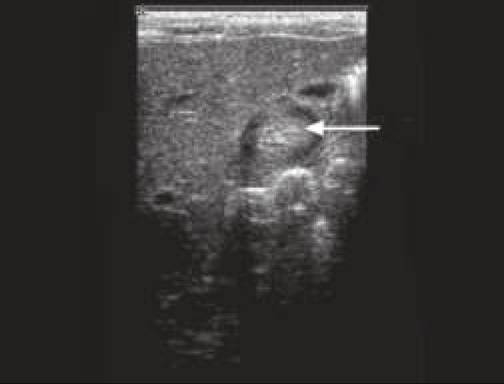
Fig. 14.13: Hirschsprung’s disease:
(A) Abdominal distension; (B) Barium enema.
TABLE 14.11: Congenital megacolon vs functional constipation
| Cong. megacolon | Functional constipation | |
| Clinical | ||
| Age of onset | lt;1 month | gt;1 year |
| Stools | Ribbons/pellets | Normal/hard |
| Diarrhea | Intermittent | None |
| Encopresis | Rare | Common |
| Failure to thrive | Yes | l#8739;No |
| Abd. distension | Yes | Minimal |
Per-rectal examination
| Anal tone | Tight | Patulous |
| Rectum | Empty | Fecoliths |
| Post-PR evacuation | Immediate | Late or none |
Investigations
| Ba. enema | Transition zone | No TZ |
| Internal sphincter* | Tight | Relax |
| Rectal biopsy | Absent ganglions | Normal |
*on anorectal manometry, PR: Per-rectal examination; TZ: Transition zone
D/D of Hirschsprung's disease includes other causes of constipation in newborns and young infants (Ch 14.4.4), specially—(a) functional or habitual constipation (Table 14.11), (b) hypothyroidism, and (c) anorectal malformations.
Management: Definitive management is essentially surgical, after pre-operative stabilization with-
(a) correction of fluid and electrolyte disturbances,
(b) treatment of acute enterocolitis with appropriate antibiotics, and (c) provision for adequate nutrition.
Surgical options depend on the length of aganglionic segment and general condition of newborn. Direct corrective surgery may be performed in cases with small lesions in good health, though most cases require
a two-stage procedure—immediate temporary colostomy followed by definitive repair after 6-12 months. Efforts are made to preserve anal canal and sphincter mechanisms to achieve continence. Various corrective procedures are used depending on the severity of lesion and experience of surgeons, including:
• Duhamel's pull-through operation, i.e. transabdominal or laparoscopic construction of a new rectum, by bringing down normally innervated colon behind the aganglionic segment.
• Boley's endorectal pull-through operation, i.e. stripping the mucosa of aganglionic segment and bringing down the normally innervated proximal colon through the residual muscular cuff.
• Classic Swenson's procedure, i.e. excision of involved segment with end-to-end anastamosis between proximal bowel and rectum, 1-2 cm above the dentate line, is no longer preferred.
• USS disease needs only the excision of a strip of rectal muscle, including internal anal sphincter.
• Hirschsprung's disease involving whole length of colon needs ileal-anal anastamosis.
Prognosis: With timely management, prognosis is usually excellent, though complications like- (a) fecal incontinence (b) leaks/stenosis at anastamotic site
(c) perineal abscesses/fistulas and (d) colostomy problems, e.g. enterocolitis are common.
14.9.3
More on the topic HIRSCHSPRUNG’S DISEASE:
- Pelvic Inflammatory Disease
- Cat Scratch Disease (Bartonellosis)
- CLINICAL EVALUATION OF GIT DISEASE
- Inflammatory Bowel Disease
- Agrawal M.. Textbook of Pediatrics. 3rd ed. — CBS Publishers,2025. — 973 p., 2025
- CAUSES OF DISEASE
- This chapter is about how to live with this disease and stay in one piece.
- ABDOMINAL MASS/LUMP
- CONGENITAL LUNG MALFORMATIONS
- Parkinson Disease