PERSISTENT DIARRHEA
Persistent diarrhea refers to “prolonged continuation of an acute diarrheal episode beyond 14 daysquot;, usually due to diarrhea-induced gut injury.
While two terms-persistent diarrhea and chronic diarrhea are often used interchangeably, later one is usually a manifestation of primary malabsorption defect-a heterogeneous group of congenital or acquired gut disorders, characterized by impaired digestion and/or absorption of ingested nutrients and discussed in next chapter 14.12.
Some important differences between persistent and chronic diarrhea are given in Table 14.19.
Etiopathogenesis: Some amount of transient gastrointestinal mucosal injury is inevitable in acute diarrhea, which usually recovers rapidly and spontaneously after cessation of primary insult.
Persistent diarrhea indicates—(a) excessive mucosal damage during acute phase, or (b) impaired repair during recovery, with or without persistence of infection.
Disaccharides (Lactose) intolerance is one of the leading cause of persistent diarrhea, discussed later in chapter.
TABLE 14.19: Persistent vs chronic diarrhea
| Persistent | Chronic (MAS) | |
| Duration | gt;2 weeks | Longer |
| Cause | Post-infective | Non-infective* |
| Common age | lt;2 years | Any |
| Malabsorption | Effect | Cause |
| Course | Persistent | Recurrent |
| Stools | Watery | Cause-specific |
| Dehydration | Common | Uncommon |
| Malnutrition | Risk factor | Effect |
*although secondary infection is common
Risk-factors for persistent diarrhea include—(a) younger age lt;2 years, (b) severe malnutrition, (c) vitamin A deficiency, (d) top-feeding, (e) bacterial diarrhea due to enteropathogenic organisms, (f) milk-protein allergy, (g) co-existing systemic infection.
Clinically, apart from persistent diarrhea, these cases also present with secondary complications, e.g. (a) dehydration, (b) dyselectrolytemia, (c) progressive malnutrition. Secondary lactose intolerance is common.
IMNCI classifies these cases as: (a) severe persistent diarrhea with dehydration, and (b) persistent diarrhea without dehydration.
Diagnostic evaluation in these cases aims to identify riskfactors for persistence of diarrhea and its complications. Specific tests for malabsorption (Ch 14.12) though frequently abnormal, are usually unnecessary in these cases, as malabsorption is the effect and not the cause of persistent diarrhea. Important diagnostic investigations include:
• Stool examination for pH and reducing sugar (secondary lactose intolerance), microscopy (parasitic/protozoal etiology) and cultures for unusual pathogens, e.g. spore-forming protozoa and Candida.
• Base-line evaluation for secondary effects, e.g. hemoglobin (anemia), serum electrolytes, blood sugar (hypoglycemia) and blood cultures to exclude systemic infection.
• Other investigations, e.g. colonoscopy are indicated only in cases with intractable diarrhea.
Management of persistent diarrhea includes—(a) correction of dehydration and dyselectrolytemia*, (b) treatment of co-infections and metabolic complications*, (c) nutritional management, and (d) micronutrient supplementation. (*as in acute diarrhea).
• Nutritional management is the cornerstone of therapy in persistent diarrhea, considering inevitable development of secondary malabsorption defects after prolonged mucosal injury. Lactose intolerance is the predominant absorption problem in these cases, while more severe cases may also develop fat intolerance. Protein absorption is often preserved till late stages.
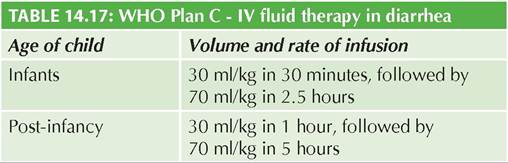
Fig. 14.17: Dietary plan for persistent diarrhea.
In infants lt;4 months, persistent diarrhea is unlikely and continuation of breastfeeding is the best option in these cases.
In top-fed children of this age group, a lactose-free formula may be used for 1-2 weeks to overcome problem of lactose intolerance.In older infants and children, dietary management depends on the amount of lactose-load that they can tolerate. Most children, despite moderate lactose intolerance, tolerate low-lactose diet, if given in small frequent feeds.
Accordingly, a step-wise approach is recommended in dietary management of persistent diarrhea (Fig. 14.17) with three different types of therapeutic diets (Table 14.20) to provide nutrition, till recovery. Each diet differs in its lactose or other carbohydrate content. Success or failure of each step is assessed by change in stool frequency and weekly weight gain.
• Diet plan A (Low-lactose diet) is recommended as initial therapy to all but very severe cases and should be started as soon as baby starts accepting oral feeds. It includes feeding with low-lactose foods, e.g. milkrice gruel, milk-sooji gruel, curd-rice, puffed rice, dalia, etc. in small, frequent (6-7) feeds, to provide ~110 cal/kg/day initially, which may be further gradually increased to ~150 cal/kg/day by 2 weeks. Diet A may also be given via nasogastric tube in reluctant children. Animal milk must be reduced to lt;50-60 ml/kg.
• Diet plan B (Lactose-free diet) is needed in children, who do not improve on diet A. This is a complete lactose-free diet with low-starch content, e.g. a cereal and glucose mixture, with egg or commercial proteins. Animal as well as human milk is eliminated totally.
• Diet plan C (Monosaccharide-based diet) is rarely required in lt;10% cases, who do not recover on diet B. It contains only glucose along with egg/chicken/
TABLE 14.20: Representative diets in persistent diarrhea
| Diet A | Diet B | Diet C | |
| Milk | 1/3 katori | - | - |
| Egg or (chicken)* | - | 1frac34; (2frac12;) tsf | 2frac12; (5) tsf |
| Puff rice powder’ | 4 tsf | 2 tsf | - |
| Sugar | frac12; tsf | frac34; tsf | frac34; tsf |
| Oil | frac12; tsf | 1 tsf | 1 tsf |
| Water (add to) | 100 ml | 100 ml | bgcolor=white>100 ml|
| Calories | 96 | 78 | 60 |
| Proteins | 2.4 | 2.3 | 3 |
*volume in parentheses is for chicken, #can be substituted by cooked rice
commercial proteins, with added oil. Cereals are also completely eliminated from the diet, along with milk.
Change-over from one to other diet plan depends on clinical response, as follows:
Step-up (Diet Agt;Bgt;C) is indicated in cases with:
(a) marked increase in stool frequency (gt;10#8725;day) after at least 48 hours of initial diet, (b) appearance of dehydration anytime, or (c) failure of weight gain till 7th day. In rare cases of failure despite diet C, total parenteral nutrition is indicated.
Step-down (diet Cgt;Bgt;Agt; home diet) should be allowed only after 7 days of satisfactory clinical response, to permit enough time for mucosal recovery.
A baby is fit for discharge, only when: (a) stools are of normal consistency with frequency of lt;2/ day,
(b) home-diet has been introduced and well tolerated,
(c) weight gain is satisfactory.
• Micronutrient supplementation is essential in all cases of persistent diarrhea, usually in double doses of regular RDA. However, iron should be added only after control of diarrhea.
Essential micronutrient supplements include: (a) single dose of Vitamin A 2,00,000 IU (1,00,000 IU in infants), and (b) oral zinc 20 mg/day (10 mg/day lt; 6 months of age) for 2 weeks. Some workers also advise potassium and magnesium supplements in early stages, given orally or parenterally.
Disaccharide (lactose) intolerance: Disaccharidase enzymes, essential for digestion/absorption of various carbohydrates are located in the brush borders of epithelial cells of small intestinal mucosa. While congenital deficiency of these enzymes is very rare (commonest being sucrase-isomaltase deficiency), secondary deficiency is common due to acquired insults to intestinal epithelium, e.g. in diarrhea, malnutrition and prolonged antibiotic therapy.
Lactose intolerance is the commonest cause of persistent or intractable diarrhea in Indian children, due to deficiency of lactase-an enzyme, essential for lactose absorption.
Etiology of lactose intolerance may be divided into three categories:
a. Secondary lactase deficiency due to transient mucosal injury in acute diarrhea, malnutrition or prolonged antibiotic therapy is the commonest cause of temporary lactose intolerance in childhood.
b. Congenital or inherited lactase deficiency is known but extremely rare.
c. Ontogenic lactase deficiency: Normally, lactase levels rise in late fetal life, remain high during first 2-3 years and then decline gradually due to reducing milk intake in diet. Hence, ontogenic lactose intolerance is common in preterms, early infancy and children gt;3 years. Indians have lower lactase levels than western population, probably due to less milk consumption.
Pathogenesis: In lactase deficiency, lactose cannot be hydrolyzed into absorbable monosaccharides, i.e. glucose and galactose. Consequent accumulation of unabsorbed sugars in distal intestines leads to:
• Hyperosmolarity of luminal contents causing osmotic diarrhea, and
• Fermentation of sugar into gases (H2, CO2, and methane) and organic acids, causing gaseous abdominal distension, borborgymi and acidic, frothy stools.
Clinically, most cases present as unusual persistence of diarrhea after an acute viral episode, with:
• Watery, frothy, explosive stools,
• Bloating abdominal distension and borborgymi,
• Perianal excoriation, due to acidic stools.
Laboratory diagnosis depends on:
• Acidic pH of stools (normally alkaline),
• Reducing sugars in stools on Benedict test*
• Breath-hydrogen test revealing high hydrogen content in expired air (gt;15 ppm) due to excess carbohydrate fermentation in gut.
• Enzyme assays on mucosal biopsy, though rarely necessary.
*Benedict test: Add 8-10 drops of saline-stool suspension in 5 ml of Benedict reagent and heat the mixture. A change of color from blue to orange or brick-red indicates presence of reducing sugar. Prior hydrolysis of stool sample with hydrochloric acid is needed to detect presence of sucrose, which is not a reducing sugar.
Management of these cases includes:
• Reduction in lactose load: Lactose intolerance is almost
always secondary, transient and partial. Hence, management of these cases includes partial or complete withdrawal of milk for 5-7 days, to allow recovery of damaged brush borders and enzyme activity. Although most cases tolerate low-lactose diet (Diet A), severe/refractory cases may need lactose- free diet (Diet B) for 2-3 days, followed by gradual re-introduction. Soya-milk can also be used during this period.
• Supplementation of lactase enzyme in diet, by adding specific lactase preparation (2-3 drops in one litre of milk) 2-3 hours before consumption is useful, provided the milk is not re-heated before consumption. Use of yogurt/curd, which contains lactase-producing bacteria, is also beneficial.
14.12
More on the topic PERSISTENT DIARRHEA:
- Bahrain
- Agrawal M.. Textbook of Pediatrics. 3rd ed. — CBS Publishers,2025. — 973 p., 2025
- AVIAN CHOLERA