Conclusion
The view we have been led to is summarized in Figure 6.2. An arrow with a “Yes” beside it indicates the condition in the box from which it originates is met. An arrow with a “No” beside it indicates the condition in the box is not met.
A box with rounded corners contains conditions. Square boxes contain conclusions about collective and individual responsibility. A path through a series of conditions indicates the conjunction of their being met or not met.We ascribe collective backwards-looking moral responsibility to a group, in the first instance, for something that has been done when
(a) all (or, perhaps in institutional cases, some) members of the group, and no one else, made contributions (of a relevant sort) to bringing it about;
(b) it was a moral harm;
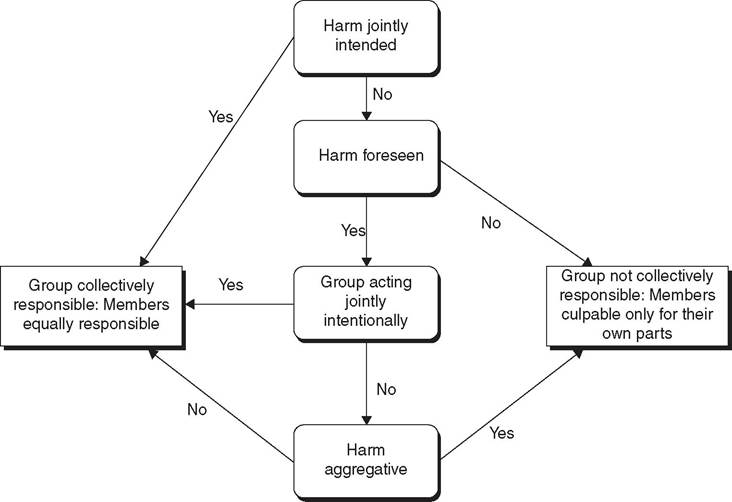
Figure 6.2 Conditions and Consequences of Collective Responsibility.
(c) its having been done by a single individual, knowingly or under conditions under which she should have known what she was doing, would ground the claim that she was morally responsible for it;
AND
(d) (i) they intended to do it;
OR
(ii) they foresaw (or should have foreseen) it as a side effect ofsomething they intended to do; OR
(iii) it was non-aggregative and they foresaw (or should have foreseen) it as a side effect of something they were doing nonintentionally.
Responsibility distributes to members of the group on the basis of degree of culpability. In the case of collective backwards-looking moral responsibility for a harm, each member of the group is culpable to the degree he would be if acting alone regardless of the size of the causal contribution and regardless of whether it was overdetermined. Thus, the surprising result of this study is that the rejection of the DILUTION PRINCIPLE and the ABSOLUTION PRINCIPLE for collective responsibility leads directly to the view that the degree of responsibility in genuine cases of collective responsibility is indivisible.
It passes undiminished to the individual members of the group, no matter how large it is.This result may seem incredible. Is each of us in affluent or industrialized societies who contributes to global warming really fully to blame for its consequences and called on to act in light of the magnitude of the full harm? And what exactly are we called upon to do? If we can’t do anything to stop it, are we really called upon to do something? The answer is complicated in this case for at least two reasons. First, there is not only one moral demand or other demand on us. We have many obligations to others both in particular and in general, and many others that are connected with collective action, on-going or potential, together with our life projects. We are called on to balance all of them as best we can, with limited informational and computational resources. Second, we must consider what are the most effective means to the end of reducing the accumulations of greenhouse gases and addressing other conditions that cause harm that are the side-effects of massive unintentional collective activity. Effective response requires collectivizing. Yet there is already a vehicle for collectivizing action for the public good, namely, governmental action. Thus, the single most effective thing that individuals can do is to try to influence governmental policy to respond effectively to anthropogenic climate change. A primary and minimal duty then is to contribute to effective governmental and intergovernmental policy to address especially unintended harmful side-effects of human activity. This is something that it is in everyone’s power to do in a democracy by voting for representatives who will advocate for policy changes that address recognized harmful side-effects of human activity. If everyone did their minimal duty, we would respond effectively. Anyone who does not therefore cannot be relieved of responsibility for the consequences.
Acknowledgments
I would like to thank my colleagues Kate Abramson and Allen Wood, and the editors of this volume, Saba Bazargan-Forward and Deborah Tollefsen, for helpful discussion and comments, as well as the audiences at presentations of the ideas in this chapter at the University of California, Merced, March 13, 2017; the College of Charleston, March 23, 2017; and Indiana University, September 14, 2018.
Notes
1 See Sinnott-Armstrong 2005 for some of the puzzles in the case of climate change.
2 There is a conceptual tie between moral responsibility and moral reasons for action, and hence between holding morally responsible and the possibility of change of behavior. Darwall expresses the general idea: “In a slogan: the moral sense of ‘responsible for' is conceptually tied to ‘responsible to' (whether to individuals or to one another as members of a moral community)” (Darwall 2008: 68). Being responsible to others implies an obligation and so gives one moral reasons for action in response to being found responsible for something. This connects being responsible to the possibility of change of behavior in agents who are responsive to moral reasons.
3 For some responses to the claim that corporations per se are suitable subjects for ascription of moral responsibility, see Ashman and Winstanley 2007; Hasnas 2012; Garrett 1989; Ronnegard 2015;Velasquez 1983; 2003.
4 Many organizations delegate authority to individuals or subgroups to act for, or in the name of, the group. The role occupiers are the locus of moral responsibility for those organizational actions over which they exercise control. Sometimes moral responsibility rests wholly with the person or subgroup. In this case, their failing their role responsibilities screens off the other members of the group from moral responsibility. Sometimes others bear moral responsibility, e.g., those who execute decisions they recognize as harmful, careless, negligent, etc., those who fail oversight responsibilities, or those who assign roles irresponsibly.
5 While the principle as stated is trivial, it serves as a schema we can apply on the basis of more substantive considerations in particular cases.
6 Ultimately it is not important whether the agency of everyone in an organization is involved when we say it acts. What is important here is that the basis for saying the organization acts is that all or some of its members have acted in their roles in the organization—see Tollefsen 2015 and Tuomela 1995: ch.
5.7 When I hire an assassin to kill someone, he and I are both equally and fully responsible for the death. But in this case my plan does involve other agents contributing, and in more direct ways than I do. The same goes if I hire a team of assassins. I am still equally and fully responsible.
8 One objection to we-intending being directed at what the group does is that it requires us to think we will make others cooperate, so that joint action becomes mutual coercion (Stoutland 1997; Velleman 1997). All it requires, however, is that one think that what one does, given what else one expects will most likely happen, will bring about what one aims at (Bratman 1999; Ludwig 2016: ch. 14.1).
9 One reason might be that someone else would have done it if I had not, though if I do it, no one else contributes. In this case I would be fully responsible even though it would have occurred anyway. But in the present case it is not that counterfactually another cause would have taken my place, but just that my contribution could be subtracted without replacement and it would still have happened.
10 Sometimes a gun with a blank or wax bullet, a “conscience round,” is distributed randomly to one member of the firing squad with the intention of diffusing responsibility or at least allowing each member of the firing squad to think that he is not responsible for the death. Does this relieve the person who fires the conscience round (or any of the others) of moral responsibility for the death? No. Each member of the firing squad shares an intention with the others to kill the victim, and intends to make a contribution to their doing so, the same contribution—firing a gun aimed at the victim which has a 1/10 (e.g.) chance of having the conscience round—and so to contribute to a sufficient condition for the death of the victim. My thanks to Allen Wood for raising this case.
11 What about the doctrine of double effect? The doctrine of double effect only applies to foreseen but unintended harm resulting from intending something morally good that outweighs the harm.
The workmen are not intending to do something morally good but morally neutral; and whatever good outcomes there might be do not outweigh the harm.References
Ashman, I., and Winstanley, D. (2007) “For or Against Corporate Identity? Personification and the Problem of Moral Agency,” Journal of Business Ethics 76(1):83-95.
Bratman, M. (1992) “Shared Cooperative Activity,” The Philosophical Review 101(2):327-41.
Bratman, M. (1999) Faces of Intention: Selected Essays on Intention and Agency, Cambridge: Cambridge University Press.
Bratman, M. (2014) Shared Agency: A Planning Theory of Acting Together, Oxford: Oxford University Press.
Copp, D. (2006) “On the Agency of Certain Collective Entities: An Argument from Normative Autonomy,” Midwest Studies in Philosophy: Shared Intentions and Collective Responsibility XXX:194—212.
Copp, D. (2007) “The Collective Moral Autonomy Thesis,” Journal of Social Philosophy 38(3):369-88.
Copp, D. (2012) “The Collective Moral Autonomy Thesis: Reply to Ludwig and Miller,” Journal of Social Philosophy 43(1):78-95.
Darwall, S. (2008) The Second Person Standpoint, Cambridge: Harvard University Press.
Davidson, D. (2001) Essays on Actions and Events (2nd edn), Oxford: Clarendon Press.
French, PA. (1979) “The Corporation as a Moral Person,” American Philosophical Quarterly 16(3):207-15.
French, PA. (1984) Collective and Corporate Responsibility, New York: Columbia University Press.
French, PA. (1995) Corporate Ethics, Fort Worth: Harcourt Brace College Publishers.
Garrett, J.E. (1989) “Unredistribu table Corporate Moral Responsibility,” Journal of Business Ethics 8(7):535-45.
Gilbert, M. (2009) “Shared Intention and Personal Intentions,” Philosophical Studies: An InternationalJournal for Philosophy in the Analytic Tradition 144(1):167-87.
Gilbert, M. (2013) Joint Commitment: How We Make the Social World, New York: Oxford University Press.
Hasnas, J. (2012) “Reflections on Corporate Moral Responsibility and the Problem Solving Technique of Alexander the Great,” Journal of Business Ethics 107(2):183-95.
Johnson, B.L. (2003) “Ethical Obligations in a Tragedy of the Commons,” Environmenta lValues 12(3): 271-87.
List, C., and Pettit, P. (2011) Group Agency: The Possibility, Design, and Status of Corporate Agents, Oxford: Oxford University Press.
Ludwig, K. (2007) “The Argument from Normative Autonomy for Collective Agents,” Journal of Social Philosophy, Special Issue: Collective Responsibility, 38(3):410-27.
Ludwig, K. (2016) From Individual to Plural Agency: Collective Action 1, Oxford: Oxford University Press.
Ludwig, K. (2017) From Plural to Institutional Agency: Collective Action 2, Oxford: Oxford University Press.
Mackie, J.L. (1974) The Cement of the Universe: A Study of Causation, Oxford: Clarendon Press.
Miller, S. (2001) Social Action: A Teleological Account, Cambridge: Cambridge University Press.
Pettit, P. (2007) “Responsibility Incorporated,” Ethics 117(2):171-201.
Pettit, P. (2009) “Corporate Responsibility Revisited,” Netherlands Journal of Legal Philosophy 2:159-76.
Ronnegard, D. (2015) The Fallacy of Corporate Moral Agency, Netherlands: Springer.
Searle, J. (1990) “Collective Intentions and Actions,” in P.R. Cohen, J. Morgan, and M.E. Pollack (eds), Intentions in Communication, Cambridge: MIT Press, 410-15.
Sinnott-Armstrong, W (2005) “It's Not My Fault: Global Warming and Individual Moral Obligations,” in W Sinnott-Armstrong and R. Howarth (eds), Perspectives on Climate Change, Elsevier, 221-53.
Stoutland, F. (1997) “Why are Philosophers of Action so Anti-Social?” in L. Alanen, S. Heinamaa, and T. Wallgreen (eds), Commonality and Particularity in Ethics, New York: St. Martin's Press, 45-74.
Tollefsen, D. (2015) Groups as Agents, Malden, MA: Polity Press.
Tuomela, R. (1995) The Importance of Us: A Philosophical Study of Basic Social Notions, Stanford: Stanford University Press.
Tuomela, R. (2005) “We-Intentions Revisited,” Philosophical Studies 125:327-69.
Tuomela, R. (2013) Social Ontology: Collective Intentionality and Group Agents, New York: Oxford University Press.
Tuomela, R. and Miller, K. (1988) “We-intentions,” Philosophical Studies 53: 367-89.
Velasquez, M. (1983) “Why Corporations Are Not Morally Responsible for Anything They Do,” Business and Professional Ethics Journal 2(3):1-18.
Velasquez, M. (2003) “Debunking Corporate Moral Responsibility,” Business Ethics Quarterly 13(4): 531-62. Velleman, D. (1997) “How to Share an Intention,” Philosophy and Phenomenological Research 57(1):29-49.