Connective tissue
Connective tissue is responsible for supporting and holding all the organs and tissues of the body in place. It also provides the transport system within the body, carrying nutrients to the tissues and waste products away.
Connective tissue consists of cells embedded in an extracellular matrix or qroimd substance. The properties of this ground substance depend on the type of connective tissue. There arc many types of connective tissue which, in order of increasing density are:
???????iβ?Λβ??∙*β Λ Ob W e bear weight (Fig. 2.4). It is composed of cells (known as chondrocytes) and fibres within a gel-like ground substance. Cartilage has no blood supply and its nutrition is supplied by the fibrous sheath or perichondrium that surrounds it.
Bone
Bone is a living tissue that is capable of remodelling and repairing itself when damaged. It is a specialised type of connective tissue, which provides the rigid supportive framework of the body and forms a system of levers for locomotion.
Bone consists of an extracellular matrix or ground substance that contains the protein osteonectin and collagen Iibres. Together, these form osteoid within
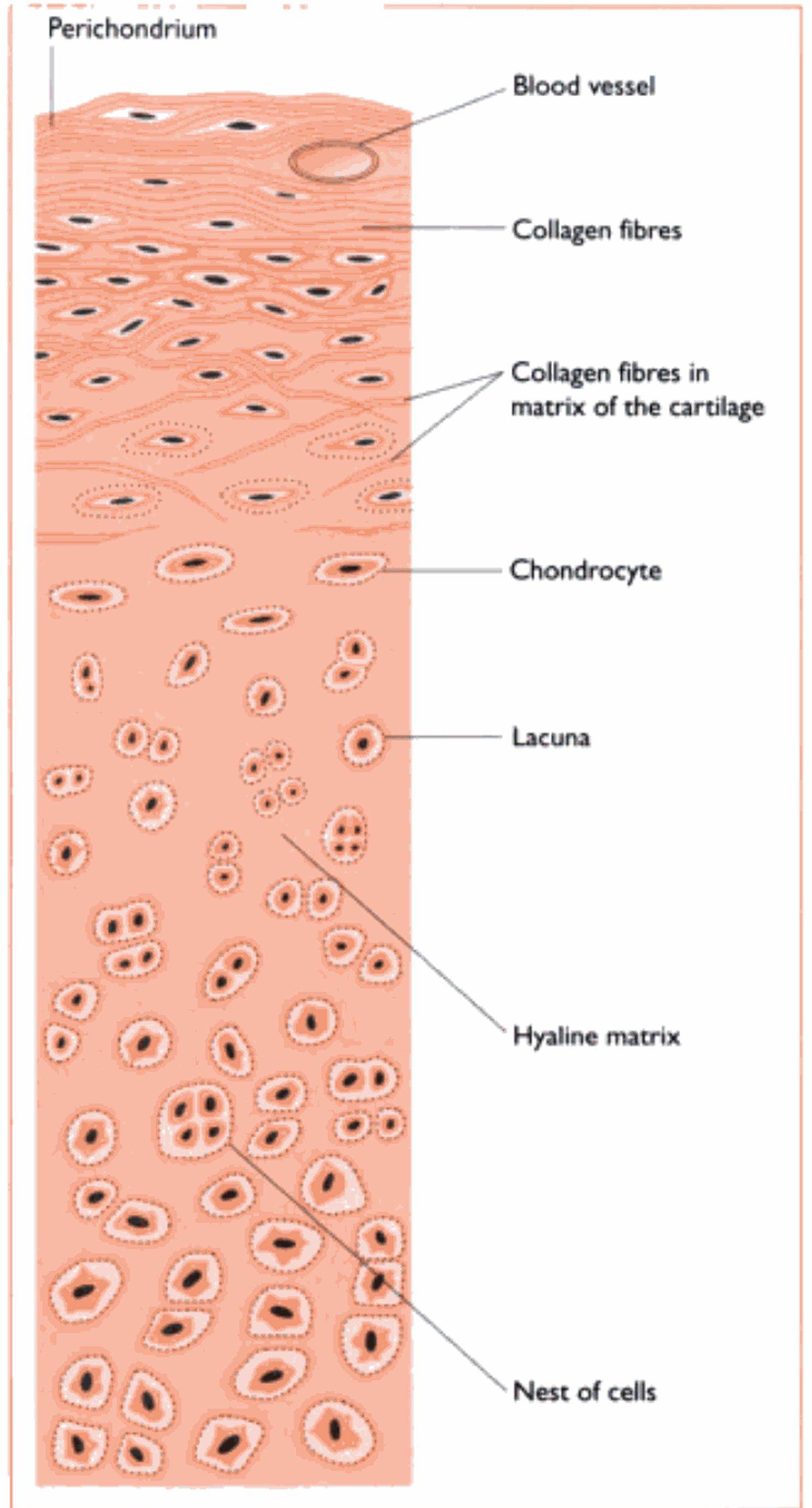
Fig. 2.4 The structure of hyalpleura lines the inside of the thoracic cavity but is named according to which part of the walls it covers, i.c. the diaphragmatic pleura covers the diaphragm and the costal pleura covers the ribs. The thoracic cavity is divided into two pleural cavities by a continuation of the parietal pleura. Each cavity contains one of the lungs and serous pleural Iluid. The lungs Ihcmsclvcs arc covered in visceral pleura, called the pulmonari/ pleura. Between the two pleural cavities, the thorax is divided into right and left sides by a vertical connective tissue septum called the mediastinum. which is covered in the Hicdiustinul pleura. The mediastinum is the potential space formed by the double layer of parietal pleura that separates the two pleural cavities. It contains the pericardial cavity, containing the heart, aorta, trachea, oesophagus and the thymus gland in young animals.
The pericardial cavity lies within the mediastinum in the thoracic cavity and is the space in which the heart sits. The heart is contained within the pericardium, which is a double Iavered membranous sheath that completely surrounds it. Between the two layers of membrane is serous fluid that acts as a lubricant, enabling the heart Io beat freely.