Eosinophilic inflammation
Eosinophilic inflammation has been reported, either solely within the liver or associated with hypereosinophilic syndrome (Brellou et al., 2006). Typical causes of peripheral eosinophilia (parasitic, allergic, and atypical processes such as paraneoplastic reactions or endocrinopathies) are thought to play a similar role in the liver (Figures 9.31, 9.32).
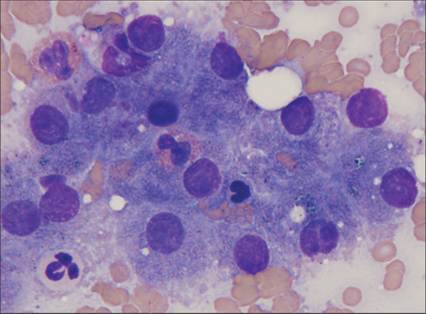
Figure 9.31 Hepatic aspirate from a domestic shorthair cat with eosinophilic inflammation in the spleen, duodenal wall, and jejunal lymph node. Eosinophils are consistently noted within clusters of hepatocytes and free in the background. Two neutrophils are also present in this image. A peripheral blood eosinophilia was not present in this patient, an important confirmation as peripheral eosinophilia can cause intrusion of eosinophils into the sinusoidal spaces (Wright–Giemsa, 1,000? magnification).
id=fig9.32.jpg class="lazyload" data-src="/files/uch_group75/uch_pgroup311/uch_uch7426/image/image464.jpg" alt=fig9.32.jpg>
Figure 9.32 Hepatic sinuses are clogged with eosinophils in this canine patient with a marked eosinophilic hepatitis (Wright–Giemsa, 1,000? magnification).
Parasitic infections
Parasites are infrequently observed in hepatic samples in the dog and cat. Cestode infection has been documented in canine liver cytology (Brosinski et al., 2012; Patten et al., 2013). Toxoplasma gondii and other Sarcocystids have been reported in hepatic cytologies as have Echinococcus spp., Heterobilharzia spp., Hepatozoon spp., Platynosomum spp., and Cytauxzoon spp., among others (van den Ingh et al., 2006a, b; Aschenbroich et al., 2012; Koster et al., 2016). Dogs with heavy heartworm burdens can have microfilaria on hepatic cytology; this is an indication of blood contamination, not the true presence of the parasite specifically in the liver (Figure 9.33).
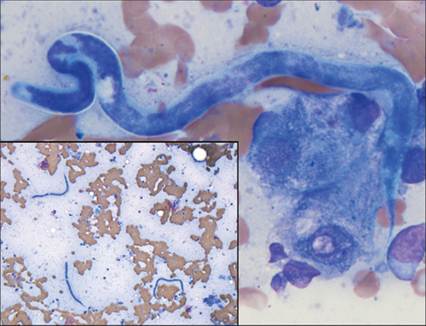
Figure 9.33 A microfilaria’s tail appears to wind between hepatocytes. Two small lymphocytes are also noted. Inset shows a 200? field with multiple microfilaria (Wright–Giemsa, 1,000? magnification).