Gastric Candidiasis
Candida pintolopesii (formerly Torulopsis pintolopesii) is a yeast that inhabits the surface mucosa of the glandular stomach of normal mice and rats (Fig. 1.81). The yeast Candida albicans is frequently present as a member of the normal flora of the alimentary tract in laboratory rodents.
When microscopic examination of the murine stomach reveals scattered pseudohyphae in the keratinized epithelium of the forestomach, it is usually regarded as an incidental finding. However, there have been reports of extensive gastric candidiasis with mortality in immunocompromised mice. These mice have thickening of the squamous portion of the stomach with necrotic debris adherent to the surface forming a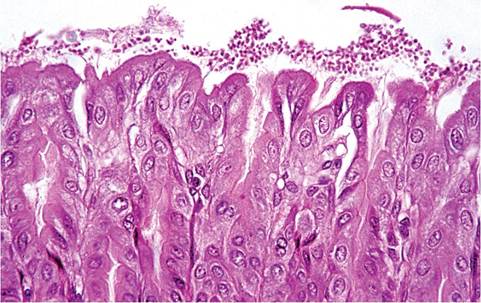
FIG. 1.81. Candida pintolopesii yeast forms populating the surface of the glandular stomach of a normal mouse.
pseudomembrane. There is marked epithelial hyperplasia with hyperkeratosis and leukocytic infiltration. The typical filamentous structures with pseudohyphae formation are readily visualized with PAS or silver stains. T-cell-deficient mice are particularly at risk.
More medical literature on Medic.Studio
More on the topic Gastric Candidiasis:
-
Infectious diseases -
Internal diseases -
Obstetrics and Gynaecology -
Pediatrics -
Veterinary medicine -
-
Conflictology -
Ecology -
Economy -
Finance -
History -
Law -
Medicine -
Philosophy -
Religious studies -