Glomerulonephropathy
Degenerative renal disease represents an important cause of morbidity and mortality in older hamsters. The disease occurs more frequently in females than in males. The etiology and pathogenesis of the disease is poorly understood.
The disease in the hamster has been interpreted to be similar to chronic progressive nephropathy in aged rats. It has been suggested that there is a direct relationship between the concentration of dietary protein and the severity of the renal lesions. Proteinuria is present, but no IgG or amyloid has been found in the glomeruli. Renovascular hypertension has been suggested as a possible cause of the disease.Pathology
Affected kidneys are pale and granular in appearance, with irregular cortical depressions (Fig. 3.36). There may be radiating cortical scarring evident on the cut surface. On microscopic examination, glomerular changes vary from segmental to diffuse thickening of basement membranes, with deposition of eosinophilic material. In severely affected animals, there may be complete obliteration of glomerular structures. In advanced cases, there is often concurrent amyloid deposition on glomerular basement membranes and dilation and atrophy of
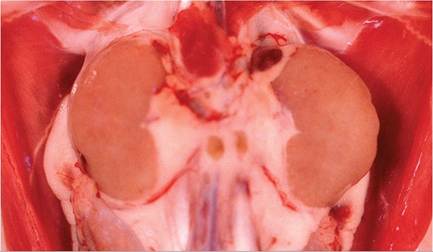
FIG. 3.36. Adult hamster with advanced glomerulonephropathy. Note the pale, irregular cortical surfaces.
degenerating tubules. Some tubules may be lined by poorly differentiated epithelial cells, and epithelial changes in other tubules vary from flattening to degeneration. There is a variable degree of interstitial fibrosis in a diffuse to segmental pattern, with thickening of basement membranes and minimal inflammatory cell response. Proteinaceous, eosinophilic casts may be present in many tubules. Fibrinoid change may be present in the media of intrarenal vessels, but this is not a consistent finding.
Diagnosis
Differential diagnoses include toxic nephropathy and uncomplicated amyloidosis. Amyloid deposition frequently occurs as a concurrent event, particularly in advanced cases of glomerulonephropathy.