NURSING, FOOTBATHS, DRESSINGS AND BLOCKS
So far this chapter has dealt only superficially with treatments. The next section examines some of the general treatments in more detail and discusses the importance of nursing.
Nursing
Lame cows obviously find walking difficult. They are much less able to compete with the rest of the herd, especially if they are at the lower end of the social dominance scale. In addition, they find it difficult to manoeuvre in and out of the cubicles. Cubicles are not easy to use at the best of times and if a cow is not fully mobile, they are even more difficult to negotiate. The result is that lame cows either spend longer standing up or, when down, they spend a long time lying and do not feed enough. This is one of the reasons for the marked
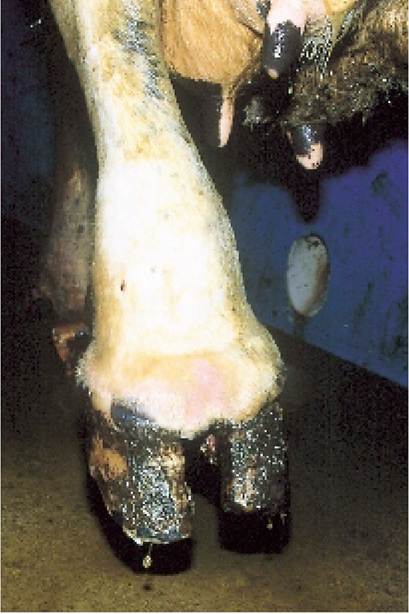
Plate 9.56. Severe pedal arthritis. This cow would not even put her foot to the ground. The degree of swelling indicates severe infection.
weight loss. Ideally lame cows should be transferred into a straw yard, where it is easier for them to lie down and get up again and where there is perhaps less competition for food. Herdsmen have commented that moving cows from cubicles into a straw yard results in an increase in yield in as little as 24 hours, especially in heifers.
Footbaths
Footbaths are an excellent preventive measure for lameness, and cows should be walked through once a week during the winter housing period. Solutions of 5% formalin or 2.5% copper sulphate or zinc sulphate have been used, as have a variety of disinfectants. The main objective of a footbath is to clean and disinfect the foot and in so doing it should help to reduce the incidence of conditions such as: • foul
• slurry heel
• growths or corns
• digital dermatitis
Formalin also has a drying action on the foot. However, it is unpleasant to handle and its use is not permitted in some countries.
Similarly, copper sulphate baths may not be permitted by some environmental authorities because of the risk of pollution. Often two baths are used, the first containing water to wash and clean the feet.0
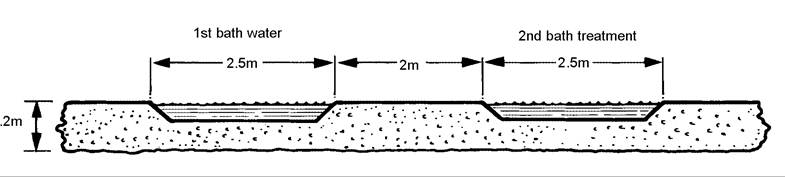
Figure 9.22. Two footbaths are sometimes used, the first to wash the feet and the second containing the active ingredient.
The cows next walk over a concrete strip to drain off excess water before walking into the second bath containing the active chemical, as shown in Figure 9.22. The liquid in the bath should be only 80-100 mm deep, as only the claws need to be immersed. Too great a depth, particularly if formalin is being used, can lead to damaged skin on both feet and teats.
Antibiotic footbaths are needed for the control of digital dermatitis. The frequency is dependent on the severity of disease but once a month is usually adequate. Many antibiotics will work, with the most commonly used being lincomycin (1 g/litre), lincospectin 150 (1.0g/litre) or oxytetracycline (6 g/litre). Lin- comycin is totally degraded in the environment within 12 hours. Other treatments used include tylosin, ery- thomycin, or tiamulin, or twice weekly through a mixture of 40 g/litre copper sulphate plus 60 g/litre salt.
For best effects cows should have their heels cleaned by spraying them with water as they enter the parlour. Excess water then drains off during milking, after which the cows should exit through a footbath and into a clean environment, with the whole herd being bathed on the same day to avoid cross-contamination. If done carefully, a single passage through an antibiotic footbath will dramatically reduce the incidence of lameness due to digital dermatitis in as little as 24 hours. Unfortunately it does not eliminate infection from a herd.
Foot Dressings and Blocks
Opinions vary on the need to apply a bandage and dressing to an exposed corium, for example following the trimming out of a sole ulcer or a white line lesion and under-run sole. There appears to be a minimal risk of infection from the environment penetrating the corium, even if cows with extensively under-run soles are allowed to walk back out into the slurry.
It is surprising how quickly the exposed corium becomes covered by a layer of new horn. On the other hand, there are several potential disadvantages of applying a dressing, any of which may retard healing. These include:• Unless changed almost daily, the dressing will impede drainage. Pus and infection may spread, producing further under-run horn.
• Dressings prevent exposure to air, and air often promotes healing.
• The presence of a bulky dressing on the sole means that the affected sole becomes weightbearing. This could make sole ulcers worse and certainly cannot be beneficial to the production of new horn.
• Astringents, sometimes used to ‘burn back’ proud flesh on a sole ulcer, discourage the formation of the new horn which is so badly needed to cover the sole.
At one stage I almost always applied a dressing. Now I rarely do so. Dressings may be used to control haemorrhage, or on the stump of an amputated digit, but otherwise I doubt if the extra cost of a dressing produces any additional benefits.
On the other hand, the use of a block applied to the sound claw is an excellent practice, as it both promotes healing and considerably improves the welfare of the cow. There are a variety of devices available, for example:
• tie-on shoes and boots
• nail-on blocks
• blocks and shoes which are glued on Tie-on shoes are the least popular. They are difficult to fix and by encasing the whole foot keep it damp and can retard healing.
Nail-on blocks are used successfully in skilled hands, although the sole of the claw to be blocked needs to be flat. They are cheap and fast to apply. Personally I am not keen on making nail holes through the wall of the sound claw and although I have used them, I prefer the glue-on blocks.
Wooden blocks, rubber blocks and PVC shoes are all available and can be glued onto the sound claw. All have their advantages and disadvantages. At the time of writing I find the PVC shoe (‘Cowslip’, Giltspur UK) the best to use in most cases.
It is easy to apply, the glue sets quickly even on a cold winter’s day and because the shoe is attached to the wall and not just the sole, it gives better support and durability.For all the glue-on blocks, the sound claw should be scraped totally clean and dry using a hoof knife, making sure that you do not touch it with your fingers. Access to the inner wall can be improved by forcing the claws apart with a small roll of paper towel. With the PVC shoe the glue is mixed in the shoe until it forms a paste, as in Plate 9.57. Wait until it is just starting to set and then push the shoe as far back towards the heel as possible (Plate 9.58). It is very important that the shoe or block supports the heel; otherwise the cow rotates backwards on the sound claw, leading to discomfort and very rapid wearing of the block. Cows with large claws should be trimmed in advance to ensure a good fit, or if this is not possible, use a wooden block (Demotec Ltd). Glue- on blocks should stay on for two or three months, by which time most foot problems have healed. The PVC shoes can easily be removed by clipping around their outer wall with hoof clippers.
id="Picutre 403" class="lazyload" data-src="/files/uch_group75/uch_pgroup311/uch_uch7293/image/image401.jpg">
Plate 9.57. Liquid being added to powder in a PVC shoe (‘Cowslip', Giltspur UK Ltd).
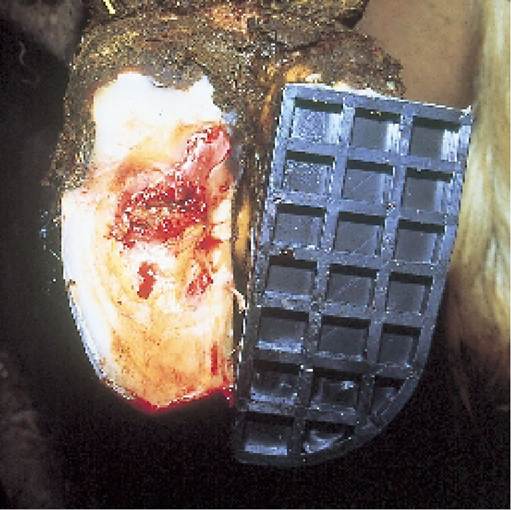
Plate 9.58. The Cowslip shoe needs to be pushed well back to provide adequate support for the heel.
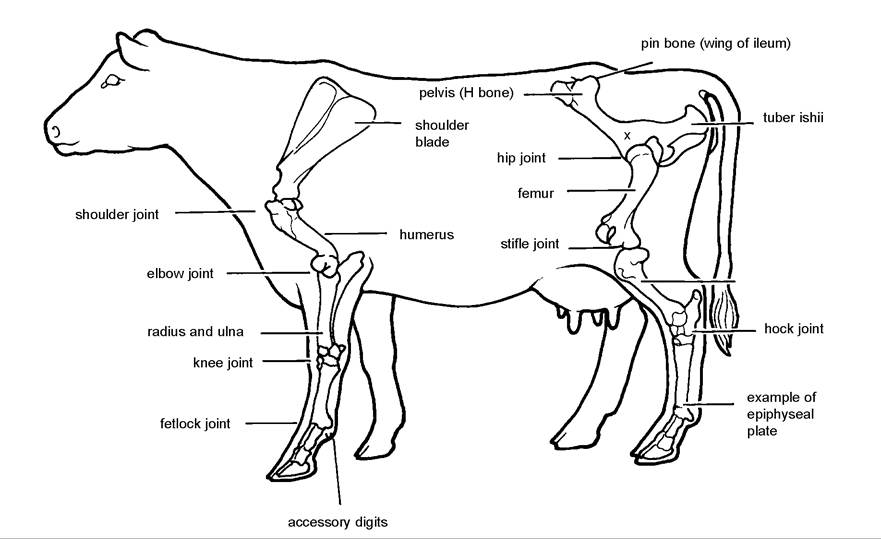
Figure 9.23. The bones and joints of the limbs.