Synovial joints
Synovial joints or diarthroses allow a wide range of movement. In synovial joints, the bones are separated by a space Iilled with synovial fluid known as the joint cavity (Fig. 3.22).
Λ joint capsule surrounds the whole joint; the outer layer consists of fibrous tissue, which serves as protection, and the joint cavity is lined by the synovial membrane, which secretes synovial fluid. This lubricates the joint and provides nutrition for the hyaline articular cartilage covering the ends of the bone. Synovial fluid is a straw coloured viscous Iluid that may be present in quite large quantities in large joints, especially in animals that have a lot of exercise.Some synovial joints may have additional stabilisation from thickened Iiyamcnts within the Iibres of the joint capsule. These are most commonly found on either side of the joint, called collateral ligaments. However, other synovial joints have stabilising ligaments attached to the articulating bones within the joint - these are known as intracapsular ligaments and examples include the cruciate ligaments w ithin the StifIejointtFig. 3.2 3).
A few synovial joints possess one or more intraarticular Iibrocartilaginous discs or menisci w ithin the joint cavity. These are found in the stifle joint - it has two crescent shaped menisci - and in the temporomandibular joint between the mandible and the skull. These structures help to increase the range of movement of the joint and act as ‘shock absorbers.* reducing wear and tear.
Synovial joints allow considerable freedom of movement betwreen the articulating bones, the extent of which depends upon the type of synovial joint. The movement allowed by a synovial joint may be in a single plane only, or in multiple planes.
The range of movements that are possible in synovial joints are:
Flexionlextension - these are antagonistic movements of a joint.
- Flexion reduces the angle between two bones, i.e. bends the limb
- Extension increases the angle between two bones, i.e. straightens the limb
Abductionlodduction - these movements affect the whole limb:
- Abduction (meaning to ‘take away’) moves a body part σwσy from the median plane or axis. e.g. moving the leg out sideways
- Adduction moves a body pan back towards the central line or axis of the body, e.g. moving the leg back to standing position
Rotation - the moving body pan ‘twists’ on its own axis. i.e. it routes either inwardly or outwardly Grcumduction - the movement of an extremity, i.e. one end of a bone, in a circular pattern Giidinglsliding - the anicular surfaces of the joint slide over one another
Protraction - the animal moves its limb cranially, i.e. advances the limb forward, as when walking Retraction - the animal moves the limb back towards the body.
Synovial joints can be furl her classified into subcategories based upon the types of movement that they allow' (Table 3.11.
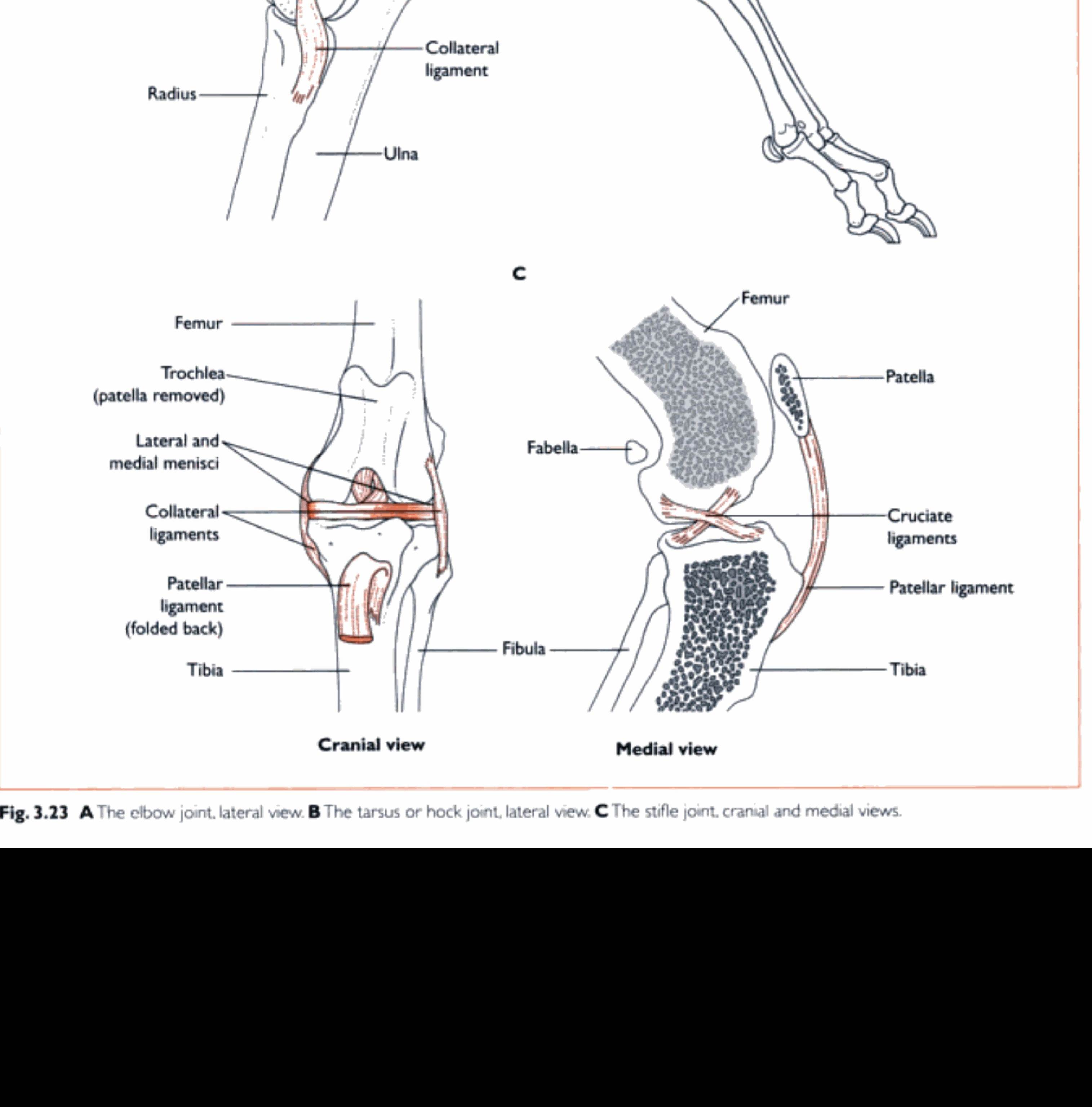
Table 3.1 Properties of different synovial joint types.
Type of synovial joint Description Example of joint
| PtaneZgliding | Allows sliding of one bony surface over the other | Joinu between the rows of carpal and ursal bones |
| Hinge | Allows movement in one plane only, i.e. flexion and extension | Elbow; stifle |
| Pivot | Consisu of a peg sitting within a ring; allows roution | Atlanto-axial joint (between CI and C2) |
| Condylar | Consisu of a convex surface (condyles) that siu in a corresponding concave surface; allows movement in two planes (flexion, extension and over extension) | Hock or (ursus) |
| Ball and socket | Consisu of a rounded end or ball, sitting within a socket or cup; allows a great range of movement | Hip; shoulder |