The tongue
The functions of the tongue are:
1. To aid the ingestion of food
2. To carry the receptors (taste buds) for the sensation of taste or it. It passes through the thoracic cavity, running within the mediastinum, dorsal to the heart base and between the two lungs.
The oesophagus enters the abdominal cavity via the oesophageal hiatus of the diaphragm, which separates the thorax and abdomen.The walls of the oesophagus arc lined with StniiiJied squamous epithelium arranged in longitudinal folds. This protects against damage by food and allows for widthways expansion as the boluses pass down. Within the walls are circular and longitudinal bands of smooth muscle fibres. Contraction of these muscles brings about a series of peristaltic waves which force the food along the tube (Fig. 9.8). Focxi can pass in the reverse direction - antiperistalsis - seen during vomiting. The average time taken for fd to pass down the oesophagus is 15-30 seconds, but this depends on the type of food: liquids take a shorter time than drv foods.
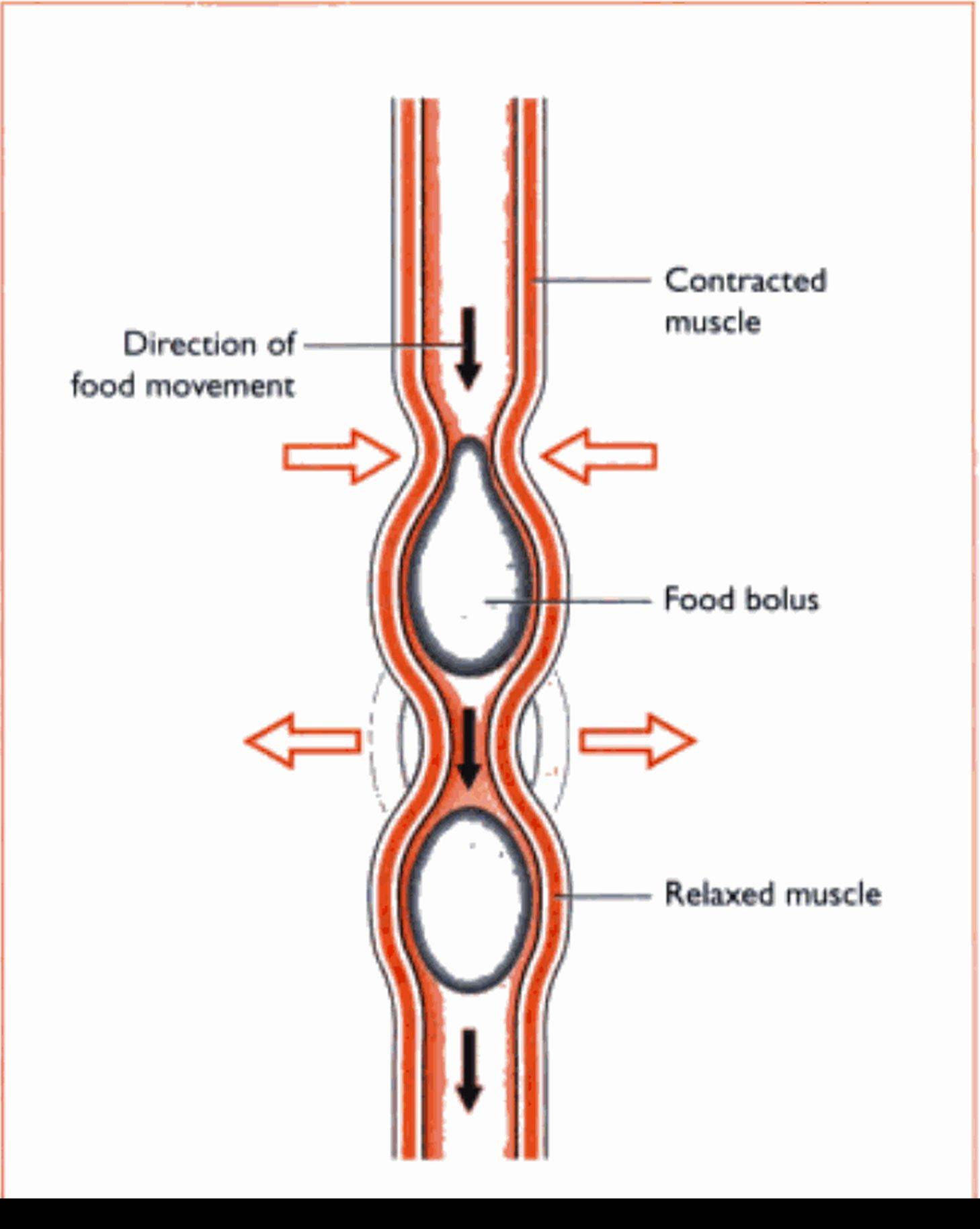
Fig. 9.8 Rjepresentation of peristalsis. Muscular contraction within the tube forces the food bolus along.
Diagnosis of conditions of the digestive tract may be helped by the use of a *barium meal*. Liquid barium sulphate is administered orally and a series of radiographs are taken over a period of several hours. Figure 9.9 shows the result of the use of barium as a contrast medium and illustrates the anatomy of the canine digestive tract.