Algeria
Economic transition or more of the same?
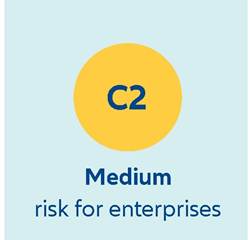
| GDP | USD191.9bn (World ranking 56) |
| Population | 44.9mn (World ranking 34) |
| Form of state | Semi-presidential republic |
| Head of government | Abdelmadjid Tebboune (President) |
| Next elections | 2024, Presidential |
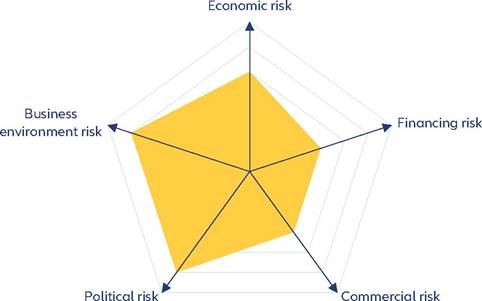
Strengths & weaknesses
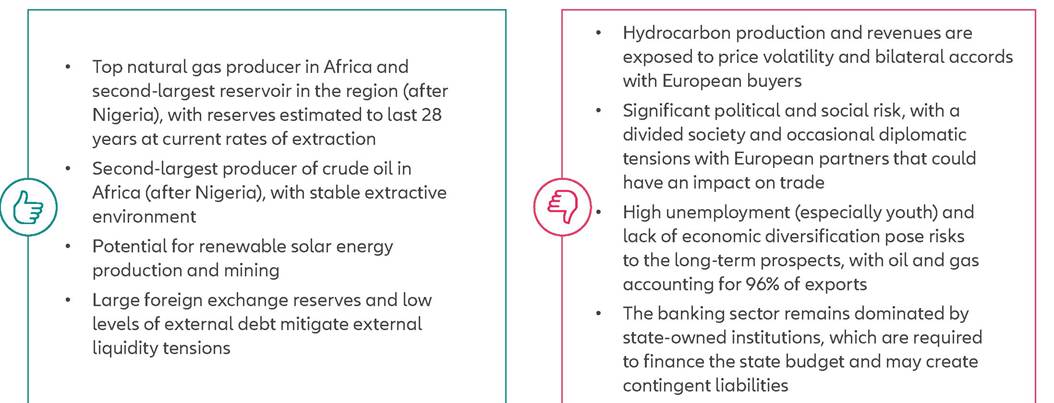
Economic overview
Hydrocarbon production props up the economy in the short run
The Algerian economy has already returned to pre-pandemic levels, with GDP per capita surpassing its 2011 peak and the current account reverting into a surplus in 2022 after eight years.
On the other hand, economic growth is largely a consequence of increased hydrocarbon prices, particularly in Europe and is estimated to have hovered around +2.4% in 2023 and moderate to +1.8% in 2024, well below Africa's average of +3.6% due to less favorable assumptions on energy prices and the long wave of losses in the cost of living that matured in 2023. Inflation is likely to reduce to around +4.8% on average in 2024.Hydrocarbons represent 96% of total exports and 40% of budget revenues. Under present conditions, the government is unlikely to pursue much-needed structural reforms and reduce a high import bill. Overall, hydrocarbons remain the largest source of hard currency with liquidity buffers replenished in 2022-2023 and international reserves remaining the largest on the continent with around USD70bn at end-2023.
The government is trying to diversify its export basket and signed several agreements with China to increase the production of phosphate and iron ore as well as solar, wind and hydrogen projects with European partners.
Accords with Italy, the main destination market, are likely to increase natural gas sales, attract additional investment into the sector and partly mitigate an anticipated decrease in trade with Spain following diplomatic tensions over the recognition of Western Sahara.The transition to a more sustainable model is challenged by the economic cycle, bilateral relations and emergency measures
In 2023, international reserves recovered for the second year in a row, reaching around 1.5 years of import cover and representing a substantial buffer against external shocks, with foreign debt amounting to less than USD3bn. Financing remains unorthodox, consisting of a mix of funds from the Banque d'Algerie (the central bank) and state-owned banks through debt issuance and deposit drawdowns. If necessary, Algeria can also seek bilateral support from China and Russia.
Rising hydrocarbon production has eased Algeria's fiscal pressure over the last quarters, with the budget deficit estimated at 3% of GDP in 2023, widening to 4-5% of GDP in 2024. Trade surplus accumulated in 2022 was an exception, compared to an average annual deficit of USD15.8bn over 2017-2021. In 1994, with a debt-to-GDP ratio of more than 110%, Algeria had to turn to the International Monetary Fund, after which 13 consecutive years of public debt reduction followed, finally averaging 8.8% between 2008 and 2015. Public debt was on an upward trend between 2015 and 2021 but decreased in the past two years from 63% to 55%, underscoring the importance of investment flows, economic diversification and the reallocation of subsidies as means to further reduce solvency risk.
Recent diplomatic tensions, latent social unrest and the reconfiguration of energy supply chains may increase country risk
Algeria's prospects for government stability have improved since 2019-20, when it experienced weekly nationwide anti-government protests calling for sweeping changes to the political system. Three waves of the Covid-19 pandemic effectively neutralized the Hirak protest movement, which had served as the country's main opposition force for a decade.
Moreover, the government of President Abdelmadjid Tebboune has embarked on a number of policies that have proved popular and helped to revive the economy. To reduce the risk of civil unrest, the 2024 budget law has continued to increase already high levels of social spending, including subsidies, but maintained a prudent reference price for crude oil at USD60 per barrel. Overall spending is projected to increase by 11% in 2024 to the equivalent of USD114bn, allocating more to state salaries and affordable housing.The government is trying to open up to investors but significant obstacles remain, including capital controls. In a sign that President Tebboune's administration recognizes that the business environment needs to be liberalized, the government reversed some protectionist policies adopted since 2019. However, the implementation of such policies may pose additional threats. In September 2022, the government issued secondary legislation related to the Investment Law published in July, prescribing that the foreign investor must bear at least 25% of the overall cost of the investment in order to repatriate freely the invested capital and the income derived from it. After Algeria's application for BRICS membership in November 2022, the process has encountered some resistance from both sides and has not materialized yet. Overall, enhanced relationships with Southern European countries are likely to streamline administrative procedures for attracting investment and facilitating trade, including the transferability of funds and custom proceeds.
Bilateral relations and personal ties remain prevalent in setting the business framework, while the government continues its anti-corruption drive. Foreign companies are unlikely to be directly targeted as such actions primarily target individuals close to former President Abdelaziz Bouteflika and his inner circle. However, in June 2022, Algeria decided to suspend its friendship treaty with Spain after the Spanish Prime Minister voiced support for Morocco's Autonomy Plan for the Western Sahara. Following this, the Algerian association of banks ordered its members to freeze operations relating to trade with Spain. The decision was soon reversed but affected trade and investment prospects between the two countries. Transparency of counterparty data is also frequently cited among the causes of reduced credit limits among financial institutions and insurers.
More on the topic Algeria:
- Algeria
- Commerce, sport and empire
- Index
- Islamic Nationalism
- A clash of races
- Conclusion
- POLITICAL ELITES IN THE NEW STATES
- From European war to World War